Our country failed you.
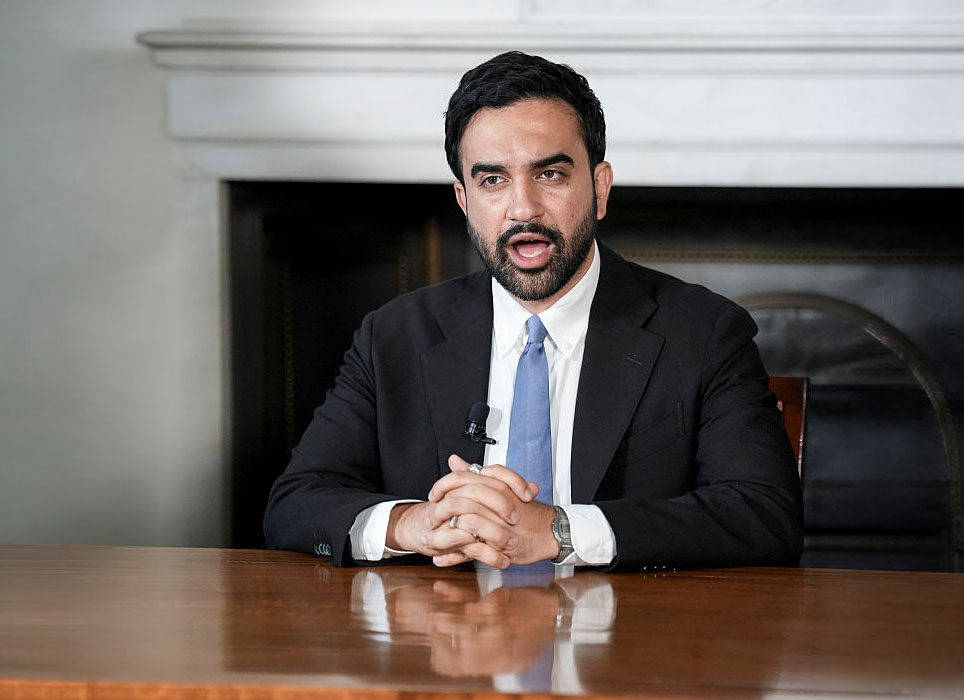
That was Zohran Mamdani’s central message in his America 250 speech on Friday.
The New York City mayor never mentions what individual Americans might do to improve their lot. Instead, it’s all about what America is failing to do to improve people’s lives.
When he harked back to early immigrants, it wasn’t as a model of hard work and personal responsibility that today’s immigrants might emulate.
No, it was to remind us that America failed those immigrants too, and only added to their hardship.
“We are told that America is exceptional because we are richer, stronger, more powerful than everyone else,” he said.
Really? Who told you that?
America is exceptional because, as the English writer G. K. Chesterton observed, “America is the only nation in the world that is founded on a creed.” That creed is set forth most clearly in the Declaration of Independence, which proclaimed that “all men are created equal” and are “endowed with unalienable rights, including life, liberty and the pursuit of happiness.”
It is those principles that led to America becoming exceptionally powerful and the world’s favorite destination for those searching for freedom and opportunity.
“The truth, my friends, is that America is exceptional because here, nothing is fixed into place,” Mamdani added.
Actually, the most important things in America– our founding principles and ideals—are very much fixed into place.
Mamdani used flowery language throughout his speech to soften his blow-by-blow of grievances against the country that made him famous.
The main villain in this hit job is a group he calls the “powerful.”
That group, Mamdani said, sees “America as an arena of supremacy, where only a select few are allowed freedom, where not all are created equal…America, they will tell you, belongs only to those with the right accent or the right shade of skin.”
Really? What about the millions of successful Americans who don’t have the “right” shade of skin? Or the millions of poor white Americans who do have the right shade of skin?
While railing against those who “have tried to win power and enrich themselves by turning us against one another,” Mamdani does his own version by turning the “powerless” against the “powerful,”
He rails against “our leaders [who] do not believe in a vision of this nation as an asylum for the persecuted, but rather as one that persecutes those seeking asylum.”
He rails against “the wealthiest country in the history of the world, one where children go to sleep hungry while the world’s first trillionaire hungers for more.”
He rails against “monopolies that dominate every industry and oligarchs who buy elections. We see masked agents terrorizing our streets, eating food cooked by our undocumented neighbors before spiriting them away in unmarked vans.”
He rails against “a nation whose immense wealth has been built by those with calloused, dirt-streaked hands, those who toil on factory floors and chisel into stone. And we see a nation that has allowed so much of that wealth to be held instead in the soft hands of a precious few.”
He rails against “a health insurance industry that exploits the sick.”
Putting aside whether one agrees or not with these grievances, Mamdani’s blow-by-blow was jarring at a time meant to celebrate a national birthday. Maybe that’s why he was savvy enough to throw in some uplifting ideas, such as: “The work of fulfilling the values first enshrined in the Declaration of Independence — that work endures and it belongs to us all.”
Yes, but evidently, according to Mamdani, what most endures and belongs to us all are the endless grievances against America he gladly chronicles in his speech.
I couldn’t help wonder how Mamdani’s speech would have gone over had he emulated President John Kennedy, who famously urged Americans to “Ask not what your country can do for you; ask what you can do for your country.”
Let’s not hold our breath. For Mamdani and his socialist brethren, a message of personal agency is galaxies away from their go-to mantra that “our country is failing you.” No need to make any personal sacrifices. Just remember that everything is your country’s fault. It is not you who is failing to deliver on promises. It is America.
Whether appropriate or not for a day of celebrations, it’s a message that can only make his followers exceptionally weaker.