Most of us understand what America gave the Jews. Batya Ungar-Sargon knows what the Jews gave America.
After almost two thousand years of exile, America became the place where Jews achieved genuine freedom. America not only offered unparalleled economic opportunity, but separated church and state, and prohibited religious tests for office. And while it has struggled to live up to its ideals, America enshrined in its founding the understanding from the Hebrew Bible that all men are created equal.
By the beginning of WWII, the homegrown antisemitism that was festering in some corners of America resulted in the failure to take in European Jews at a time when it could have prevented the Holocaust. Nonetheless, by the mid 20th century, the American neighborhoods, universities, professions, and institutions that had once excluded Jews opened their doors. And America became the safest and most prosperous country diaspora Jews had ever known.
In America, Jews have much to be grateful for. In “The Jews and the Left,” Ungar-Sargon explains that it wasn’t a one-way street.
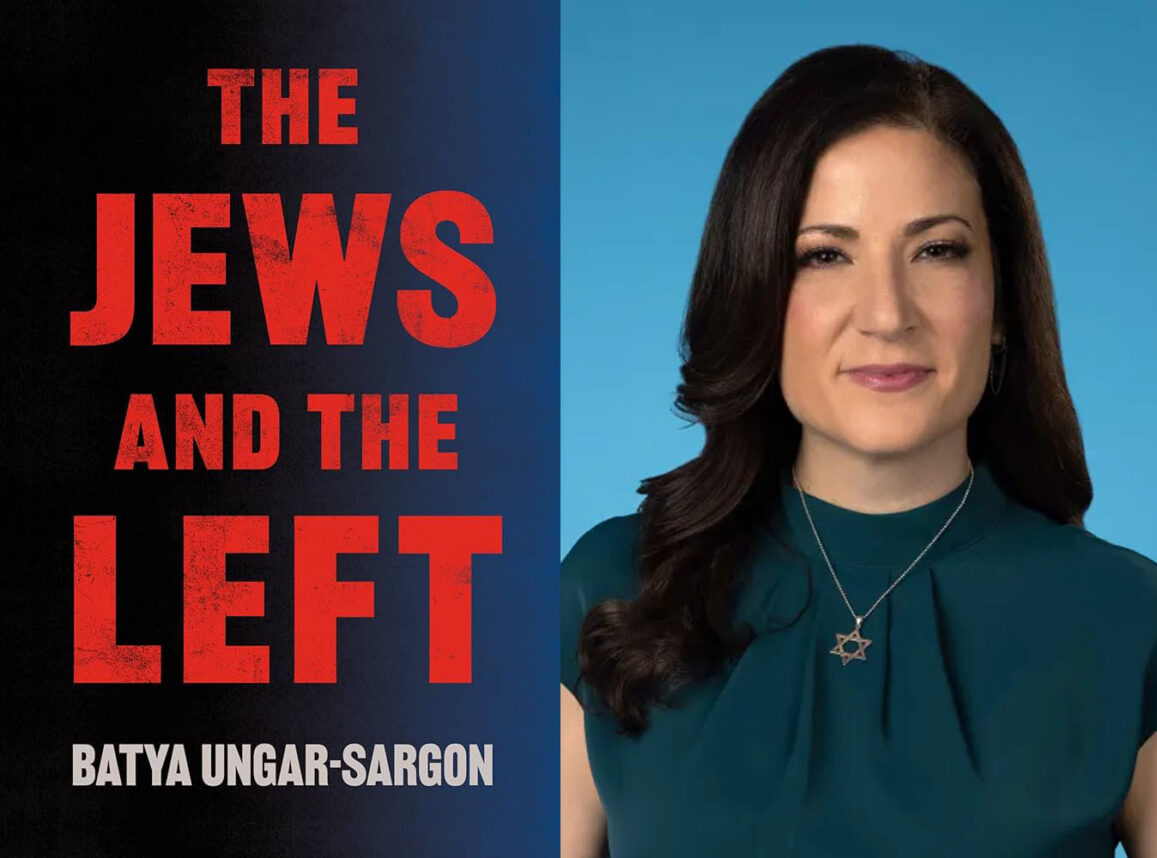
Ostensibly, the book is about a political relationship. American Jews have always been among the Democratic Party’s most loyal supporters and most committed participants in progressive causes. They were disproportionately represented in movements for labor reform, civil rights, civil liberties, and legal and social justice. As Jewish religious observance declined, many increasingly expressed their Jewish identity through liberal politics. According to the Pew data Ungar-Sargon cites, nearly 60 percent of American Jews say that “working for justice and equality in society” is among the most important components of their Jewishness.
In answering the question of why the relationship between the Jews and the Left has begun to fracture, Ungar-Sargon illuminates why American Jews were so deeply invested in the American experiment in the first place. The usual explanation is that America gave Jews opportunities they had never enjoyed before. But for most of Jewish history, Jews could become prosperous. They could even become influential. What they hadn’t become was truly free.
Throughout history, kings and emperors protected Jews—until they didn’t. Rights depended on the disposition of rulers rather than on enduring principles. Toleration could be granted or withdrawn. In his 1790 letter to the Hebrew Congregation of Newport Rhode Island, however, George Washington wrote:
“It is now no more that toleration is spoken of as if it were the indulgence of one class of people that another enjoyed the exercise of their inherent natural rights, for, happily, the Government of the United States, which gives to bigotry no sanction, to persecution no assistance, requires only that they who live under its protection should demean themselves as good citizens in giving it on all occasions their effectual support.”
America is exceptional because it grounded citizenship in principles rather than ancestry, religion, or tribe. Unlike in pre-war Europe, Jews could belong fully, even as equal citizens, without surrendering the identity that had made them outsiders elsewhere.
As Ungar-Sargon explains, in 1654, when twenty-three Jewish Dutch subjects arrived in New Amsterdam from Brazil, Governor Peter Stuyvesant wanted to expel them. But given that the Portuguese had just conquered Brazil, the Dutch West India Company, which owned the colony, took into account the “considerable loss sustained by this [Jewish] nation” and overruled him.
Stuyvesant imposed restrictions on New Amsterdam’s Jews, attempting to prevent them from becoming citizens. But a Jewish man named Asser Levy repeatedly sued. By insisting that he not be deprived of the rights of a burgher just because of his Jewishness, and winning those rights through the courts, he became a symbol of equal citizenship under law, earning the respect and admiration of his fellow citizens. As Ungar-Sargon writes: “It was Levy, a litigious Jew, who taught his fellow burghers not only what it meant to be a citizen, what it meant to have rights, but what it meant to hold them dear, to fight for them, to accept nothing less than the fullest respect from the authorities—for it was not the authorities who granted freedom but God.”
The story of Asser Levy that Ungar-Sargon tells provides one of the earliest hints that this new society would become something different from Europe. And not just for Jews.
The story of Asser Levy that Ungar-Sargon tells provides one of the earliest hints that this new society would become something different from Europe. And not just for Jews.
The book is about how the political left turned on the Jews. Something we’ve all seen since Oct. 7, 2023. But it is also about how American Jews helped build many of America’s institutions, and how those institutions have now abandoned the liberal values that made Jewish—and American—freedom possible in the first place.
Jews were once understood as deserving equal protection under laws that were created by appealing to universal principles. Today, Jews are increasingly viewed through a lens of identity, power, and oppression. The result is not merely political disagreement over Israel. It is a fundamentally altered conception of morality.
On the Fourth of July, American Jews have every reason to celebrate what America made possible. No other nation gave the Jewish people such an extraordinary combination of liberty, equality, and belonging. But the Jewish contribution to America is worth celebrating too. From Asser Levy’s insistence that rights belonged to citizens rather than rulers, to the generations of Jews who fought to extend to all Americans the promises of the Declaration of Independence and the Constitution, the Jewish contribution was not simply economic or even cultural; it was civic. Jews both found freedom here and helped Americans understand what freedom requires.
Jews both found freedom here and helped Americans understand what freedom requires.
In the conception of individual rights that Jews embraced on the political Left, liberty meant more than the absence of persecution. It meant that rights no longer depended on belonging to the “right” religion, the “right” race, or the “right” tribe. For the first time in almost two thousand years, Jews not only found a refuge; they found a country in which they could remain fully Jewish and still be equal participants in creating the story of a young nation. And that’s what makes the Left’s betrayal that much more painful.
In 1751, to mark the 50th anniversary of Pennsylvania’s original charter, a bell was inscribed with a line from the Hebrew Bible. From the book of Leviticus, the words that for 275 years have been seared into the Liberty Bell read, “Proclaim liberty throughout the land for all its inhabitants.”
The story of the Jews and the Left, as Ungar-Sargon tells it, is a story of love and loss. The ending depends on whether that essential, and uniquely American, conception of liberty is defended or defeated.
The Jews and the Left by Batya Ungar-Sargon is available on Amazon.
A social psychologist with a clinical background, Pamela Paresky, Ph.D. serves as an Associate at Harvard University in the Psychology Department, Senior Advisor to the Open Therapy Institute, Advisor to the Mindful Education Lab at NYU, and Senior Fellow at the Network Contagion Research Institute. She writes the “Habits of a Free Mind” Substack and is on Twitter @PamelaParesky.

What Jews Can Celebrate About America, and What America Can Celebrate About Jews
Pamela Paresky
Most of us understand what America gave the Jews. Batya Ungar-Sargon knows what the Jews gave America.
After almost two thousand years of exile, America became the place where Jews achieved genuine freedom. America not only offered unparalleled economic opportunity, but separated church and state, and prohibited religious tests for office. And while it has struggled to live up to its ideals, America enshrined in its founding the understanding from the Hebrew Bible that all men are created equal.
By the beginning of WWII, the homegrown antisemitism that was festering in some corners of America resulted in the failure to take in European Jews at a time when it could have prevented the Holocaust. Nonetheless, by the mid 20th century, the American neighborhoods, universities, professions, and institutions that had once excluded Jews opened their doors. And America became the safest and most prosperous country diaspora Jews had ever known.
In America, Jews have much to be grateful for. In “The Jews and the Left,” Ungar-Sargon explains that it wasn’t a one-way street.
Ostensibly, the book is about a political relationship. American Jews have always been among the Democratic Party’s most loyal supporters and most committed participants in progressive causes. They were disproportionately represented in movements for labor reform, civil rights, civil liberties, and legal and social justice. As Jewish religious observance declined, many increasingly expressed their Jewish identity through liberal politics. According to the Pew data Ungar-Sargon cites, nearly 60 percent of American Jews say that “working for justice and equality in society” is among the most important components of their Jewishness.
In answering the question of why the relationship between the Jews and the Left has begun to fracture, Ungar-Sargon illuminates why American Jews were so deeply invested in the American experiment in the first place. The usual explanation is that America gave Jews opportunities they had never enjoyed before. But for most of Jewish history, Jews could become prosperous. They could even become influential. What they hadn’t become was truly free.
Throughout history, kings and emperors protected Jews—until they didn’t. Rights depended on the disposition of rulers rather than on enduring principles. Toleration could be granted or withdrawn. In his 1790 letter to the Hebrew Congregation of Newport Rhode Island, however, George Washington wrote:
“It is now no more that toleration is spoken of as if it were the indulgence of one class of people that another enjoyed the exercise of their inherent natural rights, for, happily, the Government of the United States, which gives to bigotry no sanction, to persecution no assistance, requires only that they who live under its protection should demean themselves as good citizens in giving it on all occasions their effectual support.”
America is exceptional because it grounded citizenship in principles rather than ancestry, religion, or tribe. Unlike in pre-war Europe, Jews could belong fully, even as equal citizens, without surrendering the identity that had made them outsiders elsewhere.
As Ungar-Sargon explains, in 1654, when twenty-three Jewish Dutch subjects arrived in New Amsterdam from Brazil, Governor Peter Stuyvesant wanted to expel them. But given that the Portuguese had just conquered Brazil, the Dutch West India Company, which owned the colony, took into account the “considerable loss sustained by this [Jewish] nation” and overruled him.
Stuyvesant imposed restrictions on New Amsterdam’s Jews, attempting to prevent them from becoming citizens. But a Jewish man named Asser Levy repeatedly sued. By insisting that he not be deprived of the rights of a burgher just because of his Jewishness, and winning those rights through the courts, he became a symbol of equal citizenship under law, earning the respect and admiration of his fellow citizens. As Ungar-Sargon writes: “It was Levy, a litigious Jew, who taught his fellow burghers not only what it meant to be a citizen, what it meant to have rights, but what it meant to hold them dear, to fight for them, to accept nothing less than the fullest respect from the authorities—for it was not the authorities who granted freedom but God.”
The story of Asser Levy that Ungar-Sargon tells provides one of the earliest hints that this new society would become something different from Europe. And not just for Jews.
The book is about how the political left turned on the Jews. Something we’ve all seen since Oct. 7, 2023. But it is also about how American Jews helped build many of America’s institutions, and how those institutions have now abandoned the liberal values that made Jewish—and American—freedom possible in the first place.
Jews were once understood as deserving equal protection under laws that were created by appealing to universal principles. Today, Jews are increasingly viewed through a lens of identity, power, and oppression. The result is not merely political disagreement over Israel. It is a fundamentally altered conception of morality.
On the Fourth of July, American Jews have every reason to celebrate what America made possible. No other nation gave the Jewish people such an extraordinary combination of liberty, equality, and belonging. But the Jewish contribution to America is worth celebrating too. From Asser Levy’s insistence that rights belonged to citizens rather than rulers, to the generations of Jews who fought to extend to all Americans the promises of the Declaration of Independence and the Constitution, the Jewish contribution was not simply economic or even cultural; it was civic. Jews both found freedom here and helped Americans understand what freedom requires.
In the conception of individual rights that Jews embraced on the political Left, liberty meant more than the absence of persecution. It meant that rights no longer depended on belonging to the “right” religion, the “right” race, or the “right” tribe. For the first time in almost two thousand years, Jews not only found a refuge; they found a country in which they could remain fully Jewish and still be equal participants in creating the story of a young nation. And that’s what makes the Left’s betrayal that much more painful.
In 1751, to mark the 50th anniversary of Pennsylvania’s original charter, a bell was inscribed with a line from the Hebrew Bible. From the book of Leviticus, the words that for 275 years have been seared into the Liberty Bell read, “Proclaim liberty throughout the land for all its inhabitants.”
The story of the Jews and the Left, as Ungar-Sargon tells it, is a story of love and loss. The ending depends on whether that essential, and uniquely American, conception of liberty is defended or defeated.
The Jews and the Left by Batya Ungar-Sargon is available on Amazon.
A social psychologist with a clinical background, Pamela Paresky, Ph.D. serves as an Associate at Harvard University in the Psychology Department, Senior Advisor to the Open Therapy Institute, Advisor to the Mindful Education Lab at NYU, and Senior Fellow at the Network Contagion Research Institute. She writes the “Habits of a Free Mind” Substack and is on Twitter @PamelaParesky.
Did you enjoy this article?
You'll love our roundtable.
Editor's Picks
Israel and the Internet Wars – A Professional Social Media Review
The Invisible Student: A Tale of Homelessness at UCLA and USC
What Ever Happened to the LA Times?
Who Are the Jews On Joe Biden’s Cabinet?
You’re Not a Bad Jewish Mom If Your Kid Wants Santa Claus to Come to Your House
No Labels: The Group Fighting for the Political Center
Latest Articles
Mamdani Needs to Pay a Price for Harming Jews
Rabbis of LA | Rabbi Geller’s Feminist Education
Rabbi Artson Honored by WLCJ, Mem Global’s Embark Names Executive Director
I Can’t Always — A poem for Parsha Va’etchanan
A Bisl Torah — Senseless versus Sensible
Moment in Time: Tisha B’Av – A Time to Comfort
Poussin’s Menorah Chimes Without Jews at Midnight
Print Issue: Haredim at War | July 24, 2026
The Haredim who break out of their bubbles to join the IDF are often caught between faith, family and country. Here are some of their stories.
The Inversion of History
Molly Crabapple has written a work of great inversion and of ultimate betrayal.
From ‘The Chosen’ to ‘Imaging Torah’: Jeremy Kagan’s Journey to Bring Torah to Life
For the director/artist, creating images inspired by Torah is a way of engaging with the stories, ideas and interpretations that have shaped Jewish life for thousands of years.
Three Dates to Dataland
I took three different dates, ages 6, 72 and 35, to see Dataland, the unusual digital art experience in downtown Los Angeles.
Hakol Shalom, All Is Shalom
This is the transcript of the speech Rabbi Dr. Bradley Shavit Artson gave at the 2026 AJU Gala on May 19, 2026.
A Slice of Aussie Heaven for the Jewish Day of Love
A classic Australian dessert chocolate coconut slice features a rich, dense, fudgy chocolate base packed with dried coconut, finished with a thick cocoa frosting and generously dusted with even more coconut.
Recipes that Celebrate Love for Tu b’Av
This roundup has recipes from two matchmakers: one is perfect for a special date night, the other is the perfect representative of lasting love.
Table for Five: Va’etchanan
Secret Sauce
The Haredi Soldiers Caught Between Faith, Family and Country
For decades, the question of Haredi enlistment has remained one of Israel’s most sensitive and unresolved conflicts.
Why Are Jews Not Suing Mamdani for Slander and Defamation?
At the very least, the case would provide a global stage to debunk the genocide lie that is devastating world Jewry.
The Empty Plaza and the Eternal Bond
This Tisha b’Av, as we mourn over the Temple once more, it is an occasion to consider what resonance the remnants of the Temple structure hold for us today.
Rosner’s Domain | A Leftist (Not) by Choice?
Coalition supporters want to define Eisenkot as a leftist because leftist is a title most Israelis do not want their Prime Minister to hold. But this definition has inherent limitations.
Love for the Sake of Love: A Lesson from Tisha b’Av
Last week, I moderated a panel of interfaith leaders fighting antisemtism and supporting Israel as part of the American Muslim and Multifaith Women’s Empowerment Council’s conference.
Life, Love and Tisha b’Av
As if life needed one more complication, my anniversary with life, my birthday, usually falls somewhere inside the Three Weeks, that narrow corridor of Jewish time when celebration starts to feel suspicious.
Accidental Pilgrim: My Moroccan Adventure
Does Morocco have genuine warmth toward Jews, or is it a way to reignite lucrative Jewish tourism? Does it even matter?
The Hits Just Keep Coming
What the Changing Narrative Around Israel Reveals About the Fragmentation of the West
Anti-Israelism has become a kind of cultural and political loyalty test that has almost nothing to do with the actual policy questions at stake. If the postwar liberal order is fragmenting, the story of Israel is a symptom of that fragmentation, not its cause.
Echoes of Oct. 7 in ‘The Odyssey’
The film reminded me that an ancient poet could write about massacres but also about moral courage, while terrorists who dream of killing Jews can only think of going right to the massacre.
Censoring Global Jewry
This tale of censorship is bad for books and portends a death knell for literature.
More news and opinions than at a Shabbat dinner, right in your inbox.