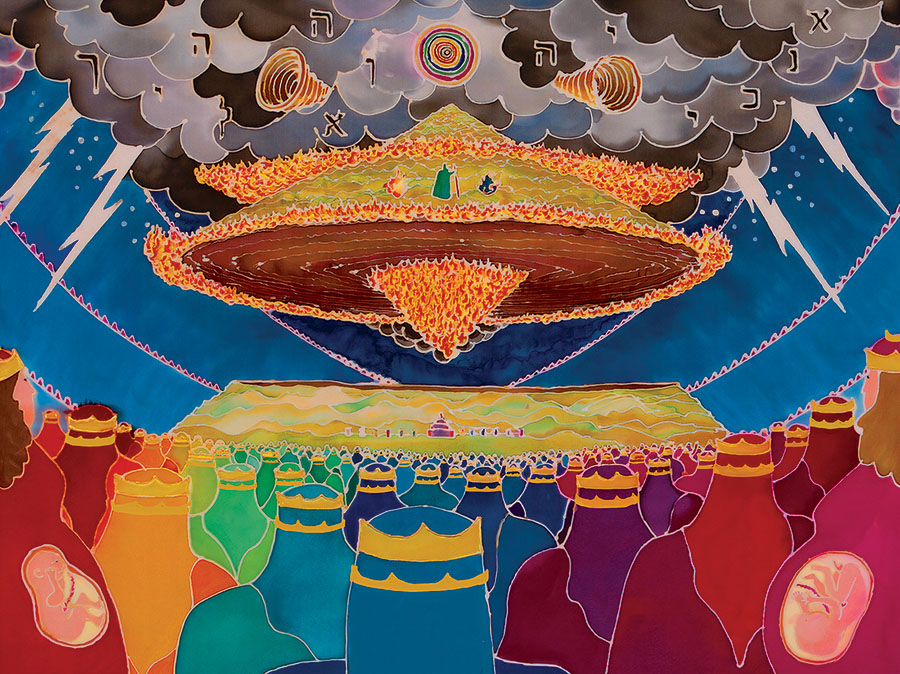
Jeremy Kagan has spent a lifetime bringing stories to the screen, but his latest project is perhaps his most personal. In “Imaging Torah,” a visually striking 25-minute film, the acclaimed director combines his original paintings and drawings with the timeless words of the Hebrew Bible, transforming the weekly Haftorah readings into a rich tapestry of color, symbolism and imagination.
The Torah is divided into 54 weekly portions, known as parashas. Following each parashah, a selection from the books of the Prophets is traditionally read; these passages are known as the Haftorahs. Kagan’s paintings and drawings are visual responses not only to the words of the Torah and Haftorah, but also to centuries of Jewish interpretation, including rabbinic commentaries found in the Talmud and Mishnah, as well as the mystical teachings of the Zohar and other ancient texts. The film offers a deeply personal artistic interpretation of sacred texts, inviting viewers to experience them through both sight and spirit.
The son of a Reform rabbi in Mount Vernon, New York, Kagan grew up immersed in biblical stories, which captivated his imagination from an early age. Encouraged by a father who was himself an amateur painter, Kagan grew up in a home where art and faith existed naturally alongside one another. He was drawing almost constantly as a child, and his talent was evident early on. Family friends suggested that his parents send him to a specialized art school, but they ultimately chose not to pursue that path, a decision Kagan later believed was influenced by their concern that the life of an artist might prove challenging.
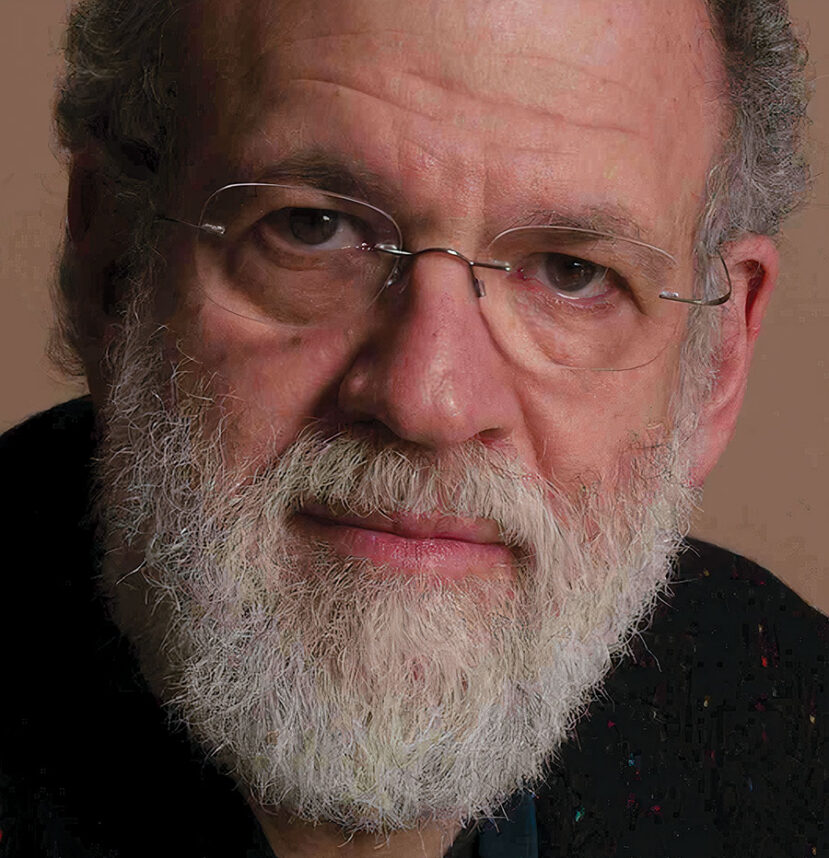
It was through filmmaking that Kagan’s relationship with Judaism would deepen in unexpected ways. His 1981 adaptation of Chaim Potok’s 1967 novel “The Chosen” became more than a professional milestone — it opened a door to a spiritual exploration that would eventually shape his life and his art.
“When I started making “The Chosen,” I was in New York. I didn’t know how to pronounce or spell Hasidic,” he recalled. “It wasn’t a part of Reform Judaism.”
Kabbalah, the mystical tradition of Judaism, was also outside his experience. He remembers asking his father about it when he was 12 years old. “I said, ‘What is Kabbalah?’” Kagan recalled. “And he said ‘That’s part of old thinking, it’s superstitious. You have to be married and 40 years old to study it, and it has no real relevance today.’”
But while doing research for “The Chosen” Kagan began questioning those assumptions. He started meeting members of Orthodox communities, spending Shabbat with families and learning about a more spiritual dimension of Judaism. “I got exposed to the concept of spiritual Judaism, and I got really interested in it,” he said.
That journey eventually led him to Rabbi Stephen Robbins in Los Angeles, who taught courses on Kabbalah. Kagan would wake up early to attend the 6 a.m. classes before continuing with his work as a filmmaker.
“We would read Aryeh Kaplan’s work, which is the most wonderful way of approaching it because it makes it incredibly accessible,” he said. “Suddenly I realized what the spiritual basis was, and how profound and effective it was. … I practiced it daily,” Kagan said. “It became part of my daily being.”
Today, Kagan attends The Happy Minyan in Pico-Robertson, a congregation influenced by Rabbi Shlomo Carlebach’s teachings and his emphasis on making Judaism accessible and welcoming. Looking back, Kagan sees his path toward a deeper Jewish connection as something that unfolded rather than something he consciously planned.
“I feel like some things in life are chosen for you,” he said. “You think you’re choosing, but you’re really not. These are unintentional events that happen in your life. The story of making ‘The Chosen’ was one of those things.”
At 80, Kagan shows no signs of slowing down. But for him, creating art and illustrating biblical stories is more than another project — it is a calling.
Speaking with The Journal from his home studio in Venice Beach, Kagan reflected on the decades-long journey of creating “Imaging Torah,” which will be screened at The Braid on July 25 and 26 alongside an exhibition of his artwork.
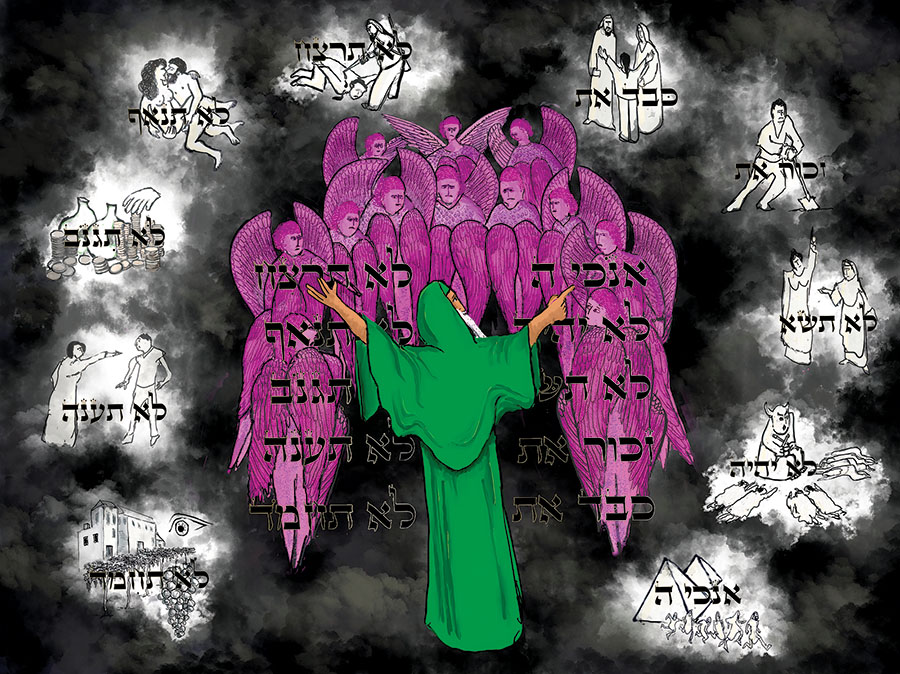
“I have an obsession to create an image based on the parashah of the week. I’ve been doing it for at least 20 years,” said Kagan. “I assumed that if I drew one set a week, this would take a year. But just doing the first set actually took five years.”
Inspired by a Midrash describing the serpent in the Garden of Eden as a tall, two-legged creature with a long neck, Kagan created his first painting using an ancient Indian technique on stretched silk. His spiritual studies influenced the symbolism and color palette that became a hallmark of the series.
Although he remained busy directing feature films and television projects, Kagan refused to let the artwork sit idle. He brought canvases with him to film locations, using evenings, weekends and any spare moments between shoots to continue painting. Each week’s artwork began with studying the Torah portion and traditional commentaries, followed by pencil sketches that were gradually developed into detailed paintings.
Yet Kagan’s decision to visually interpret biblical stories did not come without questions. The Second Commandment’s prohibition against making graven images has historically shaped Jewish attitudes toward religious art, particularly depictions of God and divine beings. Unlike many other religious traditions, Jewish art developed largely through ornamental, decorative and symbolic forms rather than figurative representations of sacred subjects.
Yet Kagan believes the relationship between Judaism and art has evolved over time. As Jews entered broader society, visual expression became more prominent, with artists such as Camille Pissarro, Marc Chagall, Mark Rothko and Roy Lichtenstein using art to explore identity, spirituality and Jewish experience.
During his travels, Kagan encountered many examples of Jewish communities embracing visual expression. He makes a point of visiting synagogues wherever he spends Shabbat, whether in London, Amsterdam or Casablanca. “I found many that incorporate artistic elements, including stained-glass windows,” Kagan said.
For the director/artist, creating images inspired by Torah is a way of engaging with the stories, ideas and interpretations that have shaped Jewish life for thousands of years.
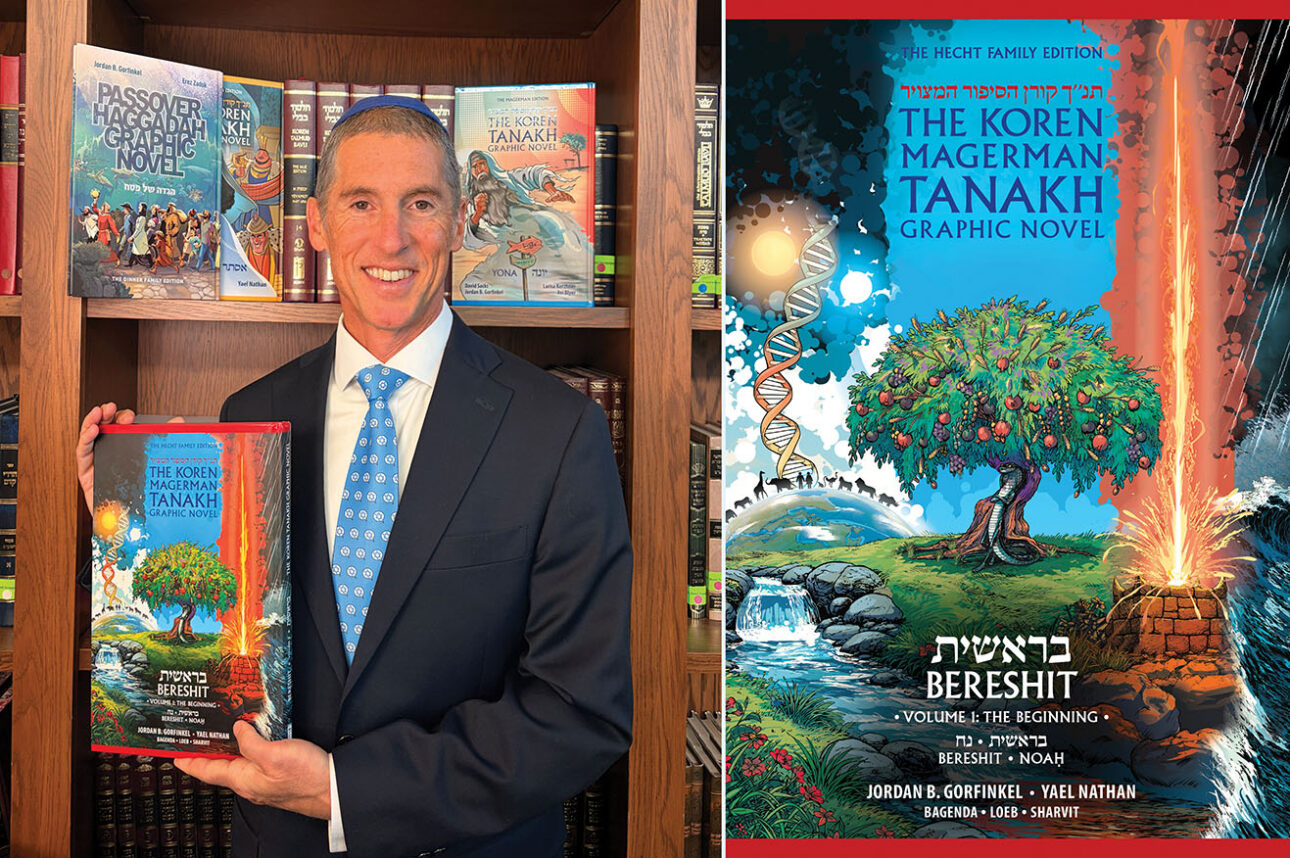
Over the past several years, he has been compiling his Torah artwork into a book, including a collection devoted to Genesis, with each chapter accompanied by his own commentary and multiple interpretations of the biblical text.
Kagan emphasized that financial gain was never the motivation behind the project. His decades-long filmmaking career has already provided him with professional and financial success. Now, he hopes “Imaging Torah” will serve a different purpose: offering viewers another doorway into Jewish texts and traditions.
“I hope that it would be of value – that it would be another way to see Torah, be inspired by it and that it would become part of people’s lives.”
The film will screen at The Braid, followed by a conversation with filmmaker Jeremy Kagan and composer Yuval Ron, a musical performance by Ron, and an exhibition of Kagan’s artwork. Screenings will take place on July 25 at 7:30 p.m. and July 26 at 2 p.m.