By legitimizing a Palestinian state at the United Nations, the United Kingdom and other European powers risk emboldening terror, prolonging conflict and making the recovery of Israel’s hostages harder. That’s the stark warning delivered by Emily Damari—an Israeli-British citizen and survivor of 471 days in Hamas captivity—directly to Britain’s Prime Minister Keir Starmer.
“This move does not advance peace—it risks rewarding terror. It sends a dangerous message: that violence earns legitimacy,” she wrote on X. “By legitimizing a state entity while Hamas still controls Gaza and continues its campaign of terror, you are not promoting a solution; you are prolonging the conflict. Recognition under these conditions emboldens extremists and undermines any hope for genuine peace. Shame on you.”
Damari posed a damning question to Starmer on Instagram. “Prime Minister Starmer is not standing on the right side of history. Had he been in power during World War II, would he have advocated recognition for Nazi control of occupied countries like Holland, France or Poland?” she asked, adding, “This is not diplomacy—it is a moral failure.
Damari’s remarks echo growing concern within Israel over Europe’s accelerating push to recognize a Palestinian state—regardless of Hamas’ continued hold on Gaza, its refusal to release hostages, or its unrepentant calls for Israel’s destruction.
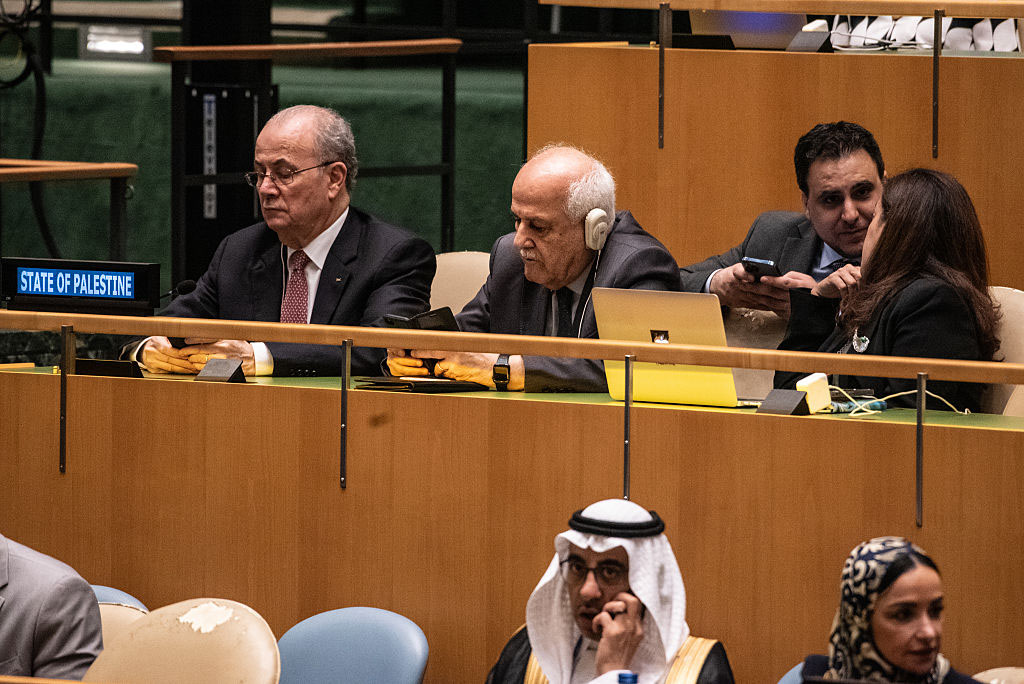
Starmer’s proposal to vote for recognition of Palestinian statehood at the United Nations, alongside calls for a ceasefire, was met with outrage from Israel’s Hostages and Missing Families Forum. The group warned that this diplomatic pressure only aids Hamas by weakening Israel’s negotiating leverage.
Foreign Minister Gideon Sa’ar put it bluntly: “If a terrorist organization embraces you, you’ve ended up in the wrong place.”
France is leading the charge for a U.N. vote in September, with President Emmanuel Macron reportedly working behind the scenes to build majority support for Palestinian statehood. But critics point out that the timing—while Israeli troops are still engaged in combat and dozens of hostages remain in captivity—is deeply troubling.
The humanitarian narrative is crumbling under scrutiny. The New York Times recently retracted a widely circulated image of a starving Gaza child, which had fueled outrage abroad. Meanwhile, Israel, Egypt, and Saudi Arabia are facilitating massive humanitarian airdrops and aid deliveries. Hundreds of trucks of food and supplies continue to cross into Gaza. But Hamas diverts much of this aid for military use or internal control, undermining relief efforts.
Calls for Palestinian statehood aren’t new. Yet history is clear: when Egypt occupied Gaza and Jordan ruled the West Bank (Judea and Samaria), no Palestinian state was proposed. Since 1948, Israel has offered statehood on at least ten occasions. Each time, Palestinian leadership—from the PLO to Hamas—rejected peace in favor of armed struggle.
Even after the failed Oslo Accords and the bloodshed of the Second Intifada, Israel unilaterally withdrew from Gaza in 2005, dismantling 21 communities and evacuating 9,000 Israelis. Greenhouses and infrastructure were left intact, intended to form the backbone of a future Palestinian economy. Instead, Gaza became a launchpad for terror—armed, financed, and entrenched by Iran.
The world never asked Hamas—or even the Palestinian Authority—the basic questions: Will the future Palestinian state be democratic? Demilitarized? Will it stop indoctrinating children to hate Jews? Will it protect women and minorities? Will it cease paying stipends to terrorists?
Today, Macron and Starmer move forward with recognition efforts without demanding a single concession in return. No promise to end incitement, no guarantee to release hostages, no commitment to rewrite textbooks or dismantle terror tunnels.
In 1988, several Eastern European states recognized a Palestinian state on paper. In 2014, Sweden joined. In 2024, Spain and Ireland followed. The result? No peace—only further violence. Recognition without reform is not diplomacy. It’s appeasement.
Israel has made painful concessions in pursuit of peace. What it cannot accept—and what no democracy should accept—is legitimizing a terror state that rejects coexistence and seeks its destruction.
If the West truly wants peace, it must demand accountability, not reward brutality.
Dr. Fiamma Nirenstein is an Italian-Israeli journalist, author, and senior research fellow at the Jerusalem Center for Public Affairs.