
Israel has won its war against Hamas in Gaza. But for a number of reasons — practical, political and polemical — Hamas has won its war against Israel in the eyes of the rest of the world.
Most global observers would never admit a Hamas victory, let alone that they have helped facilitate it. They strongly condemn the Oct. 7 terrorist attacks and kidnappings, and they demand the release of the remaining hostages and call for Hamas to disarm and end its rule in Gaza. (Even the 22 members of the Arab League all signed a declaration last week endorsing each of these goals.) But the outrage that much of the international community has directed at Israel for the deteriorating humanitarian situation in Gaza has caused the Jewish state’s already sub-optimal international reputation to plummet even further to near-pariah status.
The overwhelming irony, of course, is that when measured strictly in military terms, Israel’s armed forces have achieved decisive victories in their defeat of Hamas. Most of Hamas’ organized battalions have been dismantled — reports estimate that up to 23 of 24 battalions are gone — and roughly half of their fighters have been killed or captured. Nearly all of its rocket stockpiles have been destroyed, their leaders have been killed and the organization’s remnants now control only about 20% of Gaza territory.
The overwhelming irony, of course, is that when measured strictly in military terms, Israel’s armed forces have achieved decisive victories in their defeat of Hamas.
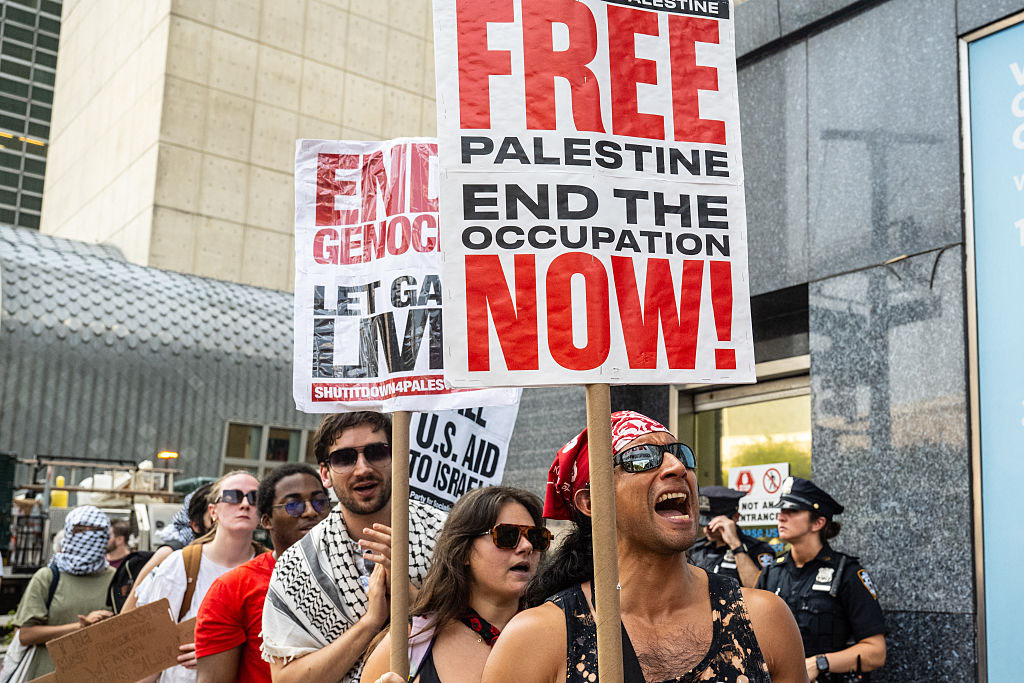
But the price that Israel has paid for its success on the battlefield is even more staggering. Britain, France, Canada and Australia have all taken steps toward supporting the establishment of a Palestinian state. More than three-quarters of the United Nations’ member countries have now taken this position, reflecting a dramatic drop in public support for Israel across much of the planet. Nowhere has this shift been more noticeable than here in the U.S., where recent polling conclusively demonstrates how fast and how far Americans’ attitudes toward Israel have fallen.
Last month’s Gallup poll was the latest in a series of increasingly discouraging surveys of how voters in this country regard Israel’s conduct regarding the war in Gaza. Less than one-third of respondents now support Israeli military action there, with an all-time high of 60% who now state their opposition. Feelings toward Prime Minister Benjamin Netanyahu are just as dismal, as 52% of Americans now view Netanyahu unfavorably, roughly double the level of disapproval toward him just five years ago.
This particular poll did not measure broader public opinion toward Israel, but other recent surveys have demonstrated that more than half of U.S. respondents have an unfavorable view of the Jewish state. For context, this compares with 42% disapproval in 2022 before the current war began and roughly 20% disapproval (with 72% approval) during the previous Gaza war in 2014. But even then, evidence of partisan and generational splits had already emerged, as left-leaning voters and young people voiced their unhappiness with Israel in growing numbers.
Not surprisingly, those divisions have exploded during the current conflict. Currently, less than 10% of Democrats and of 18-34 year-olds approve of Israel’s military action in Gaza. The unhappy result is that, despite the best efforts of establishment political leaders in both parties, historical bipartisan support for the Jewish state in this country has essentially disappeared. The widespread opposition among Generation Z suggests that the long-term challenges will be even greater.
This is exactly what Hamas hoped for when they first launched their attacks. It has been evident for most of Israel’s history that their most brutal opponents have always been willing to sacrifice children, the elderly and other innocents to achieve their goals. But it also stands to reason that Hamas’ original leaders understood their own fate too, that they would need to forfeit their own lives in order to achieve just this type of victory.
There will always be more terrorists to take the place of the suicidalists who preceded them. But a nation’s reputation is much more difficult to rebuild. Once the shooting is over, we will then face the equally formidable task of rehabilitating Israel in the eyes of a hostile world.
Dan Schnur is the U.S. Politics Editor for the Jewish Journal. He teaches courses in politics, communications, and leadership at UC Berkeley, USC and Pepperdine. He hosts the monthly webinar “The Dan Schnur Political Report” for the Los Angeles World Affairs Council & Town Hall. Follow Dan’s work at www.danschnurpolitics.com.