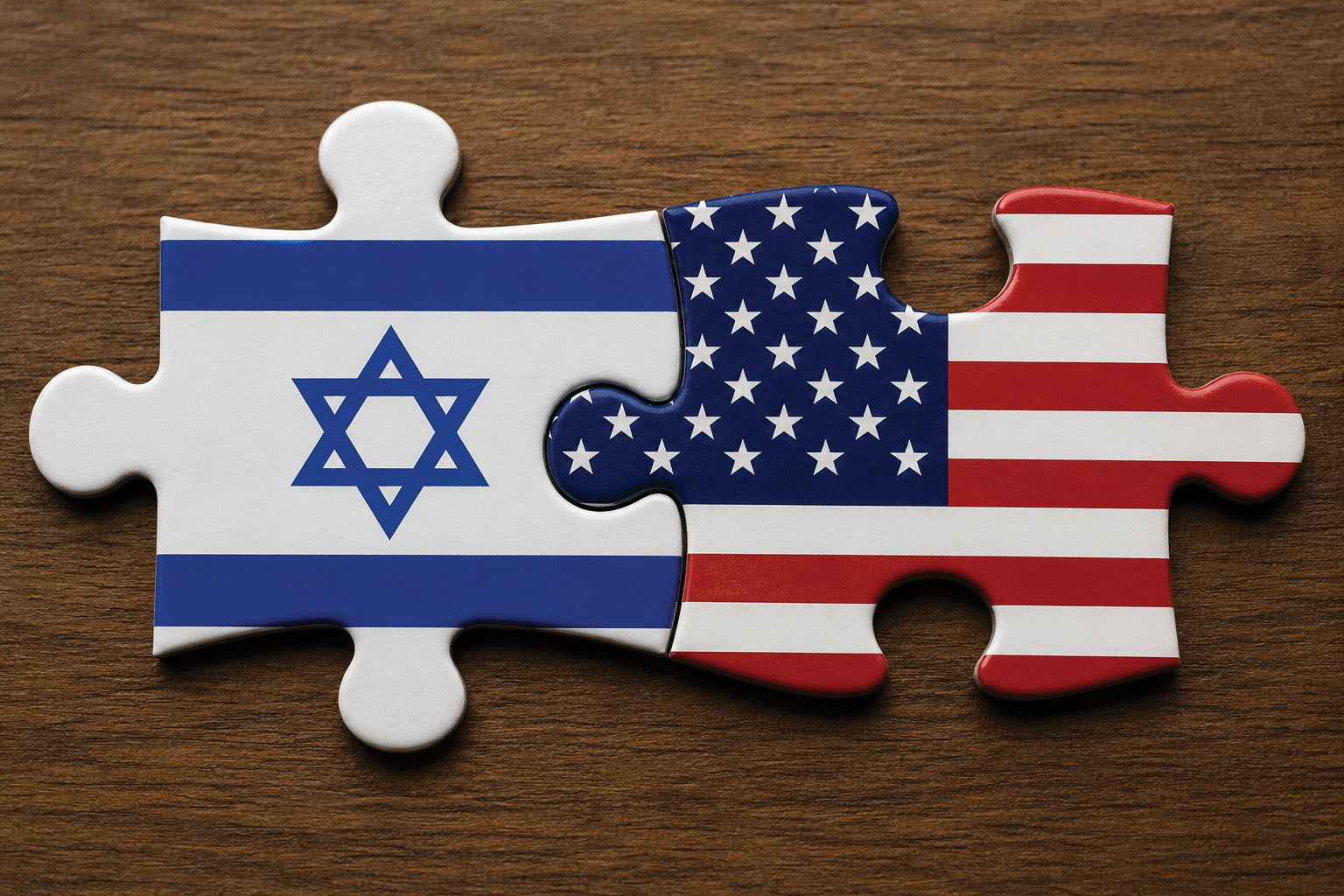
Israel’s relationship with the United States is a serious matter, and it is rarely easy to manage. This is true today in Lebanon, just as it was in Gaza. “Israeli officers recount that their American counterparts claimed any ground maneuver would require ‘turning cities to dust,'” writes veteran military analyst Amos Harel in his new book “06:29,” about the Oct. 7, 2023 massacre. The Americans warned against Israel’s decision to send forces into Khan Younis and Rafah. Israeli officers, Harel notes, believed that “the track record of the Americans and their allies against ISIS – where the casualty ratio stood at five civilians for every combatant – disqualified the United States from lecturing Israel on morality.”
This encapsulates an important part of the U.S.-Israel dynamic. First, there is the American condescension – they believe they know better and feel entitled to dictate how others should act. Second, there is the misunderstanding by Israelis who assume the relationship is built on symmetry: if the U.S. is allowed to do something, so are we. It is cooperation running parallel to mutual grumbling. When Israeli officers argue that Washington’s own history of civilian casualties strips it of the moral high ground, they are entirely right in principle – but entirely wrong in practice. They can still lecture Israel because they are the superpower, and superpowers decide what they can and cannot do. Israel is left with three choices: surrender to the American position, attempt to persuade the Americans or defy the American stance. Every decision carries consequences and a cost. At every crossroads, Israel must decide what is right based on the immediate circumstances.
Amid the current ongoing fighting in Lebanon (Israelis are now calling it The Cease Fire War) there is a growing resentment in Israel toward the U.S. dictate that limits Israel’s options to respond militarily as it wishes to do. Israel is operating in Lebanon under constraints, and is also under constrains in Iran and Gaza. Every front remains open, and progress on them is subject to the whims or calculations of the American president. Many Israelis feel this unacceptable situation.
And perhaps it is.
And yet, this situation cannot be judged solely against the Israeli ideal – which is total freedom of action and unyielding American support. It must be weighed against reality, where freedom of action and strategic support are inextricably linked. This calculus is complicated – it is doubtful whether any citizen without access to classified information can compute it.
Consider an example from Harel’s book: “The Americans halted the supply of one-ton precision bombs to the Air Force, limiting transfers to quarter-ton bombs instead.” This refers to the earlier stages of the Gaza war. Let’s imagine a current scenario: Israel decides to launch a operation in Lebanon against American wishes. Israel needs one-ton bombs to operate effectively, but Washington warns: defy us and you won’t get them. If Israel lacks the capacity to manufacture these munitions, the dilemma is stark. Israel can either proceed without the right weapons, or it can stand down as requested. Defiance might boost national morale or signal a boundary to American overreach, but the cost could be an ineffective military campaign, and a further erosion of U.S. support.
Should Israel declare the situation “unacceptable” and march forward, or bite its lip and wait? The instinctive response for many Israelis is to act, because the idea of being constrained in defending your security is deeply unsettling. But the correct answer is that while there are times Israel must act regardless of the diplomatic fallout, other times it has no choice but to accept the constraints and vent. There is no sweeping, definitive rule that applies to every case. There are only specific, case-by-case options.
Can Israel’s dependency on the U.S. be reduced? Yes, but it is a lengthy, costly process. Israel is not alone in navigating these waters. Other nations weigh the costs and benefits of their relationship with Washington. The Saudis can maneuver because of their wealth and energy resources. The Europeans have leverage because, if they chose to unify, they could form a rival superpower. The Australians have flexibility because they face no immediate threat.
Israel’s situation is unique – it is not a vassal state. But it is also not a country that can easily revolt against American dictates. David Ben-Gurion understood this after the 1956 Sinai Campaign. Golda Meir realized it at the end of the Yom Kippur War. Yitzhak Rabin saw it when he faced Kissinger’s pressure, Menachem Begin during the peace talks with Egypt, Yitzhak Shamir during the First Gulf War and Ariel Sharon during the Second Intifada.
Netanyahu, of course, understands this too. Does he bear responsibility for the fact that Israel’s hands have been tied due to political choices he made over recent years? Absolutely. Would Israel’s hands be any freer had he chosen differently? That’s far from certain. Can he unbind these chains and release Israel from the iron grip of Donald Trump? Don’t answer “yes” until you fully comprehend the price.
Something I wrote in Hebrew
Why would we find a correlation between Israelis who support civil marriage and Israelis who see climate change as real danger? There is a reason …
Of course, there is absolutely no connection between civil marriage and global warming. These are distinct issues that, on the surface, should have no bearing on one another. And indeed, when it comes to the other three threats [we asked about] – nuclear weapons, social networks and artificial intelligence – there is almost no consistent, clear link between the level of concern and other issues. But climate is a special case. That is because it has been put through the political ringer. Israelis (as well as Americans) do not evaluate the climate threat the way they do threats like nuclear weapons or networks; they look at the climate threat through the lens of political identity, where it is clearly aligned with an entire suite of other issues. Generally speaking, the situation is such that right-wing supporters are not worried about the climate, while center and left-wing supporters are (Center: 56% worried; Right: 21% worried).
A week’s numbers
Here’s what Israelis are telling themselves about you — Americans.
 A reader’s response
Mike Posens writes: “I’ve never worried about the future of Israel as I do now.” My response: Join the club. It’s a great club, with many Israelis as current members.
Shmuel Rosner is senior political editor. For more analysis of Israeli and international politics, visit Rosner’s Domain at jewishjournal.com/rosnersdomain.