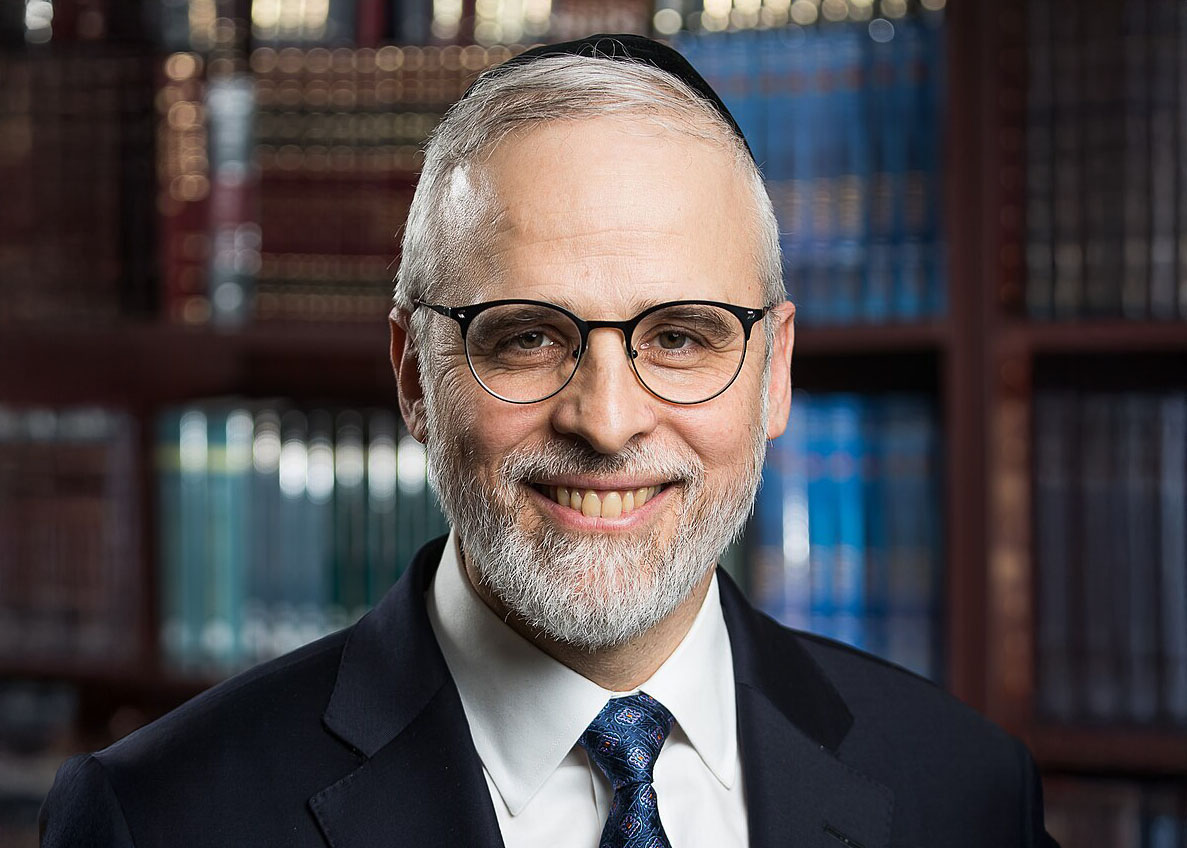
I remember exactly when I first heard from Rabbi Moshe Hauer. It was a Saturday night in early December 2021. “We have not met,” the email began, but he “wanted to express appreciation” for a legal brief I had written on behalf of the Orthodox Union (OU). The note was brief and characteristically gracious — and it was the first of many we would exchange in the years that followed. What stood out to him about the brief — and what would become a recurring theme in those many conversations — was how proud he was that it articulated “the embracing nature of religion in the life of an Orthodox Jew.” That line, and the pride he took in it, said everything about how he viewed faith: expansive rather than defensive, confident rather than cautious.
That short exchange was my introduction to a man whose reach across the Jewish world was extraordinary. So many people knew him far better than I did — students, rabbis, colleagues and friends who had spent decades learning from his wisdom and warmth. But from that very first note, his integrity came through unmistakably in all our conversations. His words reflected a conviction that religious life, at its best, could hold complexity without compromise, and that genuine leadership meant living one’s principles as naturally as one articulated them.
Over the next four years, we spoke regularly — typically when he asked me to take on a legal advocacy project for the OU — conversations that often turned to legal strategy and the halakhic and hashkafic principles that should guide it. Through that work, I came to see the consistency that defined him: he always led with principle. And he believed that the strength of one’s commitments could coexist with genuine openness — that integrity required both.
He sometimes called me his “advocacy chavrusah,” a title that captured the spirited debates that defined so many of our exchanges. We debated — sometimes intensely — how to frame an argument, where values should set limits, and when prudence should give way to principle. When we found ourselves on opposite sides of an issue, his persuasion was never forceful. Yet it was impossible to ignore. His arguments carried weight not because he insisted on being right, but because they reflected thoughtfulness and integrity. More than once, his clarity and conviction got me to change my mind, even on issues where I was certain of my own position. But that same integrity left him open to challenge. He listened with seriousness and was never afraid to change his mind when counterarguments demanded it. Sometimes he convinced me, sometimes I convinced him—but most of the time, after hashing out an issue, we realized that we didn’t actually disagree. For him, disagreement was never a threat to conviction; it was the way conviction was refined.
Over time, I began to realize that what made him such a powerful voice within OU— and far beyond it — was not only his intellect or eloquence, but the rare steadiness with which he lived his values. In a communal landscape too often marked by posturing and polarization, he modeled something different: conviction without rigidity, confidence without ego. He believed that ideas mattered, that words carried weight and that leadership required the courage to stand on principle even when consensus lay elsewhere. That combination of moral seriousness and genuine humility is what so many people saw in him — and why his passing has been felt in so many corners of Jewish life.
I will miss those opportunities to engage with him, to use his phrase, b’chavrusah. It is rare to find someone in Jewish communal leadership with so much to share and teach who also is so open to learning. But when wisdom and integrity are your calling cards, it can be no other way.
Yehei zichro baruch — may his memory be a blessing.
Michael A. Helfand is the Brenden Mann Foundation Chair in Law and Religion and Co-Director of the Nootbaar Institute on Law, Religion and Ethics at Pepperdine Caruso School of Law; Senior Fellow at the Shalom Hartman Institute; and Senior Legal Advisor to the Orthodox Union’s Teach Coalition.