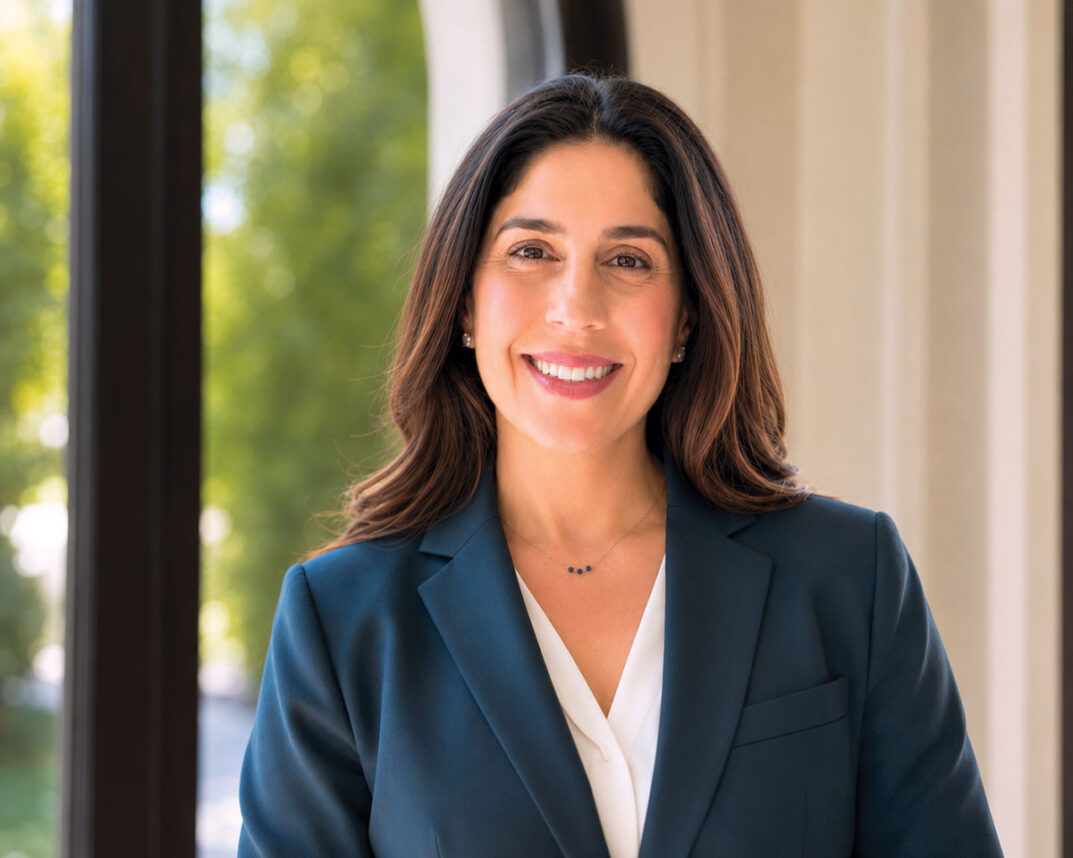
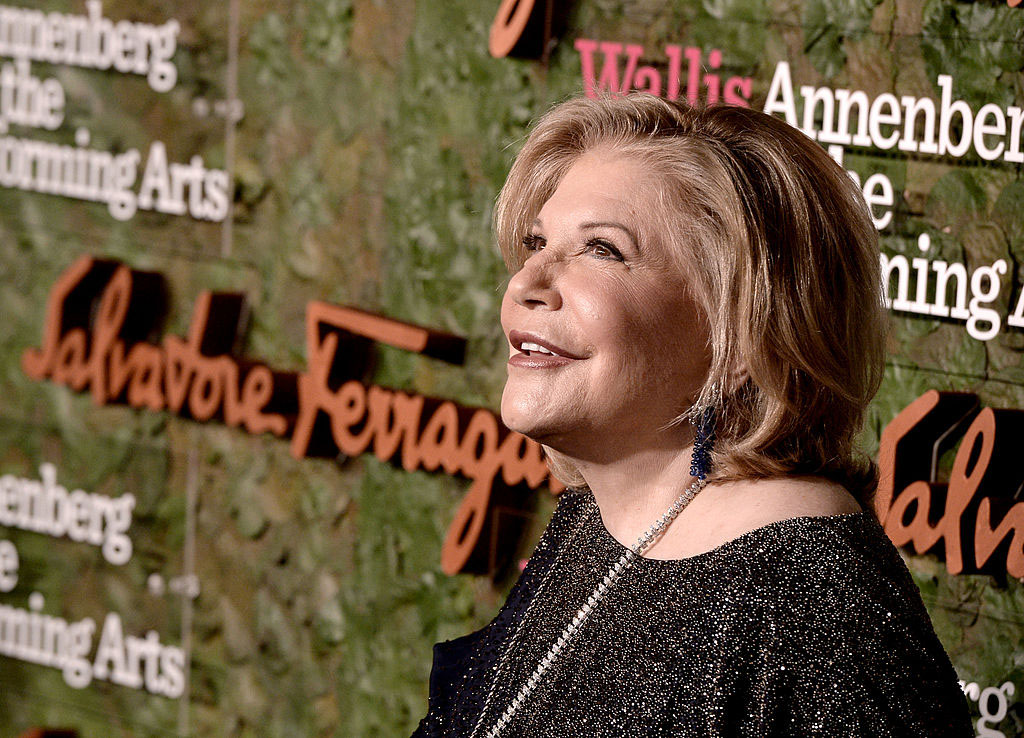
Wallis Annenberg, the longtime president and CEO of the Annenberg Foundation, and the namesake of the Wallis Annenberg Center for the Performing Arts in Beverly Hills, died July 28 at her home in Century City. She was 86. Her family said the cause was complications from lung cancer.
Annenberg joined the foundation’s board in 2002 after her father, Walter Annenberg, died. He had created it in 1989 after selling TV Guide and other publishing assets to Rupert Murdoch. She became president and CEO in 2009, following the death of her stepmother, Leonore.
During her tenure, the foundation distributed more than $3 billion to over 2,800 nonprofits, including major grants to organizations in healthcare, education, the arts, environmental protection, and civic life.
Annenberg was born on July 15, 1939, in Philadelphia. Her father published TV Guide, Seventeen, and the Daily Racing Form. Her mother, Bernice Veronica Dunkelman, came from a Canadian Jewish family in Toronto.
She graduated fourth in her class from Pine Manor Junior College in Massachusetts in 1959. She enrolled at Columbia University’s School of General Studies but left after meeting Seth Weingarten. They married in 1960 and had four children: Lauren, Roger, Gregory and Charles. They divorced in 1975.
In the 1980s, Annenberg publicly discussed her struggles with addiction and recovery. She spent time at the Betty Ford Center. “If you want to term it a wild phase, fine,” Annenberg told Vanity Fair in 2009. “I’m grateful for every one of the life experiences that I had. And I had them.”
After Walter Annenberg died in 2002, she became vice chair of the foundation and directed support toward Jewish institutions in Los Angeles. In 2007, she was honored by the USC Shoah Foundation Institute with its Ambassadors for Humanity Award. She supported Yiddishkayt’s Helix Fellowship, a residency “exploring Jewish and other marginalized histories in Eastern and Central Europe.” She also funded the expansion of the Annenberg School of Nursing at Los Angeles Jewish Health in Reseda. Annenberg’s name appears on dozens of civic and cultural projects throughout the city. These include the Wallis Annenberg Center for the Performing Arts in Beverly Hills, the Annenberg Community Beach House in Santa Monica, PetSpace in Playa Vista (an animal adoption center), and GenSpace (a senior community center in Koreatown).
When she formally took charge in 2009, Annenberg broadened the foundation’s priorities to include wildlife protection, disability access and senior citizen services. In 2016, it issued a $1 million challenge grant toward a wildlife crossing over the 101 freeway in Agoura Hills, followed by a $25 million gift in 2021. It is projected to be the largest wildlife crossing in the world when completed in 2026.
She was also a major donor to LACMA. In 2008, she gave $23 million to help the museum acquire the Marjorie and Leonard Vernon Collection of photography. She previously endowed the museum’s director position with a $10 million gift. She was a trustee at both LACMA and the Museum of Contemporary Art (MOCA).
At the University of Southern California, Annenberg served as the longest-standing trustee. She gave more than $360 million to the USC Annenberg School for Communication and Journalism, including funding for Wallis Annenberg Hall and a $10 million gift in 2017 to fund renovations. She also supported USC’s Annenberg Inclusion Initiative, which tracks representation across film and media.
In 2022, President Joe Biden awarded her the National Humanities Medal. Upon her passing, Biden said, “Wallis Annenberg was a remarkable person who transformed philanthropy in our Nation. Devoted to family and public service, she understood deeply that community is at the center of everything. She was a visionary giver and innovator who advocated for change with empathy and compassion.”
In her final year, Annenberg contributed to wildfire recovery efforts in Southern California. She pledged $100,000 to the Ventura County Community Foundation’s Mountain Fire fund, which provided direct aid to families affected by the blaze. She also partnered with the Wasserman Foundation on a $1 million grant to the Los Angeles Fire Department Foundation.
“Wallis believed in community – in supporting innovators who could create and scale environments that helped all in it, whether that meant older people facing social isolation, kids in need of support, pets needing a home, or wild animals trying to cross a dangerous freeway.” – Gov. Gavin Newsom
In a statement, Governor Gavin Newsom said, “Wallis believed in community – in supporting innovators who could create and scale environments that helped all in it, whether that meant older people facing social isolation, kids in need of support, pets needing a home, or wild animals trying to cross a dangerous freeway.”
She is survived by her four children and five grandchildren.