Sarah Josepha Hale, a 74-year-old magazine editor of Godey’s Lady’s Book and composer of “Mary Had a Little Lamb,” wrote a letter to President Lincoln on Sept. 28, 1863, urging him to solidify what had become an ad-hoc habit in America’s early years. A special day of gratitude, she felt, should have a set date. Hale petitioned to have the “day of our annual Thanksgiving made a National and fixed Union Festival.” She explained, “You may have observed that, for some years past, there has been an increasing interest felt in our land to have the Thanksgiving held on the same day, in all the States; it now needs National recognition and authoritative fixation, only, to become permanently, an American custom and institution.”
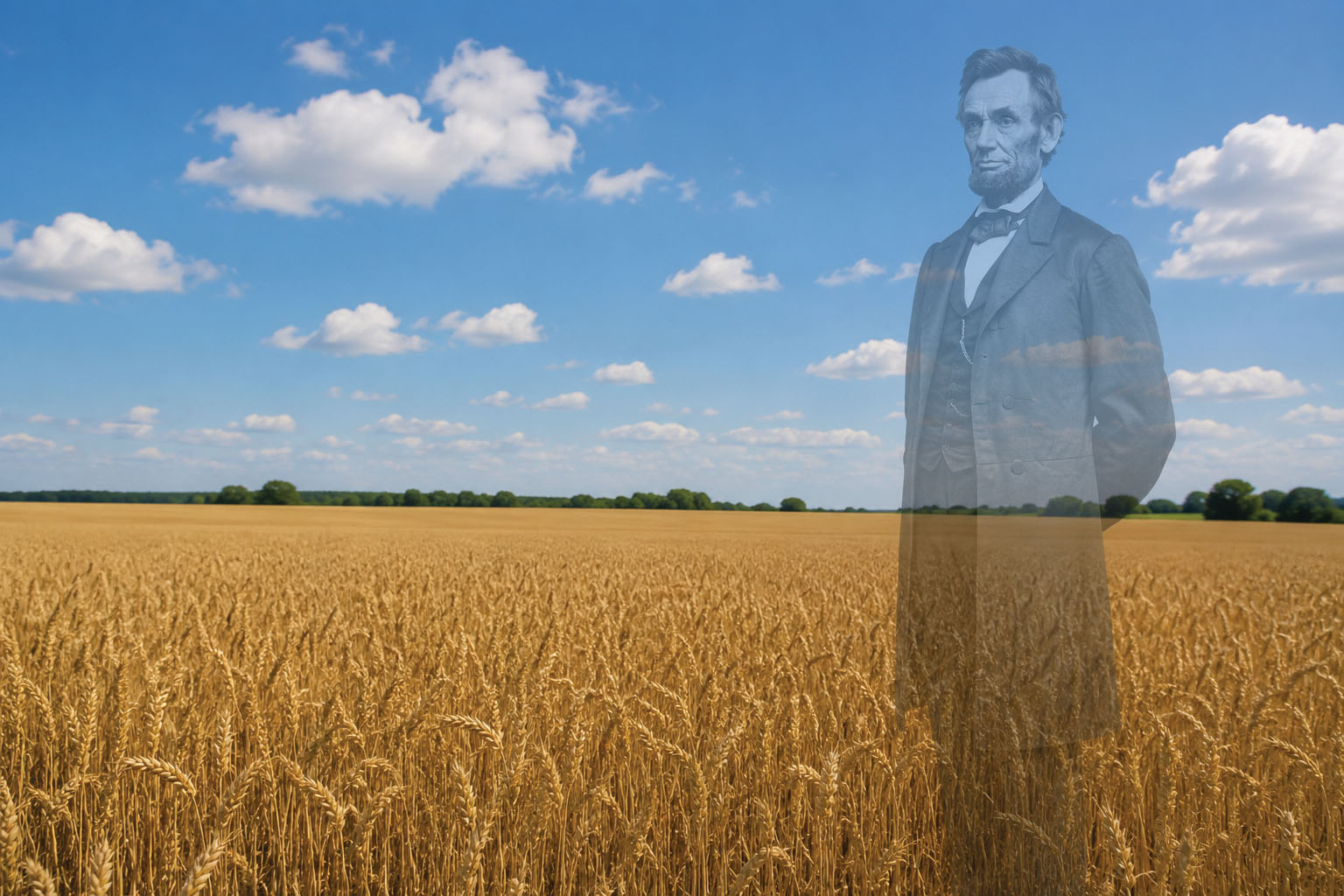
In conceiving of the holiday, Hale drew from the Jewish holiday that celebrates God’s giving of the Torah on Sinai, the spring-time harvesting of wheat and the bringing of the first fruits of the field to Jerusalem — Shavuot, called Pentecost in English. “The noble annual feast day of our Thanksgiving resembles, in some respects, the Feast of Pentecost, which was, in fact, the yearly season of Thanksgiving with the Jews,” she wrote in the pages of her magazine. Like the socially-unifying festivals of ancient Israel in which pilgrims would gather in the holy city, this American commemoration would be “a festival which will never become obsolete, for it cherishes the best affections of the heart – the social and domestic ties. It calls together the dispersed members of the family circle, and brings plenty, joy and gladness to the dwellings of the poor and lowly.” After, all, Deuteronomy 23:16 describes “the Feast of the Harvest, of the first fruits of your work, of what you sow in the field; and the Feast of Ingathering at the end of the year, when you gather in the results of your work from the field.”
Lincoln, mired in the middle of the Civil War, understood that even amidst the ravages of the conflict, there was still much to be thankful for. On Oct. 3, he issued the following proclamation, written by Secretary of State William Seward:
“The year that is drawing towards its close, has been filled with the blessings of fruitful fields and healthful skies. To these bounties, which are so constantly enjoyed that we are prone to forget the source from which they come, others have been added, which are of so extraordinary a nature, that they cannot fail to penetrate and soften even the heart which is habitually insensible to the ever watchful providence of Almighty God. In the midst of a civil war of unequalled magnitude and severity, which has sometimes seemed to foreign States to invite and to provoke their aggression, peace has been preserved with all nations, order has been maintained, the laws have been respected and obeyed, and harmony has prevailed everywhere except in the theatre of military conflict; while that theatre has been greatly contracted by the advancing armies and navies of the Union. Needful diversions of wealth and of strength from the fields of peaceful industry to the national defense, have not arrested the plough, the shuttle or the ship; the axe has enlarged the borders of our settlements, and the mines, as well of iron and coal as of the precious metals, have yielded even more abundantly than heretofore. Population has steadily increased, notwithstanding the waste that has been made in the camp, the siege and the battle-field; and the country, rejoicing in the consciousness of augmented strength and vigor, is permitted to expect continuance of years with large increase of freedom. No human counsel hath devised nor hath any mortal hand worked out these great things. They are the gracious gifts of the Most High God, who, while dealing with us in anger for our sins, hath nevertheless remembered mercy. It has seemed to me fit and proper that they should be solemnly, reverently and gratefully acknowledged as with one heart and one voice by the whole American People. I do therefore invite my fellow citizens in every part of the United States, and also those who are at sea and those who are sojourning in foreign lands, to set apart and observe the last Thursday of November next, as a day of Thanksgiving and Praise to our beneficent Father who dwelleth in the Heavens. And I recommend to them that while offering up the ascriptions justly due to Him for such singular deliverances and blessings, they do also, with humble penitence for our national perverseness and disobedience, commend to His tender care all those who have become widows, orphans, mourners or sufferers in the lamentable civil strife in which we are unavoidably engaged, and fervently implore the interposition of the Almighty Hand to heal the wounds of the nation and to restore it as soon as may be consistent with the Divine purposes to the full enjoyment of peace, harmony, tranquillity and Union. In testimony whereof, I have hereunto set my hand and caused the Seal of the United States to be affixed.”
Among the factors that Lincoln believed all Americans should be grateful for were foreign nations not exploiting the current conflict, the containment of the battles to the field and not the streets and the enlargement of both the country’s borders and its population. These, in a phrase undoubtedly inspired by Lincoln’s affinity for biblically-infused rhetoric, were undoubtedly, “the gracious gifts of the Most High God, who, while dealing with us in anger for our sins, hath nevertheless remembered mercy.”
Just like the grateful Israelites of old, humbly offering thanks for the bounty of their land as they bowed before God in appreciation of His blessings, Lincoln, inspired by Hale, established the yearly American practice of finding – amidst our personal and national battles – sources of brightness within them, and being thankful for them.
Rabbi Dr. Stuart Halpern is Senior Adviser to the Provost of Yeshiva University and Deputy Director of Y.U.’s Straus Center for Torah and Western Thought. His books include the newly released “Jewish Roots of American Liberty,” “The Promise of Liberty: A Passover Haggada,” “Esther in America,” “Gleanings: Reflections on Ruth” and “Proclaim Liberty Throughout the Land: The Hebrew Bible in the United States.”