fbpx

May 20, 2026

Israel’s Noam Bettan Finishes Second at Eurovision 2026

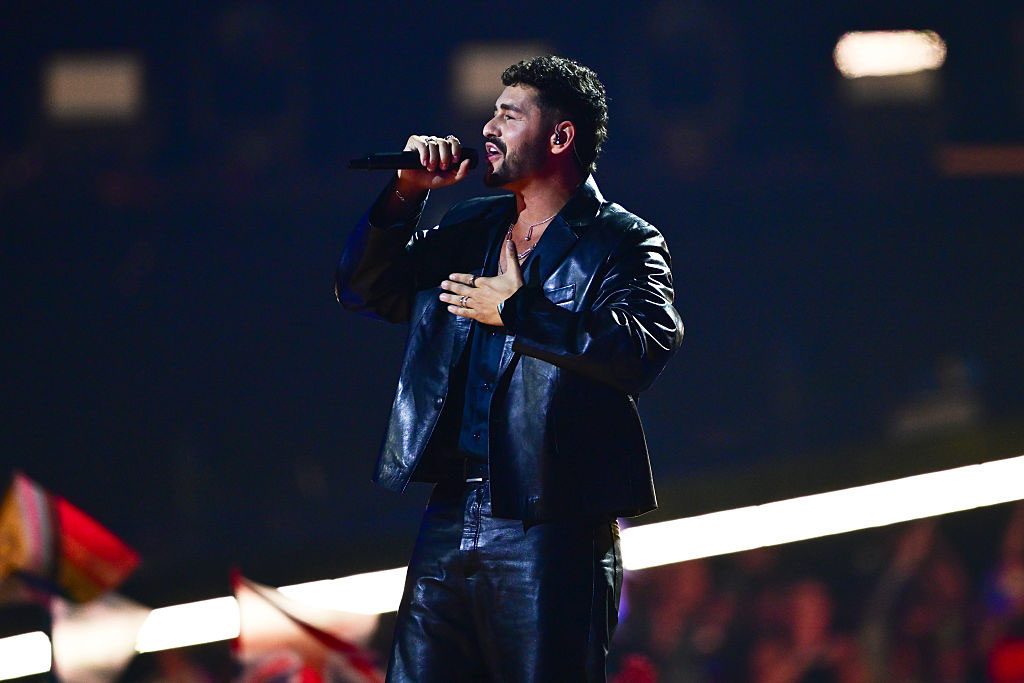
Israel’s Noam Bettan finished second at the Eurovision 2026 Grand Final in Vienna on May 16, giving Israel its second straight runner-up finish in the competition. Bettan performed “Michelle,” a Hebrew, French and English pop song, and finished with 343 total points: 220 from the public vote and 123 from national juries. Bulgaria’s DARA took first place with “Bangaranga.”

The result came four days after Bettan qualified for the Grand Final out of the first semifinal on May 12. Israel advanced alongside Greece, Finland, Belgium, Sweden, Moldova, Serbia, Croatia, Lithuania and Poland. It was the fifth time Israel qualified for the Eurovision final in the past six years.

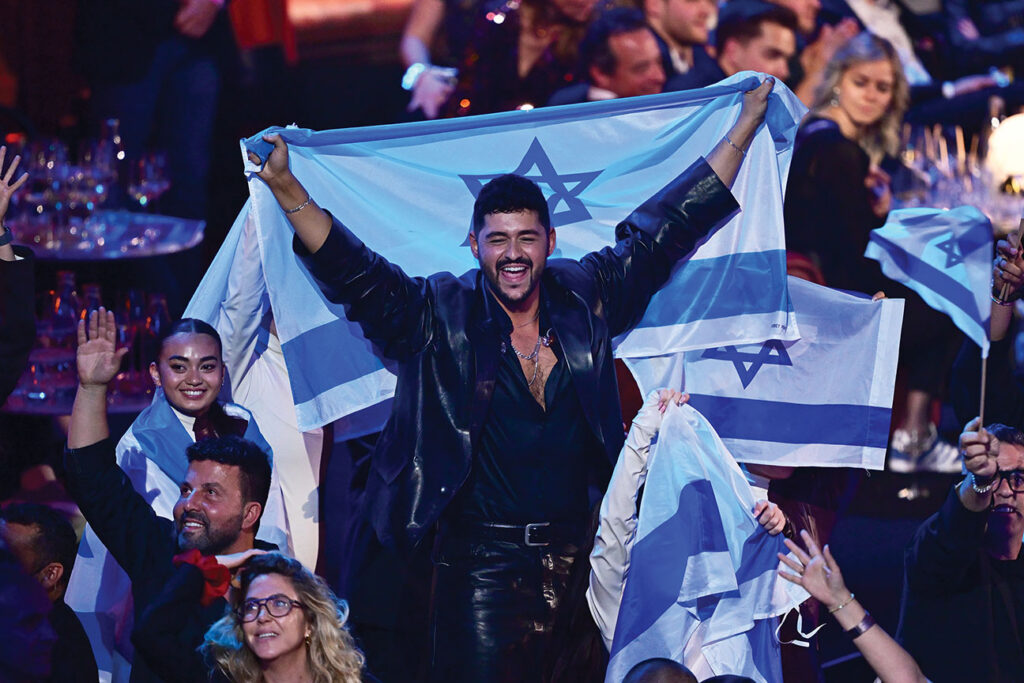
After the three-minute Grand Final performance, Bettan received applause from the audience at Vienna’s Wiener Stadthalle. Several Israeli flags were seen waving during the performance, and the cameras cut to fans wearing festive clothing adorned with Israeli flags.

He told Kan 11, “Wow, wow, wow. That was crazy. I felt more emotional than the previous times… I felt good, I felt I gave 100% in real time. It was crazy, it was fun, we’re done now… I love you, Am Israel Chai!”

On social media after taking second place, Bettan said, “I’m still processing everything and trying to find the words for this incredible journey. You guys are amazing and this is all because of you. I love every single one of you!” He added, “This is just the beginning, there are so many amazing things in the way!”

Israel briefly moved into first place during the results sequence after receiving its public-vote total. Bettan finished third in the televote, receiving the maximum 12 public-vote points from Finland, Portugal, Switzerland, Germany, Azerbaijan and France. The United Kingdom gave Israel 10 televote points, while Cyprus and Italy each gave Israel eight. Australia, Croatia and Lithuania were the only countries that gave Israel no audience points in the Grand Final.

Israel received fewer top public-vote scores than last year. Six countries gave Israel 12 televote points this year, compared with 12 countries that gave Israel the top public score in 2025. Israel also did not win the “Rest of the World” vote for the first time since that vote was introduced in 2023. It finished fifth in that bloc with six points.

The jury vote also helped Bettan. Poland’s jury gave Israel 12 points, while Ukraine gave Israel 10. Lithuania, Austria, Albania and Moldova each gave Israel eight jury points. Israel received jury points from 22 of the 34 voting countries, compared with 14 of 36 countries for Yuval Raphael in 2025. Bettan’s 123 jury points more than doubled Raphael’s jury total of 60 points last year.

Israel’s own votes also went to the eventual winner. The Israeli public gave Bulgaria 12 points, followed by Australia with 10, Moldova with eight, Italy with seven and Denmark with six. Israel’s professional jury gave its top score to Australia’s Delta Goodrem for “Eclipse,” followed by Denmark, Bulgaria, Finland, Moldova and Greece. Israeli mentalist Lior Suchard announced Israel’s jury results during the broadcast.

Before taking the stage, Bettan told Kan 11, “I feel good, I’m excited, I’m relaxed at the moment.” During Saturday’s rehearsal, Bettan said he heard boos that were “the loudest I ever heard,” but said many fans were cheering him on. “And we’re doing it for them,” Bettan said.

As with years past, there were some jeers from the live audience. During the final rehearsal before the live semifinal broadcast, Palestinian flags were seen in the crowd. During the live broadcast, chants of “stop the genocide” could be heard. The Austrian newspaper Österreich reported that two people disrupting the show were ejected by security. Bettan’s weeks of rehearsals included preparation for boos and a hostile reception.

Still, during Bettan’s final performance, there did not appear to be any noticeable disruption during the broadcast.

The song opens with Bettan singing over arpeggiated acoustic guitar. In the first verse, as he sings the lyrics “Oh Michelle,” dancer Lihi Freud appears by his side inside a diamond-shaped mirror stage prop. Bettan was wearing a black shirt under a black jacket with black leather pants. The spinning diamond then opened as the song’s first verse kicked up. They were then joined on stage by four backup dancers wearing half black, half white singlets.

Bettan is a 28-year-old singer-songwriter born in Ra’anana, Israel, to a French family. His breakout hit, “Buba,” was released in 2022 and has over 9 million listens on Spotify. His solo album “Me’al HaMayim” was released the following year.

Bettan secured his Eurovision spot by winning Israel’s reality singing competition “Rising Star” on January 20. He sang a cover of French pop star Indila’s “Dernière Danse” (“Last Dance”).

“Michelle” is a ballad about leaving a toxic relationship. Like Yuval Raphael’s “New Day Will Rise” at Eurovision in 2025, Bettan’s Eurovision song has lyrics in Hebrew, English and French. Raphael, a survivor of the Nova Festival massacre, took second place at Eurovision last year and is a co-writer of “Michelle.” Israel’s 2024 entry, “Hurricane” by Eden Golan, took fifth place. Bettan’s song is the first song since Noa Kirel’s “Unicorn” to not have any direct reference to the attacks of Oct. 7, 2023.

The song was selected for Bettan by an internal Kan Television committee from more than 200 submissions. Bettan told reporters after the selection that Israel was ready for “a different kind of energy” after sending several ballads in recent years.

Bettan also received support from other entertainment figures during Eurovision week. DARA, who won for Bulgaria, liked a clip of Bettan’s rehearsal performance. Before the final, Gal Gadot sent Bettan a video greeting and told him not to let the booing rattle him. “They don’t have any power over you… You’re amazing, and you’re talented, and we’re all behind you,” Gadot said.

Five countries boycotted this year’s Eurovision contest over Israel’s inclusion: Iceland, Spain, Slovenia, Ireland and the Netherlands. Ireland, Slovenia and Spain also said they would not broadcast the contest, while Iceland still planned to air it and the Netherlands’ sister broadcasters NOS and NTR planned to carry it through NPO 1.

In Vienna, organizers had given each competing country a themed café. According to the Jerusalem Post, Israel’s café was vandalized before the semifinal with anti-Israel graffiti found on a bathroom wall; it was removed after police arrived. Café owner Liza Vigenstein downplayed the incident, saying Vienna was full of security and “felt safer than Berlin.”

Anti-Israel protests also took place in Vienna throughout the week. Police increased security around the contest, barred protests near the 16,000-seat arena and banned all political materials besides national flags. Austrian police also assigned two elite units to protect the Israeli delegation. Ynet reported that hundreds attended the protest, which was billed as a “concert against genocide” under the slogan “No Stage for Genocide.”

Creative Community for Peace said the result showed public rejection of the cultural boycott of Israel. “The Eurovision Song Contest results sent a resounding message: the public rejects the cultural boycott of Israel,” the organization said. “Despite months of coordinated pressure, intimidation campaigns, and calls to exclude Israel from the competition, audiences across Europe and around the world delivered one of the strongest public vote totals of the night in support of Israel’s entry and contestant, Noam Bettan.”

Israel has participated in Eurovision since 1973 and has won four times: 1978, 1979, 1998 and 2018. Bettan’s second-place finish gives Israel a second straight runner-up result and another strong public-vote showing after recent entries by Noa Kirel, Eden Golan and Yuval Raphael.

Israel’s Noam Bettan Finishes Second at Eurovision 2026 Read More »

Shavuot, the Source of American Gratitude

Sarah Josepha Hale, a 74-year-old magazine editor of Godey’s Lady’s Book and composer of “Mary Had a Little Lamb,” wrote a letter to President Lincoln on Sept. 28, 1863, urging him to solidify what had become an ad-hoc habit in America’s early years. A special day of gratitude, she felt, should have a set date. Hale petitioned to have the “day of our annual Thanksgiving made a National and fixed Union Festival.” She explained, “You may have observed that, for some years past, there has been an increasing interest felt in our land to have the Thanksgiving held on the same day, in all the States; it now needs National recognition and authoritative fixation, only, to become permanently, an American custom and institution.”

In conceiving of the holiday, Hale drew from the Jewish holiday that celebrates God’s giving of the Torah on Sinai, the spring-time harvesting of wheat and the bringing of the first fruits of the field to Jerusalem — Shavuot, called Pentecost in English. “The noble annual feast day of our Thanksgiving resembles, in some respects, the Feast of Pentecost, which was, in fact, the yearly season of Thanksgiving with the Jews,” she wrote in the pages of her magazine. Like the socially-unifying festivals of ancient Israel in which pilgrims would gather in the holy city, this American commemoration would be “a festival which will never become obsolete, for it cherishes the best affections of the heart – the social and domestic ties. It calls together the dispersed members of the family circle, and brings plenty, joy and gladness to the dwellings of the poor and lowly.” After, all, Deuteronomy 23:16 describes “the Feast of the Harvest, of the first fruits of your work, of what you sow in the field; and the Feast of Ingathering at the end of the year, when you gather in the results of your work from the field.”

Lincoln, mired in the middle of the Civil War, understood that even amidst the ravages of the conflict, there was still much to be thankful for. On Oct. 3, he issued the following proclamation, written by Secretary of State William Seward:

“The year that is drawing towards its close, has been filled with the blessings of fruitful fields and healthful skies. To these bounties, which are so constantly enjoyed that we are prone to forget the source from which they come, others have been added, which are of so extraordinary a nature, that they cannot fail to penetrate and soften even the heart which is habitually insensible to the ever watchful providence of Almighty God. In the midst of a civil war of unequalled magnitude and severity, which has sometimes seemed to foreign States to invite and to provoke their aggression, peace has been preserved with all nations, order has been maintained, the laws have been respected and obeyed, and harmony has prevailed everywhere except in the theatre of military conflict; while that theatre has been greatly contracted by the advancing armies and navies of the Union. Needful diversions of wealth and of strength from the fields of peaceful industry to the national defense, have not arrested the plough, the shuttle or the ship; the axe has enlarged the borders of our settlements, and the mines, as well of iron and coal as of the precious metals, have yielded even more abundantly than heretofore. Population has steadily increased, notwithstanding the waste that has been made in the camp, the siege and the battle-field; and the country, rejoicing in the consciousness of augmented strength and vigor, is permitted to expect continuance of years with large increase of freedom. No human counsel hath devised nor hath any mortal hand worked out these great things. They are the gracious gifts of the Most High God, who, while dealing with us in anger for our sins, hath nevertheless remembered mercy. It has seemed to me fit and proper that they should be solemnly, reverently and gratefully acknowledged as with one heart and one voice by the whole American People. I do therefore invite my fellow citizens in every part of the United States, and also those who are at sea and those who are sojourning in foreign lands, to set apart and observe the last Thursday of November next, as a day of Thanksgiving and Praise to our beneficent Father who dwelleth in the Heavens. And I recommend to them that while offering up the ascriptions justly due to Him for such singular deliverances and blessings, they do also, with humble penitence for our national perverseness and disobedience, commend to His tender care all those who have become widows, orphans, mourners or sufferers in the lamentable civil strife in which we are unavoidably engaged, and fervently implore the interposition of the Almighty Hand to heal the wounds of the nation and to restore it as soon as may be consistent with the Divine purposes to the full enjoyment of peace, harmony, tranquillity and Union. In testimony whereof, I have hereunto set my hand and caused the Seal of the United States to be affixed.”

Among the factors that Lincoln believed all Americans should be grateful for were foreign nations not exploiting the current conflict, the containment of the battles to the field and not the streets and the enlargement of both the country’s borders and its population. These, in a phrase undoubtedly inspired by Lincoln’s affinity for biblically-infused rhetoric, were undoubtedly, “the gracious gifts of the Most High God, who, while dealing with us in anger for our sins, hath nevertheless remembered mercy.”

Just like the grateful Israelites of old, humbly offering thanks for the bounty of their land as they bowed before God in appreciation of His blessings, Lincoln, inspired by Hale, established the yearly American practice of finding – amidst our personal and national battles – sources of brightness within them, and being thankful for them.


Rabbi Dr. Stuart Halpern is Senior Adviser to the Provost of Yeshiva University and Deputy Director of Y.U.’s Straus Center for Torah and Western Thought. His books include the newly released “Jewish Roots of American Liberty,” “The Promise of Liberty: A Passover Haggada,” “Esther in America,” “Gleanings: Reflections on Ruth” and “Proclaim Liberty Throughout the Land: The Hebrew Bible in the United States.”

Shavuot, the Source of American Gratitude Read More »

Barri Worth Girvan: Leading Jewishly in LA

At a time of record antisemitism, the only Jewish candidate in the City Council race has already spent two decades fighting for LA’s Jewish community

Proper Jewish representation in Los Angeles County is difficult to find, despite Los Angeles being home to the second-most Jews in the United States and third most in the world. In the upcoming Los Angeles City Council race, lifelong Jewish activist and civil servant Barri Worth Girvan is the only Jewish candidate, with a record to show for it.

Barri Worth Girvan has always been the Jewish voice in the room—not when it was convenient or politically opportune. In fact, Girvan seems to find herself there when it is not.

She has spent her career in a dogged fight against antisemitism, championing Los Angeles’ Jewish community in her synagogue, at the Jewish Federation, alongside the Mayor, lobbying State Senators, and funding county initiatives—all for the community that raised her.

Girvan is campaigning to represent the West Valley, where she has lived her entire life. She grew up at Temple Judea in Tarzana, where she was active in youth programs. Now, as a mother of three children at Temple Judea, she has served on the Ethics Committee and was the youngest member ever elected to the Board of Trustees.

Salt Lake City Rabbi Samuel L. Spector began his career at Temple Judea, where he worked alongside Girvan.

“Barri Worth Girvan is one of the people that rabbis dream of having in their community; she is a millennial with over a decade involved in synagogue and Jewish communal leadership, and has a deep love and pride for her Jewish faith and heritage, and her commitment to speaking up against antisemitism whether it is local or global,” he said.

After graduating from UC San Diego, she worked for the Shalom Institute, becoming the  administrative director when it first separated from the Jewish Federation.

“She leads with thoughtfulness, compassion, and a strong sense of purpose. At a time when trusted leadership matters more than ever, voices like Barri’s are important in helping communities feel heard and represented,” Rabbi Bill Kaplan, CEO of the Shalom Institute, said.

For five years, she worked in LA Mayor Antonio Villaraigosa’s office as the Mayor’s Jewish Liaison, overseeing the city’s relationship with the Jewish community.

During her tenure, she led several “firsts” for Los Angeles, including raising the Israeli flag on Wilshire for Israel’s 60th anniversary, starting citywide Hanukkah and Passover celebrations, condemning the 2010 flotilla incident and hosting Israeli dignitaries.

In 2013, Girvan began leading political initiatives of her own. She led the first non-Jewish delegation of California elected officials to Israel through the Jewish Federation and lobbied on behalf of the federation as an executive board member of the Jewish Political Action Committee (JPAC).

“Her Jewish identity is not separate from her service; it is the foundation of her commitment to serve,” Rabbi Sarah Hronsky of Temple Beth Hillel and former President of the Board of Rabbis of Southern California said.

She later worked with the State Senate, earning funding for Jewish Family Service LA’s food pantry program and for Jewish summer camps destroyed in the 2018 fires. She lobbied with the California Jewish Caucus to fund the Museum of Tolerance, Holocaust Museum LA, and nonprofit security grants, and fought against policies tied to the Boycott, Divestment, Sanctions (BDS) movement.

“Barri is smart, effective and deeply committed to our community. I am confident she will be an engaged and effective advocate for our community, and I am proud to endorse Barri for LA City Council,” Assemblymember and CA Legislative Jewish Caucus Chair Jesse Gabriel said.

Most recently, Girvan worked at the county level, leading Jewish public safety initiatives before October 7, securing $123,000 for the Federation’s Community Security Initiative and writing “bubble zone” motions to protect houses of worship. After the Palisades Fire, she led Federation leadership into the burn area to assess synagogue damage and community needs.

In a cultural space muddled with virtue signaling and political buzzwords, Barri Worth Girvan has unequivocally supported Los Angeles’ Jews and Israel. She lives by “tikkun olam” — “repairing the world” — a Jewish value that is, at its core, simply a human one. She is not solely the “Jewish candidate for City Council,” but the one most equipped to represent the Valley community she has served since childhood.

“For more than twenty years, I have worked in public service to connect our community and ensure we have a voice,” Girvan said. “I am deeply concerned that antisemitism and hate have reached record highs, and I am standing up to continue my work to elevate our voice. Representation matters.”

Barri Worth Girvan: Leading Jewishly in LA Read More »

Can Harvard Confront the Campus Climate It Helped Create?

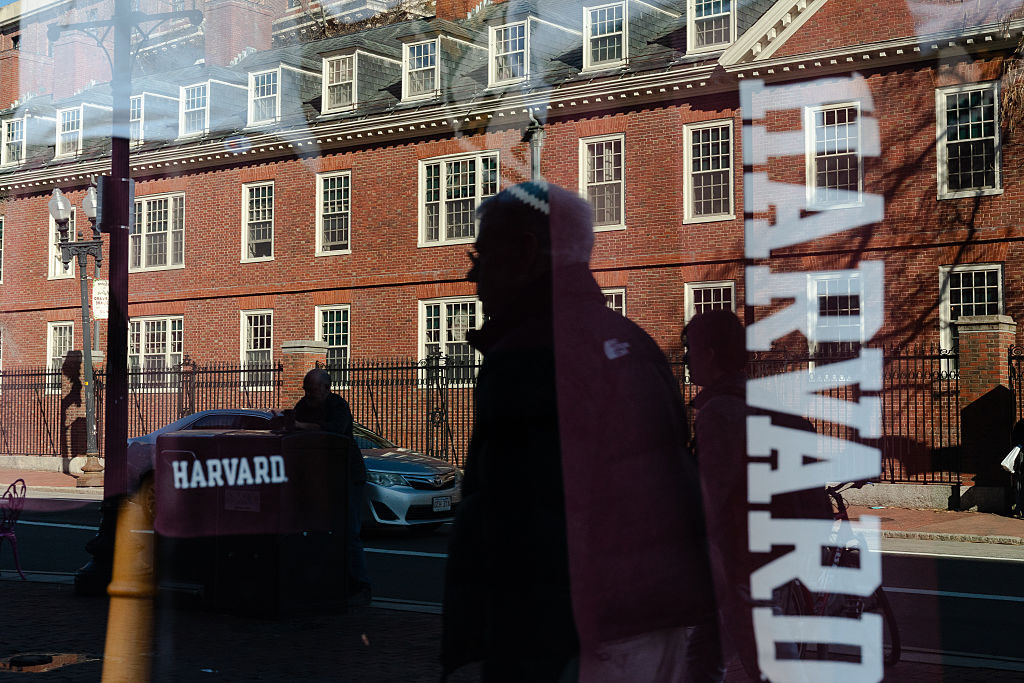
Harvard University is ending this academic year under mounting scrutiny over antisemitism, facing federal lawsuits, public criticism, and growing questions about whether its leadership is willing to confront the campus culture many Jewish students say has become increasingly hostile.

The latest development came this week, when Harvard asked a federal judge to dismiss the Department of Justice’s antisemitism lawsuit against the university, arguing that the government’s claims were legally deficient and based on outdated allegations.

The legal battle has become one of the clearest examples of the growing national conflict between elite universities and federal authorities over antisemitism and institutional accountability. But beyond the courtroom, it has also forced a broader question into public view: How did one of the world’s most influential universities allow concerns about antisemitism and ideological intimidation to escalate to this point in the first place?

The DOJ Lawsuit Put Harvard’s Campus Climate Under National Scrutiny

In March, the Department of Justice formally sued Harvard University, accusing the institution of failing to adequately protect Jewish and Israeli students from harassment and discrimination following the October 7 attacks and the subsequent campus unrest that spread across American universities.

According to the federal complaint, Jewish and Israeli students faced exclusion from social spaces, disruption of campus life, and an environment in which university policies were enforced inconsistently. The lawsuit further alleged that Harvard failed to meaningfully discipline some of the most disruptive conduct that emerged during the protests.

The lawsuit intensified concerns that Harvard’s response to antisemitism has been largely reactive, driven more by external pressure than by a willingness to confront the campus culture that allowed tensions to escalate. Those concerns deepened further after a federal judge allowed the DOJ lawsuit to proceed, rejecting Harvard’s effort to distance the case from earlier antisemitism-related litigation.

Alan Garber Acknowledged the Problem Without Fully Addressing Its Source

Harvard President Alan Garber recently expressed concern about what he described as widespread “ignorance” among students debating the Israeli-Palestinian conflict.

But ignorance does not emerge in a vacuum.

For years, parts of Harvard’s academic and activist ecosystem have contributed to an increasingly politicized environment surrounding Israel and Zionism. Faculty-backed events, petitions, and public statements have often blurred the line between scholarship and activism while retaining the legitimacy of academic discourse.

The result has been a campus climate where many Jewish students feel rhetoric directed against Israel, Zionism or Israelis is normalized in ways that would likely trigger far greater institutional concern in other contexts.

This is precisely the contradiction Harvard still appears reluctant to confront directly. The administration has acknowledged rising tensions and concerns about antisemitism, yet it has largely avoided addressing how parts of the university’s own intellectual and institutional culture may have contributed to those conditions.

Faculty Controversies Continue to Fuel Debate Over Harvard’s Campus Climate

Concerns about campus culture have also been amplified by a series of faculty-linked controversies that many Jewish students and alumni believe Harvard has failed to address seriously or consistently.

Among the most debated figures are Diana Buttu, who said that Hamas had no real “choice” in launching the October 7 attacks and framed the war almost entirely as Israeli “genocide”; Karameh Kuemmerle, who has faced scrutiny for promoting highly contested genocide accusations while minimizing Hamas’ responsibility for the conflict; and Vijay Iyer, who portrayed Israel and its supporters as “the most powerful people on the planet” engaged in “evil, deranged state-sponsored terror.”

The issue is no longer simply about individual faculty opinions. At the center of the debate is whether Harvard has developed an institutional culture in which certain forms of ideological activism are increasingly treated as professionally insulated from scrutiny, even when many students view the resulting rhetoric as intimidating, exclusionary, or openly hostile.

At a university as globally influential as Harvard, institutional silence does not remain neutral indefinitely. Over time, the absence of visible accountability can begin to shape the broader campus culture itself.

Harvard’s Reputation Is Now Tied to How It Handles This Crisis

Harvard has long positioned itself as a global symbol of intellectual rigor, academic leadership, and moral credibility. But over the past two years, the university has increasingly become associated with federal investigations, lawsuits, campus unrest, and growing public concern over antisemitism in higher education.

The university now finds itself in a position where statements of concern are no longer enough.

The university now finds itself in a position where statements of concern are no longer enough.

What many students, alumni, and outside observers are waiting to see is whether Harvard is willing to confront not only isolated incidents, but also the broader academic and institutional environment that allowed these tensions to deepen in the first place.

That is the real challenge now facing Alan Garber and Harvard’s leadership. How Harvard responds may ultimately shape not only its own reputation, but also the national debate over antisemitism, academic freedom, and institutional accountability in higher education.

Can Harvard Confront the Campus Climate It Helped Create? Read More »

The Dog-Rape Libel Perpetuates Antisemitic Rape Culture – and Palestinian Rape Mania

Since Nicholas Kristof charged in The New York Times that there’s “a pattern of widespread Israeli sexual violence” against Palestinians, many analysts have questioned Kristof’s sources, uncovered their biases, tracked how some testimonies changed. The most egregious act of journalistic malpractice, however, was the Times’ editorial failure to question – let alone prove – what veterinarians say is a biological impossibility: that a “dog mounted” a prisoner, as part of an intentional IDF campaign of canine rapes. Kristof clearly wanted to make history; he did. His dog-rape libel will long resound as the latest despicable chapter in a 1,000-year history of Jew-hating rape culture, wherein falsely charging Jewish perversion rationalizes abusing Jews perversely.

The aversion to Jews runs deep. Traditionally, many pious Christians and Muslims, stung that Jews rejected the “true” faith, decided that Jews must be particularly sinister. And with so many Jews looking like their neighbors – yet believing and acting differently – bigots project onto these strange intimates their sickest fantasies, then commit those very crimes against Jews.

Like so many prejudice-driven slanders, the Jew-haters’ most infamous medieval accusation, the blood libel, had a sexual dimension. The lie about Jews drawing Christian blood for matzah was absurd enough. But the alleged victims were often young boys – with claims of castration and other forms of genital mutilation reflecting many medieval Christians’ circumcision anxiety.

Antisemitic sculptures in churches and castles, stretching back to 13th-century Germany, the Judensau – the Jews’ sow – depicted Jews coupling with pigs, symbolizing the devil.

The philosopher Jonah Cohen calls centuries of depictions of Jews “as perverse, predatory, pornographic, horny vampires of the Orient,” the “lust libel.” These slurs are “likely rooted in a mental process known as ‘projective inversion’ whereby ‘A accuses B of a misdeed which A really wishes to carry out him or herself.’” The brutal accusations — no matter how false – rile up the haters to act out their sick thoughts.

Tragically, these and other mainstreamed-lies unleashed many pogroms over centuries – mixing mass rape with mass murder. In the April 1903 Kishinev Pogrom – which scandalized Americans – brutes on Russian Orthodox Easter Sunday slaughtered 49 Jews, while raping dozens, possibly hundreds. Accounts describe sadistic gang-rapes of neighbors, frequently perpetrated in front of husbands, children and parents.

Characteristically, the Nazis took these perversions to a mass scale. Their obsession with Jewish impurity and deviance reeked of sexual anxiety. Germany’s Race Defilement Laws offered to protect Aryan “maidens” from Jewish men caricatured as sexual predators, debasing the women – and their race. Paradoxically, the Nazis’ dehumanizing contempt for their victims didn’t stop them from raping Jewish girls, even forcing them to be mistresses and prostitutes, on an inconceivable scale.

Rapes during anti-Jewish riots were not only a European affliction. The Damascus Blood Libel imported medieval Christian lies about the Jews to Syria in 1840, decades before Theodor Herzl launched the formal Zionist movement.  This June will mark the 85th anniversary of the Farhud of 1941 in Iraq, particularly Baghdad. “Farhud,” the historian Edwin Black explains, is Arabized Kurdish for “violent dispossession,” although “some translate it as ‘mass rape and killing.’” Pro-Nazi Iraqi soldiers and policemen spearheaded the riots, murdering at least 128 Jews, injuring 600 others and raping hundreds. In his 2010 book, “The Farhud: Roots of the Arab-Nazi Alliance in the Holocaust,” Black details: “Women were defiled everywhere. Arabs broke into the girls’ school and the students were raped – endlessly. … One young girl was raped – and then her breasts [were] slashed off – an all too typical crime that day.”  Those horrors effectively ended the proud history of Jews in Iraq, stretching back 2500 years to the Sixth Century, BCE.

In their century-long struggle against Zionism, the Palestinian national movement has embraced and updated this revolting mix of often sexually-charged blood libels and barbaric sex crimes. Oct. 7, 2023, and these latest lies, are the culmination of this growing sexual obsession and glorification of gendered violence against the Jews.

On Aug. 24, 1929, stoked by the Grand Mufti of Jerusalem, Hajj Amin al-Husseini, crying to avenge “the honor of Islam,” rioters ended centuries of peaceful Arab-Jewish coexistence in Hebron. They massacred 67 Jewish residents, while raping, castrating, brutalizing others. The journalist Pierre van Paassen, a Unitarian minister, would recall in his best-selling 1939 autobiography, “Days of Our Years,” entering a home that “looked like a slaughterhouse,” with “severed sexual organs” and “cut-off women’s breasts … lying scattered over the floor and in the beds.” The house was looted.  Not “a single item has been left intact except a large black-and-white photograph of Dr. Theodor Herzl, the founder of political Zionism. Around the picture’s frame the murderers had draped the blood-drenched underwear of a woman.”

Some historians speculate that such violence hastened the Jewish timetable in campaigning for a state, years before the Holocaust. The viciousness also helped build the Zionist cult of the muscular, unapologetic New Jew. Exorcising European Jewish cowardice, Zionist pioneers refused to be intimidated by their new Arab neighbors – many of whom were flocking to Palestine from other Arab and Muslim lands, as it flourished.

In the Middle East too, Jew-haters used the calumnies against Jews to justify the worst kind of anti-Jewish violence. “Rape culture” acknowledges the sometimes hidden messages, disrespectful assumptions, “boys will be boys” apologetics that greenlight sexual violence. As the Arab-Israeli conflict intensified, Arab and Palestinian sexual accusations and calls became increasingly bellicose. The traditional antisemitic rape culture fueled a Palestinian rape mania.

Israel’s founding spawned one of the Palestinians’ founding lies, their Ur-Blood Libel: Deir Yassin. In the 1970s, when Palestinian terrorists butchered schoolkids and Olympic athletes, they – and their supporters – cried “remember Deir Yassin!” It’s true, Jewish irregulars attacked that village in April, 1948. But Arabs then accused the Jews of massacring 254 Arabs, including 25 pregnant women, 50 breast-feeding mothers, 60 other women – while raping and mutilatingmany others. In their still-defining book on 1948, “O Jerusalem,” Larry Collins and Dominique Lapierre described Jews cutting open a pregnant woman’s stomach “with a butcher’s knife,” and slashing at least two people “from head to toe,” as they “killed” and “looted,” then, “finally they raped.”

In 2021, however, Professor Eliezer Tauber published “The Massacre that Never Was: Deir Yassin and the Creation of the Palestinian Refugee Problem.” Tauber, who founded Bar-Ilan University’s Department of Middle Eastern Studies, backed 208 pages of text with nearly 100 pages of Arab, Israeli and British sourcing.

After describing fierce fighting from both sides, Tauber meticulously counted 101 Arab deaths, most “killed under battle conditions.” Ayish Zeidan, who was a teenager living in Deir Yassin in 1948, told a reporter 50 years later: “I believe that most of those who were killed were among the fighters and the women and children who helped the fighters.” As for the rape accusation, Zeidan insisted: “this is not true.”

Tauber quotes members of the Arab Higher Committee urging colleagues to give the battle “the utmost propaganda possible.” They coached villagers saying: “We want you to say that the Jews slaughtered people, committed atrocities, raped and stole gold.” When the Arab Higher Committee published photos of mutilated bodies, Tauber reports, a “Haganah intelligence man identified the bodies as actually being Jewish victims of mutilation by Arabs.”

The rape libel backfired. Rather than undermining the Jewish state five weeks before its establishment, the sexual allegations touched “a raw nerve in the Palestinian psyche,” the Arabic editor of the Palestine Broadcasting Service, Hazim Nusayba, admitted. Choosing their women’s honor over land, most Arabs fled. “This turned out to be the highest, most expensive, mistake that we made,” Nusayba realized. An estimated 60,000 Arabs in Palestine fled their homes before April 9. More than 350,000 would flee in the ensuing five weeks. Adil Yahya, a Palestinian researcher who interviewed many refugees in the late 1990s, concluded: “the Deir Yassin affair was the main cause for the 1948 exodus.”

The Deir Yassin lie tried balancing out the actual horrors inflicted on “The Lamed Hey” – 35 Jewish volunteers for the self-defense forces murdered in January 1948. Their bodies were so badly mutilated – with severed body parts – that many of them couldn’t be identified physically. The Deir Yassin Massacre myth also reflected the mass Arab feeling that Israel’s existence insulted Arab honor – and manhood. Israelis – like Jews for millennia before them – were called “germs,” “vermin” and a “cancer” who deserved to be “slaughtered” amid this anticipated Arab “cleansing.”

Over the decades, as exaggerated stories about these supposedly-victimized Patient Zeroes justifying Palestinian rape mania inspired thousands of terrorists, many Arabs committed antisemitic sexual crimes, roused by a culture of antizionist rape-lust. During the tense build-up to what became the 1967 Six Day War, the Arab cries to annihilate Israel did not just promise dhabh – slaughter – but I’tidaa’ – violation or assault – and tathir, purging. Radio Cairo and government-organized demonstrations vowed to “violate the honor” of Zionist women while offering victorious soldiers the “honor” of Jewish women. 

Indeed, after the 1967 War and the 1973 Yom Kippur War, surviving Israeli prisoners reported searing torture, including sexual abuse, especially by the Syrians. Some bodies of fallen Israeli soldiers were found stripped. In December 1973 Israel submitted a formal complaint to the U.N. Security Council “regarding crimes of murder, torture, acts of brutality and other serious breaches of the Geneva Convention.” The report noted: “According to the testimony of some of the prisoners of war, sexual assaults, unnatural acts and sodomy were committed on a number of Israeli prisoners. There are attested cases of sharp objects having been inserted into the anus of Israeli prisoners of war.”

Perversely, because antizionists believe Israel can do no right, Israeli soldiers have also been accused of anti-Arab bigotry – precisely because of  “the lack of organized military rape,” as one academic argued in 2007.

As the Palestinian movement became increasingly Islamist, new tropes warned about the Zionists defiling the Islamic family and undermining Muslim morals. Sayyid Qutb (1906-1966), a founding ideologue of the Muslim Brotherhood and modern Islamism, claimed “The Jews are behind materialism, animal sexuality, the destruction of the family and the dissolution of society.”  That sensibility shaped Hamas’ 1988 founding charter. Article 28 claimed “The Zionist invasion” aims “at undermining societies, destroying values, corrupting consciences, deteriorating character and annihilating Islam.”

Tragically, gendered violence spikes during wartime. And anyone claiming that no Israeli ever acted abominably is lying to themselves or others. But there’s a distinction between instances of deviant rape and the systematic intentional violence – nurtured throughout history, inflaming fanatics – that Hamas inflicted on Oct. 7 – and on many hostages for months thereafter.

Accusations of sexual violence must be taken seriously. But they should be conveyed judiciously, with the seriousness such crimes deserve. The Times’ sloppiness, imagining a systemic rape culture, makes it harder to investigate whatever incidents of deviant rape that may have occurred.

Such sloppy demagoguery reveals that antizionists aren’t seeking Israeli reforms or accountability. And the way this dog-rape libel mocks journalistic standards once again reflects the antisemites’ triple double-cross. Bigots hate Israel so obsessively, they betray the Jewish people and liberal values — but they also betray themselves. Feminists excusing the mass rapes of Oct. 7, or journalists acting like “churnalists,” churning up propagandists’ lies, undermine their core identities, their defining ideologies and professional standards to champion antisemitic antizionism.

It’s tedious to keep repeating the mantra: Israel’s not perfect because no country is, and it’s not antisemitic to criticize Israel. But after decades of antizionists’ demonizing Israel with old-fashioned Jew-hating tropes – then targeting Jews abroad – the burden of proof is on any antizionists to prove they’re not antisemitic too. They – and their Palestinian allies – keep merging the two hatreds.

This time, these shoddy, poorly-sourced lies should have died on the editor’s desk or what we might call the “OR” – the Operating Room for dissecting any bigot’s lies. If accusations reflect an Obsessive hatred, while tapping into a long-standing reservoir of images about the targeted group, the accusers fail the most basic smell-test.

As someone who won’t abandon standards as The Times did, I have no proof illuminating Kristof’s motivation. Nor can I confirm conclusively that the Times published this article just in time to upstage the detailed, substantive report issued by the “Civil Commission on Oct. 7,” an independent Israeli NGO. Reasonable suspicions aren’t hard facts. Nevertheless, The Times should retract at least the dog-rape riff in Kristof’s article – if not the entire mess. Alas, in this anti-Israel atmosphere of verdict first, facts afterwards, these accusations will keep resonating, echoing centuries of Jew-hatred too.


Gil Troy is an American presidential historian and a senior fellow in Zionist thought at the Jewish People Policy Institute in Jerusalem. Last year he published “To Resist the Academic Intifada: Letters to My Students on Defending the Zionist Dream” and “The Essential Guide to Zionism, Anti-Zionism, Antisemitism and Jew-hatred.” Next month, he will publish “The Essential Guide to the U.S-Israel Partnership, the 250th Edition.”

The Dog-Rape Libel Perpetuates Antisemitic Rape Culture – and Palestinian Rape Mania Read More »

Between Munich and Vietnam

Mature societies are fundamentally organized around anticipatory thinking. We spend incalculable amounts of time and money on insurance systems, risk management, actuarial experts, vaccination schedules and broader public health initiatives, infrastructure maintenance, military preparedness, financial planning and environmental protections, all resting on the assumption that waiting for complete certainty before acting is often irresponsible. Popular opinion, possibly the most fickle variable, plays no small role.

On the micro level, people plan ahead constantly. We save for retirement before poverty arrives. We wear seatbelts before collisions occur. We shop for food before our kitchens are empty and vaccinate before illness. Mature behavior is built around prevention rather than reaction. Yet when the subject shifts from personal life to geopolitics, this logic often disappears. Hunger is an immediate experience everyone wants to avoid. Geopolitical instability is less easily measured and harder to anticipate. Yet the observation can be made that the world repeatedly hesitates to confront emerging dangers until the cost of doing so becomes vastly higher.

Civilizations rarely justify violence without constructing moral and strategic rationales for doing so. In the society of nations, alliances exist, competition is valued but managed, ongoing assessments of financial strength and intent are made and vast amounts of intelligence are gathered in an attempt to anticipate intentions. When diplomatic efforts begin to reap diminishing returns, nations shape their narratives to render the opposition uniquely culpable, dangerous or illegitimate.

History offers conflicting lessons about anticipatory action. The failure to confront Nazi Germany early enough remains one of the defining moral and strategic failures of the modern era. Global fatigue from the horrid destruction of World War I was relatively fresh and the world had not climbed out of the real burden of The Great Depression. The logic of prevention also helped draw the United States into Vietnam, driven largely by fears about the spread of communist ideology.  The 2003 U.S. invasion of Iraq is now widely criticized due in no small part to flawed intelligence. Today, similar questions understandably surround the confrontation with Iran.

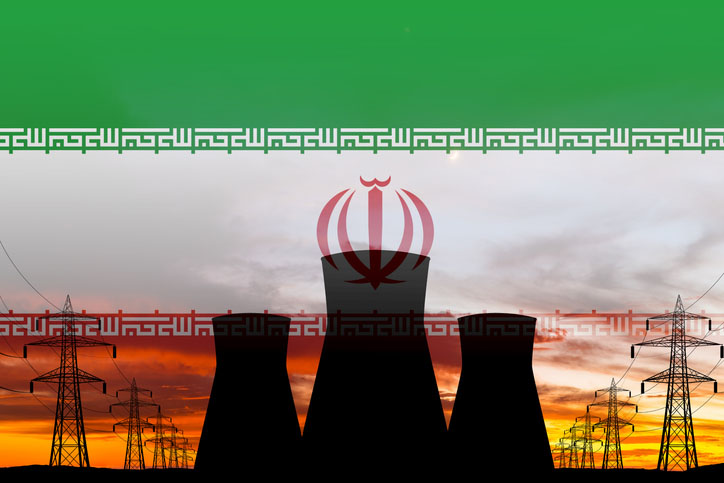
Was Tehran really weeks away from the development of a nuclear weapon? As with many preventative measures, what was avoided may be eternally debated. What we do know is that Iran has, for decades, pledged and acted toward the destruction of Israel and the U.S., the small and great Satans. Iran funded hostile actions toward Israel, the U.S. and their allies beginning as far back as the destruction of the Marine barracks in 1983. They avoid or deny any international oversight of their capabilities even after agreeing to them and domestically are prepared to respond to civil disobedience with deadly violence on a massive scale.   

Democracies understandably fear repeating Vietnam or Iraq. But the fear of acting on uncertain threats can itself become distorting when it evolves into a demand for near-perfect certainty before any meaningful response is considered. History rarely grants that luxury.

No reliable algorithm for distinguishing Munich from Vietnam exists while events are still unfolding. The challenge to leadership is that these decisions must be made before absolute certainty exists, because by then it’s often too late, as 1938 shows. Waiting too long can prove catastrophic. Acting too early can prove catastrophic as well.

The challenge we have today is not choosing between paranoia and passivity. It is learning to recognize when a regime’s stated intentions, ideological consistency, military development and demonstrated violence cumulatively cross the threshold from hypothetical danger into strategic reality. Waiting for history to render its final verdict with complete clarity is not an option.


Moshe R. Manheim is a retired clinical social worker and psychotherapist. He writes on antisemitism, Jewish identity and social issues.

Between Munich and Vietnam Read More »

Europe’s Sanctions Are a Strategic Blow to the Settlement Enterprise – and to Israel

The European Union’s (EU) decision to impose sanctions on Israeli organizations and individuals carries serious implications for Israeli sovereignty, and it is bad news for the settlement enterprise in Judea and Samaria (the West Bank) and for the State of Israel. It also signals the possibility of further damage to Israel’s vital economic relations with the EU. This harsh step shows how Israel’s failure to enforce the law is spurring international actors – who seek to dictate what they regard as proper Israeli policy – to act against it. Israel must fight these decisions resolutely on the diplomatic front. At the same time, it must act against Jewish terrorism, a vile phenomenon that endangers the settlements and the state.

In its decision last week, the EU, for the first time, imposed sanctions on bodies in Israel. In doing so, it drew a false and contemptible equivalence between Hamas butchers and settlers in Judea and Samaria.

The implications for the sanctioned organizations and individuals are dramatic. They are expected to face restrictions on financial activity outside Israel, and limits will likely be imposed on them inside Israel as well. But the implications do not stop there; they affect the entire settlement enterprise and even the State of Israel.

Economic sanctions cast a wide net. They may formally target specific actors, but because the global financial system is so deeply interconnected, they require financial institutions in Europe and elsewhere throughout the world to scrutinize every financial transaction and transfer of funds originating in Judea and Samaria. This could brand all economic activity in the area as suspect in the eyes of foreign banks and have a “chilling effect” on Judea and Samaria across the financial and economic system. International banks – and even Israeli ones – fearful of violating sanctions, may impose restrictions beyond what the law requires, thereby limiting the ability of parts of Israeli society to operate within the global economy. This is a strategic threat that could eventually affect the entire Israeli economy, as it creates further uncertainty and business risk for Israel.

Moreover, imposing sanctions on institutions and organizations such as Amana and Regavim blackens the reputation of the settlement enterprise as a whole. It sends a threatening message to other companies and economic bodies active in Judea and Samaria: they, too, could find themselves on a sanctions list.

In practice, the sanctions also bypass Israel’s legal and administrative systems, thereby harming its sovereignty. When the European Union decides to restrict activity related to the settlements, it seeks to usurp Israel’s right to decide what happens on the ground. This is an attempt to impose a diplomatic agenda through economic pressure, while eroding Israel’s authority as the sole power responsible for its citizens and for the territory under its control.

This step deserves unequivocal condemnation, whatever justification the Europeans may offer. And yet, these sanctions are also the result of what is happening on the ground. Reports of Jewish rioters committing acts of terror against their Palestinian neighbors have become almost daily occurrences. Harrowing images from such incidents are circulated the world over, and Israel’s law-enforcement system appears barely functional. This is hardly surprising when the ministers responsible for administering the territory and enforcing the law are Bezalel Smotrich and Itamar Ben-Gvir. The consequences of this failure are severe. Israel’s international image suffers as a result, and settlers of every stripe are tarred with the same brush.

Israel must act with determination in convincing the European Union to cancel these detrimental sanctions. At the same time, and regardless of the sanctions, the state must get serious about enforcing the law in Judea and Samaria. A reality in which Jewish rioters repeatedly attack Palestinians is disastrous. Finally, the Bank of Israel must find targeted solutions that allow those affected by the sanctions to continue functioning economically, without harming the Israeli financial system as a whole or its ability to operate globally.


Dr. Shuki Friedman is the director-general of JPPI – the Jewish People Policy Institute – and a senior lecturer in law at the Peres Academic Center.

Europe’s Sanctions Are a Strategic Blow to the Settlement Enterprise – and to Israel Read More »

A Nod from the Judges

“And the winner of this year’s Eurovision is…” It was the most tense moment of the contest. Israel vs. Belgium. Things had been looking grim all night. Noam Bettan, Israel’s representative this year, had received only one full endorsement from the Polish judges, leaving us in the middle of the pack leading up to the popular vote. Just as the popular vote was coming to a close, Israel took first place — a moment which should have been filled with pure elation. But there was more going on than what appeared on the live stream.

I’m not a huge Eurovision fan. When it comes to staying up until 2am, surf contests have been the only sporting event to keep me until all hours of the night. I don’t watch the Superbowl or the World Series, although my children do. Living in Israel means that if you want to participate in these events as they happen, you have to pull an all-nighter. But for this year’s Eurovision, I chose to tough it out with my kids.

My eldest daughter is head-over-heels for Noam Bettan. As the various artists were performing throughout finals night, she showed me some of her favorite social media videos of Bettan. I had to agree, he seems like a real mensch. And his performance was not to be believed. He took it on with such charisma and poise, you’d never know the audience was booing him.

“Look Aba,” my eldest said as she showed me her phone again. A video played of a Eurovision audience member holding his phone above his head displaying a Palestinian flag. I felt slightly dejected. “But look,” she continued. “He’s dancing.” I couldn’t believe my eyes. In the midst of his protest, this person couldn’t help but shake his head to the beat of Noam’s song. I hoped it was a sign of what was to come.

The culmination of the competition was something to be proud of. My kids and I laughed at the awkward commentary of the Austrian hosts. “Let’s just review who the top three artists are,” they said as a chart was on screen, detailing everyone’s rank. “How does it work again?” I joked. “Number one is in the lead or number 35?” In the end, we all had a good laugh at the United Kingdom’s expense, which only received one point in both voting categories. It was pretty clear who was in last place.

At 2am, after comparing my children’s own rankings to the actual results, we headed to bed with smiles on our faces. Not only did we have a great time but our country came in second place. It felt like a big win for Israel.

The next morning the news coverage of the contest had shifted from our near victory to the audience’s behavior. I recalled at one point during the night hearing some murmurs from the crowd, but I hadn’t noticed much else. In actuality, both during Noam’s performance and the live rankings, the audience was littered with Palestinian flags and anti-Israel chants.

As it turns out, Bettan’s preparation had included more than just song rehearsals. His team had prepped him for this eventuality. As he practiced, people would yell and boo at him, so that at the main event, it wouldn’t faze him.

When I first heard of Bettan’s preparations and what he had to endure I was reminded of my children’s enduring question since Oct. 7: Does that famous person hate us? My prayer throughout has been that their idols will just remain silent on the issue so my children can go on loving them in peace.

However, Noam Bettan taught them something important through his performance. He showed them that despite the adversity they may face in the future, they can press on and still create something meaningful; that they can rise above the screaming crowds of detractors, and if they smile as beautifully as he did, they may still get those who disagree with us to nod their heads to the beat.


Hayim Leiter is a rabbi, a wedding officiant, and a mohel who performs britot (ritual circumcisions) and conversions in Israel and worldwide. Based in Efrat, Israel, he is the founder of Magen HaBrit, an organization protecting the practice of brit milah and the children who undergo it.

A Nod from the Judges Read More »

Christians, Jews and America

Former Prime Minister Ariel Sharon, who was Israel’s iconic conservative leader before Donald Trump was even a twinkle in Benjamin Netanyahu’s eye, was once asked by an aide how he could accept support from Evangelicals who believe all Jews will ultimately either convert or perish during the Second Coming. Sharon famously shrugged off the theological threat by answering:

“I don’t care what happens when the Messiah comes. When the Messiah arrives, we can ask him, ‘Is this your first visit or your second visit?’ In the meantime, let them help us.”

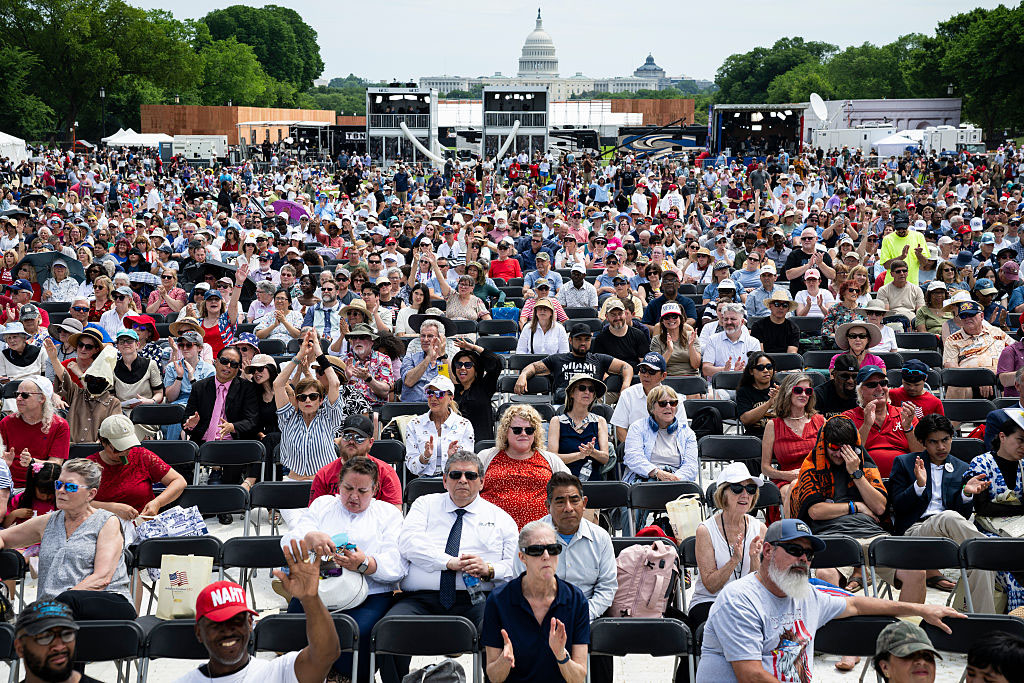
Sharon’s dismissal came to mind last Sunday, when thousands of people attended a day-long faith event on the National Mall that featured a mixture of worship music and speakers from evangelical Christianity and conservative Catholic traditions. The service reflected ongoing White House efforts to elevate Christianity in government and civic life, which has both highlighted an uplifting message of values and morality but also made many non-Christians uncomfortable as to our place in the national fabric.

Thousands of attendees chanted “We welcome Jesus” frequently throughout the day. There is no evidence that any of them vocalized that believers of other religious faiths were unwelcome, and it is well within their rights to express their beliefs publicly and enthusiastically. But it should be understandable why the participants’ elevation of one set of religious convictions over all others in such a visible and government-sanctioned setting could unintentionally transmit a suggestion of superiority and preeminence of Christian doctrine at the expense of the rest of us.

Over the course of roughly nine hours of prayer, four minutes were set aside for an Orthodox rabbi, who drew boisterous cheers from the assemblage with his denunciation of antisemitism and his reference to Jewish songwriter Irving Berlin’s patriotic anthem “God Bless America.” He was the only non-Christian speaker of the day: no Muslim, Hindu, Buddhist or Sikh religious leaders addressed the crowd. Nor were there were any Mormon, Greek Orthodox, Jehovah’s Witness or Coptic Christian speakers. I suspect that most followers of these various faiths – and ours — would happily include a Catholic or Evangelical visitor to their own gatherings. But while there is no evidence that those of other religious beliefs were prohibited from the Mall last Sunday, the fact that their leaders were not invited sent a powerful exclusionary message to them – and us.

The Jewish challenge here is an especially complicated one, given the increasingly vital support that religious Christians have provided to Israel in recent years. In Sharon’s time, Israeli leaders and most Diaspora Jews accepted that backing even while being mindful of the religious motivations that were often behind it. But in the 20th century, those religious and cultural differences were bridged by a belief in the same pro-Zionist agenda. The discomfort is much more pronounced when those same evangelical communities are more fervent in their support of Israel than many American Jews. We are not only excluded from their celebration of the United States as a Christian nation but it can feel like we are relegated to secondary status when the conversation turns to the modern Jewish state.

The vast majority of religious Christians espouse no enmity toward Jews or members of other religious groups. But the Trump administration’s active participation and sponsorship of activities like last weekend’s prayer service makes many of us feel like we are unwelcome when patriotic gatherings take on overtly religious overtones. The fact that Trump had proclaimed a National Sabbath the day before did little to make us feel more included. If anything, it appeared as a cursory gesture that was isolating and unconvincing at least and segregationist and contemptuous at worst.

Ultimately, the president’s Sabbath proclamation was one more political Rorschach test. If Barack Obama or Joe Biden had done the same thing, they would have been hailed by most American Jews and mocked by the MAGA minority in our community. Since it was Trump rather than a Democratic president, the reactions were predictably reversed. In the end, we spend the weekend being reminded that we are outsiders. Again.


Dan Schnur is the U.S. Politics Editor for the Jewish Journal. He teaches courses in politics, communications, and leadership at UC Berkeley, USC and Pepperdine. He hosts the monthly webinar “The Dan Schnur Political Report” for the Los Angeles World Affairs Council & Town Hall. Follow Dan’s work at www.danschnurpolitics.com.

Christians, Jews and America Read More »

Jerusalem Day Exposed a Growing Political Divide in Israel

This year’s Jerusalem Day celebrations revealed something impossible to ignore about modern Israeli society and politics.

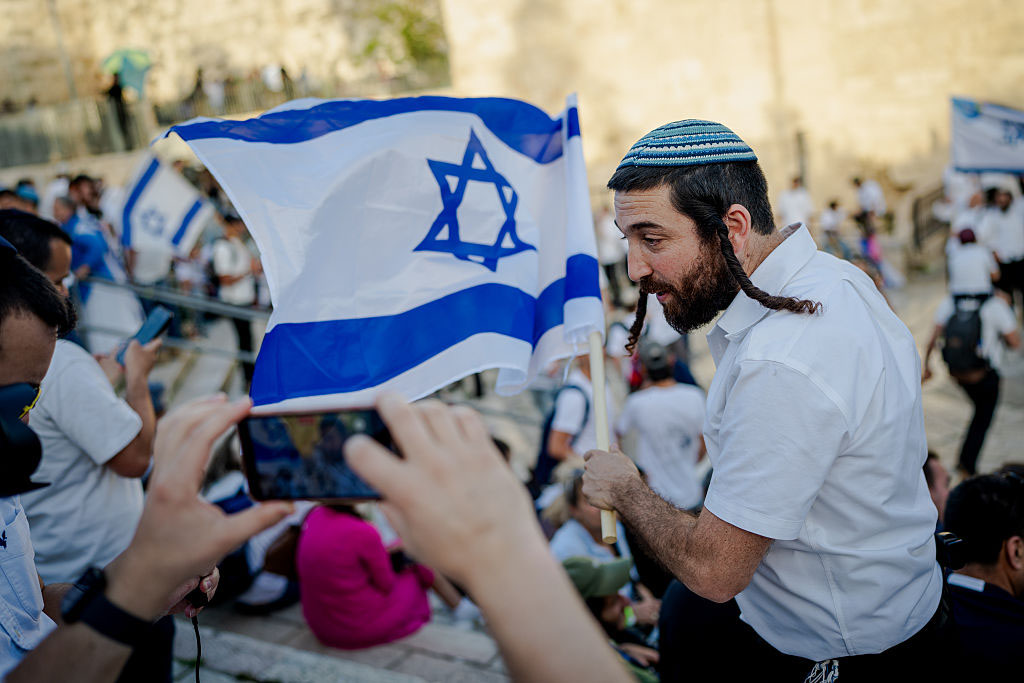
As tens of thousands marched through the streets of Jerusalem during the annual Flag Dance procession toward the Western Wall, the images across Israeli media looked remarkably similar: young Jewish Israelis wrapped in blue and white flags, dancing and singing patriotic songs, many of them religious Zionists wearing knitted kippahs.

The atmosphere was emotional and deeply connected to Jewish history and identity.

But one thing stood out immediately.

Where was everyone else?

Where was Israel’s secular youth?

Where were the young people from Tel Aviv, Herzliya, Haifa and the secular centers of the country? Jerusalem is their capital too. Soldiers from every background fought and died for the reunification of Jerusalem in 1967. Yet today, Jerusalem Day increasingly feels identified with only one sector of Israeli society.

Over time, Jerusalem Day has evolved from a broad national celebration into something strongly associated with the religious Zionist movement and the nationalist right.

This year, that political divide was especially visible.

Members of the coalition were everywhere.

Politicians from Itamar Ben-Gvir’s Otzma Yehudit marched publicly through the city, gave speeches and ascended the Temple Mount. Ministers and Knesset members from Religious Zionist Party led by Bezalel Smotrich were highly visible throughout the celebrations. Likud ministers and MKs also filled the events, embracing the symbolism of the day.

The message from the coalition was clear: Jerusalem stands at the center of their political identity. But much of Israel’s opposition leadership seemed absent.

Naftali Bennett was in Jerusalem a day before the Jerusalem Day events and did not attend the Central Flag March celebration, despite being seen as the main contender against Benjamin Netanyahu.

Where was Avigdor Lieberman? Where was Yair Lapid?  Where was Yair Golan?

Even Gadi Eisenkot limited himself to social media posts instead of attending physically.

And in politics, physical presence matters.

Strong politicians understand that politics is not only about interviews or social media posts. It is about physically showing up where the nation’s emotions are taking place.

If someone truly wants to become Prime Minister of Israel, how do they not appear in Jerusalem on one of the country’s most symbolic days?

No speeches. No participation. No connection with the crowds.

One of the questions raised by this year’s celebrations is whether parts of Israel’s opposition have become politically uncomfortable even appearing alongside religious Zionist Israelis. Has the divide reached a point where some politicians fear being photographed with young Israelis because of how it may be perceived by their political base?

For a country that once tried to build a shared civic identity between secular and religious Jews, that possibility is deeply troubling.

Increasingly, it feels as though Israel is developing two emotional capitals.

One is Jerusalem, the city of history, nationalism, religion and Jewish memory.

The other is Tel Aviv, the city of secularism, liberalism, nightlife and global culture.

Jerusalem is not only Israel’s capital, but its largest city, with more than 1.06 million residents. Yet despite its size and national importance, many secular Israelis increasingly seem emotionally disconnected from one of the city’s most symbolic national celebrations.

I would like to see more opposition politicians, more secular Israelis and even organized buses from secular cities coming to celebrate Jerusalem Day, walk in the Flag March and participate proudly in the celebrations. Jerusalem belongs to all Jews and all Israelis, not only to one political camp or one religious sector.

As a secular Jew, I can say that I enjoyed seeing religious Zionists ascending the Temple Mount with Israeli flags and praying openly. In the past, scenes like that often triggered riots across eastern Jerusalem and international outrage. Today, it happens regularly.

Whether one agrees with it politically or not, it reflects a major shift in reality, a strengthening Jewish presence at the site and a much stronger sense of Israeli governance in Jerusalem.

Jerusalem, I hope to see more unity around you in the years ahead, religious and secular, right and left, all celebrating the capital of the Jewish people together. You belong to all of us.

Happy Jerusalem Day.


Maoz Druskin writes about Israel, democracy and the challenges of national identity in modern societies.

Jerusalem Day Exposed a Growing Political Divide in Israel Read More »