

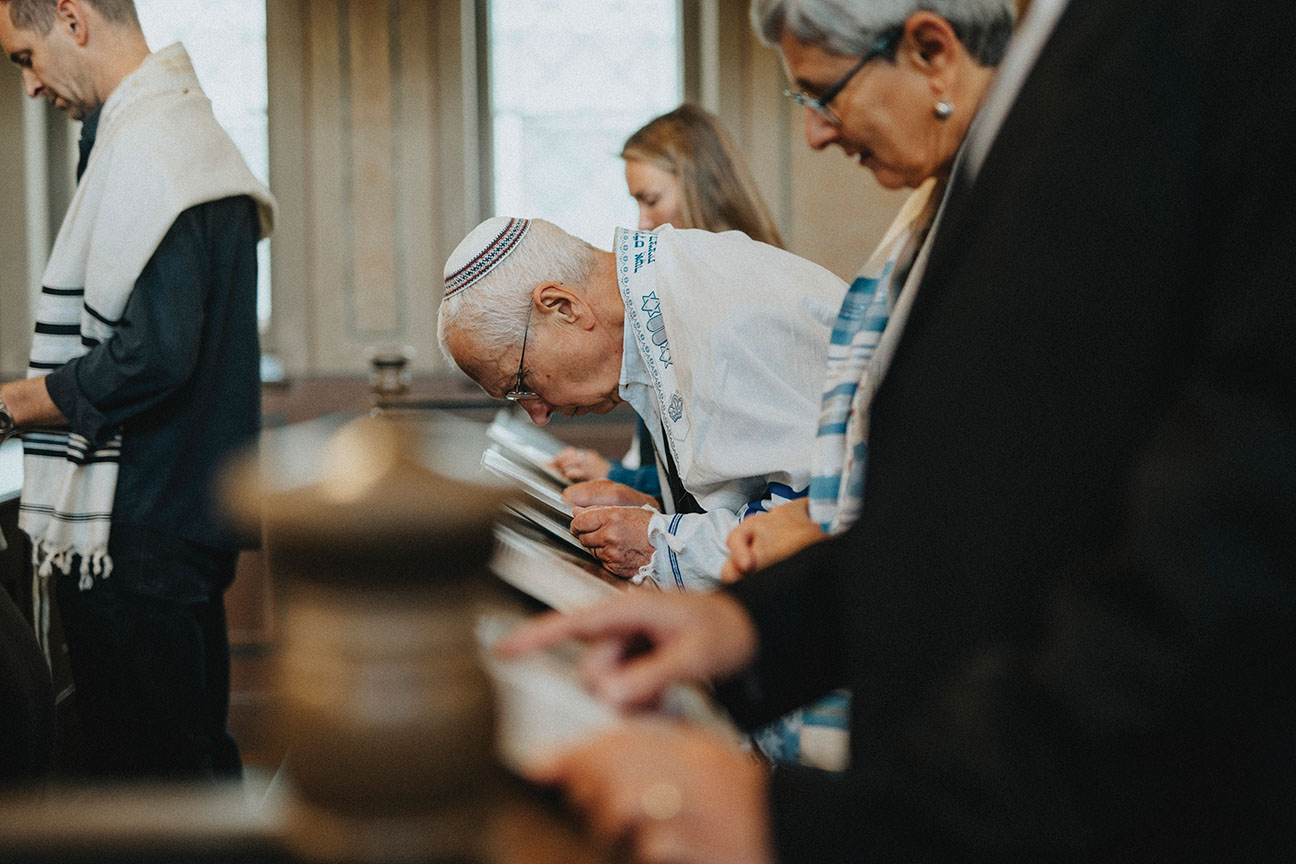
This year, once again I will be standing in synagogue along with my community for Yom Kippur, the most sacred day of the Jewish calendar. On more than ten separate occasions, I’ll strike my chest, confessing to a litany of sins, like bad business dealings, disrespecting the elderly — and committing violence.
Most of my friends don’t do many of the things to which we find ourselves confessing, so why do we recite this list?
The Day of Atonement’s central prayer contains a “Worst-of-Sins” list, with every single one confessed in the plural. It’s always we sinned, not I sinned. We committed slander. We engaged in futile conversation. Even the most pious will admit to things they did not, and would not, do.
“We not me” is a spiritual affirmation that dates back to the earliest days of religious tradition. Yom Kippur’s observance is commanded to the Israelites in Leviticus (16:29) not as an individual obligation, but in plural second-person terms: “For on this day atonement shall be made for you [in the plural] to purify you [plural] of all your [plural] sins; you [plural] shall be purified before God.” While we also take responsibility as individuals, here the repentance is for “us,” a reminder that our fate is shared and intertwined.
On Yom Kippur, Jews don’t just pray as individuals. We pray as one. We are a community shouldering the weight of our wrongs. We don’t pass judgment or pass the buck. We seek commonality with empathy.
We live in an age that thrives on finger-pointing. Politicians win points not by solving problems but by assigning blame. Social media is built to amplify outrage, rewarding whoever shouts “it’s their fault” the loudest. Even in our homes, we instinctively blame others—our coworkers for the missed deadline, our spouse for the messy kitchen, our kids for the chaos. The blame game is easier than accountability. Yet this usually leaves relationships frayed and problems unsolved.
Yom Kippur represents another approach—that of the second-century mystic Rabbi Shimon Bar Yochai. He relayed a parable of a group of passengers on a ship. One person began to drill a hole under his seat. Other passengers protested, “What are you doing?” The individual replied, “Why does it bother you? I am only drilling under my seat, not yours.” They replied: “When the water enters and the boat sinks, we too drown.” The passengers, of course, were responsible for the individual, and the person for them. Blame would do nothing to keep the ship afloat.
The collective acknowledgment of guilt on Yom Kippur interrupts our natural inclination to blame, helps us unravel knots, and forces us to reflect on the ways we need each other. We stop pointing fingers. We focus on what matters and how we can fix things.
Once a year, we stand shoulder to shoulder and chant our sins out loud. Wrapped in solidarity with those who may have lived very differently from us, we affirm: “Your failings are my failings. My repentance is yours.”
Jewish mystics see this as a sacred act of repair with metaphysical ripple effects. With each confession, we concede that a spiritual rupture has occurred. In taking ownership as a group, we commit to mending the tear—to restoring goodness and light toward its perfect, primordial form. This is what the Kabbalists referred to as Tikkun Olam—the work of healing a fragmented world.
Life gives us an endless supply of excuses to shift responsibility. At work, at home, in society—there’s always someone else to blame. But Yom Kippur teaches that repair begins only when we stop outsourcing guilt and start owning our share. Striking our chest as we confess is a visceral reminder that none of us is perfect. We’re all human, flawed, and bound together—and we must literally take that to heart.
We cannot fix everything alone, nor can we keep blaming others for the world’s brokenness. We return together. That’s one lesson Yom Kippur offers—not just to Jews, but to anyone exhausted by the culture of blame: when we take responsibility as a collective, we create the possibility of real change.
Rabbi Dr. Benji Levy is a global educator and the CEO of Share.Fund.
































