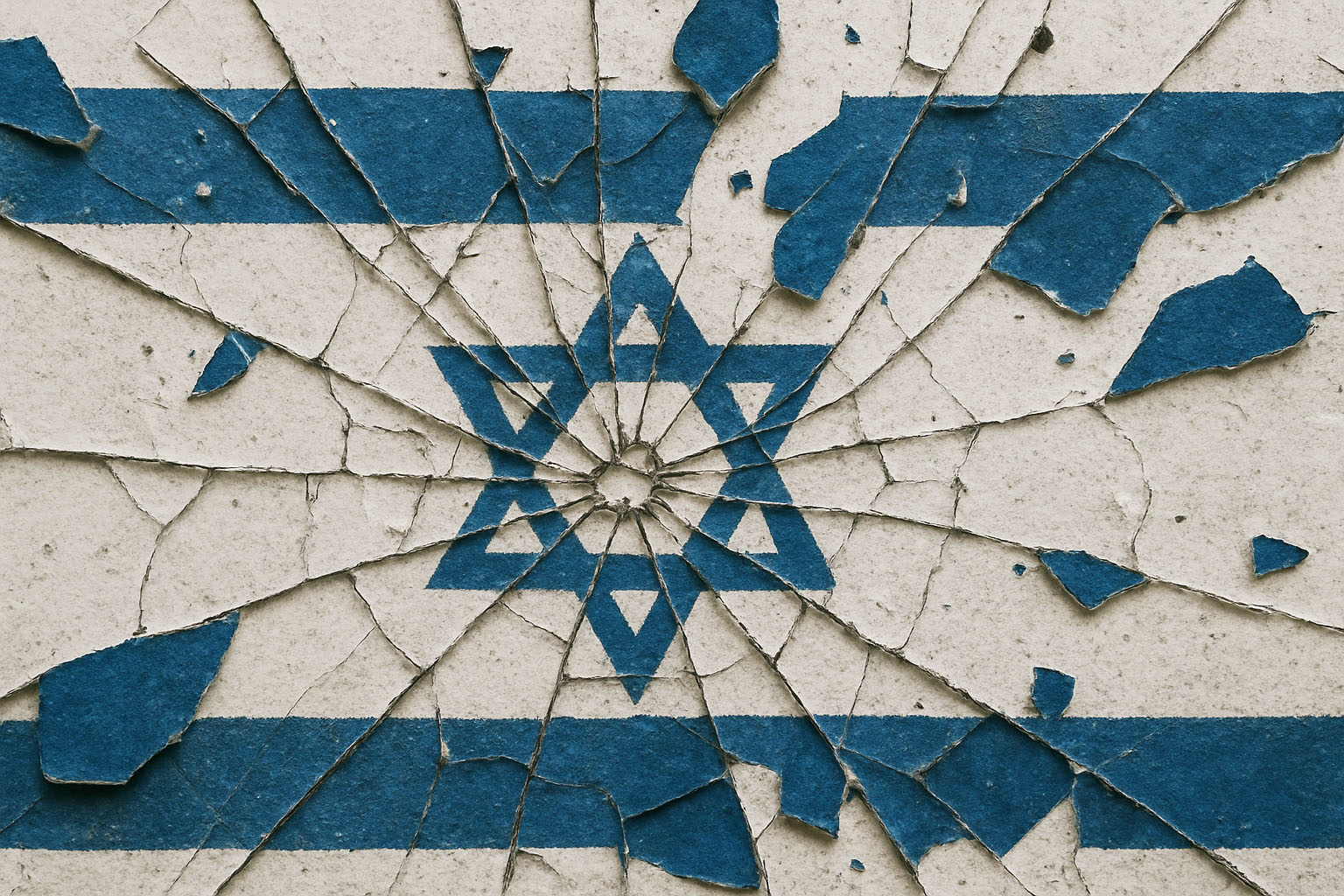
Events and moments have legacies. The Jewish calendar is filled with them. Times that are suffused with emotion, contemplation and perspective. Pick any holiday and there is a historical and foundational message that it trumpets. With Tisha b’Av around the corner and in the midst of the “three-weeks” period of national introspection, it behooves us, the Jewish people, to look in the mirror and remind ourselves of our noble and timeless mission to be a reflection.
It is not random that both Temples in Jerusalem were destroyed on Tisha b’Av. What is more tragic, however, is that we continue to break a glass at a Jewish wedding. This profound and universal custom is not designed to merely remind us of past tragedies. It’s to direct our attention to the ongoing fragmentation of humanity as a whole and of the Jewish people in particular. So how is this year going to be different than last year or the year before or the centuries before?
You see, Jewish history is filled with wake-up calls. Every generation since Pharaoh conceived of the dual allegiance canard has experienced existential threats and mind-numbing suffering. And each was followed by bursts of clarity and purpose coupled with a fierce determination to rebuild, rethink and repurpose our lives. More than Startup Nation we are the consummate Start Again nation. Oct. 7 was the latest in a very long line of such events and the ripple effect of that horrific event is still unfolding. But here’s the thing: if one’s renewed awareness, pride and activism is merely a response to antisemitism and is not rooted in a deeper affinity for the depth, power and aspirations of Jewish peoplehood and missionhood, then the rekindled flame will be a flickering one.
If one’s renewed awareness, pride and activism is merely a response to antisemitism and is not rooted in a deeper affinity for the depth, power and aspirations of Jewish peoplehood and missionhood, then the rekindled flame will be a flickering one.
A couple of weeks ago I spoke to a group of fathers and their high school and college-aged children. Prior to the class as each father introduced me to their children, I jokingly asked each of them how much they were paid to show up! To my great joy, and without exception, they each chuckled but stated emphatically that they wanted to be at the class and conversation, that they needed to be there. And then, as I was moderating a group-wide conversation, these young adults seized the opportunity to express both the challenges and the victories that they have been experiencing. Their findings in high school and especially on the college campus, dovetailed with what we’re seeing in the Jewish world: both a revelational awakening of Jewish pride and activism, along with a corresponding alienation of many Jews toward Israel and their Jewish identity.
It was deeply gratifying and reassuring to be in a room of young Jewish students eagerly sharing their renewed pride and dedication to their Jewish identity. But their first-hand, from-the-trenches ruminations springboarded to two larger conversations: What about Jews whose wake-up call has awoken within them a further alienation from their Jewishness and where do we go from here? I capitalized on the opportunity to share two essential Tisha b’Av-related lessons and aspirations. First, that Jewish pride and Jewish identity should not be formed as a response to hatred and darkness but rather as a march toward light and harmony. That for Jewish consciousness to stay awake it needs to flow and be guided by a deep reverence for and dedication to Jewish learning, practice and mission.
Secondly, that despite seemingly intractable disagreements with other Jews we should never abandon the aspiration of Jewish unity nor underestimate the power of engagement. It’s important to remember that it’s not enough to build bridges. We need to cross them as well. Waking up is the first step. Staying awake is the next step. Awakening the world is the final step. May we all derive the deepest soul satisfaction from our aspirations and may our efforts transform Tisha b’Av from a day of tragedy to a day of joy and shared humanity. Am Yisroel Chai.
Rabbi Shlomo Seidenfeld is a lifecycle rabbi, teacher, speaker and residential real estate agent.