
My mom was Jewish, so I am a Jew and glad of it. Dad was Jewish. That and a roll of nickels alone doesn’t make me Jewish, but it doesn’t hurt. If I had to pick one of the Big Three, I would say my Ima and Aba — whom I never called Ima and Aba, just Mom and Dad — were Reform Jews.
Nobody in my family was in the Holocaust. Except for an occasional mugging, they were all here in America, safely tucked away in the Bronx. And except for my grandfather and me, no one in my family ever made it to Israel. These were Americans to the core. If they managed to move out of the Bronx, it was off to Fort Lauderdale to live and eventually die.
Those who moved from the Bronx found that the Bronx never moved out of them. These were real coffee-and-honey-cake, flanken, roast chicken, borscht herring, matzah ball, seltzer-and-Postum-eating and drinking, hard-working-class Jews.
The parts of the Bronx we lived in were practically all Jewish. Growing up, I thought there were more Jews in the world than Chinese people. The only non-Jews I saw regularly were the school bus drivers and the superintendents of our apartment buildings.
Other than lighting Shabbat, Hanukkah, and Yizkor candles, eating matzah on Passover and arguing at every meal, there wasn’t much Jewish going on in my family.
So why, as my mother would say, “in God’s name,” did my Reform Jewish parents send me from grades one to three to an Orthodox black-hat yeshiva instead of a free public school? And why did they send me to an Orthodox summer day camp, and Camp Tagola sleep-away camp, also Orthodox, for eight weeks in the Catskill Mountains?
I was told I was sent to yeshiva because public school would let me out too early; they needed to send me somewhere that kept me later in the day. But why kosher summer camps? We were not kosher at home or anywhere else. If we were even middle class, which I doubt, we were on the bottom rung of a 30-rung financial ladder. So, why send me to tuition-based yeshiva and kosher camps, which easily cost two or three times as much as secular camps?
My parents have long since left this world for Shamayim, so I, as much as I hate to speak for them, can only imagine that they felt I would be safer and happier among the Jewish people. They knew the world they had lived in a few years prior. They also knew that the Jew hatred, which seemed buried and quiet, could erupt at any moment. They knew it was only a matter of time until antisemitism reared its ugly head, as it has now.
They knew they needed to spend whatever money they had to ensure that I would remain a Jew. That I married a Jew, and that I would be able to access the gift of my Jewish soul. For this, I can never repay the debt owed to them for teaching me what it is to be a Jew. They did everything they could to keep me focused and on the right path. For this, I am eternally grateful to my parents.
Yes, we did not keep kosher. Yes, we watched TV and drove on Shabbat. However, despite all of that, the message I received from them was to stay Jewish. Even the few boxes of matzah on Passover, or the lighting of Hanukkah and Shabbat candles, spoke volumes to me about what was important. And what was that? It was to remain Jewish when everything around you asks you to walk away from being a Jew, as the secular snake swallows up so many of us.
Like me, most of my relatives have remained Bronx Jews to the core. What they saw growing up in an all-Jewish neighborhood has kept them proud Jews. I can’t imagine that if I did not have Yeshiva, orthodox summer camps and my parents’ complete love of being Jews, outside of a miracle, whatever Jewishness lived inside of me would have been crushed. Thankfully, it has endured. It’s a good feeling to know my parents would be proud of me.
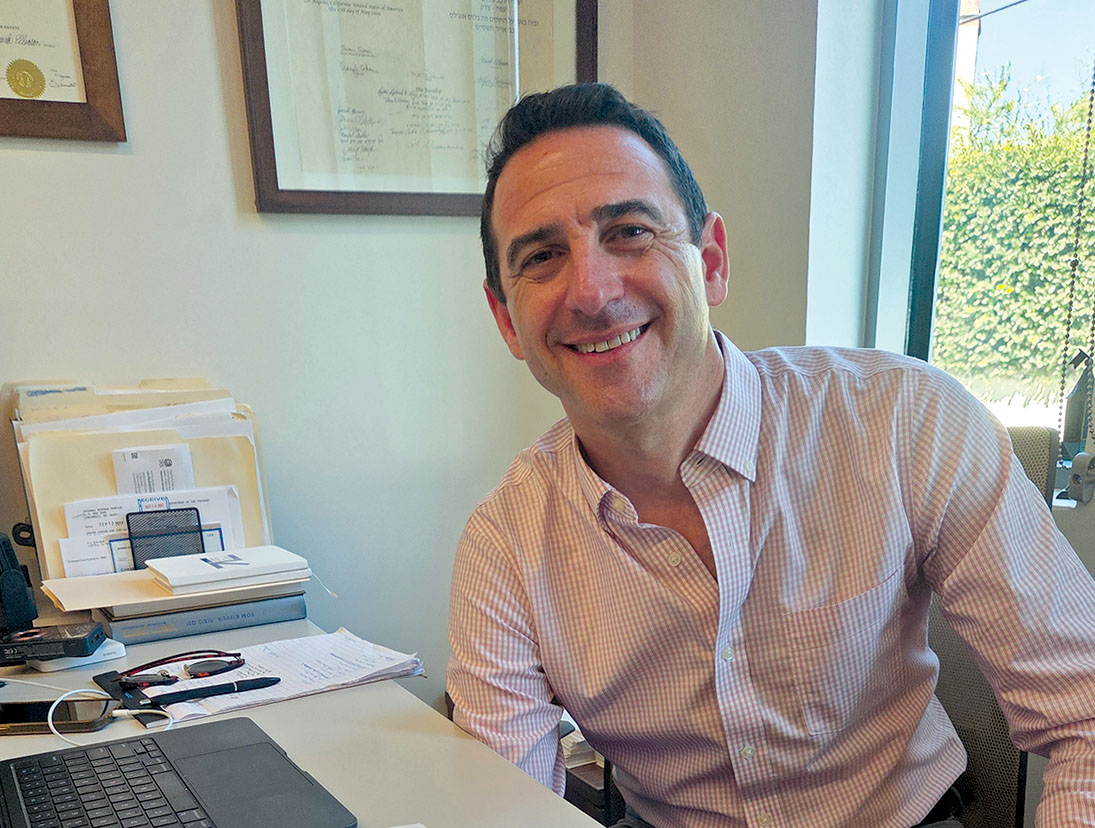
Mark Schiff is a comedian, actor and writer, and hosts, along with Danny Lobell, the “We Think It’s Funny” podcast. His new book is “Why Not? Lessons on Comedy, Courage and Chutzpah.”