The reckless violence in the Middle East is deeply disturbing on all sides, but the fog of inflammatory rhetoric only obscures any path to a resolution. A few definitions may help.
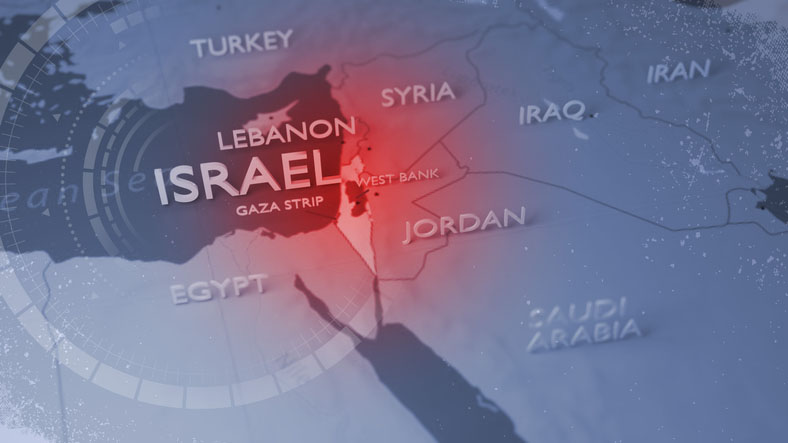
Genocide is an attempt to wipe out an entire people. In rough numbers, about five million of the seven million Palestinians live in Israel itself or the West Bank of the River Jordan. About as many are thought to live in Jordan and other Arab countries. The Israelis are not trying to wipe out those people, nor the two million Palestinians living in Gaza, whose numbers have increased from 400,000 in 1967. The Israelis are trying to root out Hamas, an organization that engages in the rape, murder, and kidnapping of Jews. One such attack ignited the current cycle of violence. In Gaza we are witnessing a nakba, a catastrophe, but not a genocide. Redefining the term to invoke the emotional force of its original meaning is a sly rhetorical ploy, but we need the word “genocide” to mean genocide. We have no other word for it.
Colonialism is the effort of a powerful country to seize control and exploit another. Israel is not a colony of any other country, nor of Europe as a whole, a continent where six million Jews were murdered. The Europeans who arrived in the 1940s were not colonists but refugees, fleeing to a former province of the Ottoman Empire managed by the British. Colonists can return to their home country, but the Israelis, as Golda Meir observed, have nowhere else to go. About half the population of contemporary Israel are Jewish people of color, many from other Arab countries, and the descendants of European refugees have now lived there for generations. Since when has the American Left denigrated immigrants?
The Europeans who arrived in the 1940s were not colonists but refugees, fleeing to a former province of the Ottoman Empire managed by the British. Colonists can return to their home country, but the Israelis, as Golda Meir observed, have nowhere else to go.
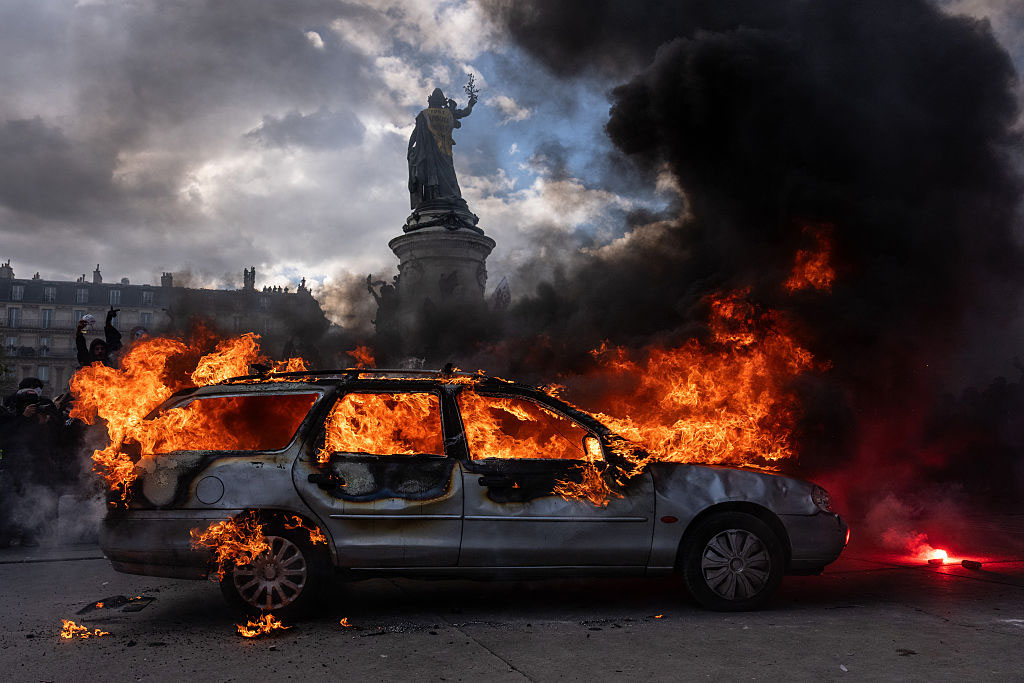
Intifada does not translate from Arabic as “justice” or “violence.” It literally means “shaking off,” or in this context, “uprising.” It’s a call for violent resistance, whether in Jerusalem or Hamilton Hall.
From the river to the sea is a call for a single Palestinian state to replace the state of Israel. Hamas makes this clear in its “softened” 2017 charter. The chant asserts Palestinians need a homeland, but Jews do not; it rejects the idea of a two-state solution (as Netanyahu has done). Older Jews, who can remember the vulnerability of Jews in a world without a homeland, recognize this phrase as an existential threat. Some younger Jews, who have only experienced the world with a Jewish homeland available to them, seem to be willing to give it away – if they are not themselves living there.
Zionism, on the other hand, is the recognition of the need for a Jewish homeland. It is very similar to the desire for a homeland among Palestinians or any other people on the face of the earth — except these people are Jews. “Holding them to a higher standard” is a genteel way of saying their actions should be judged differently than those of other people facing the same circumstances.
Antisemitism is a six-syllable world for racism directed at Jews. From Darfur and Rwanda to China and Japan, we have seen that racism is not fundamentally a question of skin color. It is the treatment of a group of people as if they were a different species — a different race — of human being. The use of the term “antisemitism” makes it sound less offensive than equivalent language or behavior directed at Black, Asian, or Latinx people, women, Muslims, or LGBT people. For clarity, we should probably call antisemitic behavior simply “racist.” When Jews are treated differently from any other minority, that’s what it is.
Richard Fliegel is a writer and a dean at the University of Southern California, with a Ph.D. in rhetoric, linguistics, and literature. He is writing to express his own opinion.