fbpx

May 21, 2024

‘Heshing’ It Out With ‘Sopranos’ Star Jerry Adler

When David Chase called Jerry Adler to be on the pilot for “The Sopranos,” the Jewish actor was thrilled, but there was a problem.

Adler was in the hospital recovering from stomach surgery. He decided to tell the doctors to let him go to the shoot and he promised to return afterward. Would he have lost the part if he told Chase where he really was?

“I’m sure of it,” Adler told the Journal. “They wouldn’t have taken a chance.”

In the first scene, as luck would have it, he was to wear loose-fitted clothes and there is an implied threat that a guy who owes money to Tony (James Gandolfini) will get thrown over a bridge if he doesn’t agree to an HMO scheme.

Adler was able to wear lose clothes hid his bandages. When the scene was finished, he returned to the hospital.

Hesh is a trusted advisor for Tony because he worked with his father, and Hesh, unlike others, rarely looses his cool. But in the final season, Hesh lends Tony $200,000 to pay off Tony’s to gambling debts, and Hesh tells his yarmulke-wearing relative Eli he fears that that at some point Tony might decide it’s cheaper to settle it another way — meaning to kill him.

“When I was reading the script, I did think it was a possibility,” Adler said of his character getting killed by Tony.

But that wasn’t the case. When Hesh finds his girlfriend Renata dead in bed with her eyes open, Tony eventually comes with Hesh’s money, kisses him on the back of the neck, tells him he’s sorry for his loss and leaves. There is a horse statue on the table — a possible nod to the famous scene in “The Godfather” whereJack Woltz wakes up in bed to find a bloody horsehead with an eye open.. Could this mean Tony had Renata killed somehow? Theory aside, Adler said he wondered if that was the implication.

“I asked the writers, but they didn’t answer me,” Adler said.

He added that it was a wonderful experience and in earlier scenes, he was happy that while his character got punched once, he wasn’t murdered.

“I certainly didn’t want to get killed,” Adler said. “I wanted the show to go on forever. It was so much fun.” One of Adler’s best-loved episodes of the Sopranos is “A Hit Is A Hit” when he tells Christopher (Michael Imperioli), that his girlfriend Adriana’s song is not a hit. Hesh as the founder of “F-Note Records” could tell what music was good.
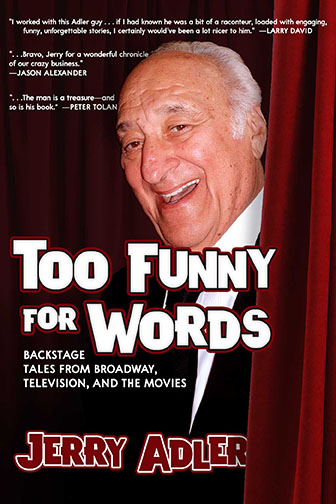
“Too Funny for Words” his recently published memoir is a delightful book. Adler tells hilarious stories about the good, the bad and the ugly in Hollywood. It’s surprisingly modest — Adler titled each chapter after the person he’s writing about.  He recounts how, when he was bringing President John F. Kennedy into a theater, he met a group of people and was starstruck and accidentally said that he was the president of the United States. Seeing the embarrassment on Adler’s face, JFK said “Well, that makes two us.”

“It was a great thing,” Adler said. “We all laughed our ass off.”

Adler comes from one of the most illustrious acting families. He is related to iconic acting teacher and school founder Stella Adler and his father, Phil Adler, taught him the ropes of theater.

Adler comes from one of the most illustrious acting families.  He is related to iconic acting teacher and school founder Stella Adler and his father, Phil Adler, taught him the ropes of theater.

He writes that Barbra Streisand auditioned for a show and her voice was so beautiful, the cleaning lady stopped cleaning to listen. Yet she didn’t get the role because a producer worried about the size of her nose.

“It was great for her,” Adler said. “She went on to much bigger and better things.”

The book shows Adler’s tenacity:  From flying on a whim to convince Orson Welles have one of a play he wrote performed by Welles’ theater, to working with Robin Williams and Meryl Street to playing a rabbi on “Northern Exposure” where he shot a scene soaking wet.

He said was most nervous when he auditioned for Woody Allen, who was casting “Manhattan Murder Mystery.” He called it a kind of scary moment.  “The woman who I was reading with was nervous. It made me nervous. It was dark. You’re looking at him out of the corner of your eye when you do one scene after the other.” He got the part of Paul House, a man whose wife dies and the Liptons (Allen and Diane Keaton) think he may have murdered his wife. Younger audiences may recognize Alder from an episode of  “Broad City” where he played Saul, a character that  Ilana Glazer  helps breaks out of an assisted living facility for a day.

Who’s the funniest person Adler’s ever worked with?

“I’d say Larry David.”

The two worked together on Broadway for David’s play “Fish In The Dark” and on an episode of “Curb Your Enthusiasm,” “Mister Softee.”  His character and David are part of a minyan where David brings a man Adler recognized as Bill Buckner, the Boston Red Sox first baseman best known for the infamous error in Game 6 of the 1986 World Series allowing the Mets to win the game and, eventually, the championship. Due to angry Red Sox fans, Buckner is asked to leave.

In real life, Adler, who is from Brooklyn, and has lived in Los Angeles, was thrilled to meet Buckner because he is a big fan of the Mets. He said it was a pleasure to work with David.

“We improvised the scene and Larry is great,” Adler said. “His dressing room was one floor below mine. We used to kind of holler down at each other. He came up with great lines. It may come as a surprise to people, but he’s really a generous guy.”

At 95 and still mentally sharp and witty, Adler said he wanted the stories to be told.

In real life, as he writes in his book, that with plays or shows it was not always possible to tell what a hit would be. But he said “The Sopranos” was an exception.

“With such great writing and a talented cast, I knew it would be,” Adler said.

If you are interested in Hollywood, acting or the triumph of a good man who made the most of his opportunities and great talent, “Too Funny For Words” is a book you will treasure.

‘Heshing’ It Out With ‘Sopranos’ Star Jerry Adler Read More »

It’s Not Good to Be Alone

As a child, I spent most of my Saturdays at home, alone. My mom, a nurse, would work long shifts at the hospital, and my sister was busy with her own life, which meant that I had to entertain myself with TV, food, and America Online. I’d waste time by watching movies and building websites and eating way too much pizza. 

I was miserable. 

I thought about how much I wanted to hang out with my friends, but I couldn’t, because I was too young to drive, and they lived far away. I thought about how everyone else – except for me – was having fun. I longed to be with my friends or my family; I longed not to be lonely.

This sense of isolation I felt throughout my childhood persisted when I went to college. I had a hard time connecting with others and typically felt out of place, so I retreated to my dorm room and spent most of my time on the internet. It was only when I graduated from college, started dating my boyfriend (now husband) Daniel and began my conversion process that I finally felt less alone.

When converting, I gained a second family – my husband’s – as well as the entire Jewish people. I would spend my weekends with our family, friends and members of our community, eating Shabbat meals and going to synagogue and events. While I still felt lonely sometimes, it was nothing compared to how I used to feel.

The Jewish people are in an especially challenging moment, one that is made so much worse if you feel like you’re experiencing it alone. You’re not. All you need to do is call up a friend to realize that.

Today, there is a loneliness epidemic, fueled by social media and made worse by the pandemic. According to a poll from the American Psychiatric Association, one in three Americans feels lonely every week. Not only is loneliness taxing on your emotions, but it can also lead to negative physical outcomes. One study showed that people who experience social isolation have a 32% higher risk of dying early from any cause, compared to people who are not socially isolated. 

In the first few lines of the Torah, after Hashem creates Adam, He says, “It is not good for Man to be alone.” And then he creates Eve as a companion for Adam. Right away, we learn the importance of being around other people.  

These days, many of us work alone at home, and we try to fill our need for interacting with others with social media. We may think that commenting on someone’s post or conversing with someone on WhatsApp is enough. 

It’s not. If it were, we wouldn’t have this loneliness epidemic. 

If you are feeling lonely, first, know that you are not the only one. I’ve been there and so have many others. You must actively work on not being lonely – especially these days, when people are reluctant to hang out with others and happy to cancel plans. 

I would recommend joining a synagogue or going to your local Chabad for services or Friday night dinner. You’re sure to meet friendly people there who share the same values as you, which is important.

It’s also helpful to go to classes, whether in a spiritual setting or not, so you can be around others, learning something new and fascinating. 

I like to schedule coffee dates with friends – even if I have to triple confirm with them to make sure it actually happens. Meeting someone in person and having a conversation is so incredibly fulfilling and good for your soul.

I also enjoy hosting people at our home for Shabbat meals. Long Shabbats in the summer are hard for me if I don’t have people over, because I easily get bored staying in the house for so many hours. And boredom breeds loneliness. But having friends there makes the day so much more fun and exciting. 

The Jewish people are in an especially challenging moment, one that is made so much worse if you feel like you’re experiencing it alone. 

You’re not. All you need to do is call up a friend to realize that.

Now, go and pick up the phone.


Kylie Ora Lobell is the Community Editor of the Jewish Journal. You can find Kylie on X @KylieOraLobell or Instagram @KylieOraWriter.

It’s Not Good to Be Alone Read More »

Defining Terms in the Middle East

The reckless violence in the Middle East is deeply disturbing on all sides, but the fog of inflammatory rhetoric only obscures any path to a resolution.  A few definitions may help.

Genocide is an attempt to wipe out an entire people. In rough numbers, about five million of the seven million Palestinians live in Israel itself or the West Bank of the River Jordan.  About as many are thought to live in Jordan and other Arab countries.  The Israelis are not trying to wipe out those people, nor the two million Palestinians living in Gaza, whose numbers have increased from 400,000 in 1967. The Israelis are trying to root out Hamas, an organization that engages in the rape, murder, and kidnapping of Jews.  One such attack ignited the current cycle of violence.  In Gaza we are witnessing a nakba, a catastrophe, but not a genocide.  Redefining the term to invoke the emotional force of its original meaning is a sly rhetorical ploy, but we need the word “genocide” to mean genocide.  We have no other word for it.  

Colonialism is the effort of a powerful country to seize control and exploit another.  Israel is not a colony of any other country, nor of Europe as a whole, a continent where six million Jews were murdered. The Europeans who arrived in the 1940s were not colonists but refugees, fleeing to a former province of the Ottoman Empire managed by the British. Colonists can return to their home country, but the Israelis, as Golda Meir observed, have nowhere else to go.  About half the population of contemporary Israel are Jewish people of color, many from other Arab countries, and the descendants of European refugees have now lived there for generations. Since when has the American Left denigrated immigrants?

The Europeans who arrived in the 1940s were not colonists but refugees, fleeing to a former province of the Ottoman Empire managed by the British.  Colonists can return to their home country, but the Israelis, as Golda Meir observed, have nowhere else to go. 

Intifada does not translate from Arabic as “justice” or “violence.”  It literally means “shaking off,” or in this context, “uprising.”  It’s a call for violent resistance, whether in Jerusalem or Hamilton Hall.

From the river to the sea is a call for a single Palestinian state to replace the state of Israel. Hamas makes this clear in its “softened” 2017 charter.   The chant asserts Palestinians need a homeland, but Jews do not; it rejects the idea of a two-state solution (as Netanyahu has done).  Older Jews, who can remember the vulnerability of Jews in a world without a homeland, recognize this phrase as an existential threat.  Some younger Jews, who have only experienced the world with a Jewish homeland available to them, seem to be willing to give it away – if they are not themselves living there.

Zionism, on the other hand, is the recognition of the need for a Jewish homeland.  It is very similar to the desire for a homeland among Palestinians or any other people on the face of the earth — except these people are Jews.  “Holding them to a higher standard” is a genteel way of saying their actions should be judged differently than those of other people facing the same circumstances.  

Antisemitism is a six-syllable world for racism directed at Jews.  From Darfur and Rwanda to China and Japan, we have seen that racism is not fundamentally a question of skin color.  It is the treatment of a group of people as if they were a different species — a different race — of human being.  The use of the term “antisemitism” makes it sound less offensive than equivalent language or behavior directed at Black, Asian, or Latinx people, women, Muslims, or LGBT people. For clarity, we should probably call antisemitic behavior simply “racist.”  When Jews are treated differently from any other minority, that’s what it is.


Richard Fliegel is a writer and a dean at the University of Southern California, with a Ph.D. in rhetoric, linguistics, and literature. He is writing to express his own opinion.

Defining Terms in the Middle East Read More »

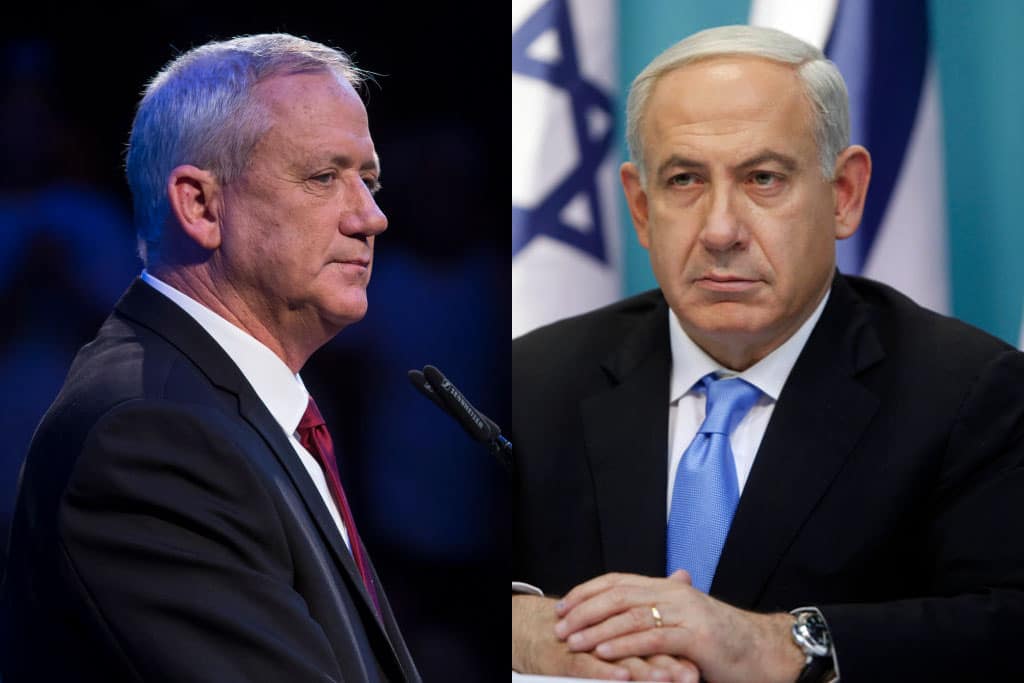
Bibi vs Gantz: Constructive Ambiguity

The late Henry Kissinger is widely credited with coining the phrase “constructive ambiguity” to describe a tool of diplomacy, in which deliberately imprecise language is used to provide flexibility for negotiators. Israel’s two most prominent leaders are about to put Kissinger’s strategy to a challenging test.

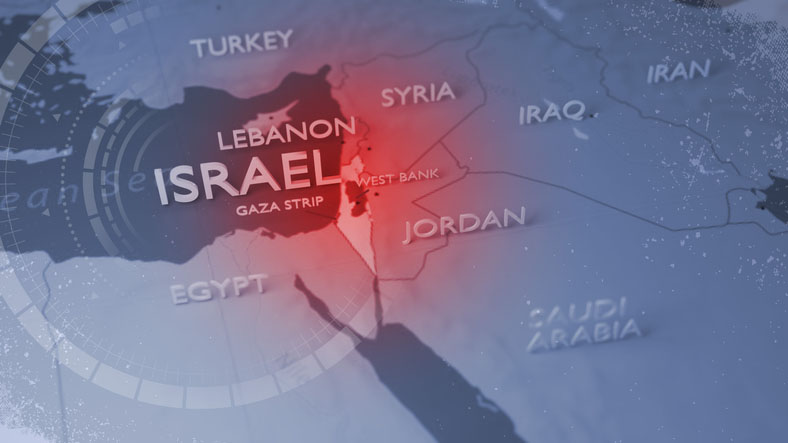
National Unity Party leader Benny Gantz moved closer to a complete breakup with Prime Minister Benjamin Netanyahu last weekend, when he outlined a series of conditions that Netanyahu would have to accept if Gantz were to remain in the war cabinet that has held Israel together since the Oct. 7 Hamas terrorist attacks. Not surprisingly, most of Gantz’s demands were focused on the administration of the Gaza War, and he also echoed Defense Minister Yoav Gallant’s call for Netanyahu to develop a plan for post-war oversight of Gaza. But Gantz also emphasized the need to normalize the relationship with Saudi Arabia, which is widely seen as a necessary step toward regional peace but would also require movement toward a Palestinian state.

Gantz recognizes the widespread hostility among Israeli voters to such a dramatic act, so he made sure in his remarks to state his opposition to a potentially dangerous Palestinian state. He left little room for doubt, saying: “We will not allow any outside power, friendly or hostile, to impose a Palestinian state on us.” 

But if you read Gantz’ statement more closely, it’s clear that all he actually promised was that no “outside power” would impose a Palestinian state on Israel. Gantz clearly cannot verbally support a two-state solution, which would be a death sentence to his ambitions to replace Netanyahu as prime minister, at this time. But that nuance could be just enough to open a door for negotiations with the Saudis, letting both Riyadh and Washington know that as long as the first steps toward Palestinian statehood were sufficiently gradual and not as a result of explicit external coercion, negotiations could move forward under his leadership.

Both men know that they will face off against each other in the near future, and both know that the one who can more effectively maintain his precarious political balancing act will be the victor. 

Just as impressive an act of constructive ambiguity as Gantz’s is one that Netanyahu himself seems to be assembling. The pressure on him to develop a plan for post-war Gaza other than a permanent Israeli military occupation has been growing, both domestically from Gallant and Gantz, and from the Biden Administration. Netanyahu has made it clear that neither Hamas nor the Palestinian Authority can be trusted with such responsibility, despite claims from many international stakeholders that a refurbished version of the P.A. could be up to the job.

But while Netanyahu has been adamant that he will not allow Gaza to become what he calls “Fatahstan” and instead talks about a governing body made up of leaders from neither organization, the current prime minister might be relying on similar ambiguity to navigate a difficult set of obstacles. Shortly after Israeli troops recently took control of the Rafah crossing between Gaza and Egypt, Netanyahu’s senior advisors told U.S. and Egyptian officials that they would be open to Palestinian Authority representatives being part of an oversight force – as long as they are not acting in an “official capacity” on behalf of the P.A.

This is the first time since Oct. 7 that Israel has suggested a willingness to accept any Palestinian Authority involvement in Gaza under any circumstances. It seems to open the door to a larger role for P.A. representatives in a multinational administrative entity, not too different from the Arab, European and U.N. collaboration that Gantz and others have proposed.

The constructive ambiguity that was Kissinger’s hallmark is designed to buy time and keep as many options open as possible.  Both Gantz and Netanyahu understand that the Israeli people will not accept their respective goals anytime soon. So both are talking tough for the moment, but leaving themselves sufficient wiggle room for future deal-making.

Both men know that they will face off against each other in the near future, and both know that the one who can more effectively maintain his precarious political balancing act will be the victor. That day of reckoning is fast approaching: The winner will define Israel’s future.


Dan Schnur is the U.S. Politics Editor for the Jewish Journal. He teaches courses in politics, communications, and leadership at UC Berkeley, USC and Pepperdine. He hosts the monthly webinar “The Dan Schnur Political Report” for the Los Angeles World Affairs Council & Town Hall. Follow Dan’s work at www.danschnurpolitics.com.

Bibi vs Gantz: Constructive Ambiguity Read More »

Let’s Play ‘Name That Tyrant!’ (A Quiz)

Perhaps you haven’t noticed, but there have been a few disinformation campaigns against Israel in the last five decades, including the most recent accusation of committing genocide. In this week’s column, readers will test how well they know the modern history of despots and atrocities (as well as the difference between cracked wheat and a tribe of Turkic nomadic warriors). Good luck. And please, no cheating by peeking at the key before choosing an answer. 

Which mass-murdering leader killed anyone thought to be an intellectual, including doctors and nurses, and even killed those who wore glasses because they also were believed to have been intellectuals?

a) Nicolae Ceaușescu

b) Pol Pot

c) Who was Nicolae Ceaușescu? He sounds like a salad. 

d) It’s probably Bibi Netanyahu. He killed any Palestinian who wore glasses.

In which country were 500,000 to 1.2 million people killed as a result of anti-Communist purges in 1965-1966?

a) Cambodia 

b) Indonesia 

c) Myanmar 

d) What is a purge? Does it have anything to do with Palestinians?

What was “The Holodomor”?

a) An ethnic Albanian dance that, like everything else, the Jews have appropriated.

b) A secret book of spells and potions in the next “Harry Potter” series. 

c) A tool that measured how much Holo was in the atmosphere as a result of global warming. 

d) None of the above.

Which country unveiled an exciting new finger-cutting machine that it uses against prisoners convicted of robbery?

a) Iran 

b) America

c) France. This is basically a mini-guillotine. 

d) I’ll bet it was Israel. I saw a photo of a one-fingered Hamas fighter who was forced to throw a grenade with his feet. It was very sad. 

In what part of the world are women allowed to be essentially raped as part of a temporary “marriage” to a man that often lasts one night?

a) North America 

b) Anywhere colonizers still rule. So Israel and America. 

c) This sounds like a bad reality show. Is it a reality show?

d) The Middle East

In which country is it unsafe to speak or write about, or to even acknowledge a genocide that the country committed in the 20th century?

a) Rwanda

b) Turkey

c) Israel. Israelis receive life sentences if they even acknowledge the “Nakba.”

d) Seriously, I’m pretty sure it’s Israel. 

How many people were killed in only eight months during the Bangladesh Genocide in 1971?

a) Up to 250,000 people 

b) Up to 3 million people

c) 800,000 Palestinians 

d) 900,000 Palestinians. Wait, did you say Palestine or Bangladesh?

Which country was the last in the world to officially ban slavery? And in what year? 

a) Russia in 1917

b) America in 1960

c) Mauritania in 1981

d) I still don’t think Israel has officially banned slavery. Big surprise. 

Which country suffered a “Silent Holocaust” between 1981-1983 in which 160,000 civilians were killed by government forces, as part of a larger civil war between 1960-1996 in which 200,000 people were murdered?

a) Palestine 

b) Guatemala

c) One of the other countries in the Middle East. I think it starts with an “S.” 

d) One of the “-stan” countries. Trombonistan.

The “Rape of Nanking” was:

a) Something Israel did to Palestinians in 1948.

b) Something Israel did to Koreans in 1967.

c) Something Israel did to the Chinese in 1973.

d) None of the above. (Too bad. I really wanted it to be something Israel did.)

Which army exterminated the Golok people and also drowned thousands of victims in the Yellow River during the 1920s?

a) The British Army

b) The Chinese-Muslim (Hui) Ninghai Army

c) Is that the river that goes all the way “to the sea” in the slogan I chanted at graduation?

d) I know the IDF wasn’t around officially in the 1920s, but it was probably the IDF. 

Which country committed so many mass murders against Koreans between 1910-1945 that each mass murder has its own name, including the Gando Massacre, the Kantō Massacre, and the Jeamni Massacre?

a) Japan

b) China 

c) North Korea

d) None of the names of those massacres sound like Hebrew or Arabic, but I think it was Israel.

Who was Basil the Bulgar Slayer?

a) Someone named Basil who made a killer Bulgur salad. He slayed. 

b) The 1996 subpar Turkish version of “Buffy: The Vampire Slayer” 

c) A Byzantine emperor who killed many Bulgur. Though I don’t understand why. Bulgur is healthy and delicious. 

d) I cannot complete this quiz at this time. Appetizers and chilled water are currently being served at my campus encampment. 

And finally, protesters are most outraged by which country?

a) Israel

b) Israel

c) Israel

d) Israel

KEY

Which mass-murdering leader killed anyone thought to be an intellectual, including doctors and nurses, and even killed those who wore glasses because they also were believed to have been intellectuals?

b) Pol Pot

The Khmer Rouge targeted those it considered intellectuals, including doctors, nurses, teachers and lawyers, and generally, those who held degrees. Refugees who survived the Cambodian Massacre by Pol Pot and the Khmer Rouge claimed that anyone who wore eyeglasses was targeted because they were perceived to have been intellectuals.

In which country were 500,000 to 1.2 million people killed as a result of anti-Communist purges in 1965-1966?

b) Indonesia

In 1965-1966, the Indonesian Army and various death squads, under orders from the Indonesian leader, Suharto, executed between half a million to over one million people (some estimates are up to three million) in an attempt to purge Communists from social, political, and military life. 

What was “The Holodomor”?

d) None of the above

The Holomodor was a genocide campaign by the Soviet government against Ukrainians in which between 3.5 to 5 million people died as a result of mass famine from 1932-1933.

Which country unveiled an exciting new finger-cutting machine that it uses against prisoners convicted of robbery?

a) Iran 

Iran unveiled a new finger-cutting machine in 2013 and released photos of blindfolded prisoners whose fingers were being inserted into the machine as punishment for robbery. 

In what part of the world are women allowed to be essentially raped as part of a temporary “marriage” to a man that often lasts one night?

d) The Middle East. Please Google the term “sigheh.”

In which country is it unsafe to speak or write about, or to even acknowledge, a genocide that the country committed in the 20th century?

b) Turkey

Generations of Turkish officials have continued to deny the Armenian Genocide of 1915, and all of Turkey’s political parties, with the exception of Peoples’ Democratic Party (HDP), also deny crimes committed by Turkey against the Armenians. In recent years, Turkish writers have been exiled for speaking out about the Armenian Genocide that killed roughly 1.5 million people. 

How many people were killed in only eight months during the Bangladesh Genocide in 1971?

b) Up to 3 million people

The Pakistan Armed Forces and the Razakars ethnically cleansed Bengalis (especially Bengali Hindus) who were living in East Pakistan, which is now Bangladesh. Between 200,000 – 400,000 Bengali women were also raped. 

Which country was the last in the world to officially ban slavery? And in what year? 

 c) Mauritania in 1981

Yes, 1981. Slavery was not banned there until the year that The Rolling Stones released “Start Me Up.”

Which country suffered a “Silent Holocaust” between 1981-1983 in which 160,000 civilians were killed by government forces, as part of a larger civil war beginning between 1960-1996, in which 200,000 people were murdered?

b) Guatemala

Guatemalan armed forces tortured and murdered hundreds of thousands of Maya in what is also called the Maya Genocide.

The “Rape of Nanking” was:

d) None of the above

In the span of six weeks in 1937, the Imperial Japanese Army raped and murdered victims en masse in the then-Chinese capital, Nanking, and also left the city in ruins. The Rape of Nanking is also known as the Nanking Massacre, and is considered one of the worst atrocities in the history of war. 

Which army exterminated the Golok people and also drowned thousands of victims in the Yellow River during the 1920s?

b) The Chinese-Muslim (Hui) Ninghai Army

The Chinese had been unable to exert control over the Tibetan Golok people, and the Muslim Ninghai Army exterminated large numbers of them, then called for negotiations. During those negotiations, the Chinese-Muslim (Hui) Ninghai Army slaughtered more Golok and drowned thousands of men, women and children in the Yellow River. 

Which country committed so many mass murders against Koreans between 1910-1945 that each mass murder has its own name, including the Gando Massacre, the Kantō Massacre, and the Jeamni massacre?

a) Japan

The Japanese military committed unspeakable evils against Koreans in the first half of the twentieth century. 

Who was Basil the Bulgar Slayer?

c) A Byzantine emperor who killed many Bulgar. 

Basil II Porphyrogenitus, also known as Basil the Bulgar Slayer, ruled the Byzantine Empire from 976 A.D. to 1025 A.D. Legend has it that Basil was so cruel that he blinded 99 prisoners in every group of 100, leaving one prisoner in each group with only one eye. That man would lead the others home. 

No matter your score, I hope you were inspired to learn more about the nutritional benefits of bulgur and not too disappointed that neither Walmart nor Amazon sells finger-cutting machines.


Tabby Refael is an award-winning writer, speaker and weekly columnist for The Jewish Journal of Greater Los Angeles. Follow her on X and Instagram @TabbyRefael

Let’s Play ‘Name That Tyrant!’ (A Quiz) Read More »

Jewish Actress Perfectly Depicts Amy Winehouse in Disappointing ‘Back to Black”

“Mazel Tov,” Marisa Abela’s Amy Winehouse jokes to her boyfriend, Blake, pretending she is pregnant with his baby in a humorous moment in “Back to Black,” the new biopic about the late British singer.

Abela dons a star of David necklace as Winehouse did; some of her family membersare seen wearing yarmulkes and singing Hebrew songs.

Her nan (grandmother) asks if the guy she is dating is Jewish, and she says he likely isn’t because he has tattoos. She wonders why Amy can’t date music manager Nick Shymansky, but she says he isn’t her type.

Why are some people able to construct an amazing life and then be self-destructive? It’s a tough question. Winehouse was famous for her smoky jazz voice, her beehive hairdo, and winning seven Grammy Awards, with unbelievable songs like “Back to Black” and “Rehab.” When she died in July of 2011 of alcohol toxicity, she joined Kurt Cobain, Jimi Hendrix, and Janis Joplin among famed musical artists who perished at 27.

Abela, who is Jewish, and took vocal lessons to be able to sing like Winehouse, should get nominated for an Oscar. The scenes in which Abela, who starred in the HBO hit “Industry,” sings, are all excellent she is impressive in channeling Winehouse is quite a feat.

But there are a number of problems here.

If you’ve seen the Oscar-winning  2015 documentary “Amy,” you know much is left out. There’s nothing about her struggle to deal with fame, which she said might make her go mad? (In the the documentary, her bodyguard, Andrew Morris, says the night before he found her body, she told him she’d give back her vocal talent if it meant she could walk down the street without getting hassled.) Or her relationship with her father, who she felt wasn’t around to discipline her when she needed it. Or her bulimia, which her mother admits she didn’t properly assess because when her 15-year-old daughter told she would eat whatever she wanted and would throw up, rather than taking her daughter to a doctor, thought it would “pass.”

It also omits her father telling her she didn’t need to go to rehab, which is literally in the lyrics of the hit song? There’s also the idea that financial considerations may have trumped those of her health. What about the fact that her husband got her into cocaine and heroin and she nearly died of an overdose from it? None of these elements are dealt with in the film in any meaningful fashion.

Ultimately, everyone is responsible for their own actions, but to put such little blame on others serves to dilute the film.

Eddie Marsan is a great actor but in playing her father, Mitch.

Jack O’Connell does a fine job as Blake, who no longer wants to be married to her when he gets out of jail. He is shown in too kind a light. Winehouse’s attitude with reporters, is also not addressed.

The movie fails to show the gravity of addiction and the ending isn’t satisfactory. We don’t see enough of her struggles in the film.

Her own song lyrics proclaim: “Love is a losing game/One I wish I never played. Oh what a mess we made…”

With all of that said, this is the kind of movie that rides on the lead and Abela is so good the issues with the film are less prominent than they would otherwise be, but the ending of the film borders on criminal.

It’s hard to look at this depiction of Winehouse as anything other than a glass half full, though the film leaves some of it empty when there was more than enough to pour on. Hopefully, some viewers learn the dangers of toxic relationships and substances and enjoy Abela’s star turn.

Jewish Actress Perfectly Depicts Amy Winehouse in Disappointing ‘Back to Black” Read More »

American Football in Israel Visiting LA During Hopeful Olympics Tour

For the next few years, Steve Leibowitz is laser-focused on one goal: to get his Israeli flag football team, AFI American Football in Israel, into the 2028 Olympics in Los Angeles.

Leibowitz, a former journalist with ILTV in Israel who is originally from the states, founded AFI 20 years ago. There are teams for men and women, and both have gone to play in world championships; currently, the men’s team ranks eighth in the world and third in Europe, and the women’s team is eighteenth in the world.

Now, the founder is embarking on a tour of the U.S. with Jonathan Curran, one of the players, and talking about his hopes for getting AFI into the upcoming Olympics.

“I’m ready, willing and hoping to meet anyone who can help us in our Olympics quest,” Leibowitz said. “I want to get us there.”

“I’m ready, willing and hoping to meet anyone who can help us in our Olympics quest.” – Steve Leibowitz

Leibowitz and Curran are visiting LA on June 8 and speaking about their team, which hosted the world championships in 2021, at Sinai Temple. They will also be going to Chicago, Minneapolis and Dallas.

“This trip will allow us to touch base with our local supporters,” Leibowitz said. “A year from now, my goal is to bring the men’s team to the U.S. and play them against some of the best teams, since the best flag football players in the world are there.”

To get into the Olympics, Leibowitz believes that there will be a qualifying tournament in 2027. Israeli teams are rarely in the Olympics, and Israeli flag football has never competed.

“The timing wasn’t great for us, as the official announcement that the Olympics would be in LA came a week after the war started in Israel,” he said. “Despite all the problems, we are trying to keep our minds and eyes on the goal, which is to be among the top teams in our sport.”

AFI has big supporters, including President and Co-owner of the Minnesota Vikings Mark Wilf and Robert Kraft, owner of the New England Patriots, who has been sponsoring the team since it started. The football fields in Israel are named after the Kraft family.

“Robert and I have promised each other we’ll get an Israeli into the NFL one day,” Leibowitz said. “As he said, he wants to change the reality how when a Jewish boy reaches bar mitzvah age, he has more of a chance of owning an NFL team than being on one.”

Steve Leibowitz with Robert Kraft and Prime Minister Netanyahu

For the last six months, AFI has been on hold, since many of the players are currently fighting in the IDF. Curran has been serving almost non-stop since Oct. 7, and the government budget for the team has been severely impacted by the war. Along with touring the U.S. to build support for the Olympics, Leibowitz and Curran are also fundraising for the teams. The money would go towards the costs of operating the team as well as travel to world championships, like the upcoming one in Helsinki in August.

When going around the world, typically AFI doesn’t have any problems. However, seven years ago, at their first big football game in Spain, there were pro-Palestine protestors banging on drums and painting the Palestinian flag on the field.

“We went out and kicked their butts in the game,” Leibowitz said. “It was a big upset when we won.”

In Turkey, he said there were, “probably more armed guards than fans. It was a very hostile environment, to put it mildly. Again, we kicked their butts.”

Most of the time, the team is welcomed with open arms, and everyone is professional and exhibits sportsmanship.

“Israel has a well-respected place in the flag football world,” Leibowitz said.

During Leibowitz’s tour, and beyond, he is going to keep on working to get his team into the Olympics – which would do wonders for flag football in Israel and for his country.

“A medal would be a tremendous boost for our sport,” he said. “It’s important for us to go to the Olympics, where we could raise the flag for Israel.”

Find out more about AFI and donate on their website, iflfriends.com/donation.

American Football in Israel Visiting LA During Hopeful Olympics Tour Read More »