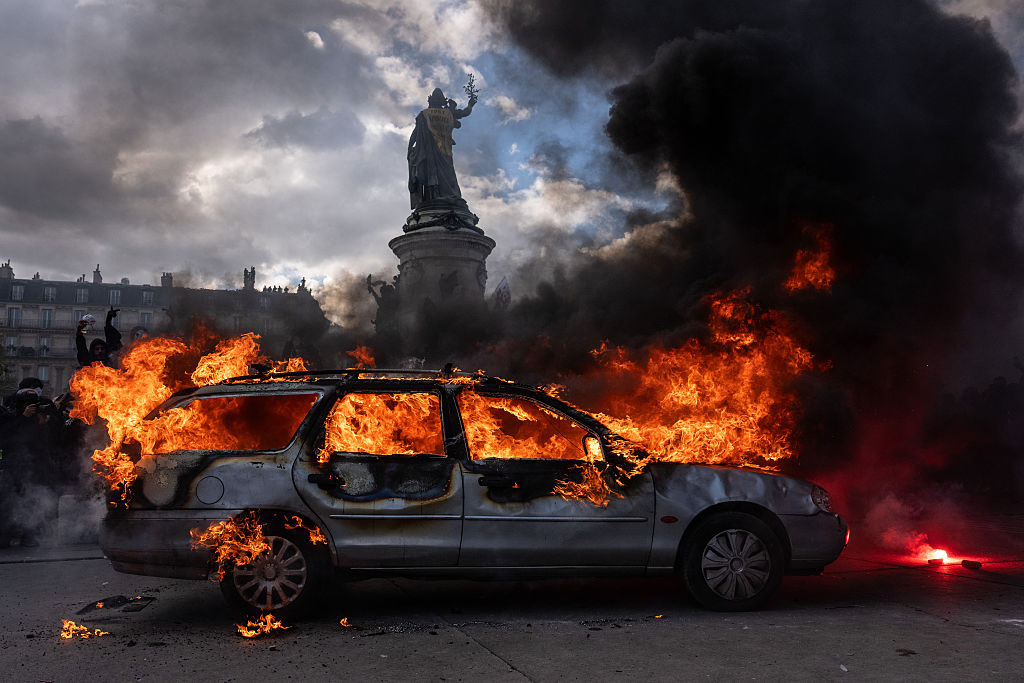

Tear gas fired into maternity wards. Pro-democracy protesters arrested, tortured, wounded, some even killed. Children attacked with machetes. Villages reduced to ash. These scenes were witnessed in recent days by the Jewish World Watch (JWW) field representative in the Democratic Republic of Congo (DRC). In his war-torn country, he is the eyes and ears of JWW, which was founded in 2004 to fight genocide and mass atrocities. The political situation in the DRC is so perilous that he asked that we not use his name.
The current brutality is largely linked to the DRC’s upcoming presidential election, scheduled for Dec. 23. Rich in mineral wealth yet rampant with corruption, Congo hasn’t seen a peaceful transfer of power since achieving independence from Belgian colonialism in 1960. The current president, Joseph Kabila, has led the country since his father’s assassination in 2001, and, according to the DRC constitution, should have left office in December 2016, after his second term.
A recent and rare bipartisan effort by the U.S. Congress aims to ensure the Congolese people can exercise their democratic rights, through the “Democratic Republic of the Congo Democracy and Accountability Act” (H.R. 6207). Introduced on June 25 by Reps. Chris Smith (R-N.J.), Karen Bass (D-Calif.), Eliot Engel (D-N.Y.) and Ed Royce (R-Calif.), the bill passed through the House Committee on Foreign Affairs just days later. It now awaits passage by the full House and Senate.
The bill expresses U.S. security concerns over the political violence, conflicts, corruption and humanitarian crises ravaging Congo and destabilizing the region. It also codifies sanctions against senior Congolese political figures — precisely the weighty pressure that Congolese civil society has been pushing for.
Rich in mineral wealth yet rampant with corruption, Congo hasn’t seen a peaceful transfer of power since achieving independence in 1960.
U.S. lawmakers have reason for concern. Kabila has repeatedly broken promises to allow free and fair elections to replace him, so his declaration of new elections to take place this December has brought more instability than joy. During the candidate registration period, which ran through Aug. 8, the Congolese waited with bated breath for any indication of whether the tight-lipped Kabila would run again, “praying with all their might for an official statement that he will not,” our field representative told us. Their prayers were answered on the final registration day, when Kabila announced he would not run and would instead support Ramazani Shadary, a hardcore loyalist.
Yet even Kabila’s new willingness to step down does not ensure a peaceful transition. For one thing, Shadary, a former interior minister and vice president, has been associated with repressive police violence in Kinshasa and Kasai, and, in May 2017, was one of several Congolese officials sanctioned by the Council of the European Union for “serious human rights violations.”
Despite the DRC’s enormous wealth in mineral deposits, its population ranks among the poorest in the world. For more than 20 years, Congo has been embroiled in intertwined conflicts that have drawn in neighboring countries. More than 70 armed groups are believed to be operating inside the country, which is roughly two-thirds the size of Western Europe. This ongoing unrest has claimed 6 million lives over the past two decades and caused the largest displacement crisis in Africa. Many of the armed groups have ramped up their violent activities, including brutal killings and rapes, as part of a strategy to exploit for their own financial gain the current environment of governmental impotence and general unrest.
Political violence has spiked as well, particularly since a government ban on protests took effect in 2016. On June 10, Luc Nkulula, leader of the pro-democracy youth movement known as LUCHA, was killed in a fire in his home in Goma under suspicious circumstances. Police and military aggressively attempt to quell dissident voices through arbitrary arrests and detentions, torture, and the gassing and killing of civilian protesters.
Yet the Congolese continue to hope for peace, and we can ask our leaders in Congress to lend their support. Please ask your representative to co-sponsor H.R. 6207, and your senators to introduce similar legislation. You can do so easily by visiting
jww.org/Congo.
Susan Freudenheim is executive director and Ann Strimov Durbin is advocacy and grantmaking director of Jewish World Watch.