fbpx

August 17, 2018

Easy Personalized Glass Magnets

One thing my refrigerator could always use more of, besides ice cream, is refrigerator magnets. But the free ones distributed by real estate agents and pizza delivery places are a bit of an eyesore. That’s why I like creating my own. They’re easy to customize with photos — or any image you want. They also make unique personalized gifts. 

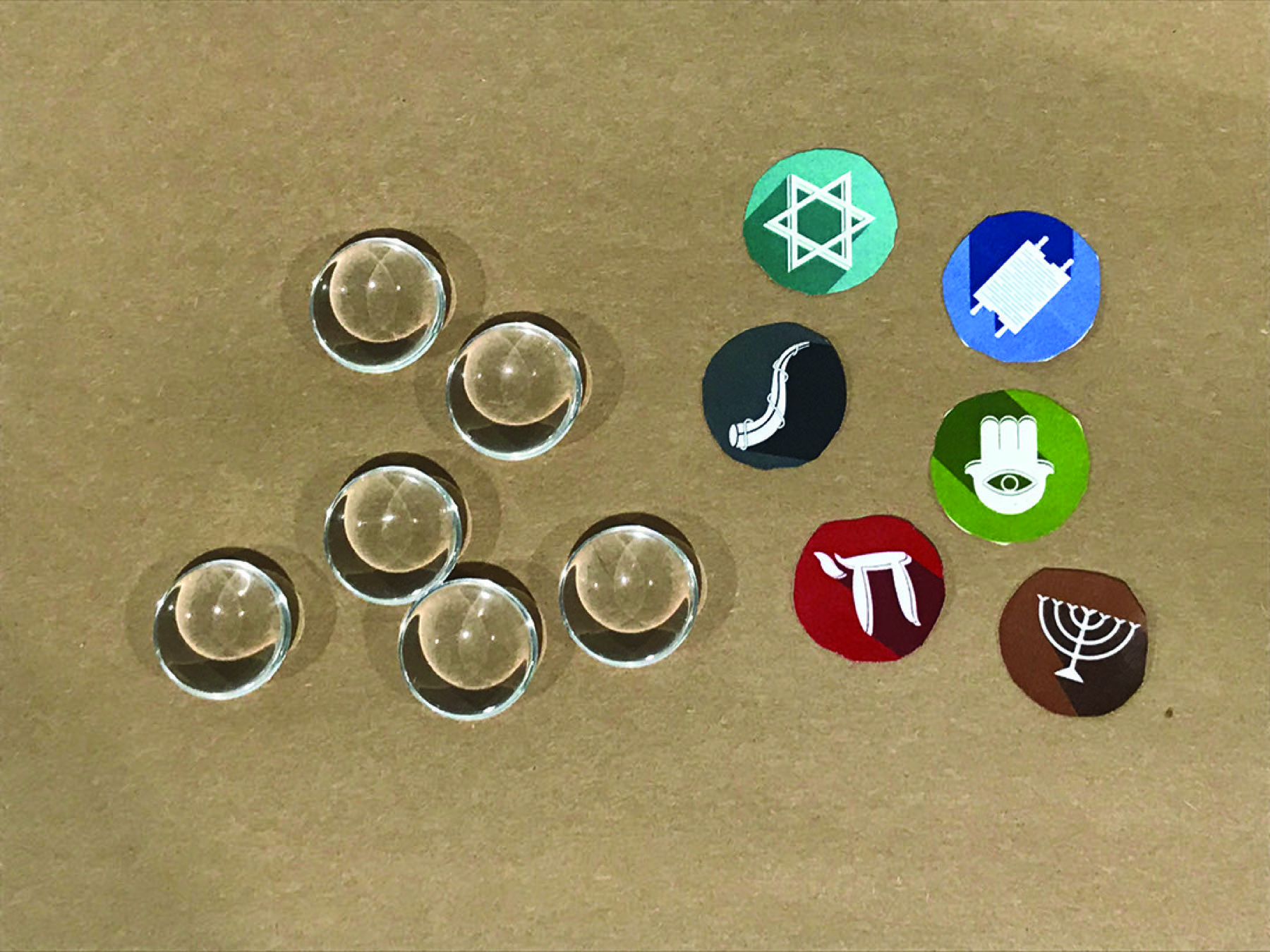
The foundation for these magnets is clear glass cabochons. They are domed on one side and flat on the other. And when you apply the image to the flat side, it is magnified through the glass. You can find cabochons at online retailers like Amazon, eBay and Etsy. 

To make the magnets in this example, I found images online and printed them out on a laser printer. I don’t recommend using an inkjet printer because the ink tends to run when the paper comes in contact with the Mod Podge. And if you’ve never used — or even heard of — Mod Podge, it is a decoupage medium similar to white glue that adheres and seals paper onto various surfaces. It’s available at crafts stores.

What you’ll need:
Round glass cabochons, about 1 inch in diameter
Mod Podge
Paintbrush
Scissors
Adhesive magnets

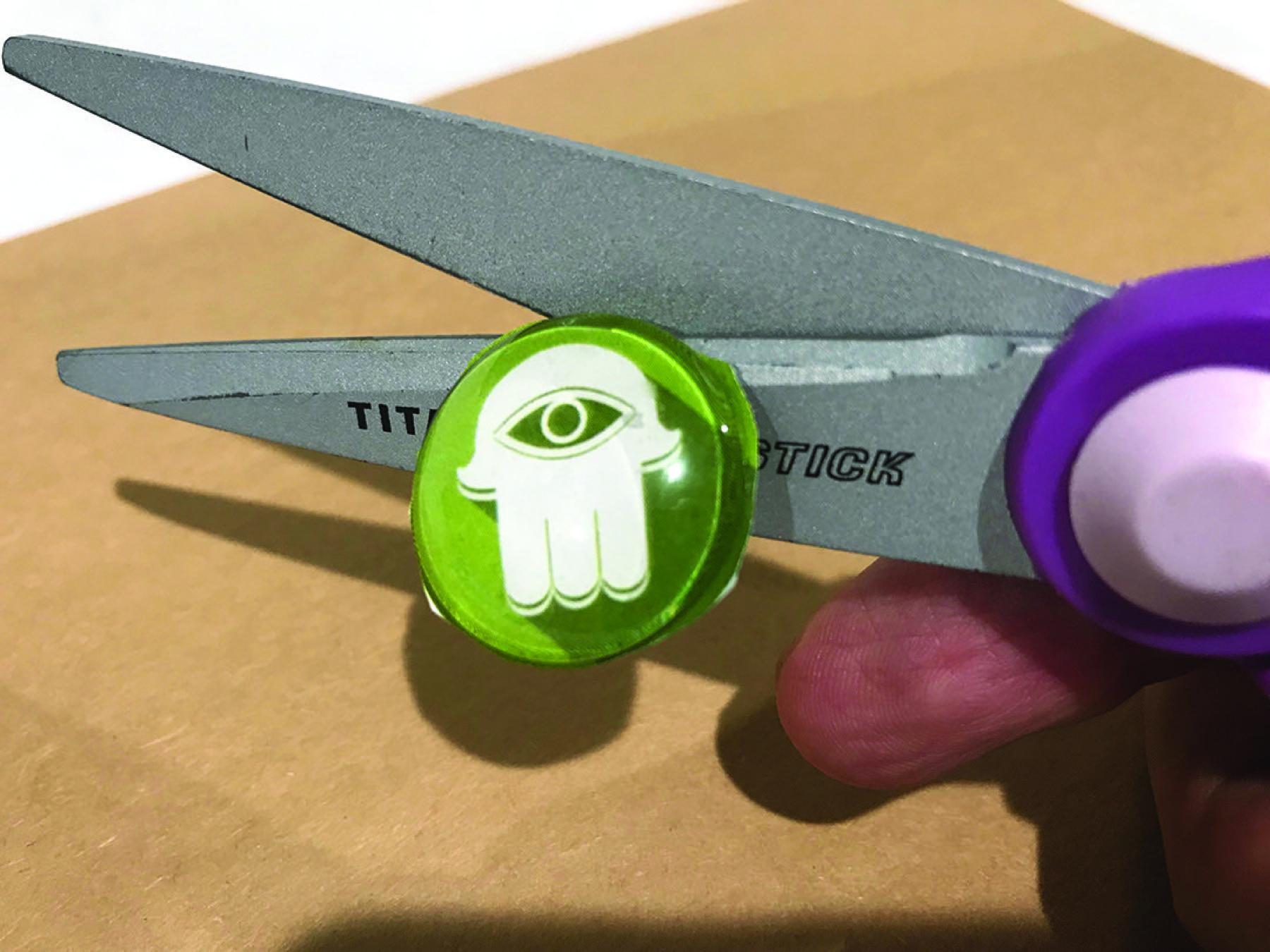
1. Cut images with scissors so they are about the same size as the cabochons. They can even be a little larger, as we will trim them later.

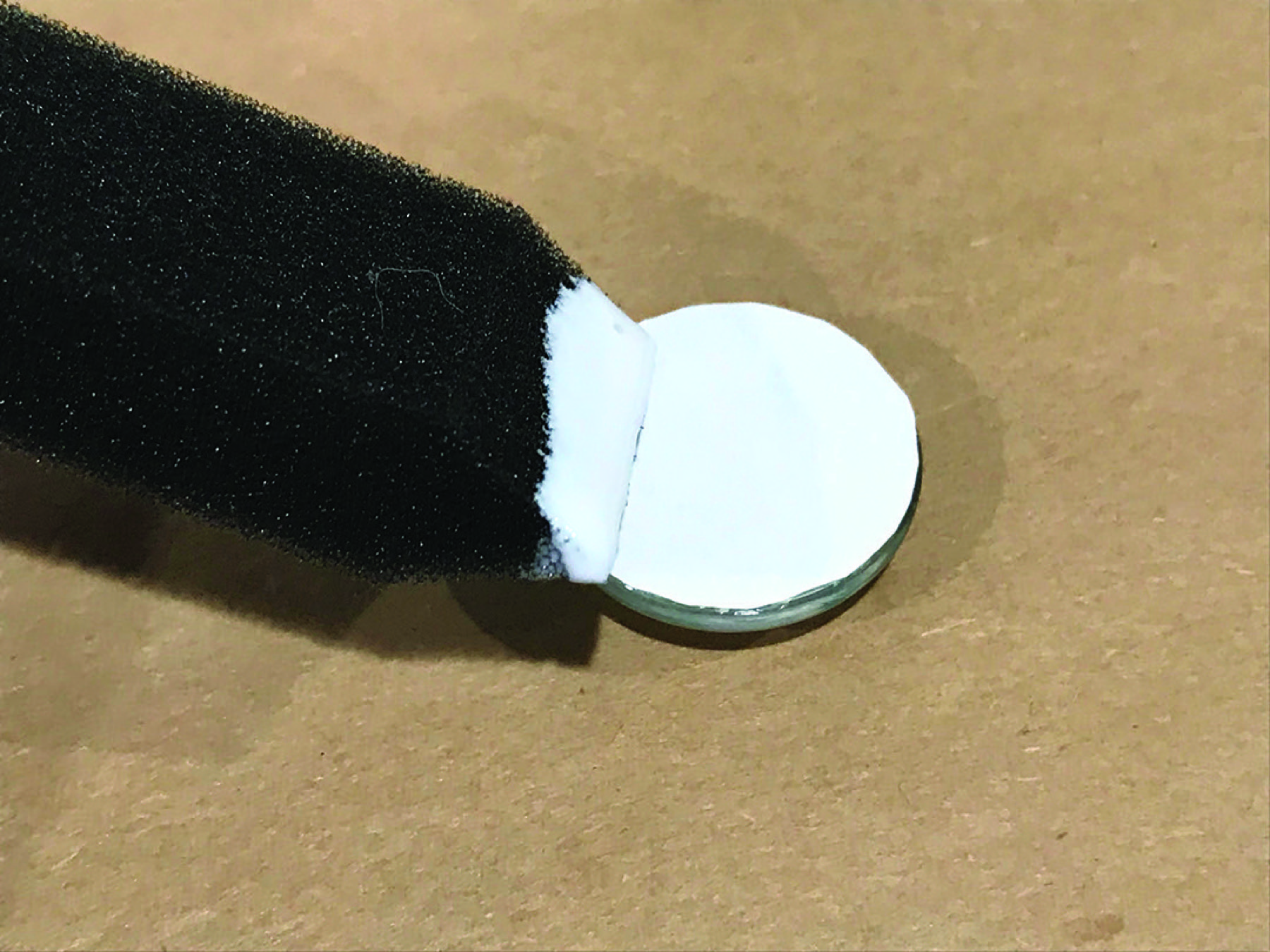
2. Apply a layer of Mod Podge to the flat side of the cabochon with a paintbrush.

3. Press the image onto the flat side of the cabochon where the Mod Podge was applied. Let it dry.

4. Trim any excess paper that extends past the edge of the cabochon.

5. Apply another layer of Mod Podge to the back side of the cabochon to seal in the image.

6. Cut a piece of adhesive magnet and adhere it to the back side of the cabochon.


Jonathan Fong is the author of “Flowers That Wow” and “Parties That Wow,” and host of “Style With a Smile” on YouTube. You can see more of his do-it-yourself projects at jonathanfongstyle.com.

Easy Personalized Glass Magnets Read More »

Hear Their Voices, Stop the Rage

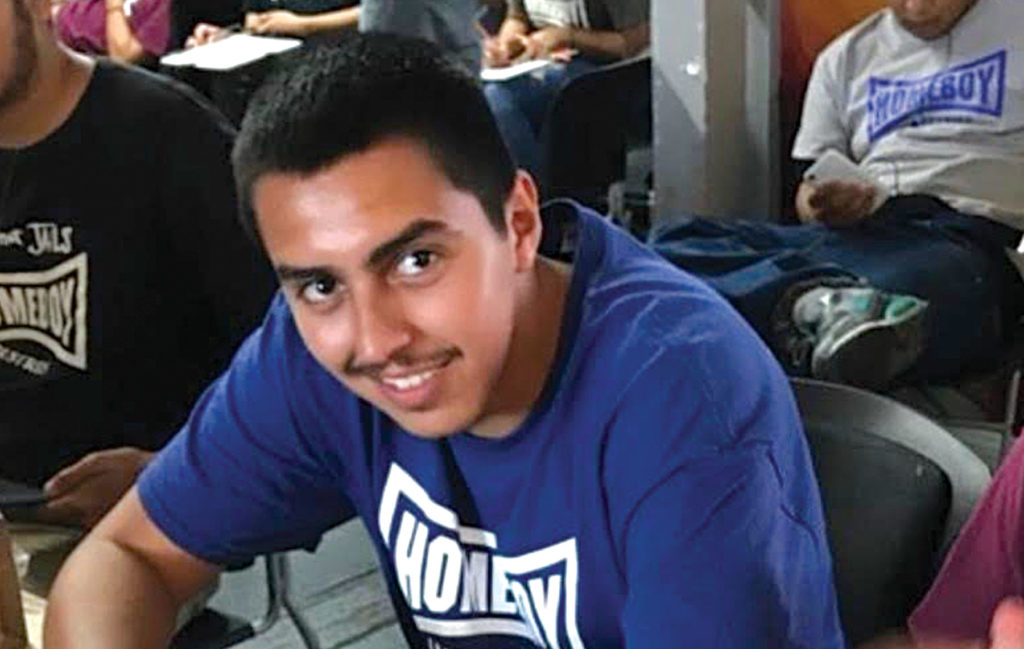
Editor’s note: Naomi Ackerman, executive director of the Advot Project, was at the Wallis Annenberg Center for the Performing Arts in Beverly Hills on Aug. 8 for the final dress rehearsal of a teen summer theater program with Homeboy Industries, which works with youths formerly involved in gangs. She and the teens were preparing for a performance the next day that would culminate their 10-week Relationship 101 program that uses theater and the arts to teach communication skills and healthy relationships. However, during the rehearsal Ackerman received a call informing her that one of the performers, 18-year-old Ramon Cardona, had been shot and killed. The show was postponed until further notice. Below are her thoughts, written in the tragedy’s immediate aftermath.


Thursday, August 9:
This morning I got into my car and turned in the opposite direction of where I was supposed to be driving. Today I was supposed to be at the culmination of our summer teen theater project, a collaboration with Homeboy Industries to be held at the Wallis Annenberg Center for the Performing Arts.

So many feelings were involved in this culmination. It was not an easy summer, but it was all coming together. It was exciting to see the youth simply being youth, the masks coming off, creativity knocking at the door.

We almost made it to the finish line.

We rehearsed on Monday and Tuesday. The sweet smell of triumph was in the air. The kids danced and sang — not without major pushback, but they too could feel the final presentation creeping up on us. Everyone was getting excited.

My car had been loaded all week with the props, T-shirts, snacks and art of my beloved homies. My own children and their friends had to wiggle around all these things to find a seat whenever I took them here or there.

Nothing, absolutely nothing, could have prepared us for what happened yesterday. As we were unloading all of our things in the theater, I received a phone call notifying me that one of “our” kids had been shot and killed.

What were we to do?

In all the years I have been doing this work, this was the first time I’d lost someone in one of my programs — someone who had been dancing, smiling and ready to take on the world.

Having lived in Israel, I sadly learned the reality of young, innocent people being torn from my side to fight a senseless war. But the gang wars of California take “senseless” to a new level.

I am simply beside myself.

I had a brilliant team this summer: Two amazingly talented acting teachers who steered the ship; a music director who raised the bar beyond the sky; and three magnificent dance teachers. 

We are all shell-shocked.

Tragically, Homeboy Industries knows how to deal with these situations and postponed the show.

Today, we stood together in a healing circle at Homeboy headquarters. We listened. We grieved. We passed around burning sage. We ate. We held the hearts of the youth.

Our work is like pushing a boulder uphill. There are days when our work seems impossible. Today could have been that impossible day. But instead, today reminded me exactly why we do what we do.

The kids talked about our program. A video of Ramon, the young man who was killed, played in a loop. Someone said Ramon had been a “lost” boy and that this summer he was the happiest he had been in a long time.

Our job is to bring the happy. The fun. The hope. We cannot stop the rage, as hard as we try. And believe me, there is nothing I want more than to stop the rage.

But we can hold each other. We can love. We can let be. And we can believe in change — as hard as it is. We must never, ever, ever stop believing in the possibility of change, because that belief is essential for the change to happen.

Nothing, absolutely nothing, could have prepared us for what happened yesterday. As we were unloading all of our things in the theater, I received a phone call notifying me that one of “our” kids had been shot and killed. What were we to do?

A man in the healing circle said, “I pray for Ramon and his family, and I pray for the shooter.”

It stopped me in my tracks.

“I pray for the shooter, because he too is suffering from trauma.”

My goodness. My goodness. We pray for everyone. We pray.

I am so grateful for the individuals in my personal community who have been reaching out all day. I am grateful for the Advot community and my remarkable team, who have been present the past 24 hours. I am grateful to the Wallis staff who simply did everything I asked of them, without question or hesitation, even though I changed my requests every 30 minutes.

I am grateful for the Homeboy community, which taught me a lesson today about the beauty of community, the simplicity of compassion and the power of communal prayer. I am grateful for the absolute privilege of working with these kids, who challenge me and force me to grow as a teacher and a human every day.

Homeboy’s Father Greg said: “Today we feel the presence and the absence.”

Today I feel despair and hope. I feel so many mixed and contradictory emotions. Who knew the heart could break and expand at the same time?

What I do know is that, at some point, we will have our performance. We will make sure the voices we heard will be heard, because they have much to say.

We will not lose faith. We will never — and I mean never — give up on these young people and the possibility of them being everything they hope to be.

So you cannot either.

Hear Their Voices, Stop the Rage Read More »

Writing Her Way Through Tragedy

When Sara-Chana Silverstein wrote her book proposal for “Moodtopia,” she had no idea it would serve as a blueprint for her own journey.

The Los Angeles native who now lives in Brooklyn, N.Y., is an herbalist, classical homeopath and international board-certified lactation/breastfeeding consultant who said she decided to write “Moodtopia” to help people combat stress and improve their quality of life. 

Her book offers a guide on how to integrate herbs, aromatherapy and color therapy into people’s lives. Doing so helps you “learn to be in control of your moods so your moods don’t control you,” Silverstein told the Journal in an interview at a Los Angeles coffee shop. 

“Becoming a master of your moods is something people need to practice every day,” she added. 

Silverstein wrote the book proposal for “Moodtopia” in 2014. The following spring, around the same time she was shopping the book to agents, her 26-year-old daughter was hit by a car while crossing the street in the crosswalk. She emerged from the accident miraculously unscathed and was cleared by the hospital. However, five months later, in October, she suddenly became paralyzed from the shoulders down. Doctors diagnosed her with transverse myelitis, an inflammatory disorder of the spinal cord, and said she would be a quadriplegic for the rest of her life.

“I ended up living in the hospital for 7½ months,” Silverstein said. “I stopped working. I couldn’t leave the hospital, because my daughter couldn’t even hit the emergency call button.”

It was during that period that Silverstein unconsciously began in-corporating the lessons she had laid out in her book proposal. She placed a sign on her daughter’s hospital room door saying no one could enter unless they were smiling. She started spraying essential oils in the room and all the nurses would migrate there. She brought in plants, painted her daughter’s nails and dressed her in hospital gowns that were in her daughter’s color palette. She snuck in acupuncture, massage, craniosacral and Feldenkrais Method specialists, and practiced laughter yoga to facilitate her daughter’s healing.

“Despite what everybody said at New York University and Mount Sinai hospital, my daughter is up and walking with a cane,” Silverstein said. 

An Orthodox woman with seven children, Silverstein admitted, “My faith left immediately” in the wake of her daughter’s diagnosis. “I struggled as a religious woman to have faith in God when he would do this to my daughter. But I continued to keep Shabbos and keep kosher. I continued to dress modestly. And I slowly but surely saw the miracles of my daughter’s hard work and her belief that she was going to get better.”

In December 2015, Silverstein landed an agent and then sold the book proposal in early 2016. She completed the book a year after her daughter was hospitalized.

Said Silverstein, “It says in the Days of Creation that God put the healing in the world before the illness. He created plants and trees before man. Since the Holocaust, when all the midwives and the wise women were killed, we also lost the wisdom of plant knowledge. And one of the goals of my book is to re-educate the Jewish people on the ways they can use herbs.”

Silverstein, who grew up in Studio City, moved to New York when she was 23. However, she spends every summer in Los Angeles and visits several times a year. 

She’s delighted to be back “home” for the local release of “Moodtopia,” which will take place at The Grove’s Barnes & Noble on Aug. 28. 

“I’m an L.A. girl,” she quipped, “who visits New York for the winters.”

Writing Her Way Through Tragedy Read More »

JCC Maccabi Coaches Find Jewish Gold on the Diamond

There are parents who volunteer to coach their kids’ Little League baseball teams or AYSO soccer teams, and then there are people like Randy Michel and Peter Waxler, who continue coaching long after their own kids have grown up. 

The two 64-year-olds have coached JCC Maccabi Games baseball teams for a combined 41 years, and for the past dozen or so years they have been doing so together. Most recently, they coached a team for boys 14 and younger from the Westside JCC’s Los Angeles delegation.

The JCC Maccabi Games got its start in 1982 in Memphis, Tenn., with 300 athletes. The games have taken place almost every year since, often in multiple cities concurrently, with local families generously hosting the athletes. 

This year’s event, from Aug. 5–10, was slightly different. The Merage JCC in Irvine and Alpert JCC in Long Beach joined forces to put together this year’s event in Orange County, playing host to 2,500 Jewish teens from all over the United States, as well as from Israel, Canada, Mexico and Great Britain. 

Michel, an accountant who lives in West Hills, first got involved with the Maccabi Games in 1997. Two years earlier, he and his son Jesse, then 11, “kind of accidentally stumbled on Maccabi,” he said. They were playing catch at the West Hills Pony Baseball fields when they noticed an unfamiliar group of teenage boys practicing. They turned out to be a team preparing for the games, which were being held in Los Angeles that year,

Jesse told Michel he wanted to participate in the games when he was old enough, and he followed through when he turned 13. With the exception of one year, Michel has been coaching a local Maccabi baseball team ever since.

It’s about the whole Jewish experience, including the rachmanus rule: “compassion and good sportsmanship, both on and off the playing field.” — Randy Michel

Waxler, who lives in Calabasas and was a pitcher at UCLA, is an attorney in the insurance business. He became involved with the Maccabi Games when his oldest son, Brett, tried out and made the cut for a Maccabi baseball team in 1999. When that happened, Waxler, who had coached Little League for years, was recruited to coach the team. He has been coaching ever since. 

Michel and Waxler have coached some very talented Maccabi athletes over the years, including current Major League Baseball pitcher Max Fried of the Atlanta Braves and outfield Kevin Pillar of the Toronto Blue Jays.

They also have experienced moments of baseball magic. In 2000, “We got to play one of the gold medal games in Tucson in the Arizona Diamondbacks’ Triple-A stadium,” Waxler said. “The normal thing is to play at a park or a high school field. All of a sudden, you’re playing in a stadium that is one step below Dodger Stadium.” 

But both men stressed that the JCC Maccabi Games are bigger than baseball. “It’s really about the whole Jewish experience,” Michel said. “That includes the rachmanus rule, defined in official materials as ‘compassion and good sportsmanship, both on and off the playing field.’ ”

“Kids go for the competition,” Michel said, “but [participating in] the nighttime events, when they are socializing with [2,500] Jewish athletes, is like no other experience. I just feel a lot of pride and joy. It’s a way of giving back to the Jewish community. And selfishly,” he added, “I love baseball. There’s really nowhere else I’d rather be than on the field.”

JCC Maccabi Coaches Find Jewish Gold on the Diamond Read More »

Tomchei Golf Outing, Boy Pays It Forward

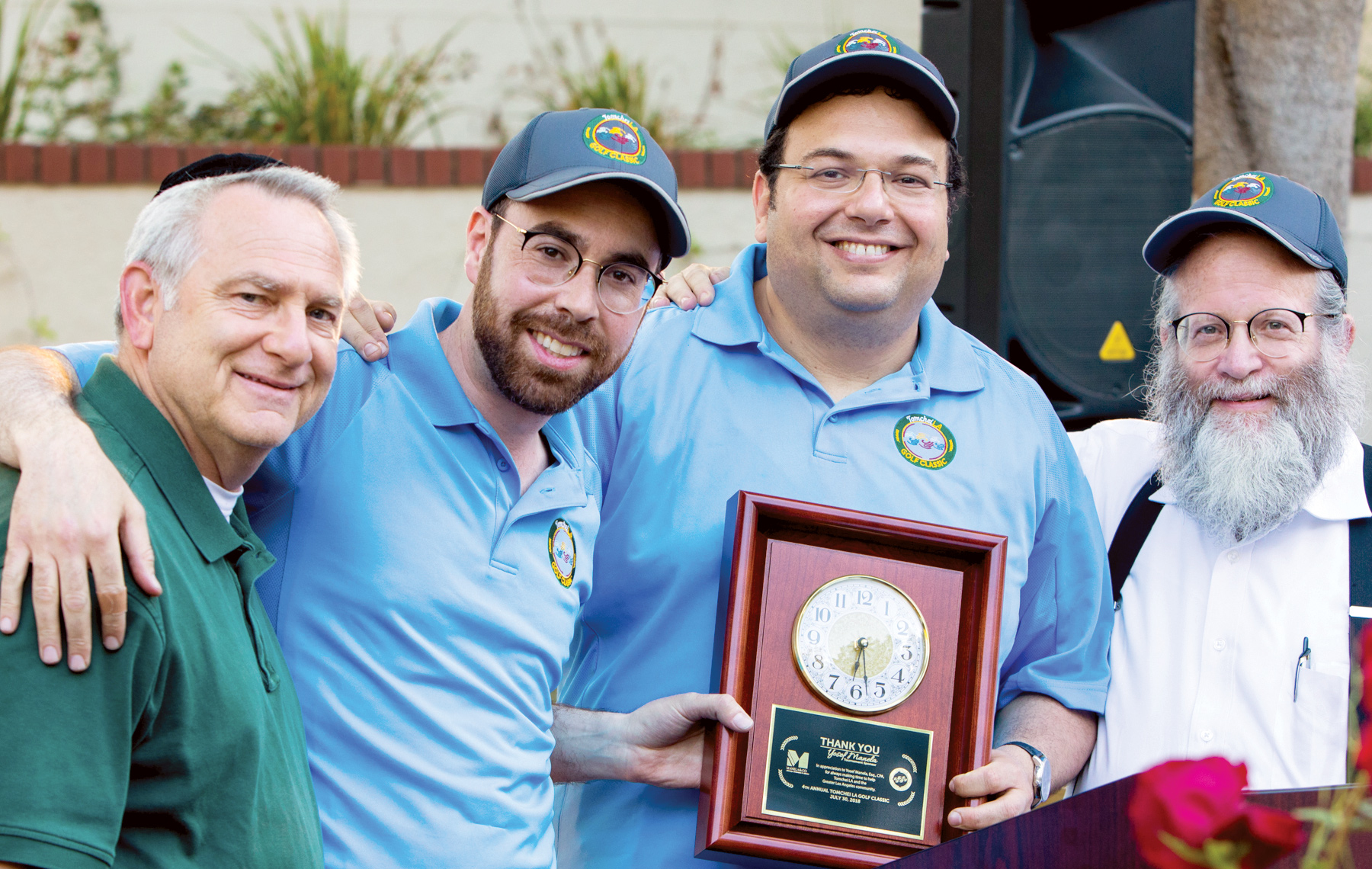
The Tomchei LA Golf Classic on July 30 at the Mountaingate Country Club raised about $250,000 for Tomchei Shabbos, an organization that provides food and services to Jews in need.

The event drew more than 150 people who golfed and enjoyed cocktails at the Brentwood club. And about 300
people attended a banquet that followed at Pat’s Restaurant on Pico Boulevard.

“We continue to see new faces and new sponsors participate,” said Tomchei Shabbos Executive Director Schneur Braunstein, who called the event a major success. “People keep coming back, and word has gotten around that this is the most fun charity event to attend.”

Tomchei Shabbos volunteers, supporters and leaders in attendance included Yosy Schames and Yosef Manela, its President Rabbi Yona Landau and Volunteer Director Steve Berger.

Founded in 1978, Tomchei Shabbos provides food on a weekly basis to Jewish people in need. Every Thursday evening, volunteers come together in a Pico Boulevard warehouse to pack food and deliver it to those living in poverty. The organization also helps Jews without work find jobs, start businesses and earn livelihoods. 


Nearly 1,400 Jewish community members turned out for Dodgers Jewish Community Day on Aug. 5 at Dodger Stadium to watch the Blue Crew take on the Houston Astros, the team that defeated them in the 2017 World Series. The Dodgers beat the Astros, 3-2.

The Sunday afternoon ballgame at Chavez Ravine began with actor and singer Skylar Astin (“Pitch Perfect”) singing the national anthem.

Nearly 30 different groups of synagogues, summer camps and nonprofit organizations — including Congregation Kol Ami and NuRoots, an initiative of The Jewish Federation of Greater Los Angeles for young adults — turned out. 

Attendees received a Dodgers Jewish Community Day T-shirt and kids under 14 received Junior Dodger backpacks. 


Hundreds of teens participating in the JCC Maccabi Games, held this year in Orange County from Aug. 5-10, took a break from the event’s athletic competitions and came together to make sandwiches for the homeless. 

The Alpert JCC of Long Beach and the Merage JCC of Orange County organized the Aug. 6 event at Westerly School in Long Beach, in partnership with Love in the Mirror, an organization that cultivates youth-led, service-focused initiatives.

Jonas Corona, who founded Love in the Mirror in 2009 when he was 6 years old, led the teens in the sandwich making. Throughout the year, Corona leads elementary and middle school children at the Alpert JCC in creating and delivering food and hygiene packages to vulnerable populations across Greater Los Angeles.

The JCC Maccabi Games, led by the JCC Association of North America, bridges Jewish communities, fosters athletic competition and offers social programming with an emphasis on volunteering. More than 3,000 Jewish teens from around the world took part in the Olympic-style event, now in its 36th year.


The American Israel Gap Year Association (AIGYA) has announced a new scholarship that will enable deserving students to spend a year in Israel after graduating high school.

“This year, we are extremely proud to announce the establishment of the Rosina Korda Gap Year Scholarship exclusively for AIGYA Fair attendees,” AIGYA Founder and Executive Director Phyllis Folb said in a statement. “Mrs. Korda was a child of Holocaust survivors, an accomplished school psychologist, loving wife and mother, and a pillar of the Los Angeles Jewish community. This scholarship reflects Rosina’s deep love of Judaism and connection to Israel.”

The gift in Korda’s name — donated by her husband and sons — is for three $3,000 scholarships and will be awarded to students planning to attend programs at the 2018 AIGYA Gap Year Fair on Nov. 15 at YULA Girls High School.

Students from Southern and Northern California, Seattle, Phoenix and Las Vegas attend the annual fair, which self-describes as the “largest [event of its kind] in the West and the only cross-denominational Israel Gap Year Fair in the United States.”

The sons of Korda and her husband, Robert Korda, spent a combined seven years in Israel after high school.

 “She would be so proud that a scholarship in her name would be used to encourage students to go on a gap year in Israel,” Robert said in a statement.

A gap year refers to the year between the completion of high school and the start of freshman year in college. Many Orthodox high school graduates spend a year studying in Israel before beginning college in the U.S.


Born two months premature at Cedars-Sinai Medical Center, Josh Klein weighed only 3 pounds, 11 ounces and was treated at the hospital’s Neonatal Intensive Care Unit for over a month. His mother, Wendy Moss-Klein, had toxemia, a blood poisoning caused by toxins from a local bacterial infection. 

For his bar mitzvah project this month, Josh, who turns 13 on Aug. 24, decided to repay Cedars-Sinai for the care he received as a newborn. He collected donations of more than 1,000 new baby items from family and friends, including onesies, bibs and handmade blankets. On July 24, he visited the neonatal unit loaded with 16 large garment bags and made the rounds with a red wagon, distributing some of the items to families whose children were being treated there. He left the remaining items for families and their babies yet to come.

A young mom thanked Josh and wiped away tears as she shared her baby’s story with him. Josh also gave a gift to a new dad whose baby was born just an hour earlier.

Josh’s family also donated $1,000 to Cedars-Sinai in honor of his bar mitzvah.

“This project was close to my heart,” Josh said.

After he distributed the items, Cedars-Sinai held a birthday party for Josh that was attended by nurses who cared for him as a newborn. 

Moss-Klein said her family owes so much to the hospital. “We don’t know where we would have been without them,” she said.

Josh became a bar mitzvah at Wilshire Boulevard Temple on Aug. 11.  

Tomchei Golf Outing, Boy Pays It Forward Read More »

This Woman’s Prayer

Blessed be the One
who made me me.
Yes, the One might have aimed higher:
made me smarter, nicer,
more loving, more generous.
But the One could have also have done far less:
given me limitations and burdens
and weaknesses that might have broken me.

Blessed be the One
who made me the daughter of my parents,
who brought me to existence in the United States
in the last third of the twentieth century,
a time after penicillin
and before social media.

Blessed be the One
who made me a reader,
a questioner, a thinker.
Who gave me life and faith
and health and so much—
so infinitely much—
more.


Erika Dreifus is a New York-based writer and book publicist.

This Woman’s Prayer Read More »

Pearls of Wisdom

In 2005, musician Craig Taubman curated a collection of short writings that attempted to get the reflective juices flowing in the month leading up to the High Holy Days. 

Called “Jewels of Elul,” the writings — which are about 250 words apiece and closely resemble tweets but with greater insight — have since become an annual tradition, save for a two-year gap in 2016 and 2017. Contributors have included Jewish and non-Jewish artists, activists, rabbis, politicians and entertainers, such as former President Barack Obama, the Dalai Lama, Hollywood executive Jeffrey Katzenberg and pop star Lady Gaga.

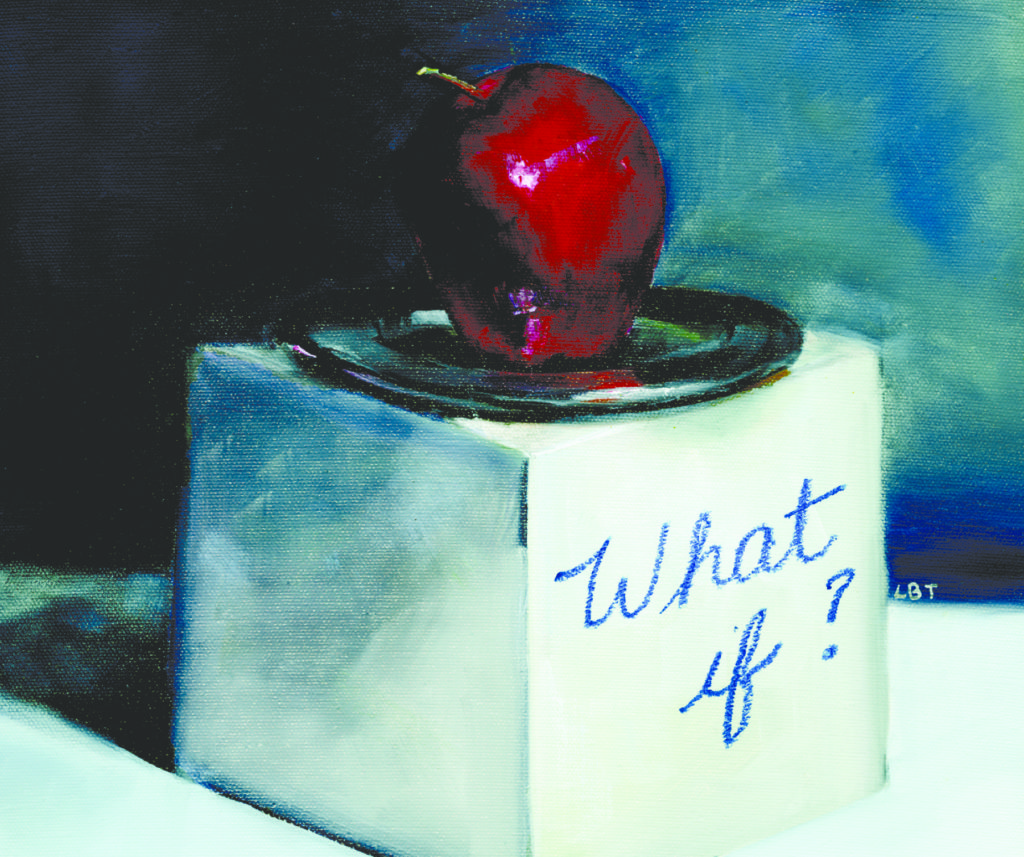
Taubman penned 29 “Jewels,” one for each of the 29 days of the Hebrew month of Elul, and this year’s contributors were asked to write about the question, “What if?”

“ ‘What if’ is the ultimate dare, the permission to think out of the box and reach for what might, could or ought to be,” Taubman, 60, wrote in the introduction to this year’s offerings on jewelsofelul.com. “It is the spice of life and, for me, the fuel that drives me through the day.”

In his contribution, Los Angeles poet Rick Lupert juxtaposes a mundane kvetch with an inspirational insight: “What if the Wi-Fi on airplanes was so much faster?” Lupert writes. “What if instead of using Wi-Fi on planes, we talked to the person in the next seat?” 

Rabbi David Ingber, founding rabbi of Romemu in New York, acknowledges his road rage and his tendency to assume the worst of other drivers. In his piece, he asks, “What if we could give each other the benefit of the doubt?”

“ ‘What if’ he was still alive — becomes our call to action,” writes Jeanne Pepper, the mother of Blaze Bernstein, the Jewish college student from Orange County who was killed on Jan 9.

Other contributors this year include Jewish transgender activist Abby Stein; Orthodox Rabbanit Alissa Thomas-Newborn; California Lt. Gov. Gavin Newsom (also a Democratic gubernatorial candidate); comedian Sarah Silverman; her sister, Rabbi Susan Silverman; March For Our Lives activist Matt Deitsch; Zionist author Gil Troy; and songwriter Eric Bazilian, who wrote the 1995 Joan Osborne hit “One of Us,” which asks, “What if God was one of us?” 

‘Jewels’ offers ‘bite-sized’ reflections that are also rich and deep in their themes. And the variety of people Craig brings together enables a diversity of perspectives, so everyone can find a voice, or voices, that brings out their own. —Rabbi David Wolpe

Taubman told the Journal in a phone interview he would not be writing “Jewels” were it not for his longtime collaborator, Sinai Temple Senior Rabbi David Wolpe. Wolpe also wrote the foreword to this year’s volume.

“Rabbi Wolpe gave me permission and opportunity to experiment and try new things,” Taubman said.

“What I would say is that ‘Jewels’ offers ‘bite-sized’ reflections that are also rich and deep in their themes,” Wolpe told the Journal in an email. “And the variety of people Craig brings together enables a diversity of perspectives, so everyone can find a voice, or voices, that brings out their own.”

This year’s theme of “What if?” was born out of a lunch meeting a couple of months ago between Taubman and philanthropist Bruce Whizin. Taubman said Whizin asked what it would take for Taubman to bring back “Jewels” this year. “Time and money,” Taubman responded, to which Whizin replied: “What if I gave you the money?” 

“With that ‘What if’ question, I got the theme and I got the money,” Taubman said. 

“What if?” is also the theme of Taubman’s forthcoming High Holy Days services, which will be held at the Pico Union Project in downtown Los Angeles. The project is Taubman’s nonprofit interfaith arts center, housed in the original Sinai Temple building, under the auspices of his congregation, Sanctuary @ Pico Union.

Taubman plans to print and distribute approximately 20,000 hard copies of this year’s “Jewels of Elul,” which will be available in a CD-sized book and printed on glossy paper. Each copy comes with a request for a donation to the Pico Union Project. The writings were released on the Jewels of Elul website on Aug.12, the first day of the month of Elul. 

After announcing this year’s contributors, Taubman said he received a letter from someone angry over the inclusion of Newsom and omission of his Republican opponent, John Cox. Similarly, a person wrote to him to express displeasure that Sarah Silverman, a champion of liberal causes, was included.

Taubman, for his part, said the point of “Jewels” is not to preach politics — though several of the contributors express their dislike of the current president — but to increase civility. 

The point, he said, is to hear from “people who are like you and people not like you.”

You can sign up here to receive a “Jewel a Day.”


Pearls of Wisdom Read More »

The Phenomenon of Left and Right

I have said some things on podcasts and on Twitter that have raised questions. I am hoping to answer those questions so people will understand the framework I am working from and why I have arrived at the perspective I have. 

I hear many people talking as if the terms liberal, progressive and leftist refer to different factions, and that one might partner with one and reject another.

I have been on the left my entire adult life. I never have seen clean distinctions drawn between these things. There was a time when the term liberal had been so thoroughly demonized by those on the right that I remember consciously choosing to call myself a progressive in order to evade the stigma. But there was no change in my perspective that accompanied it.

There may be slight distinctions in how people use those terms, but in general, I think they are synonyms and should be treated as such.

I also have said I am a liberal who wishes to live in a world so good I could be a conservative. That may sound paradoxical at first, or strange. But I think it makes a great deal of sense because the core of liberalism is a desire for change. If one’s desire for change is an earnest desire to see things improve, then surely there is a state in which things have been improved to the point where you would hope to conserve a structure rather than alter it.

I also have said I am a liberal who wishes to live in a world so good I could be a conservative.

At that point, you become a conservative.

I don’t expect to reach that place in my lifetime, but if we did, the honest thing to do would be for me to shift positions and say, “This system is so functional that we would be foolish to change.”

The essence of liberalism is a desire for change. And change can be about a number of things. In general for those of us on the left, it comes from a recognition that the system, as we find it, is unfair to some people. To the extent it is unfair, and that the unfairness is distributed in some way that is predictable, that certain populations face obstacles that others don’t, we could correct that problem. And I believe we have a moral obligation to do so. 

I also believe that we are on a trajectory, technologically and in the ways that the population of the planet is growing, that puts us in grave danger in the near term. Both of those things suggest a need for a comparatively radical degree of change. 

Those on the right are correctly pointing out that there is other evidence that says our system as it exists is highly functional. Harvard psychology professor and author Steven Pinker famously points to a decrease in random violence and warfare. I believe he has a real point. But I don’t think it predicts where we will end up in the long term. 

What it is the result of, effectively, is the fact we have created a kind of artificial growth that goes on decade after decade and gives people a lot to lose for engaging in random violence. But because it is predicated on the fiction it can go on forever, ultimately it is going to leave us holding the bag.

So, yes, I am a progressive, I’m a liberal, and I would like to see those of us on the left who have a rational perspective that is grounded in science and logic retake the left, take control of it from people who are using it as a weapon, and restore a rational dialogue of progressivism to the landscape.

I also believe that those on the right who are interested in seeing the best possible system and believe we are closer to it than I do should be rooting for a vibrant left because it is only the tension between these two entities that leaves us with reasonable governance. 

In other words, liberals tend to be overly enthusiastic about the idea of change. They tend to not fully appreciate the unintended consequences of attempting to fix problems that are identified. 

Conservatives tend to be very skeptical of change. When something could be improved, they often get in the way of those improvements because they fear the unintended consequence perhaps more than they should. 

It is the tension between these two things, where liberals can fill in the blind spots of conservatives and conservatives can fill in the blind spots of liberals, that is the magic that makes our system function well. 

It leaves us with change — enough to make things better over time — but not such wild enthusiasm for change that we take a good system and destroy it in the pursuit of a perfect one.


Bret Weinstein is an evolutionary biologist who spent most of his career at Evergreen State College in Washington state before resigning last year after a political dispute.

The Phenomenon of Left and Right Read More »

Congo’s Democracy Remains in the Balance

Tear gas fired into maternity wards. Pro-democracy protesters arrested, tortured, wounded, some even killed. Children attacked with machetes. Villages reduced to ash. These scenes were witnessed in recent days by the Jewish World Watch (JWW) field representative in the Democratic Republic of Congo (DRC). In his war-torn country, he is the eyes and ears of JWW, which was founded in 2004 to fight genocide and mass atrocities. The political situation in the DRC is so perilous that he asked that we not use his name.

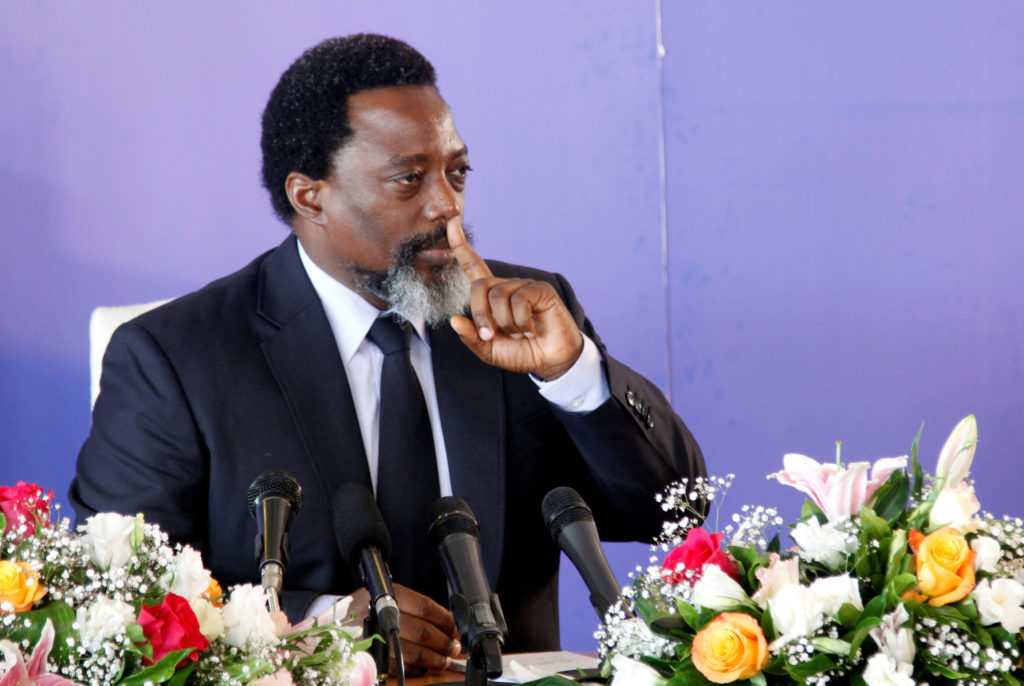
The current brutality is largely linked to the DRC’s upcoming presidential election, scheduled for Dec. 23. Rich in mineral wealth yet rampant with corruption, Congo hasn’t seen a peaceful transfer of power since achieving independence from Belgian colonialism in 1960. The current president, Joseph Kabila, has led the country since his father’s assassination in 2001, and, according to the DRC constitution, should have left office in December 2016, after his second term.

A recent and rare bipartisan effort by the U.S. Congress aims to ensure the Congolese people can exercise their democratic rights, through the “Democratic Republic of the Congo Democracy and Accountability Act” (H.R. 6207). Introduced on June 25 by Reps. Chris Smith (R-N.J.), Karen Bass (D-Calif.), Eliot Engel (D-N.Y.) and Ed Royce (R-Calif.), the bill passed through the House Committee on Foreign Affairs just days later. It now awaits passage by the full House and Senate.

The bill expresses U.S. security concerns over the political violence, conflicts, corruption and humanitarian crises ravaging Congo and destabilizing the region. It also codifies sanctions against senior Congolese political figures — precisely the weighty pressure that Congolese civil society has been pushing for.

Rich in mineral wealth yet rampant with corruption, Congo hasn’t seen a peaceful transfer of power since achieving independence in 1960.

U.S. lawmakers have reason for concern. Kabila has repeatedly broken promises to allow free and fair elections to replace him, so his declaration of new elections to take place this December has brought more instability than joy. During the candidate registration period, which ran through Aug. 8, the Congolese waited with bated breath for any indication of whether the tight-lipped Kabila would run again, “praying with all their might for an official statement that he will not,” our field representative told us. Their prayers were answered on the final registration day, when Kabila announced he would not run and would instead support Ramazani Shadary, a hardcore loyalist. 

Yet even Kabila’s new willingness to step down does not ensure a peaceful transition. For one thing, Shadary, a former interior minister and vice president, has been associated with repressive police violence in Kinshasa and Kasai, and, in May 2017, was one of several Congolese officials sanctioned by the Council of the European Union for “serious human rights violations.”

Despite the DRC’s enormous wealth in mineral deposits, its population ranks among the poorest in the world. For more than 20 years, Congo has been embroiled in intertwined conflicts that have drawn in neighboring countries. More than 70 armed groups are believed to be operating inside the country, which is roughly two-thirds the size of Western Europe. This ongoing unrest has claimed 6 million lives over the past two decades and caused the largest displacement crisis in Africa. Many of the armed groups have ramped up their violent activities, including brutal killings and rapes, as part of a strategy to exploit for their own financial gain the current environment of governmental impotence and general unrest.

Political violence has spiked as well, particularly since a government ban on protests took effect in 2016. On June 10, Luc Nkulula, leader of the pro-democracy youth movement known as LUCHA, was killed in a fire in his home in Goma under suspicious circumstances. Police and military aggressively attempt to quell dissident voices through arbitrary arrests and detentions, torture, and the gassing and killing of civilian protesters. 

Yet the Congolese continue to hope for peace, and we can ask our leaders in Congress to lend their support. Please ask your representative to co-sponsor H.R. 6207, and your senators to introduce similar legislation. You can do so easily by visiting
jww.org/Congo.


Susan Freudenheim is executive director and Ann Strimov Durbin is advocacy and grantmaking director of Jewish World Watch.

Congo’s Democracy Remains in the Balance Read More »

A LeBron James Primer

Last week, LeBron James spoke with ESPN’s Rachel Nichols in his first sit-down interview since taking his talent to Los Angeles. The video had 1 million views in the first 24 hours. 

In case you’ve been living under a rock or you’re not a sports fan, here’s a quick recap: 

On July 1, Cleveland Cavaliers superstar James announced that he was joining the Lakers. James had signed a four-year, $154 million contract. Laker ticket sales skyrocketed within 20 minutes. FormSwift estimated that James’ move to Los Angeles would bring 3,000 new jobs, have a five-year local economic impact of close to $400 million, and that the five-year state tax revenue would be about $30 million dollars.

This was all old news by the time James sat down for the interview with Nichols.

Everyone with a pen and a byline was chomping at the bit for an interview. But James wasn’t in a rush. He had a plan. 

Quick detour for a personal sidebar. 

In sports, I like to root for the underdog, so being a James fan was never in the cards for me. Where’s the thrill of rooting for the best player in basketball? Except, of course, when his team is playing the Golden State Warriors. 

Now James has come to our city. Still not a fan. 

Star athletes get so much attention, adulation and respect for doing something that few people can do. I appreciate it and waste too much time watching them. But at the end of the day, the world is no better today because James is a superhuman physical specimen and is one of the best ever to play the game. 

Back to the interview. 

Within the first moments of the interview, you realize that James has chosen the location. He has something to promote. It’s not an ESPN studio. Not on the floor at Staples. He’s at a public school. 

Within the first two minutes, Nichols says, “You’re a guy who has won three NBA titles, four MVPs, and yet you will tell anyone who listens that opening this school today is a greater moment than any of those — and I got tape of you in Game 7 in the NBA Finals. Do you mean it?” 

James says, “I do.” 

You heard that, right? After 16 years of a prolific and already legendary NBA career, James said — and I’m paraphrasing here — “Basketball is a tool that allows me to be an ambassador of good.” 

I hope NBA players will realize that James’ philanthropy is his greatest achievement.

The details of this new $8 million public school, a collaboration between James’ foundation and the Akron Public School District in Ohio, are impressive. 

Every one of the 240 students at this school for at-risk kids will get free breakfast, lunch, snacks and drinks. There is a “support circle” for students after lunch and every student gets access to a fitness trainer. Parents will get GED courses and job placement, and every student gets a new bike. Finally, if a student graduates from the school, James will pay for his or her tuition at the University of Akron. 

Respect. 

Like most people, I’m a fan of a specific team: my home team. The team that fans forge a visceral relationship with from adolescence. A team that, no matter how many games it may lose, real fans still feel something in their kishkes when they see the jersey. 

I’m still with my team, but now I root for players and owners who use their divine given platform to make a divine difference. 

How can you not root for Houston Texan defensive end J.J. Watt after he helped raise close to $40 million for the victims of Hurricane Harvey? 

You gotta love Robert Kraft, principal owner of the New England Patriots, for making an annual trip to Israel and bringing with him hall of famers such as Jim Brown, Joe Montana, Roger Staubach, Joe Greene, Cris Carter, John Stallworth, Eric Dickerson and Marshall Faulk. 

I hope the NBA players who strive to emulate James’ on-the-court success will realize that his philanthropy is his greatest achievement and the one that should be the most emulated. 

Today, the world is a better place because of LeBron James. Bruchim habaim, LeBron. Welcome to L.A.


Chaim Marcus is the CEO of Marcus Advertising in Marina del Rey.

A LeBron James Primer Read More »