fbpx

August 17, 2018

The Arrest of the Former Armenian President Kocharyan and the Khojaly Genocide

Azerbaijani children who survived the 1992 Khojaly Genocide committed by Armenian troops.


Two weeks ago I was positively surprised to learn about the arrest of Armenia’s former President Robert Kocharyan – one of the main perpetrators of a genocide that turned my life upside down as a young girl 26 years ago.

Kocharyan was taken into custody in Yerevan, and was charged with an attempt to overthrow the constitutional order and causing the death of 10 people in the post-election crackdown in Armenia in March 2008.

I had mixed feelings. I know Kocharyan not only as a former President of Armenia (1998-2008) who killed his own people to guarantee his successor’s (Serj Sargsyan) power, but primarily for his special role in the occupation of Azerbaijan’s territories, the expulsion of my compatriots from their native lands and murdering them and committing the Khojaly Genocide – the first genocide in Europe after the end of the Cold War. For me, a criminal always remains a criminal. It once again proves that those who have committed crimes against other people can never bring happiness to their own people.

Was I relieved reading this news? No, I wasn’t. Because Kocharyan wasn’t charged for the war crimes he committed against Azerbaijani civilians in the early 1990s in the Nagorno Karabakh region of Azerbaijan, especially for his involvement in the horrendous Khojaly Genocide. And because all other perpetrators of this terrible crime against humanity, including Serj Sargsyan, are still unpunished and at large.

I feel much pain when remembering the horrors I experienced in the Armenian torture camp in Nagorno-Karabakh as a captive of the Armenian army. But I know I have to be strong. I have to be confident and determined enough to share my story, the true story of what really happened in Khojaly.

I was 20 when my town Khojaly in Azerbaijan’s Nagorno-Karabakh region fell under Armenian siege. On February 25/26, 1992, Armenian soldiers invaded our town and murdered unarmed civilians indiscriminately. We ran into the night, through the forest, and into the killing field, as bullets sprayed in all directions. I was captured and sent to an Armenian torture camp, where I endured and witnessed unspeakable violence, cruelty and humiliation. I managed to survive, while 613 unarmed Azerbaijani men, women, children and the elderly from my small town did not.

The Human Rights Watch called the Khojaly crime “the largest massacre in the conflict” between Armenia and Azerbaijan, placing direct responsibility for the massacre of Azerbaijani civilians with the Armenian forces. The European Court of Human Rights also confirmed the facts about Khojaly in its ruling from 2010, and over 10 countries and 23 U.S. states have officially condemned this genocide. The United Nations Security Council passed four resolutions in 1993 condemning the illegal occupation and ethnic cleansing of the entire Karabakh region of Azerbaijan by Armenia and demanding the immediate withdrawal of Armenian forces from Azerbaijan’s occupied regions. However with the backing of certain powerful friends, Armenia continues to ignore these legally binding UNSC resolutions, while holding around 20 percent of Azerbaijan’s internationally recognized territory under illegal military occupation.

Even the former Armenian leadership couldn’t deny the fact that the atrocities committed by Armenian military in Khojaly were carefully planned in advance and brutally executed. In his interview with the British journalist Thomas de Waal in 2000, former Armenian President Serj Sargsyan, who was the commander of the separatist Armenian military forces in Nagorno-Karabakh in 1990s and President of Armenia in 2008-2018, admitted his involvement in the Khojaly Genocide, blatantly stating the following: “Before Khojaly, the Azerbaijanis thought that they were joking with us; they thought that the Armenians were people who could not raise their hand against the civilian population. We were able to break that stereotype. And that’s what happened” (Thomas de Waal, “Black Garden: Armenia and Azerbaijan through peace and war”, New York & London: New York University Press, 2003, pp. 169-172)

Kocharyan’s arrest was surprising, but his release from jail this week not quite so, showing vividly that Armenia is still not ready to go after criminals that have enormously damaged Armenia itself and the wider South Caucasus region over the years. Immediately after his release, Kocharyan has announced his decision to return to Armenian politics.

I, together with the other victims of this terrible crime, deserve to have the perpetrators brought to justice. They must answer for what they have done. You can’t hide from justice forever, Mr. Kocharyan and Mr. Sargsyan. Just because you committed this crime 26 years ago doesn’t mean you should be exonerated. There is no statute of limitations on war crimes and crimes against humanity. Criminals should never get a free pass!

The Arrest of the Former Armenian President Kocharyan and the Khojaly Genocide Read More »

Sandler and Hirsch Mine ‘Gems’

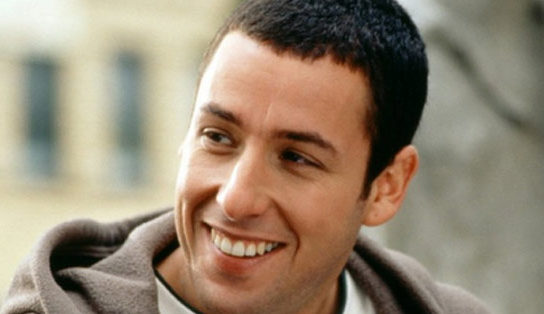
“Uncut Gems,” a movie set in Manhattan’s largely Jewish-run Diamond District, fittingly features Members of the Tribe in front of and behind the camera. Adam Sandler will star as a jewelry-store owner and gem dealer to the rich and famous whose glittery stock is stolen, and Judd Hirsch will portray his father-in-law.

Co-directors Josh and Ben Safdie, Syrian Jews known for their films “Good Time,” “Daddy Longlegs” and “Heaven Knows What,” were inspired to write the script (with Ronald Bronstein) by their father’s experiences working in the midtown Manhattan jewelry mecca

Sandler and Hirsch last appeared together in the similarly Jewish-centric Netflix flick “The Meyerowitz Stories (New and Selected)” alongside Ben Stiller and Dustin Hoffman, written and directed by Noah Baumbach.

Sandler and Hirsch Mine ‘Gems’ Read More »

A Moment in Time: Your Spiritual Filling Station

Dear all,
Yesterday was a very busy day.  I began with a low tank of fuel, and I figured I could get through most of my morning responsibilities before stopping at a gas station.
But when the gage told me I had four miles to go, I realized that running on fumes (both literally and spiritually) is never a good idea. So I made a detour and filled up.
Life is a balance.  On the one hand, we test the boundaries, exceed the limits, and reach beyond our resources.  But on the other hand, it’s so important to respect boundaries, recognize limitations, and conserve our resources.
How do we know the difference?
How far is too far?
When do we not try hard enough?
Have we found ourselves running on empty?
Are we self-aware enough to take a moment in time to stop and refuel?
Go and seek out your spiritual filling station!  It may take a detour, and it may not fit your established plan.  But it will set the tone for your onward journey!
With love and shalom,
Rabbi Zach Shapiro
Rabbi Zach Shapiro
A change in perspective can shift the focus of our day – and even our lives.  We have an opportunity to harness “a moment in time,” allowing our souls to be both grounded and lifted.  This blog shows how the simplest of daily experiences can become the most meaningful of life’s blessings.  All it takes is a moment in time.
 
Rabbi Zach Shapiro is the Spiritual Leader of Temple Akiba of Culver City, a Reform Jewish Congregation in California.  He earned his B.A. in Spanish from Colby College in 1992, and his M.A.H.L. from HUC-JIR in 1996.  He was ordained from HUC-JIR – Cincinnati, in 1997.  He was appointed to the HUC-JIR Board of Governors in 2018.

A Moment in Time: Your Spiritual Filling Station Read More »

Direct Contact - A Poem for Haftarah Shoftim by Rick Lupert

Direct Contact – A Poem for Haftarah Shoftim by Rick Lupert

Oh, how we’ve changed.
An Exodus ago we saw a light so bright
and asked Moses to be the one to
do the looking.

Now, an Exodus later,
we’re inconsolable by human voices,
even those who wrote the famous books.
We need personal contact with that Light.

We need a hug from the Almighty.
We need to know it’s going to be okay.
We need to know the cup of weakness will
be put in the hands of those who made us wander.

Our sons and daughters are fainting in the streets
we need a Divine rain to wake them up.
Nothing Noah-like…rainbows not required.
Just a splash on the face in this corner

we’ve found ourselves in.
Wake us up in Babylonia with news that
the freeway to the promised land has been paved.
We’re ready to shake off our dust and roll.

If it’s not too much trouble, we’d like the drive
to be casual. None of this flat bread on our back
kind of situation. No time to pack the collectibles.
Give us a moment to say our farewells

to put in the forwarding address
to update the paint so we don’t lose our deposit
to tell the unclean, we’re so sorry, this wasn’t
going to workout anyway.


God Wrestler: a poem for every Torah Portion by Rick LupertLos Angeles poet Rick Lupert created the Poetry Super Highway (an online publication and resource for poets), and hosted the Cobalt Cafe weekly poetry reading for almost 21 years. He’s authored 22 collections of poetry, including “God Wrestler: A Poem for Every Torah Portion“, “I’m a Jew, Are You” (Jewish themed poems) and “Feeding Holy Cats” (Poetry written while a staff member on the first Birthright Israel trip), and most recently “Beautiful Mistakes” (Rothco Press, May 2018) and edited the anthologies “A Poet’s Siddur: Shabbat Evening“,  “Ekphrastia Gone Wild”, “A Poet’s Haggadah”, and “The Night Goes on All Night.” He writes the daily web comic “Cat and Banana” with fellow Los Angeles poet Brendan Constantine. He’s widely published and reads his poetry wherever they let him.

Direct Contact – A Poem for Haftarah Shoftim by Rick Lupert Read More »

Rosner’s Torah Talk: Parshat Shoftim with Rabbi Elaine Zecher

Rabbi Elaine S. Zecher is Senior Rabbi of Temple Israel of Boston. She has served the congregation since 1990 and was the first female rabbi in the history of Temple Israel. Rabbi Zecher’s work extends beyond the congregation as she sits on the New England Regional Board of the ADL. She has been instrumental in the development of Mishkah T’filah, the Reform Jewish Movement’s  prayerbook for Shabbat, weekdays and festivals and the new Machzor, Mishkan HaNefesh. She is a Vice President for Leadership of the Central Conference of American Rabbis (CCAR) and serves as the Chair of the Machzor Advisory Group. She served on the Board of a new Jewish startup called Tzedek America-a gap year program based in Los Angeles. Rabbi Zecher received a Doctor of Divinity (honoris causa) from Hebrew Union College-Jewish Institute of Religion in 2013 and was ordained from HUC-JIR in 1988.

This week’s Torah Portion – Parashat Shoftim (Deuteronomy 16:18-21:9) – begins with instructions concerning the appointment of Judges and law enforcement officers. Moses commands the people of Israel to pursue Justice and to avoid corruption and favouritism. The portion also includes prohibitions of sorcery and Idolatry; rules concerning the appointment and the behaviour of Kings; and many laws of war, including the demand to offer terms of peace before going out to war. Our discussion focuses on the importance of “Shoftim ve Shotrim” (judges and police) and the importance of justice, Law and order in Judaism.


Previous Torah Talks on Shoftim:

Rabbi Rachel Kahn Troster

Rabbi Joshua Hammerman

Rabbi Jeffrey Kamins

Rabbi Lester Bronstein

Rabbi Howard Voss-Altman


Rosner’s Torah Talk: Parshat Shoftim with Rabbi Elaine Zecher Read More »