Against the backdrop of over 100 days of war between Israel and the terror organization Hamas, a report issued by the United States Commission on International Religious Freedom (USCIRF) provides chilling insight into factors that have enabled Hamas and similar terror groups across the globe for decades.
But it is hardly the kind of insight we might or should expect. A mix of negligence, ignorance and duplicity have resulted in what is nothing short of a scandal.
USCIRF was born in 1988, following the passing of the Religious Freedom Act by Congress, and the appointment of a U.S. Ambassador on International Religious Freedom, with an adjoining commission that serves as the global watchdog, informing and issuing recommendations to the U.S. State Department on religious freedom issues taking place across the globe.
The “watch” lists issued by the commission categorize countries identified as some degree of oppressive. The commission, staffed by no more than 15 officials of varied experience, are responsible for addressing these questions for the entire world.
Upon his resignation and statement of dissent regarding annual recommendations in 2017, USCIRF committee Vice Chair James J. Zogby pointed to the quality of research used to inform the designations and recommendations as a crisis of ethics, where the commission staff recommendations were based solely on murky sources. Included in multiple recommendations on Muslim nations in Central Asia is information derived solely from a self-described Christian organization based in Norway. The majority of information that informs these vital reports is copy and pasted from unvetted third parties, with particularly limited, if any in most cases, engagement between the commission team and the nations they have scrutinized. Zogby claims that “The commission’s staff is forced to write their drafts based largely on secondary sources or accounts from advocacy groups or the results of a few three- or four-day trips commissioners take each year to some of the countries. After receiving the draft, commissioners are then asked to review and comment on chapters dealing with countries, many about which we know very little.”
The lack of scrutiny is one issue, and the lens through which that scrutiny occurs also matters. Repeatedly, USCIRF has elected to interpret measures to combat religious extremism as weapons of religious persecution. In Tajikistan, a leading Tajik official questioned whether the United States was fighting or emboldening the Taliban, after Tajikistan earned heavy criticism from USCIRF for requiring religious institutions to register their existence with the government. In the eyes of USCIRF, sharing a vastly open border with Afghanistan is not an acceptable reason to require religious agencies to register, and that this requirement renders Tajikistan a religiously intolerant state. Never mind the “values” of the Taliban and the “tolerance” they bring to the table. From this example alone we know that something is not right. But there are many other alarming examples, such as in the 2017 report, which also railed against Kazakhstan for blocking funds transfers to people on an established list of known terror financiers.
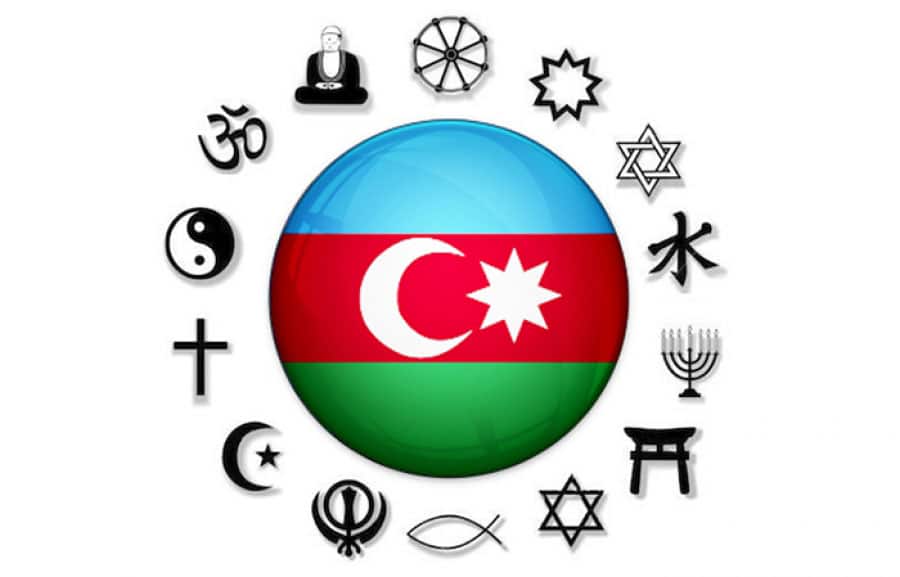
In the most recent report, USCIRF has recommended to include Azerbaijan in the State Department’s “Special Watch List”, citing Azerbaijan’s close monitoring of foreign religious leaders within their borders, most crucially because they share a border with Iran. In the eyes of USCIRF, oversight employed by Azerbaijan to vet extremism against religious radicals with proven links to Iran is a matter of religious oppression. Including Azerbaijan on this watch list has raised eyebrows, particularly in light of the fact that Azerbaijan is the oldest majority-Muslim secular republic, and the home and haven to Jewish and varied Christian communities since antiquity. Azerbaijan has been labeled in popular media as an “oasis of tolerance” and as a component of that achievement, Azerbaijan disallows extremism to enter and operate in the country. One of the leading staffers of the USCIRF is its Chief of Public Affairs, Danielle Ashbahian, previously employed as Director of Communications by the Armenian Assembly of America, one of the two main Armenian lobby groups in the U.S., known for their anti-Azerbaijani campaigns.
The question we must ask USCIRF is what in the world should nations like Azerbaijan do differently? And why would the United States advocate for peaceful democracies to suffer infiltration from foreign extremists, undeterred? Have we not seen, such as in every moment of October 7, what extremism looks like in real time?
Only through a very limited, twisted lens does religious freedom equal freedom for extremism rather than from it. With hope, let us assume this commission had better intentions. But the majority of research and evidence used to determine these reports, watch lists and sanctions, isn’t nearly close to sufficient, valid, or respectable. The American lens on mitigating foreign extremism and terrorism requires a deep overhaul. And every member of the commission is experienced enough to know that; and to know better.