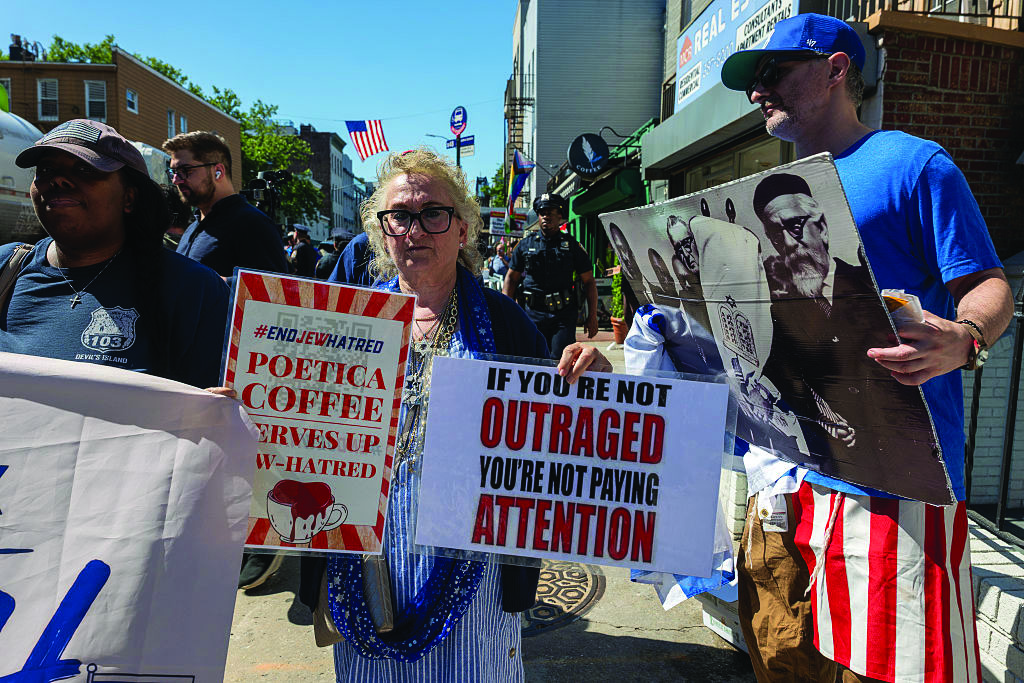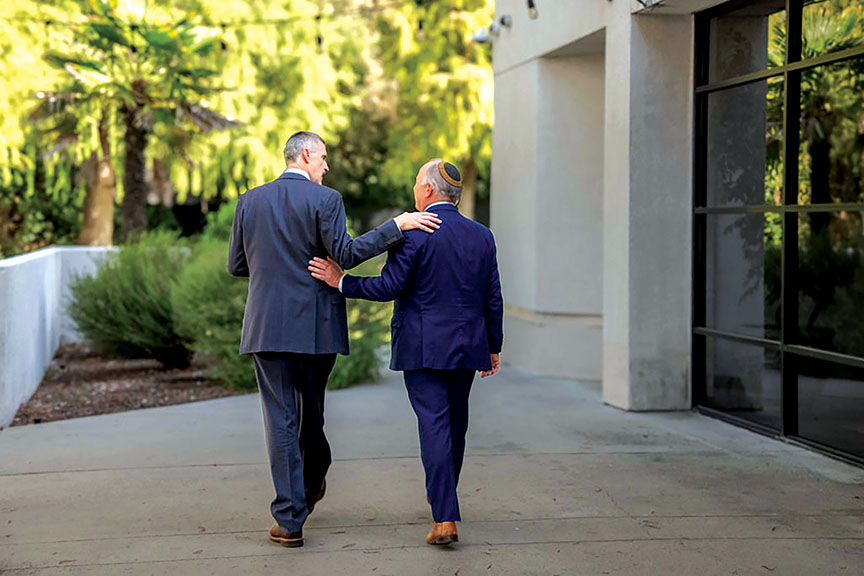
As we approach Tisha B’Av, the moment in the calendar when grief becomes our focus, I can’t help but acknowledge that the Jewish world, in this moment, is something to grieve for as well. The kind of animosity, ill will, bitterness and “destructive” speech that fills our community, world-wide. I feel a great deal of sadness at how broken we have become since Oct. 7, 2023. It feels as if the larger goal, besides the horrors Israel experienced, was destroying the Jewish community writ large.
It hit home when my husband expressed a point of view to a long-time seeker of his wisdom and was totally cut off because of what he said was seen as demonstrably critical of the leadership of Israel. Are criticisms now an overriding anti-Israel statement? Do legitimate critiques and points of view somehow represent everything one holds true? Does calling out a family member who is destructive or hurtful mean we don’t love them anymore? Is it anathema to be an American who tries to hold their personal and Jewish values to heart?
During the three weeks before Tisha b’Av we remember how the Romans began their attack, breaking the walls, creating insecurity and fear among the people. Even the sages teach that part of our vulnerability in losing the Holy Temple was what they called “Sinat Chinum,” groundless and baseless hatred towards other Jews. Isn’t that what we are seeing and experiencing today in the community? In officiating at an upcoming wedding, certain family members will not be coming because of the fall-out in opinions and approaches to expressing them. Colleagues are inundated and overwhelmed by the camps they referee in their synagogues because people have become so locked into a point of view that conversations and discussions are impossible. What a sad state of affairs. We have had so many enemies throughout our history, but nothing is more painful and destructive than fighting amongst ourselves.
I’ve always tried to hold my Jewish values close to my heart while also being a steady, objective observer of critical action and events in my community and country, and even personally with those I love and share relationships with. My tradition teaches to welcome the stranger and care for the neighbor. If I care what happens to the Palestinians am I an enemy of Israel? If I judge the leaders of Israel for overstepping in their war efforts, am I an enemy of Israel? If, as a child of Holocaust survivors, I critique my government in this country for some of their attitudes and behaviors, am I anti-America? If my Jewish values of respect for the law, honesty, empathy and equality are foundations to question what I see occurring in this administration am I a troublemaker?
This world has become so black and white, and so have you and us. Many of us love Israel. And yet hard conversations lead to judgment and rejection. We all need each other to maintain respectful relationships, open to differences. When the great Kabbalist R. Isaac Luria introduced a totally new approach to how the world came to be and G-d’s role in it, completely different from what Torah teaches, he wasn’t accused of being anti-Jewish or anti-Torah. He was embraced for offering something new and innovative, an alternative to add to our understanding of Creation.
Torah is understood to have 70 faces, innumerable varieties of commentary, all legitimate but never disloyal to Judaism if they move away from “tradition.” We have always embraced argument and difference of opinion, and yet now it has reached a level of disruption amongst friends, family, and community. This is what needs attention, this is what needs healing. Perhaps this is the kind of message and work we need in the coming new year.
The words and the language we use and the assumptions we make when we hear them are dangerous on both sides. Trying to find ways to share opinions while holding each other with respect and with the awareness that the spark of the Holy One is in each one of us, on both sides of different points of views. Perhaps as we honor our memories of loss we can find a pathway to embrace each other, building sacred space to be different while staying connected.
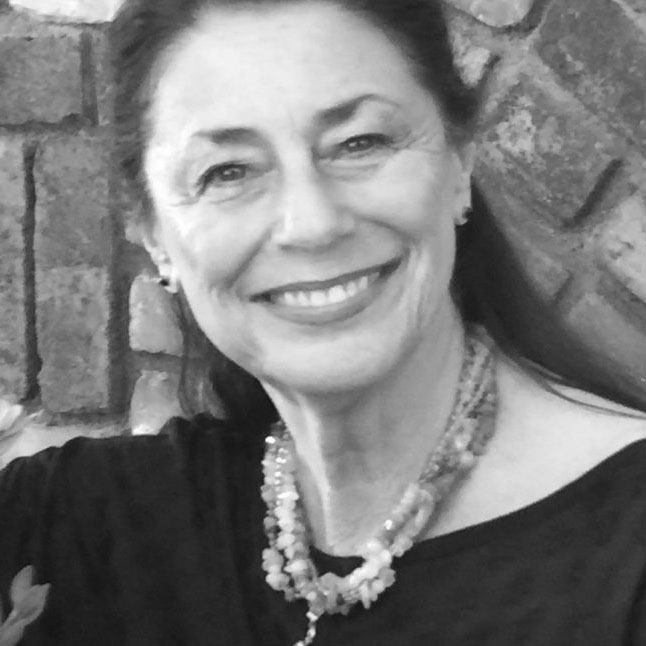
Eva Robbins is a rabbi, cantor, artist and the author of “Spiritual Surgery: A Journey of Healing Mind, Body and Spirit.”