
Me that ‘ave been what I’ve been —
Me that ‘ave gone where I’ve gone —
Me that ‘ave seen what I’ve seen —
‘Ow can I ever take on
the risk of living once again,
as I once used to do without
a mask, as in the era when
we were to closeness all devout?
Devoted not just to my Maker,
I was quite close to total strangers;
towards them now I am no breaker
of feelings, despite serious dangers
corona-caused, although great fearer
that life won’t ever be as great
as it was in the yester-era
when fearlessly we’d congregate.
We had no need to make sure distance
from other people was quite safe.
There was no movement of resistance
against the droplets we now strafe
on one another with our breath,
in that sweet distant era when
drops did not scare us all to death,
as I’m afraid they’ll do again
once we go back without fear to
the sort of life we long for, and
all our relationships renew,
obeying poorly the demand
imposed on us now to be distant
from each other. When immune
to what we are not yet resistant,
a dream I hope will happen soon,
will we be as we used to be
before we all were sadly hacked
by a most deadly virus? Free
to share the closeness we have lacked,
will all of us be once again
to one another just as close
as we were in the era when
we did not fear a deadly dose?
And will fear of it go away
when we live once again in hope,
depending on it while we pray,
hanging on it like a rope,
me and you and all who’ve been
through what we now are living through,
our hopes like skies when we are keen
for them to change from gray to blue.
Inspired by a poem by Rudyard Kipling, which was mentioned in “Oh, what an unlovely war!! Oh, what an unlovely war! How three British writers saw the conflict with the Boers,” TLS, 11/20/20, a review by Jan Montefiore, Professor Emerita of the University of Kent, and Editor of the quarterly Kipling Journal. Something of Themselves: Kipling, Kingsley, Conan Doyle and the Anglo-Boer Warby Sarah LeFanu.
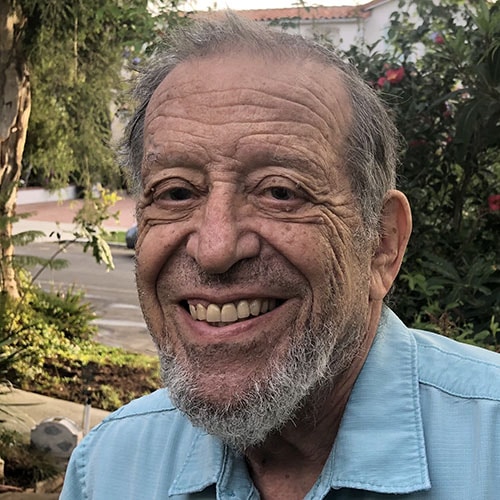
Gershon Hepner is a poet who has written over 25,000 poems on subjects ranging from music to literature, politics to Torah. He grew up in England and moved to Los Angeles in 1976. Using his varied interests and experiences, he has authored dozens of papers in medical and academic journals, and authored “Legal Friction: Law, Narrative, and Identity Politics in Biblical Israel.” He can be reached at gershonhepner@gmail.com.