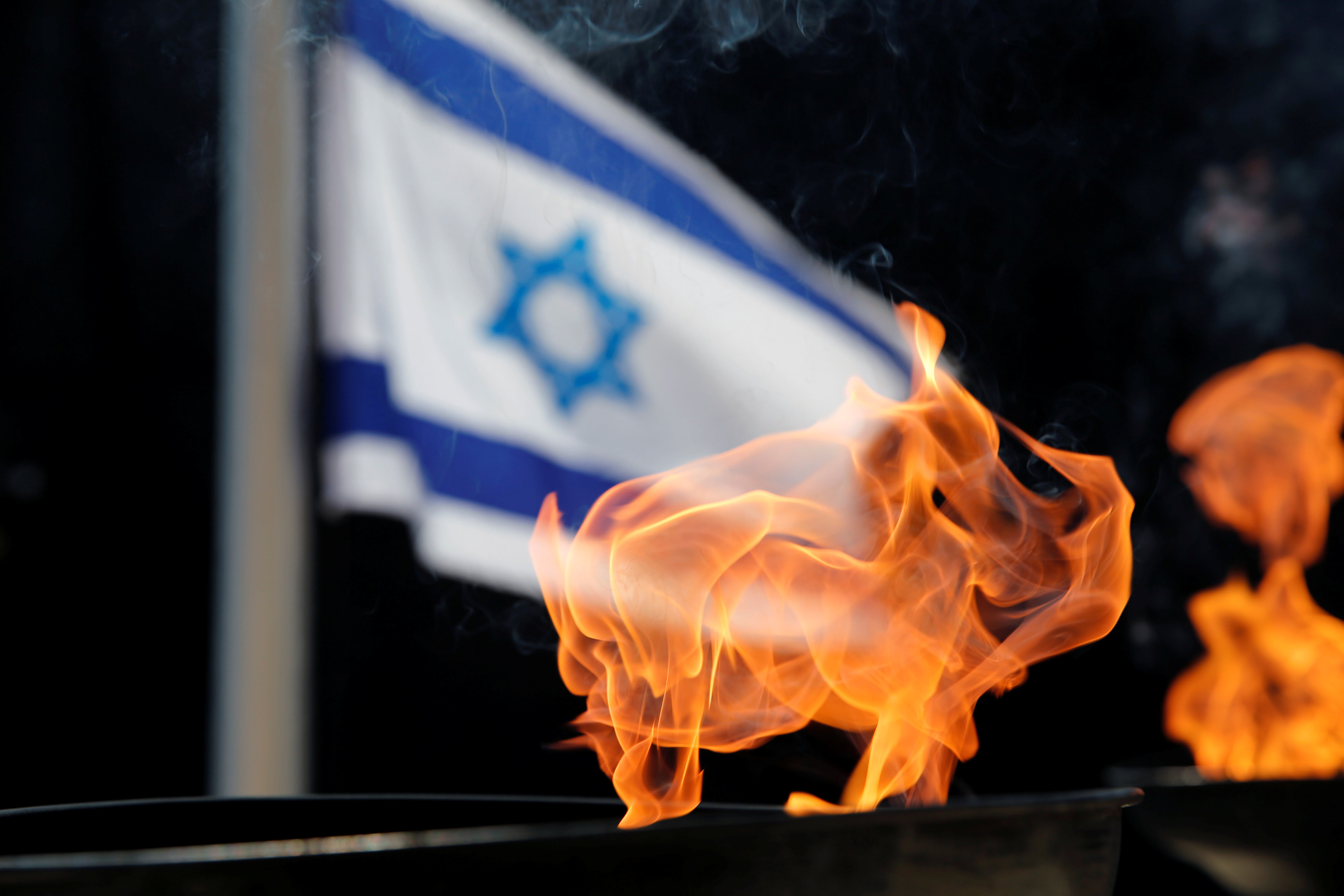
Today is Holocaust Memorial Day in Israel. Here is a list of recent articles I wrote recently on Holocaust remembrance and anti-Semitism. This list first appeared on the Jewish Journal’s daily Roundtable – a daily newsletter I highly recommend (sign up here)
- Last year, I asked if we will still remember the Holocaust in 2000 years.
As we remember the Holocaust, we are obliged to think about these highly practical matters. We must think about them as we are the first generation of Jews that will soon have to mark Holocaust Remembrance Day without any survivors around to tell us their stories. We are the first generation of Jews that will soon be sharing the burden of having to shape a Remembrance Day for the ages. Tisha B’Av survived for 2000 years, and is still with us. Can we guarantee such staying power for Holocaust Remembrance Day?
- On International Holocaust Remembrance Day, I remembered that in Israel remembering the Holocaust is a daily feature of life:
From January to May, Israel marks not one but three Holocaust Memorial days. There was International Holocaust Remembrance Day, marked this week, and there is the religious Memorial Day, marked, along with other Jewish tragedies, on the Asarah be-Tevet fast, and then there is the actual, official Memorial Day, a week after Passover. Yet in most cases, the Holocaust occupies us not because of special duty — a day that calls for a pause. In most cases it is us, busying ourselves with it because nothing has more power to grab our attention. We do not pause to remember the Holocaust; we remember it while on the move.
- In the New York Times, I argued that Israel’s response to anti-Semitism is always colored by Israeli geopolitical interests:
Israel’s silence on the White House’s Holocaust statement tells us a few disturbing things about the Jewish state. The most important is that there is a limit to what Israel is willing to sacrifice in its denunciations of anti-Semitism. Take the example of Austria’s Freedom Party, which was founded by former Nazis. For years, Israel refused to have contact with the party because of its anti-Semitic leanings. But as it grew in power — and came around to backing the Jewish state — Israel was becoming more receptive to accepting the Freedom Party’s courtship.
- I also questioned whether it’s a good idea for all Jewish students to visit Auschwitz:
There’s no doubt that these trips have merit. They certainly make Israeli students appreciate the scope and severity of the horrors of the Holocaust. These trips also force young Israelis see with their own eyes what can happen to a people when they are hated and defenseless — a lesson that is as important today as it ever was. So why end these trips? First, because they contribute to a misperception by many Jews that remembering the Holocaust is the main feature of Judaism. Second, because they perpetuate the myth that Israel itself is born only of the ashes of Europe.
- And recently I mourned the tendency of Jews to utilize anti-Semitism for their partisan political purposes:
Much more so than in the past, we point fingers at one another as we search for the mysterious factors that ignite anti-Semitism. We see anti-Semitism everywhere, we use anti-Semitism for thinly veiled political purposes, and we identify anti-Semitism among our ideological rivals while turning a blind eye to anti-Semitism within our own ideological camps.