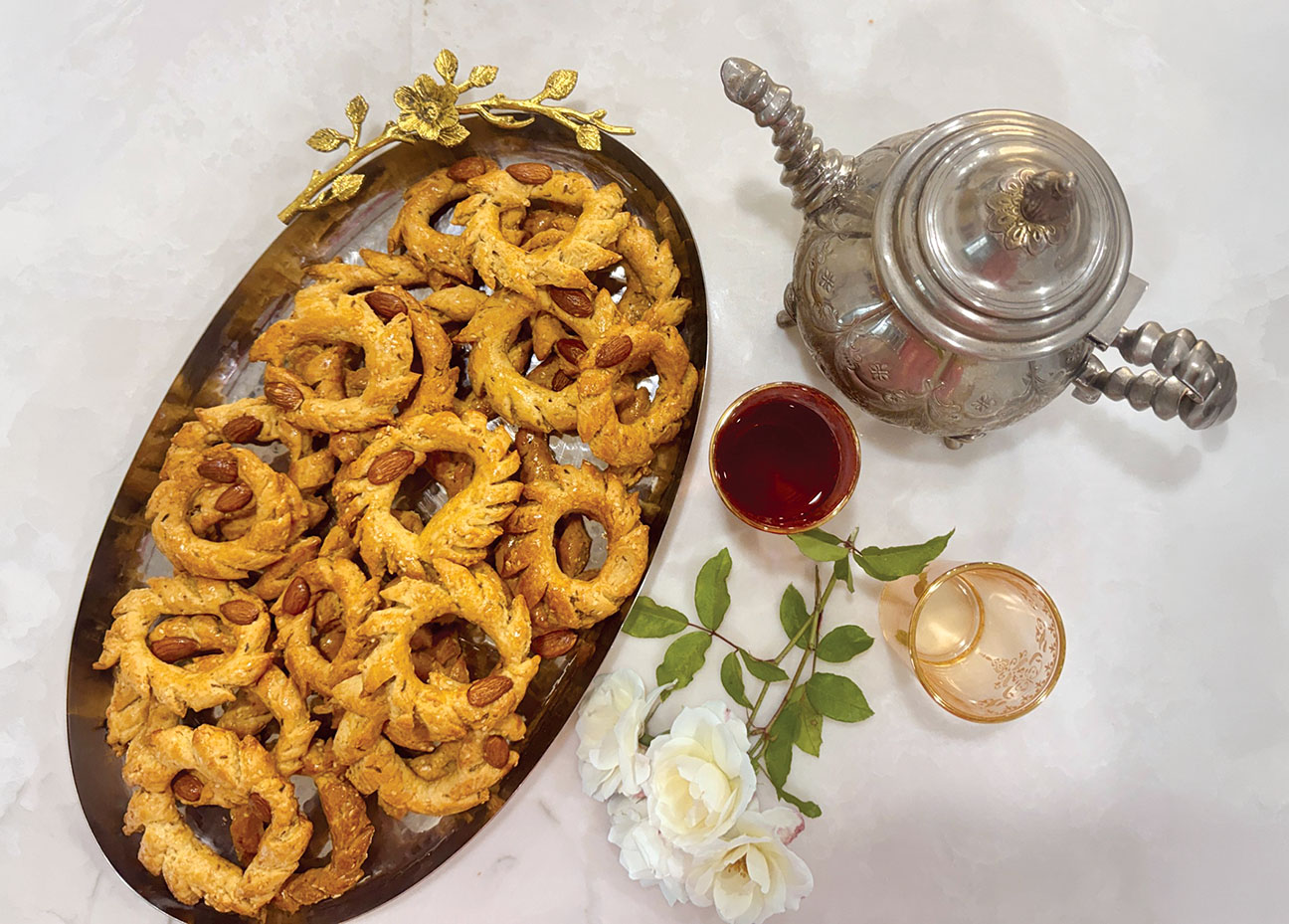
If you are friends with any Sephardic or Middle Eastern Jew, you’ve probably heard of ka’ak, traditional ring shaped cookies. Ka’ak are flaky, crispy and savory, sometimes generously coated with sesame seeds or flecked with anise. Deceptively simple, they pack a lot of flavor!
The round bracelet shape is thought to represent eternity, as well as the changing seasons. For Syrian, Iraqi and Tunisian Jews, ka’ak is often paired with salty cheese. They are served for every occasion, from breaking the fast to simple snacking.
Of course, my Nana Aziza baked the best ka’akat (but in a pinch, Pavilions sells a pretty good za’atar and sesame seed version).
—Sharon
While the word ka’ak is a generic word for cake or cookie in Arabic, in Morocco ka’ak refers to a variety of fragrant pastries and they vary according to the region. In the region around Oujda, ka’ak oujdi is flavored with anise, cardamom and toasted sesame. In Rabat, ka’ak rbati often contains almond paste.
For Moroccan Jews, ka’ak are especially beloved and a symbol of hospitality, with batches baked for holidays, family celebrations and visits with friends and relatives. The recipes are often passed down through generations, every family adding a unique touch. Most Moroccan families will keep a tin of ka’ak in the kitchen because they stay fresh for days and are perfect for unexpected guests.
The ka’ak baked by the Jews of Casablanca has a tender, crumbly texture, with a glossy finish from an egg wash and most probably, sesame seeds sprinkled on top. They are usually enhanced with richly perfumed orange blossom water, lots of toasted sesame seeds, ground anise, sometimes a little fennel seed and whole or chopped almonds.
My family is Spanish Moroccan, so we never called them ka’ak. For us, they are biscochos. Sometimes, my mother would flavor her biscochos with fennel and sesame seeds. Other times, they were more simple with a dash of orange zest and honey. Often she would add whole almonds.
The thing about Moroccan ka’ak is that they are always enjoyed with a cup of hot fresh mint tea. Tea is, and has always been, a big deal in our family. Our typical teapot is filled with green tea and fresh mint leaves. (I always brew mine with one or two decaf green tea bags.)
My father’s favorite tea was a blend of fresh mint leaves and orange blossom flowers. While Moroccans typically add a few drops of orange blossom water to their teapot, our antique teapot had to be filled with the actual blossoms. Since we lived in an apartment, we didn’t have an orange tree. Luckily, on his daily walks with my mother, my father would often find orange blossoms on flowering trees. He was known to pick a handful and put them in his pocket.
When I got older, I started to do the same thing. I would pick blossoms off a tree or from the ground, take them home, give them a rinse and save them in the fridge for our Shabbat teapot.
When Neil and I purchased a home, I grew my own mint and lemon verbena. Thirty-five years later, I still brew our Friday night tea with homegrown mint and verbena. Everyone loves it and it’s extra special when I have orange blossoms in the pot. The perfect way to enjoy ka’ak/biscochos!
—Rachel
Moroccan Ka’ak
2 large eggs
1 cup sugar
3/4 cup orange juice
1 cup avocado oil
1 Tbsp white vinegar
1 Tbsp vanilla extract
2 Tbsp orange blossom water, optional
¾ cup toasted sesame seeds
2 Tbsp anise seeds, ground
2 Tbsp caraway seeds or fennel seed
2 Tbsp baking powder
1/4 tsp salt
5-6 cups all purpose flour
1 cup raw almonds
1 egg, for egg wash
Preheat oven to 350°F.
In a large bowl, add the eggs, sugar, orange juice, avocado oil, vinegar, vanilla, orange blossom, sesame, anise and caraway seeds and mix until well combined.
Add the baking powder, salt and gradually add the flour, mixing in one cup at a time, until the dough is no longer sticky and comes together. (Depending on the kitchen temperature, the amount of flour needed can change. My recipe calls for 6 cups, but I only added 5 cups.)
Let the dough rest for 15 minutes.
Form into two logs, then cut each log into three parts (balls).
Take one ball of dough and roll into a 2 inch log and cut into 1 inch wide pieces.
Take each piece and roll into a strand about 5 inches long. With the back tip of a knife (the dull side, not the sharp side) cut small slits into the dough to make a diagonal pattern. Connect the two ends of the strand and close the circle. Press in to the closure with an almond.
Brush with egg wash and place on a parchment paper lined oven tray.
Bake for 20 minutes or until golden.
Sharon Gomperts and Rachel Emquies Sheff have been friends since high school. The Sephardic Spice Girls project has grown from their collaboration on events for the Sephardic Educational Center in Jerusalem. Follow them
on Instagram @sephardicspicegirls and on Facebook at Sephardic Spice SEC Food. Website sephardicspicegirls.com/full-recipes.