This summer, I spent a week in Ethiopia visiting the remaining Jewish communities there with a small group of American rabbis. To say it was an eye-opening and transformative experience would be quite an understatement. I had never experienced anything like this before. The poverty is overwhelming, the culture and diversity are exhilarating, and the warmth and kindness are deeply moving and humbling. I didn’t even know that there were still Jews left in Ethiopia, but what I encountered there firsthand was a thriving Jewish community, with some very significant struggles.
Especially profound were the two days we spent in Gondar, one of the poorest regions of Ethiopia and home to a Jewish community 14,000 strong. We prayed with them, visited their homes (many of which are literally made out of mud and twigs, consist of one small room with one bed, yet house very large families), visited their free health clinic (which functions all day despite frequent power outages), and met with community leadership. We visited a cramped classroom with a dirt floor and tarp walls, where they learn without electricity, yet they seemed completely content and engaged in their studies.
I found it very moving how distant my life is from these individuals, both geographically and culturally, and yet how close and connected I felt to them as mutual members of the Jewish family.
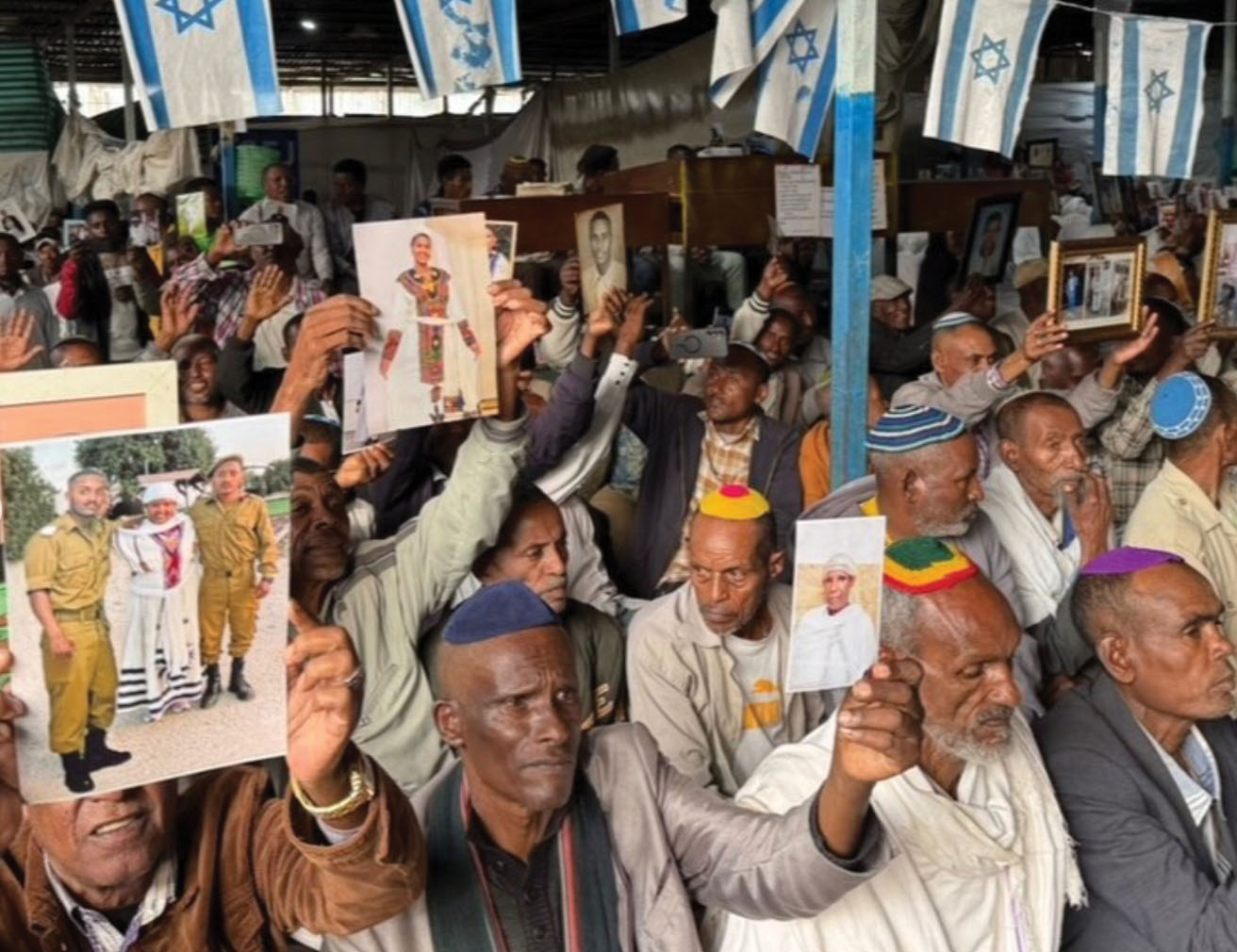
Praying with them was especially meaningful. They pack into their synagogue in rotations of over a thousand at a time. They don’t say a word during the entire prayer service but focus intently on the hazzan, who recites all of the prayers out loud, first in Amharic and then in Hebrew. They have only a few siddurim for their entire community. But they were all clutching onto something as they prayed. Only after we finished over an hour-and-a-half of prayers did we ask them to show us what they had been holding. In one of the most moving moments of the trip, they showed us photos of family members who had moved to Israel and from whom they’ve been separated (many of whom have since died serving in the IDF), and they asked that we share this moment with our communities.
They then began to spontaneously sing Am Yisrael Chai. Despite all they endure, their hope is much stronger than their pain. What especially moved me was how gently and sweetly they sing, which is exactly the type of people they are.
A consistent message we heard from the Jews there is how badly they want to go to Israel. Correction: how desperately they yearn to go to Israel.
And while they suffer from severe poverty, when we asked them what they need from us, what do you think their other requests were? Money? Their first request was assistance with education: how to write mezuzot, perform shechita, brit milah, etc. (though, as we saw firsthand, they know how to make their own matzah, talleisim, and yarmulkes).
We also got to see one of their food distribution programs, after which we toured the facility where they employ members of their own community to produce the food they distribute.
Giving is indeed a theme in this community. They lack so many material necessities, yet they give so much. They spontaneously began clapping once again as they presented us with some of the beautiful shawls they make in their community.
And what about those helping them, SSEJ (Struggle to Save Ethiopian Jewry, https://ssej.org/)? Is it just about providing basic needs? It’s much more complex, and in fact somewhat similar to some of the dilemmas we debate in the hospital: there is a limited number of resources, so how do they make the best use of their funds? The mothers are begging for soap (the children use cloth diapers that they must reuse). But if that is provided, there are fewer funds to feed the children, the majority of whom already suffer from malnutrition. They need a new cemetery for the staggering number of children who die there, but if that is funded, they can’t expand their health clinic, which is already buckling under the pressure. They currently can only provide healthcare to those under 18 and over 50. They used to feed everyone under five, but can now only afford to feed those under three. And whenever a new need arises in the community, they must ask themselves: feed 100 children or help this individual?
These dilemmas, not to mention the frequent kidnappings that members of their community endure, which somehow don’t make the press in the broader Jewish world, left me with a lot to reflect on and struggle with.
Discussing their struggle with the Israeli Ambassador to Ethiopia and the African Union, Dr. Avraham Neguise, also really helped us appreciate some of the many challenges this community and those advocating for them face. The struggles they deal with are very significant, the dilemmas in figuring out how to best help them are intensely challenging, and yet the privilege of getting to meet and interact with these precious Jews was an unforgettable and life-changing experience.
May all of their prayers be fulfilled, and may we all be able to find some of the kindness, resilience, generosity, and genuine warmth that is demonstrated by this precious part of the Jewish people.
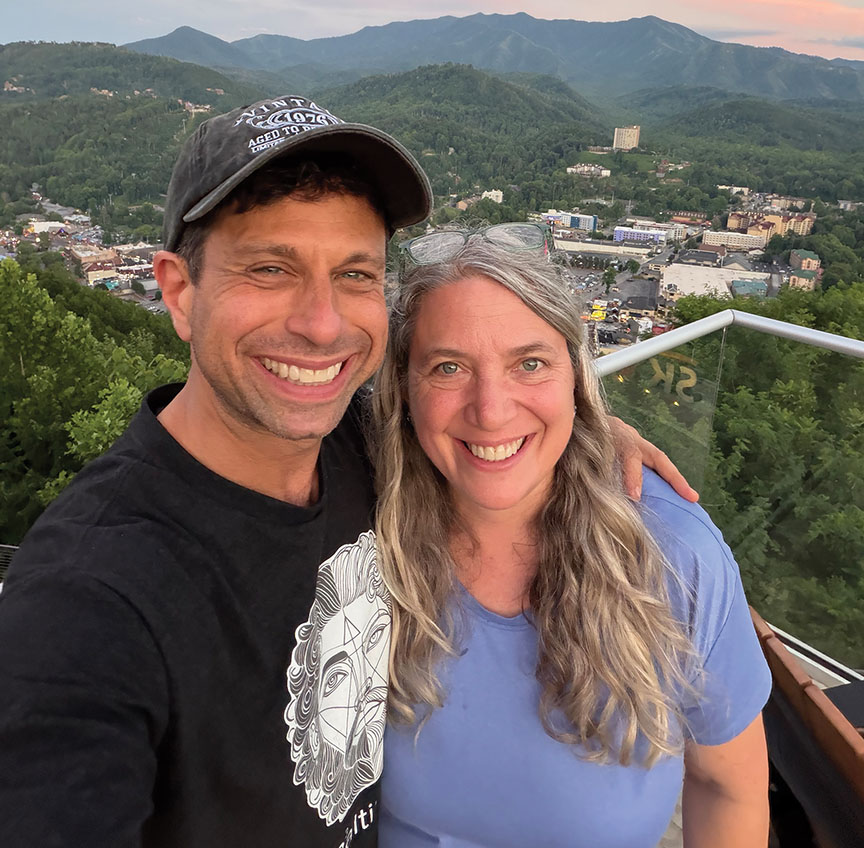
Rabbi Dr. Jason Weiner, BCC, is the senior rabbi and executive director of the Spiritual Care Department at Cedars-Sinai in Los Angeles, rabbi of Knesset Israel Synagogue of Beverlywood and senior consultant to Ematai.