Donald Trump clearly has a problem with Harvard. The Queens-born president has spent most of his career railing against those who he believes look down at him, and delights in demonstrating his power over Manhattan real estate elites and the Washington political establishment. But no one provokes his ire nearly as much as the guardians of higher education’s ivory towers, and no bastion of what he sees as university-based snobbery arouses him more than Harvard.
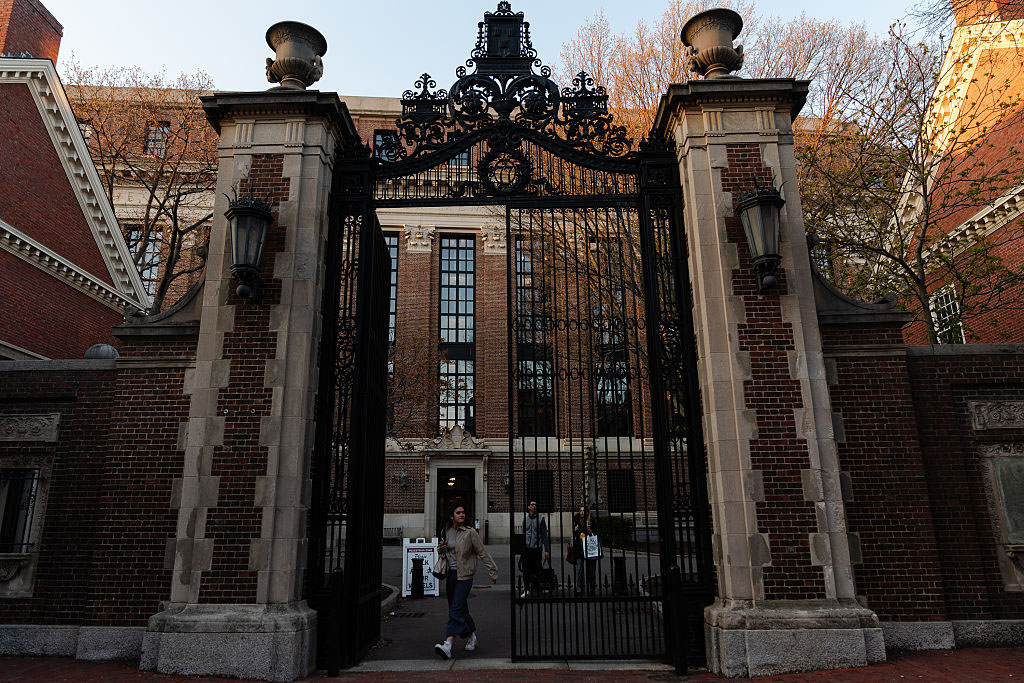
Trump’s administration has been conducting a multi-front war against America’s oldest university, freezing previously approved federal research grants, restricting international student visas, and targeting the school’s tax-exempt status. The flagships of this offensive have been the lawsuits against Harvard over disputes regarding antisemitism, civil rights and student admissions.
Some of these disagreements are predictable. Trump and Harvard interpret the Supreme Court’s 2023 affirmative action ban very differently. Some are nonsensical. Barriers to international students attending American universities are bad for the schools, bad for the students and bad for our country. But the premise of a lawsuit addressing the university’s inability or unwillingness to protect Jewish and pro-Israel students from abuse, harassment and discrimination is indisputable. Harvard’s president appointed an antisemitism task force – albeit after three months of post-Oct. 7, 2023 campus unrest when a largely ineffectual “advisory group” was disbanded – which itself admitted that the university had mishandled the crisis.
But last week, a federal judge managed to dispute the conclusion on which Trump and even Harvard agreed, dismissing the administration’s lawsuit and saying that the examples of antisemitism were “too isolated and episodic” to justify government action. In essence, U.S. District Court Judge Richard Stearns asserted that, while he still saw some prejudice and bigotry toward Jewish Harvard students, there was not enough to act on their behalf.
The phrase “isolated and episodic” is doing a great deal of work here. Stearns points to the fact that most of the incidents that the lawsuit cites took place in 2023 and 2024, and only three occurred in 2025 after the original lawsuit had been filed. But then-Harvard student Shabbos Kestenbaum, who filed a separate legal action against the university, has correctly argued that a ruling should punish past violations along with guarding against future discrimination. Stearns disagrees, maintaining that the law is not designed to punish a violator and should only prevent additional bad behavior.
The Brandeis Center for Human Rights Under Law takes Kestenbaum’s point further, contending that the judge’s dismissal raises the bar much higher for other civil rights actions by not only requiring evidence of past misconduct but also proving that additional transgressions continued to occur. Stearns seems to be saying Harvard could not be found guilty of anything, as long as the school demonstrated some effort to address the threat, no matter how insufficient their actions.
And the incidents that occurred after the lawsuit was filed raise serious questions as to whether Harvard’s actions were anywhere near sufficient. Two violations involved Harvard students: one group that broke through a metal barrier outside a speech by former Israeli Prime Minister Naftali Bennett and another where members of the Harvard Out of Occupied Palestine organization staged an anti-Israel “die-in” on the steps of the university’s main library. The organizers were given a stern warning that similar misbehavior in the future would lead to their suspension or “mandatory separation” from campus. (This warning sounds quite similar to the “strongly worded letter” that Jack Dolan promised to send as he clung to wreckage from the Titanic.)
But how in the name of Amalek does Stearns determine how many antisemitic actions are necessary to meet his standard of “isolated and episodic”? Harvard’s own polling found that more than one-fourth of Jewish students there felt physically unsafe and that 60% had experienced antisemitism while on campus. This seems decidedly unepisodic.
“Dislike of plaintiff” is not a recognized legal term, but it may have decided this case and unnecessarily endangered Jewish students. Trump may not be the only one in this regrettable episode abusing his power to elevate his own personal pique above the rule of law.
Dan Schnur is the U.S. Politics Editor for the Jewish Journal. He teaches courses in politics, communications, and leadership at UC Berkeley, USC and Pepperdine. He hosts the monthly webinar “The Dan Schnur Political Report” for the Los Angeles World Affairs Council & Town Hall. Follow Dan’s work at www.danschnurpolitics.com