As Israel stands on the cusp of an election and the U.S. enacts economic sanctions against Iran after military strikes failed to achieve a definitive victory, a newly released book serves as a must-read to understand the current moment.
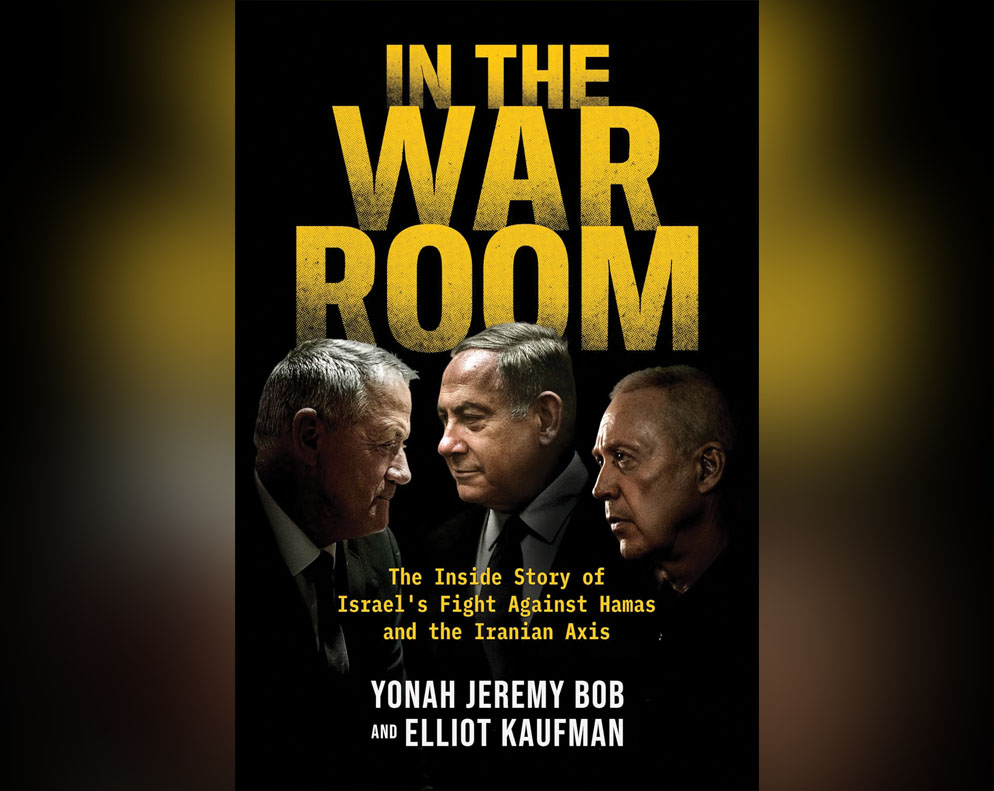
The Jerusalem Post’s Yonah Jeremy Bob and The Wall Street Journal’s Elliot Kaufman’s co-authored volume, “In the War Room: The Inside Story of Israel’s Fight Against Hamas and the Iranian Axis,” is the definitive telling of the aftermath of the Oct. 7, 2023 terror attack.
Based on exclusive research and interviews conducted with leading Israeli decision-makers, including Prime Minister Benjamin Netanyahu, former Defense Minister Yoav Gallant and former War Minister Benny Gantz, numerous intelligence officials (including some who cannot be named), and top U.S. officials from both the Biden and Trump administrations including former U.S. National Security Advisor Jake Sullivan and United States Special Envoy to the Middle East Steve Witkoff, Bob and Kaufman provide an illuminating and engaging account of the past three years of conflict.
Often revealing details for the first time, the authors offer an even-handed assessment of Israel’s successes and failures, and the political negotiations – both internally and externally – that produced them, from hesitating to launch an attack against Hezbollah in Lebanon right after Oct. 7 to the seemingly constantly-shifting Gaza humanitarian aid policy. There are tales of ignored phone calls, quirky exchanges (like the time IDF Chief of Staff Herzi Halevi told Netanyahu and the rest of the war room after October 7, “Like Serena Williams [the tennis player] says, ‘The champion is not the one who wins many games, but the one who recovers from a failure and fights back to win.’”), laments over sympathy-detracting statements (Gallant’s Oct. 9 declaration that “There will be no electricity, no food, no fuel, everything is closed [in Gaza]”), an extensive look at the Mossad’s beeper operation and the disclosure of its female agents operating in Iran, the lead-up to the U.S. B-2 bomber strikes against Iran’s nuclear facilities, and of course, the relevant parties jostling over who gets credit for the decisions that turned into wins.
The authors — one (Bob) a news analyst and the other (Kaufman) an op-ed writer and editor — wisely avoid taking sides in the understandably complex war-time choices, from negotiating densely populated hostile territory to targeted assassinations to hostage negotiations. No figure in their recounting is painted with a hagiographic brush nor disdained as a villain (except the actual terrorists, of course).
The book also provides crucial reminders along the way, worth resurfacing amidst today’s headlines. “Hamas is an idea. You can’t destroy it,” U.S. Secretary of State Antony Blinken had told Israel’s war cabinet in January of 2024. To which Netanyahu told the authors, “They say you can’t destroy Nazism, the idea. I say, sure, but there’s no Nazi regime anymore.” Case in point in the defeat of Nazism is that Israel’s military prowess post-Oct. 7 has resulted in Germany buying significantly more military supplies from the Jewish State, and standing as a steadfast political supporter.
Revisited as well is the Biden administration’s stark refusal to allow Israel to invade Rafah, which Israel ignored, and conducted in such a successful manner – minimizing civilian casualties – that even the objectors admitted they had not thought possible.
While the international community continues its swift and enthusiastic condemnations of many of Israel’s actions to this day, the reader is reminded that the U.N. Security Council has still never officially condemned Hamas’ slaughter of innocents on Oct. 7. Also recalled is the fascinating phenomenon that numerous Middle Eastern countries, including Jordan and Saudi Arabia, assisted in blocking barrages of missiles sent from Iran into Israel’s civilian population.
Perhaps most crucially, the reader is reminded that arguably the most internationally damaging accusation against Israel during the conflict, the ICC’s war crimes accusation against Israel’s leaders, seems to have been Chief Prosecutor Karim Khan’s attempt to distract from sexual harassment accusations against him, which were credible enough to have subsequently caused his removal from office (Kaufman broke the accusations in The Wall Street Journal).
Of course, the authors note, complete victory over Iran has not yet been achieved. Certain delays and echo-chamber decision-making caused unneeded setbacks and legitimate criticism. But worth appreciating, with “In the War Room” as the authoritative guide, are the daring deeds of Israel’s leaders, military and civilian population in responding to a brutal and devastating tragedy by resetting the Middle Eastern map. The moves didn’t always result in forward momentum, and they continue to be made as the players come and go, but, as the authors conclude, “As the U.S. seeks a way out of the conflicts of the Middle East, it will need regional partners to shoulder the burden. In short, it will need allies with a backbone like Israel.”
Rabbi Dr. Stuart Halpern is Senior Adviser to the Provost of Yeshiva University and Deputy Director of Y.U.’s Straus Center for Torah and Western Thought. His books include the newly released “Jewish Roots of American Liberty,” “The Promise of Liberty: A Passover Haggada,” “Esther in America,” “Gleanings: Reflections on Ruth” and “Proclaim Liberty Throughout the Land: The Hebrew Bible in the United States.”