Whenever I bring a group to Poland, I insist that we stop to visit Zamosc, a quaint, picturesque Renaissance town that seems so out of place. Visitors wonder if they are in 17th century Italy rather than in 21st century Poland. The Rynek, the main square, features restaurants and shops. The side streets have more shops with named brands than could be found in many an upscale mall.
For Jewish pilgrims to former death camps, Zamosc is a welcome breather. It is situated at the triangular intersection of Majdanek, the death camp in Lublin, Belzec, the death camp to the East, and Sobibor, the death camp to its Northeast, where some 800,000 Jews were murdered. One can see signs for Chelm, the city of Jewish lore famed for its “wise men.” It is between one form of mass murder and another.
Located but two blocks from the Rynek and equidistant from the parking square is the beautiful synagogue of Zamosc, restored after more than three score years of neglect. Visitors are surprised to see a synagogue modest in size but of such classic beauty and to learn that it was a Sephardic synagogue in the heart of Galicia, one organically woven to the fabric of the community. And they are moved to meet Daniel, its caretaker, who has dedicated his life to recovering and caring for the remnants of Jewish life in his town. He is a fountain of information about the Jews of his town and lives in the Presence of Absence and the Absence of Presence.
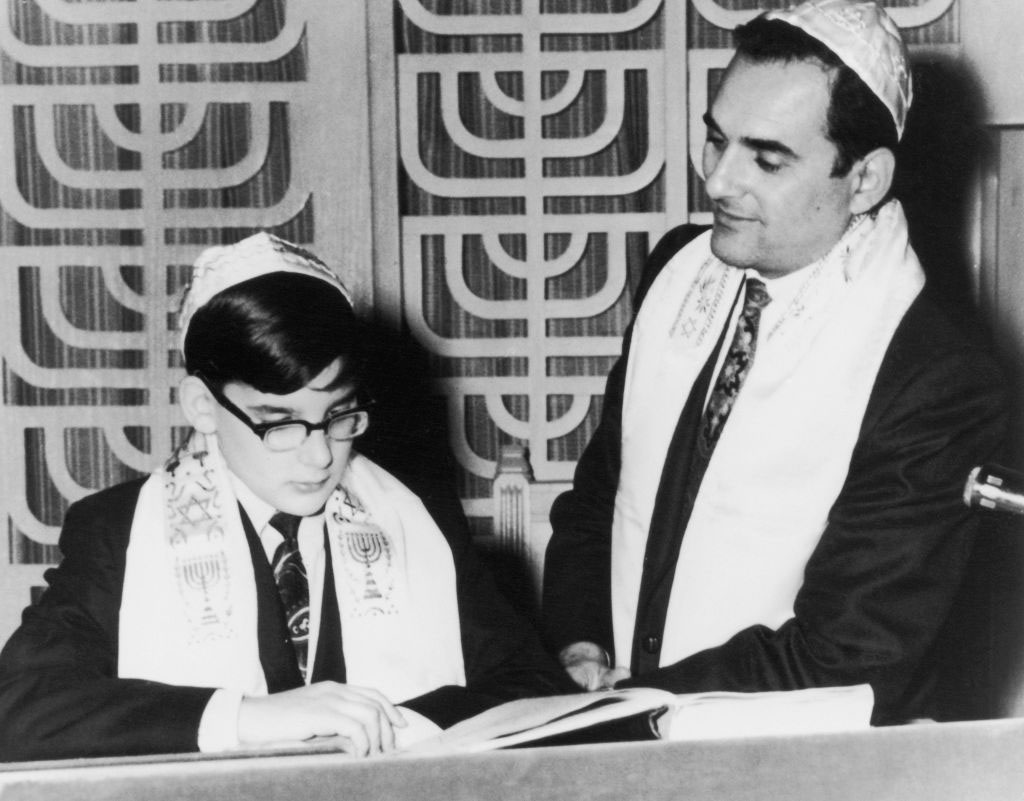
Situated right next to the ark is a framed fragment of a Torah scroll, whose desecration bears witness to what happened to Zamosc’s Jews and to all that was sacred to Jews in this region of the world. It is dedicated to Allan Gerson, a name I recognized for he was a Washington-based lawyer, a scholar and a diplomat. I often prayed with him and his Polish refugee parents when I lived in Washington.
So much for preamble.
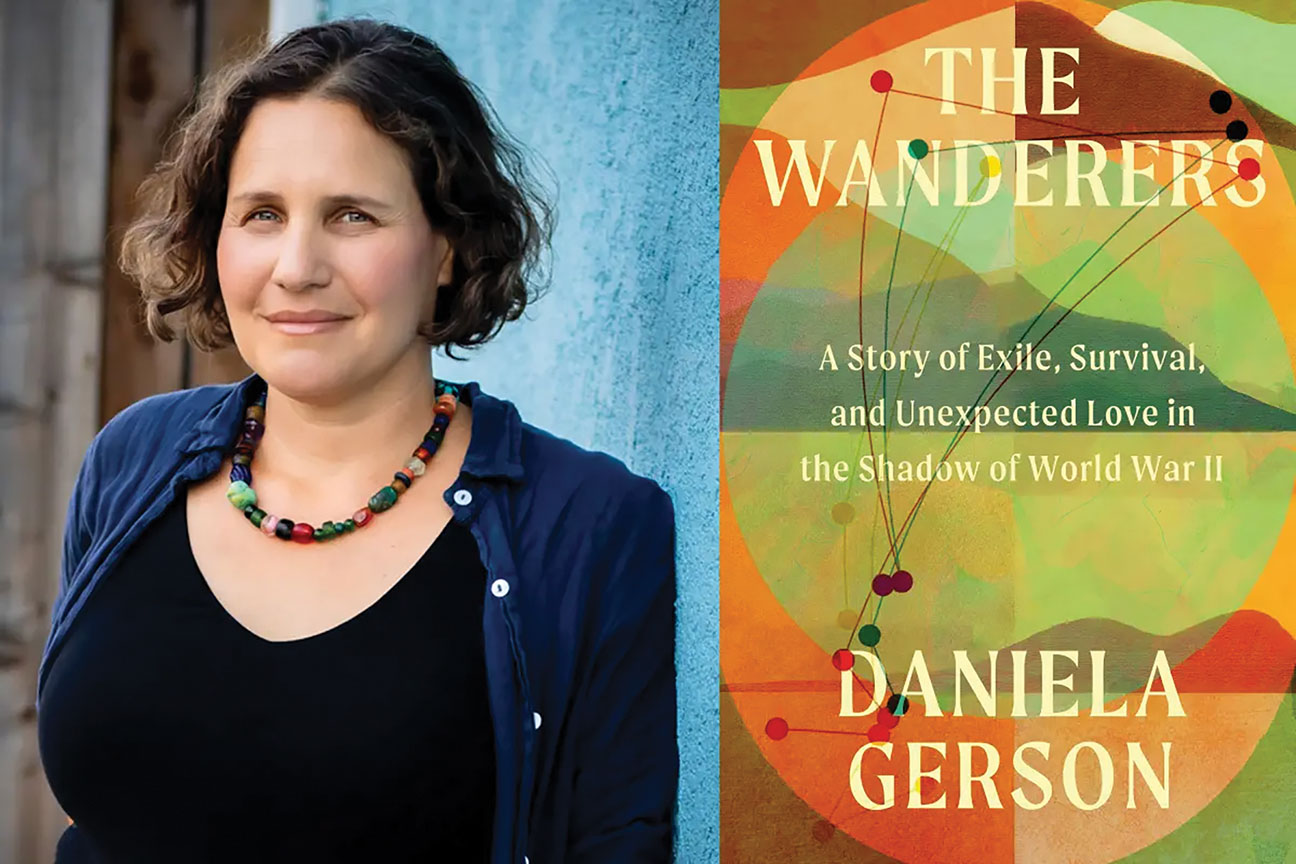
I knew that his daughter was writing a book about her father because I had read her proposal and was impressed by the importance of the story and the clarity of her writing. Thus, I picked up her work with considerable anticipation, and my reward was great.
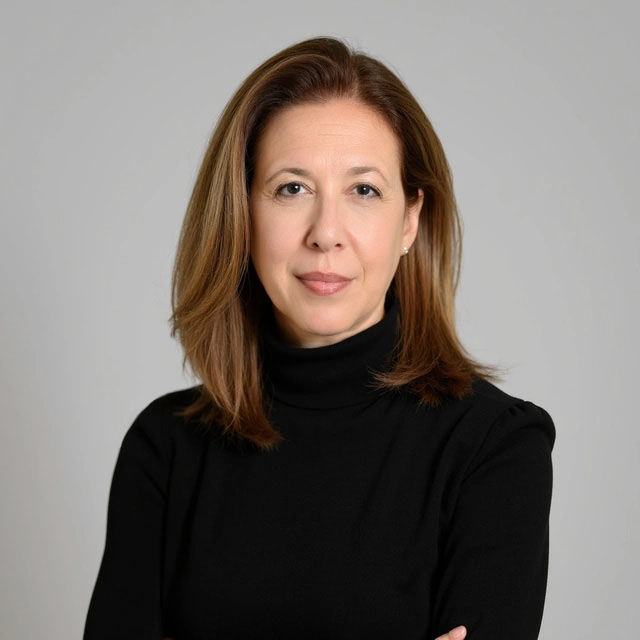
Daniela Gerson’s “The Wanderers” is all that you can ask for from a book. Meticulously researched, exquisitely told, it is an adventure story spanning more than 80 years, even a love story.
Gerson has spent time in the archives reviewing documents and understanding the full scope of what happened in Zamosc. More importantly, she has followed the journey of her grandparents and her father into exile in far-off lands, where they struggled desperately against poverty and persecution, cold and disease. They faced all sorts of harassment and difficulties but not systematic murder.
Those Jews who were sent into exile in the Eastern Soviet Union were the “fortunate ones,” for however bad life was, they did not face the mobile killing units, they were not sent to death camps. For a time, they did not consider themselves Holocaust survivors for they were not in the “camps.” They did not face the firing squads.
Gerson interviewed people along the way, meeting fascinating people in the most out-of-the-way places imaginable and using her talents as journalist to get the story. She followed leads even when they led to dead ends, finding people who knew something – anything – or knew someone who might have known something. Gerson is an Associate Professor of Journalism at California State University Northridge and also the daughter of a prominent journalist. Her mother Joan Nathan – no less talented than her father – is a renowned food writer, whose cookbooks grace many a Jewish home, including mine.
This work of history and of journalism, of autobiography and of travel is also a love story. Bored by the dating scene and by her date one evening, Gerson met a woman who was also the descendant of prominent Zamosc Jews. At first, they bond over their common past, their paternal grandparents, who did not know each other, yet lived across the Rynek. Had the Holocaust not occurred, these granddaughters might have played with each other on the massive slide that is featured in the town square while visiting their Bubbe or Zaide.
This chance meeting led to Gerson’s second story – that of her father-in-law Nachum Inlander and the equally difficult and amazing journey of his once more privileged family.
Gerson’s families experienced cattle-car deportations, forced labor and the Gulag system, hunger, disease, extreme climate, frigid winter conditions, blazingly hot summers and prolonged displacement. Their routes eventually carried them thousands of miles through the Soviet Union and Central Asia, including places such as Uzbekistan and Kazakhstan. Hitler or Stalin – there were no good choices, America was closed and British Mandate Palestine was unwelcoming. The British White Paper halted Jewish immigration to Palestine at the most critical of moments in Jewish history. Yet Stalin was infinitely better than Hitler, hardly a compliment.
Gerson’s narrative takes us to Siberia, Kazakhstan, Uzbekistan, Samarkand, Tashkent. In each of these places we come to understand the history, and encounter the people who are the keepers of this history. Gerson has told these stories in an exciting and compelling way. She is an indefatigable explorer, and her journey is one of discovery. The reader gains an understanding of the desperation of refugees and the determination it takes to survive. No wonder —her wife is a dedicated immigration lawyer in contemporary Los Angeles.
For years survivors were worried: “Who shall tell our story once we are gone?” Gerson’s “The Wanderers” should give them and us great confidence that the third generation can tell the story with integrity and authenticity, weaving the survivors’ stories into their own.
And for this reader and frequent and grateful visitor to Zamosc, I shall walk across the square from the Gerson home to the Inlander home and understand the twisted and almost impossible path that it took for two Jews to meet and love in Los Angeles. And I shall appreciate anew the tenacity of Jews to survive and their resilience, an appreciation that we Jews need at this difficult moment in time.
Michael Berenbaum is director of the Sigi Ziering Institute and a professor of Jewish Studies at American Jewish University.