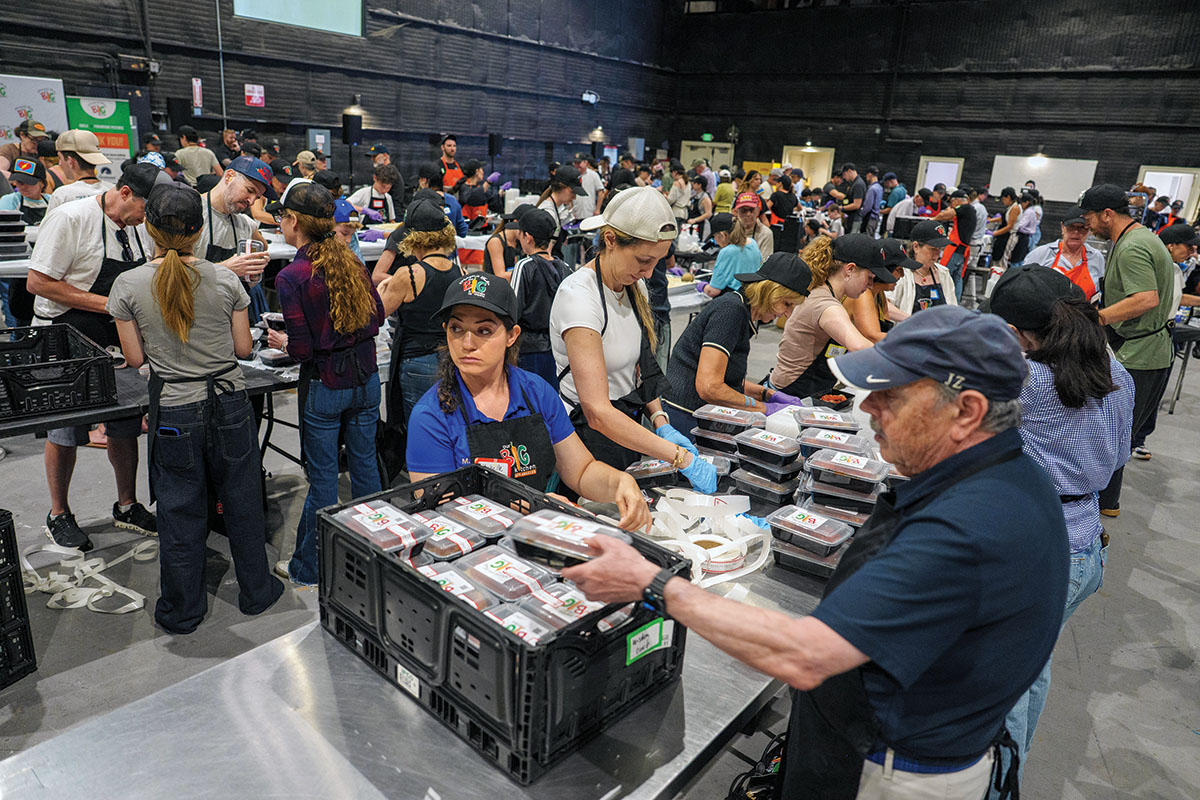
If you had visited the Our Big Kitchen Los Angeles (OBKLA) kitchen on Pico Boulevard on Aug. 19, you would have seen dozens of people working side by side to prepare and package hundreds of meals for Angelenos facing food insecurity. Among them were some recognizable names, including actress and singer Katharine McPhee, Bijou Phillips and Emmanuelle Chriqui. But you would hardly have been able to tell them apart from the other volunteers, who were just as busy rolling up their sleeves, preparing food and working together to get the meals out the door.
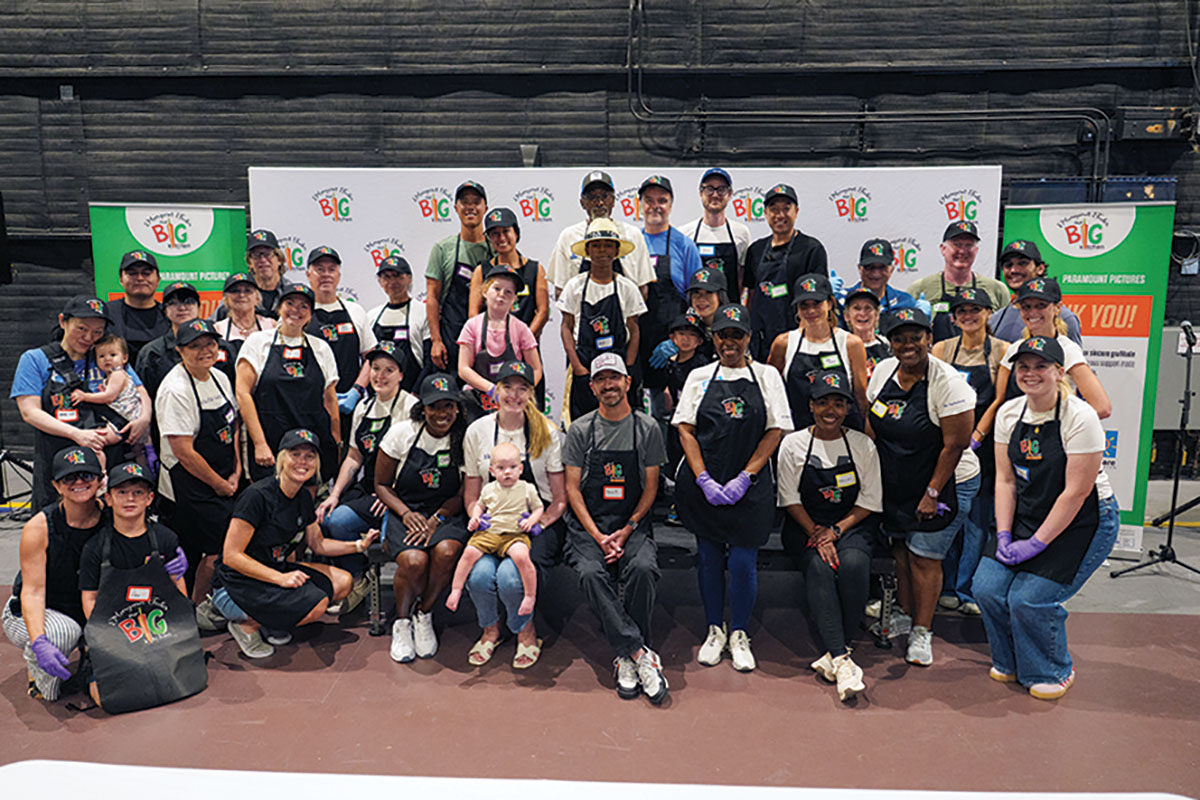
A week later, Chaya and Yossi Segelman, the husband-and-wife team who launched the Los Angeles nonprofit six years earlier, were preparing for another major volunteer event, this time at Paramount Pictures. On Sunday, Aug. 30, they brought the OBKLA experience to a Hollywood soundstage at the historic Paramount Studios lot, where 250 volunteers — donors, supporters and families — worked side by side to prepare 2,500 fresh meals for Angelenos in need.
It sounds exhausting just thinking about it: preparing thousands of meals, week after week. Which raises the question: Why would a couple choose to devote their lives to helping feed people in need?
To understand the answer, you have to walk into OBKLA on Pico Boulevard and watch the Segelmans in action.
This is where the couple comes to life, surrounded by volunteers, music, mountains of ingredients and the controlled chaos of a commercial kitchen producing hundreds of meals at a time. The kitchen fills with people of all ages and backgrounds, or, as Yossi likes to describe it: “Anyone with a heart, ages 5 and up to 99. Jewish, not Jewish, it doesn’t matter.”
The story of OBKLA began nearly two decades ago and thousands of miles away, in Sydney, Australia, where the Segelmans lived before moving to Los Angeles.
In 2005, Rabbi Dr. Dovid Slavin and his wife, Laya, started Our Big Kitchen after Laya, a hairdresser who made wigs for women undergoing cancer treatment, began hearing from her clients about the struggles they were facing at home. She began sending each woman home with a dish of food. Eventually, the couple decided to turn those informal acts of kindness into something larger, bringing volunteers together to prepare nutritious meals for families in need.
Yossi Segelman became one of the original directors of the Australian organization and remained involved from its first day. He even vacated his office in Sydney, which had been in the family for 60 years, to make room for the commercial kitchen that was built there. At the time, he had spent 25 years in business, working in sapphire mining and the jewelry industry and overseeing retail brands, factories and stores around the world.
In August 2012, his business brought him and Chaya to Los Angeles, where they moved with their family. But Segelman continued to stay involved with Our Big Kitchen, and the idea of bringing the organization’s mission to the city remained with him. Seven years later, in May 2019, they registered the name Our Big Kitchen in California.
Then came COVID-19.
In April 2020, with the pandemic shutting down businesses and leaving many people isolated and struggling, the Segelmans began looking for a way to help. Their son, who was then a student at Santa Monica College, had a side business called AP Munch, selling subscription snack boxes. When a trade show he was planning to attend in San Francisco was canceled, the family suddenly found themselves with a garage packed with boxes and products.
Instead of letting the supplies sit there, they decided to put them to use.
The family began packing healthy snack boxes and delivering them to hospitals, fire stations and first responders. Before long, the effort expanded to families who were struggling to afford groceries and snacks for their children.
“We took the logo from Australia Our Big Kitchen, added his logo, and had literally pallets of these healthy snack boxes that were being delivered to Kaiser, Cedars, the local hospitals, local fire stations, first responders,” Segelman recalled.
By August 2020, the family was ready for the next step. Chaya’s brother, David Leeder of Leeder Catering, had an available restaurant and catering space on North La Brea Avenue, and the Segelmans moved their operation there.
“We got together as a family, made 150 meals and gave them to Tomchei Shabbat,” Segelman said. “It felt really good to be able to feed people during a very difficult time in COVID.”
After a few weeks of doing it on their own, the couple’s son posted about the family project on social media. Almost immediately, dozens of volunteers began showing up, eager to help.
Since then, OBKLA has welcomed more than 80,000 volunteers, including students, synagogue and church groups, corporate organizations, top leadership teams from companies such as Netflix and Amazon and, of course, celebrities.
When Segelman welcomes a new group of volunteers, he sounds like a coach addressing his team before they take the field. He prepares them, encourages them and talks to them about their goal. Then, off they go. Like players on his court, they chop, peel, cook, pack and clean, working in unison with one purpose: making sure that those who are struggling don’t go to bed hungry.
By 2022, OBKLA had outgrown its early home on North La Brea Avenue and moved into its current 4,600-square-foot space on Pico Boulevard. The new location was made possible through a partnership with the E. and Margaret Feder Family Foundation, which helped the organization move into the building and create a permanent home for its growing operation.
The partnership also gave the kitchen a new name: Margaret Feder Our Big Kitchen, honoring the woman whose life story had become an important part of the organization’s mission.
Margaret Feder was a Holocaust survivor who had been just 14 years old when she was forced to work in the kitchen at Auschwitz. She survived by secretly taking vegetable scraps from the kitchen and sharing them with her sister and cousin.
After the war, Feder moved to Israel and later to Brazil before settling in Los Angeles about four or five decades ago. She went on to build a successful real estate business.
“She loved Israel,” Segelman said. “And she very much loved supporting education and people suffering food insecurity.”
When Feder died in 2019, her family was looking for a meaningful way to honor her legacy. Their partnership with OBKLA became that tribute.
Inside the kitchen, her story is now part of the experience. An exhibit includes a large Israeli flag and recounts her journey, along with photographs and other personal elements that tell the story of her life.
At the center of the exhibit is a simple message that reflects Feder’s outlook on life: “Life is beautiful.”
“No matter what happens, focus on the blessing,” Segelman said, describing the philosophy that guided Feder’s life.
For the dozens of volunteer groups who come through OBKLA, the exhibit offers another lesson beyond the meals they prepare: the importance of giving back and the meaning of the Hebrew word tzedakah. At its heart, Yossi said, OBKLA is a Jewish values-based organization built around the biblical command “Ve’ahavta l’reacha kamocha” — “And You shall love your neighbor as yourself.”
It is the lesson he wants every volunteer to take with them: that helping others is not only an act of kindness that makes you feel good, but also a fundamental Jewish value.