The Los Angeles 2028 (LA28) Olympic Games are still two years away, but in the City of Angels, the Olympic pulse is already being felt. As the countdown continues toward one of the world’s largest sporting events, dozens of journalists from around the globe received a rare behind-the-scenes look at the preparations — and the venues where the world’s top athletes will compete.
As part of a special media week organized by the LA28 Organizing Committee, I had the opportunity to tour the venues alongside Yael Arad, Chairwoman of the Israeli Olympic Committee and a member of the International Olympic Committee, and Adi Bichman, CEO of the Israeli Olympic Committee.
Los Angeles is one of only three cities to host the Olympic Games three times, joining London and Paris. The city first hosted the Games in 1932, during the Great Depression, and returned as host in 1984.
Unlike many previous host cities that built new stadiums and facilities costing billions of dollars only to see them abandoned afterward, Los Angeles will not build a single new permanent venue for the Games. Instead, it will rely on more than 40 existing stadiums, arenas and sports complexes, which will undergo upgrades and adaptations ahead of an event featuring 36 sports.
The first stop on the tour was one of the symbols of the new Los Angeles: SoFi Stadium in Inglewood. The spectacular venue will host part of the Olympic opening ceremony, along with the historic Los Angeles Memorial Coliseum, which hosted the Games during the city’s previous two Olympic.
For the first time in Olympic history, the opening ceremony will take place at two separate venues — a decision meant to symbolize the connection between Los Angeles’ Olympic legacy and its future. The Coliseum represents the city’s historic Olympic heritage, while SoFi Stadium represents its modern transformation.
SoFi Stadium, the home of Los Angeles’ two NFL teams, the Rams and the Chargers, has hosted the 2022 Super Bowl and matches of this year’s FIFA World Cup. It will undergo one of the most dramatic transformations in Olympic history, converting from an American football field into an Olympic swimming venue. A temporary competition pool will be installed specifically for the Games and removed afterward, with seating for 40,000 spectators.
Nearby, at Exposition Park, BMO Stadium will host flag football as well as lacrosse, which returns to the Games for the first time since 1908. The close proximity of the venues will create a walkable Olympic hub for fans.
For the first time, the Olympic Games will also come to the San Fernando Valley. At the Sepulveda Basin and Lake Balboa complex, athletes will compete in BMX (freestyle and racing), skateboarding, modern pentathlon and 3×3 basketball — the fast-paced street version of the sport featuring three players per team.
Other venues across Los Angeles are also preparing for the Games. Dodger Stadium will host baseball; the Rose Bowl in Pasadena will host the soccer finals; Long Beach will become one of the largest Olympic hubs, featuring 11 Olympic sports and seven Paralympic sports, including handball and beach volleyball. Venice Beach will host the triathlon, marathon and road cycling events — and will award the first medals of the Games just hours after the opening ceremony.
The next stops on the tour were the Intuit Dome, the new home of the Los Angeles Clippers, which will host Olympic basketball, and the Peacock Theater at LA Live, which will host weightlifting, boxing and Paralympic competitions before returning to its entertainment programming after the Games.
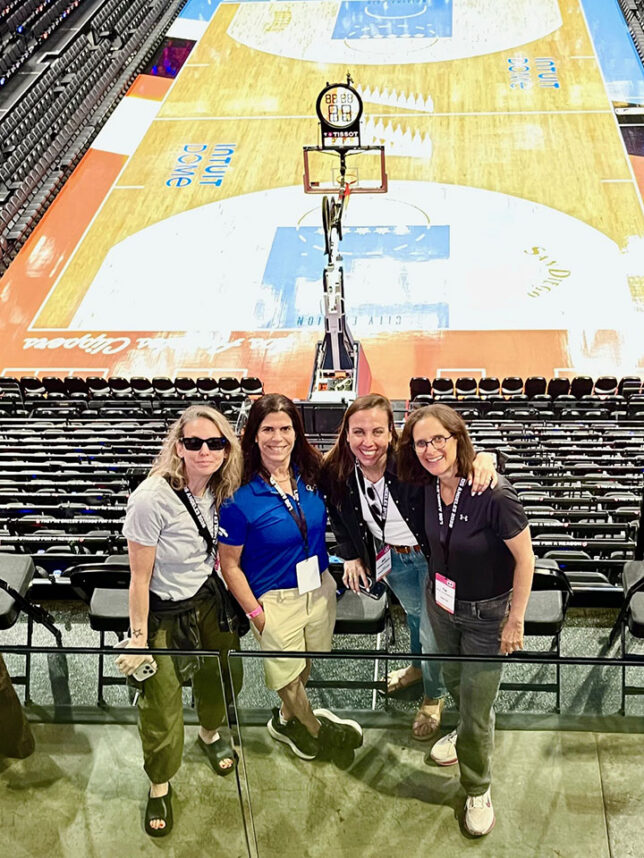
The tour continued to another iconic Los Angeles sports landmark — Crypto.com Arena, home of the Lakers. We entered through the Kobe Bryant entrance, dedicated in memory of the Lakers’ legend who was killed in a helicopter crash, and stepped onto the court where some of basketball’s greatest moments have taken place.
The biggest challenge facing Los Angeles will not only be hosting the Olympics but also managing the massive transportation demands created by an estimated 5 million visitors arriving in a city already known for its traffic congestion.
In recent years, Los Angeles has accelerated efforts to expand its rail and public transportation networks, connecting LAX, Downtown Los Angeles, Inglewood, Pasadena and other areas throughout the region. While many of these projects began before the Olympic bid was awarded, the Games have increased the urgency to complete them.
The city plans to introduce dedicated shuttle systems, special transportation lanes, and priority access for public transportation. LA28 also partnered with Uber, which will serve as the official ridesharing and delivery partner of the Games, providing transportation options through cars, bicycles and scooters as part of a flexible system designed to help visitors move between dozens of venues.
Even with these preparations, avoiding major congestion entirely may be impossible. During peak Olympic days, hundreds of thousands of visitors — including fans, journalists, staff and volunteers — are expected to arrive daily, in addition to Los Angeles County’s 10 million residents continuing their normal routines.
Our next stop was the historic Los Angeles Memorial Coliseum, built in 1923 and recognized for the Olympic flame that rises above it and its iconic view of Downtown Los Angeles. The visit was especially meaningful for Arad and Bichman, who paused when they noticed a large memorial honoring the 11 Israeli athletes murdered at the 1972 Munich Olympics.
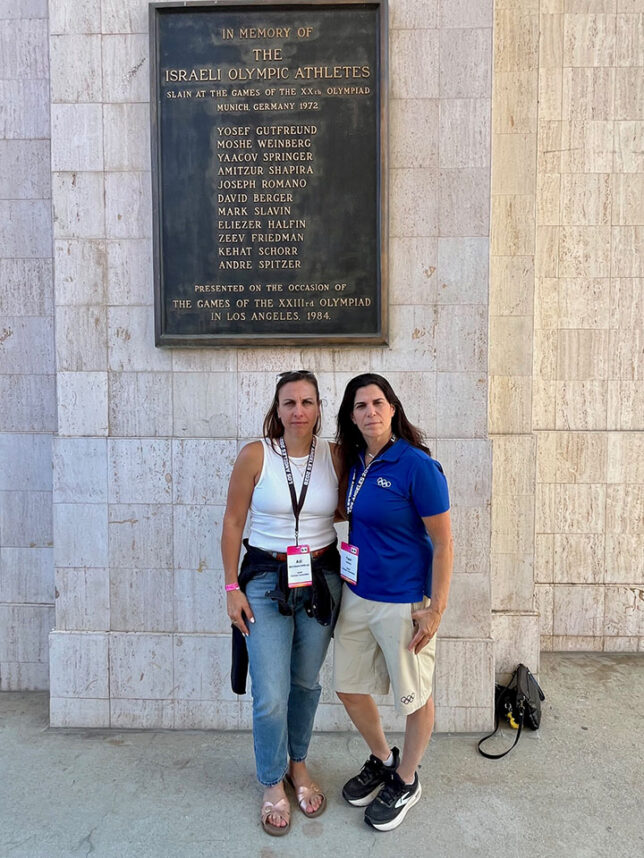
For LA28, the Coliseum will be adapted to host Olympic athletics competitions. A special surface will be installed above the existing field, and after the Games, the temporary changes will be removed and the venue will return to its role as the home of the University of Southern California (USC) Trojans football.
Arad, the first Israeli judoka to win an Olympic medal — a silver medal at the 1992 Barcelona Games — told The Journal during the tour that the Games represent a unique opportunity to strengthen the connection between American Jewry and Israel.
In recent years, Arad has worked to build support for Israeli Olympic sports within the American Jewish community. Following the 2024 Paris Games, the Friends of the Israeli Olympic Committee in the United States was reestablished with the goal of creating a strong support network ahead of Los Angeles 2028.
The support generated through these efforts is not intended to cover existing gaps, but rather to provide long-term investment in Israeli athletes — strengthening Olympic programs, improving training systems and providing professional support. “The Jewish community in the United States wants to bring the younger generation closer to Israel, and this is one of the best ways to do that,” Arad said. “We want to inspire the community to come to the stadiums, cheer for the athletes, and wave the Israeli flag.”
As part of that effort, Arad travels throughout the United States for community events and lectures, meeting with Jewish organizations, Federations and philanthropists who support Israeli athletes. She also spoke about the challenges Israeli athletes have faced since the Oct. 7, 2023 attack. “The war brought major challenges. One of the biggest issues has been dealing with travel disruptions — whenever a war breaks out, flights are canceled and even when we eventually find alternatives, the impact on us is significant,” Arad said. Despite those obstacles, she said the focus remains clear. “We are investing our energy in moving forward, achieving and fulfilling our goals. That is the message we want to convey,” she said.
The 34th Summer Olympic Games open July 14, 2028, and conclude on July 30.