fbpx

July 8, 2026

A Moment in Time: Israel – Coming Home Again

Dear all,

I write during a mini-sabbatical while studying at the Shalom Hartman Institute in Jerusalem.

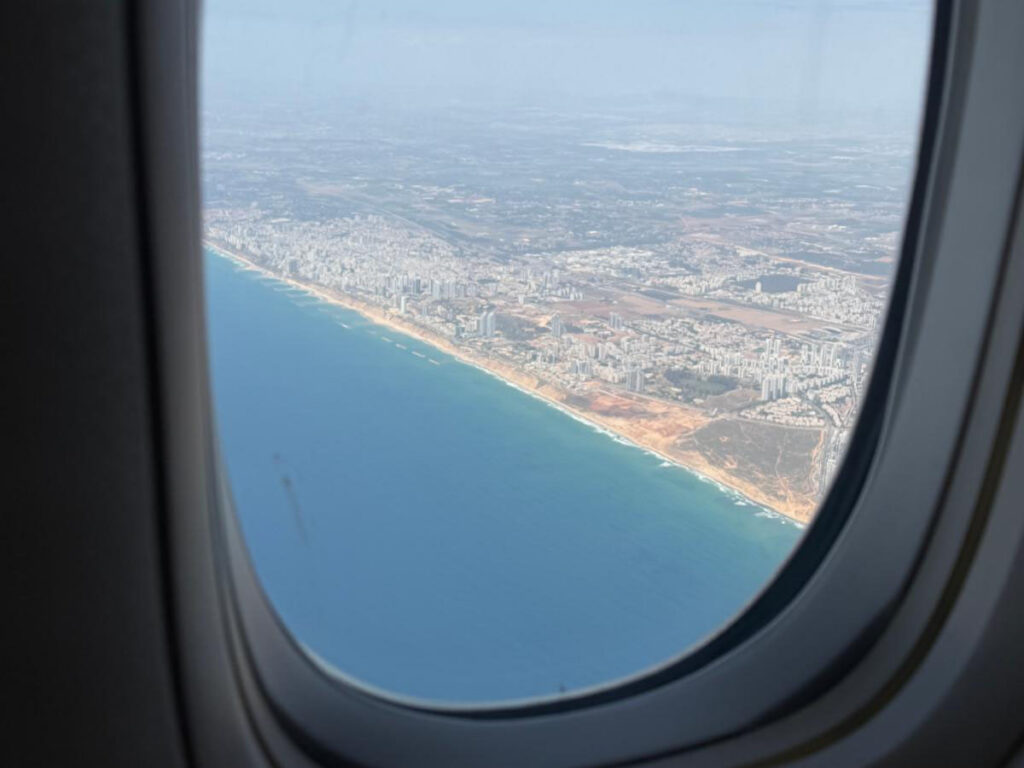
As our plane approached Israel, I gazed out the window. There is something extraordinary about nearing the coastline, about descending into Ben Gurion Airport.

It is the feeling of arrival. Of welcome. Of coming home.

I think about the millennia of hopes our ancestors imagined—a return to this place.

I think about the countless prayers, always facing toward Jerusalem.

And I think about the resistance that still exists today from those who deny Israel’s very right to be.

But Israel is here.

Israel is here as a haven of democracy for its citizens.

Israel is here as a beacon of hope and possibility.

Israel is here as a symbol of renewal.

And so, in this moment in time, I have come home again—to reflect, to re-energize, and to re-center.

As Shabbat approaches this Friday, we are all invited, wherever we are, to come home to ourselves. To pause. To breathe. To remember who we are beneath the noise of the week.

I ask that you take your own moment in time to face Jerusalem this Shabbat. I will feel your prayers as they come together with dreams from all over the world!

With love and Shalom,

Rabbi Zachary R. Shapiro

A Moment in Time: Israel – Coming Home Again Read More »

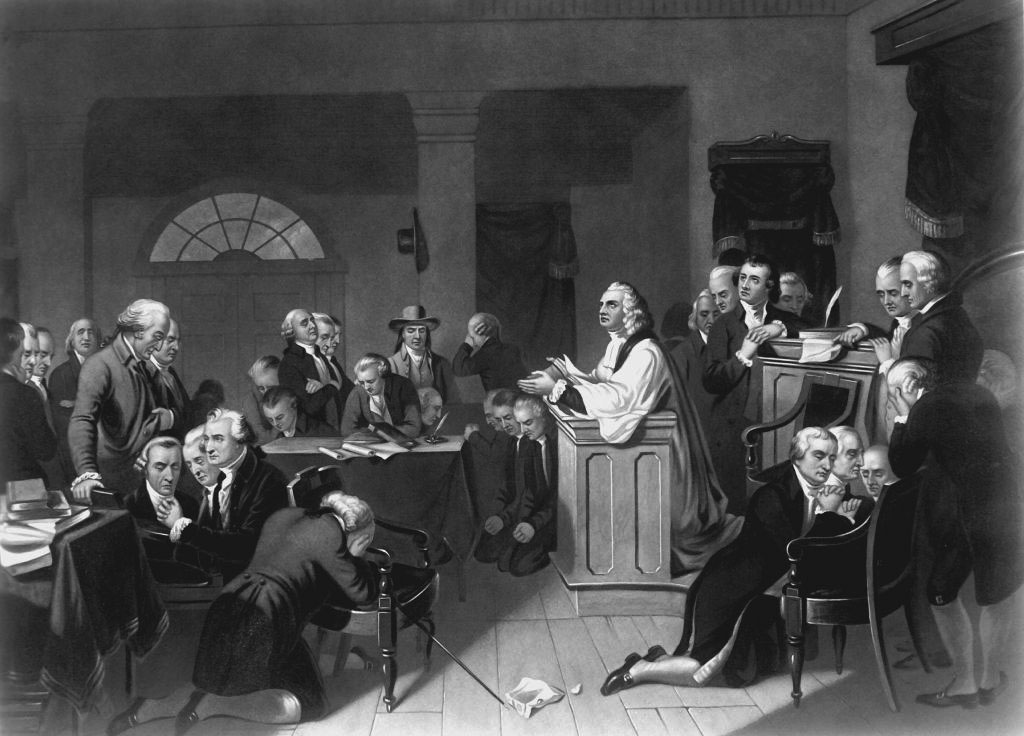
Psalm 35:8 United the First Congress of the United States and the State of Israel

Shoah, the Hebrew word defining the horrendous devastation
caused by the Nazis’ holocaustic mania
is derived from verse one fifteen in Zephaniah,
now used throughout the universe without translation.

What he called “yom shoah umeshoah, “day of calamity
and devastation,”  occurred in a war against the Jews,
during which about six million their lives would lose,
their murder not prevented by true Christian amity.

The calamity occurred because the Jews weren’t saved by friends,
but three years after peace was made Jews managed to obtain
a homeland, in which many of them live again,
as promised in the verse with which Zephaniah’s small book ends.

Though threatened by their genocidal enemies, Jews live
regathered where Zephaniah long ago had prophesied,
by God supported and with the United States allied,
still fighting feral foes and feeble lies few can forgive.

Amazingly the word appears
in psalm thirty-five, verse eight,
read to leaders of the first congress of
the United States, and united
on September 7, 1776, these leaders,
not with hate
but by the Hebrew Bible whose translated words
their unity invited.

Zephaniah 1:15 states:
י֥וֹם עֶבְרָ֖ה הַיּ֣וֹם הַה֑וּא י֧וֹם צָרָ֣ה וּמְצוּקָ֗ה י֤וֹם שֹׁאָה֙ וּמְשׁוֹאָ֔ה י֥וֹם חֹ֙שֶׁךְ֙ וַאֲפֵלָ֔ה י֥וֹם עָנָ֖ן וַעֲרָפֶֽל׃
That day shall be a day of wrath,
A day of trouble and distress,
A day of calamity and desolation,
A day of darkness and deep gloom,
A day of densest clouds,

Zephaniah 3:20 reads:
בָּעֵ֤ת הַהִיא֙ אָבִ֣יא אֶתְכֶ֔ם וּבָעֵ֖ת קַבְּצִ֣י אֶתְכֶ֑ם כִּֽי־אֶתֵּ֨ן אֶתְכֶ֜ם לְשֵׁ֣ם וְלִתְהִלָּ֗ה בְּכֹל֙ עַמֵּ֣י הָאָ֔רֶץ בְּשׁוּבִ֧י אֶת־שְׁבוּתֵיכֶ֛ם לְעֵינֵיכֶ֖ם אָמַ֥ר יְהֹוָֽה׃
At that time I will gather you, And at [that] time I will bring you [home], for I will make you renowned and famous Among all the peoples on earth, when I restore your fortunes Before their very eyes, said God.

I recalled this poem on 7/3/26, after learning that the word Shoah appears in a psalm that Samuel Adams chose to be read on September 7, 1774, in the first Congressional prayer, recited in Carpenters Hall, Philadephia. Ps. 35:8:

וְרִשְׁתּוֹ אֲשֶׁר-טָמַן תִּלְכְּדוֹ;    בְּשׁוֹאָה, יִפָּל-בָּהּ. 8 Let destruction come upon him unawares; and let his net that he hath hid catch himself; with destruction let him fall therein.

On September 6, 1774, the second day of what would become known as the First Continental Congress, Thomas Cushing of Massachusetts moved that the group’s daily meeting be opened with prayer. Formal objections to Cushing’s proposal came from John Jay, one of the most devout and theological orthodox members in Carpenter’s Hall that day, and his fellow Anglican John Rutledge of South Carolina. These men argued that such a prayer, “as proper as the act would be,” would do more to divide the members of Congress than to unite them. Adams later described a room full of “some Episcopalians, some Quakers, some Anabaptists, some Presbyterians and some Congregationalists.” How could they agree on the proper method of prayer? Would they be willing to listen to a prayer from a clergyman who did not share their denominational affiliation?
The problem was solved quickly when Boston’s Samuel Adams, a Congregationalist with a decidedly evangelical bent, supported Cushing’s motion, declaring, “I am no bigot. I can hear a prayer from a man of piety and virtue, who is at the same time a friend of his country.” He even suggested the right man for the job. “I am a stranger in Philadelphia,” Adams said, “but I have heard that Mr. Duché, an Episcopal clergyman, be desired to render prayers to the Congress tomorrow morning.” The motion passed.  Duché was appointed the first chaplain of the Continental Congress.
By the time of this historic gathering, patriotic Protestant clergy had nearly a decade of experience interpreting the Bible in ways that supported the political agenda of their fellow Whigs. Duché was no exception. Psalm 35 was a perfect passage for the moment: “Plead my cause, O LORD, with them that strive with me; fight against them that fight against me. Take hold of shield and buckler, and stand up for mine help. Draw out also the spear, and stop the way against them that persecute me…” In the King James Version, the Psalm was titled “The Lord the Avenger of His People.”
No wonder John Adams, writing to his wife Abigail, noted “It seemed as if Heaven had ordained that Psalm to be read on that morning.” Silas Deane, a representative from Connecticut, didn’t go as far as Adams with the providential musings, but could not ignore thinking about the scripture passage in light of the work of Congress. He claimed that Psalm 35 was “accidentally extremely Applicable”

The last verse of this poem points out the link between the way that the first congressional congress of the United States was celebrated by an allusion to the word Shoah in Ps. 35:8, recalled in a public recitation by future leaders of the United States in Carpenters’ Hall, Philadelphia, on September 6, 1774, inspired by Sam Adams and Ben Franklin  and the establishment of the Jewish state of Israel on May 14, 1948, three years after the Shoah that led to destruction of six million Jews.


Gershon Hepner is a poet who has written over 25,000 poems on subjects ranging from music to literature, politics to Torah. He grew up in England and moved to Los Angeles in 1976. Using his varied interests and experiences, he has authored dozens of papers in medical and academic journals, and authored “Legal Friction: Law, Narrative, and Identity Politics in Biblical Israel.” He can be reached at gershonhepner@gmail.com.

Psalm 35:8 United the First Congress of the United States and the State of Israel Read More »

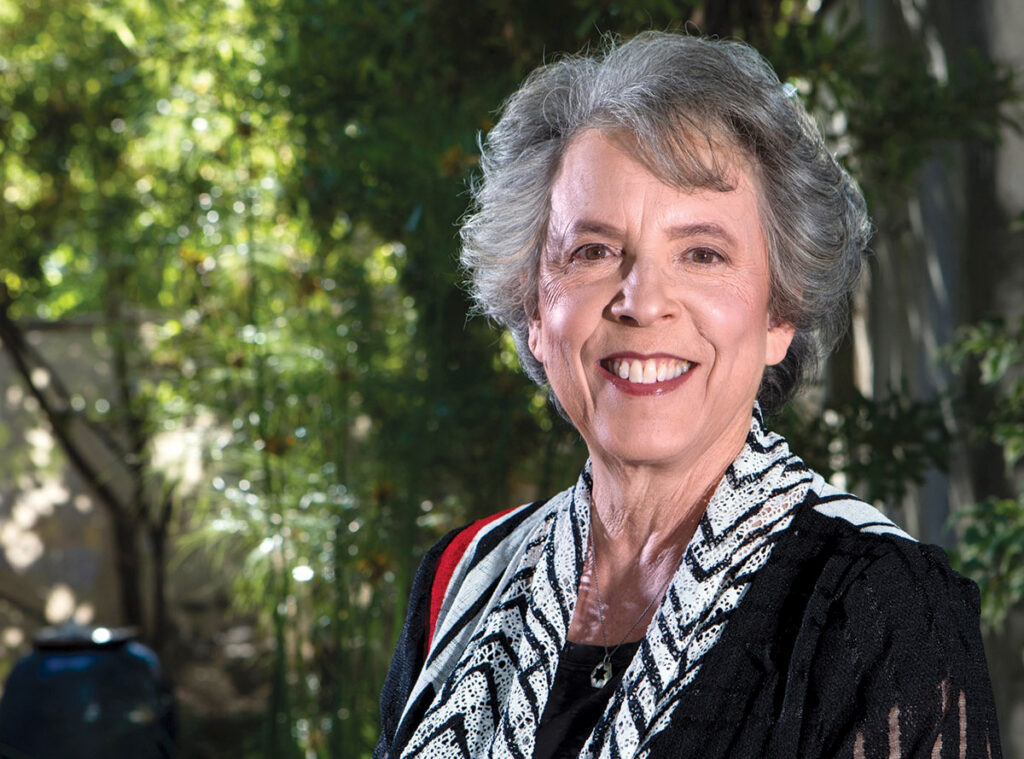
Rabbis of LA | Rabbi Geller Is Still Making History

This year marks the 50th anniversary of Rabbi Laura Geller’s ordination, the third Reform woman to earn the honor. In 1994, Rabbi Geller was again a trailblazer when she became the first woman rabbi to lead a major metropolitan synagogue, Temple Emanuel of Beverly Hills. When you meet her, you realize that her extraordinary success is due in part to her thoroughness when meeting any professional challenge. 

She showed up for her interview with The Journal with three of her books, explaining that when she retired in 2016, “instead of asking for a present, I wanted a book that talked about my rabbinic life. We called it ‘The Torah of My Life,’ an expression I used a long time ago in a public talk, and now everybody uses it. I believe there are two Torahs, not just the written Torah and the Oral Torah, but there is a Torah of Tradition and a Torah of Our Own Life. Those Torahs interact with each other, and each is changed because of interaction with the other.”

In the book’s introduction, she provides readers with a sample of her thinking. “Forty is a powerful number,” it begins. “The Torah tells the story that it rained and rained for 40 days. Moses was up on Mount Sinai alone for 40 days. There are 40 weeks of gestation. A mikvah has 40 seah of water. Our ancestors wandered in the wilderness for 40 years, and just as the wandering ended, Moses told them, ‘God has not given you a heart to know, and eyes to see, and ears to hear until this day.’ Forty suggests renewal, clarity, rebirth, the conclusion of one phase of a journey and the beginning of the next. And if you are lucky, after 40 years, you have a heart to know, eyes to see, and ears to hear.”

The introduction concludes with this paragraph: “This book is a retrospective of my career in published articles, sermons and images concerning the issues and themes that have been central to my experience as a rabbi, hence the Torah of my life. We’ve organized it (a bit pretentiously, I admit) around a reinterpretation of the Five Books of Moses: hence, the Torah of tradition. I have chosen the above in collaboration with my editor, Rabbi Beth Lieberman, who assembled this volume. The book would have been much too heavy to pick up if I  had made the choices myself.”

Lieberman was a Temple Emanuel congregant in the publishing business. “While she was here,” Rabbi Geller said, “she decided she wanted to become a rabbi.”

“The Torah of My Life” is an immensely personal book. At one point, she writes about “a memory that has shaped the Torah of my life that was deeply buried until recently. My sister Meggie died of cancer before I was born. She was two. My mother found out she was pregnant with me on the day of her funeral. We never talked too much about Meggie, but there were always pictures of her in my parents’ bedroom.  It wasn’t until I had a baby of my own that I was ready to hear the story. I learned that my parents mourned her death very differently. My mom turned to family and friends for support. My dad was more private; it was very difficult for him to find solace. And then he went to talk to his rabbi, a man I never knew. The story comforted my dad. Meggie, somehow, was always a part of his life.”

While holding a copy of “The Torah of My Life,” she pointed out two details: The cover, she said, was painted by Los Angeles artist Ruth Weisberg; she also insisted the book includ the credit, “edited by Beth Lieberman.”

The book is dedicated to Lynn Franklin, her assistant and the B’nai Mitzvah coordinator of Temple Emanuel for 22 years. The rabbi wrote that Franklin “supported and worried about me from the start.” Further, “she soothed congregants when there were hard feelings and made everyone feel as if he or she was the most important person at our temple.”

The rabbi discusses what it was like to be a pioneer for Jewish women, to be a rabbinic explorer, and her work with Barbra Streisand during the making of the film “Yentl.” She wryly notes that “in my retirement, I have written two books — ‘Moments That Matter’ and ‘Getting Good at Getting Older.’” The latter book, she said, is intended to offer road signs for growing older, a joint effort of Rabbi Geller and her late husband, Richie Siegel, who died in 2018, just short of his 71st birthday. She gave him much of the credit for the book. “My last promise to him,” she said, “was that I would finish the book. It was mostly written, but I knew I couldn’t complete it by myself. That’s when I reached out to Beth Lieberman.” It’s organized around a variety of helpful topics, such as “Getting Good at Getting Ready,” “Getting Good at Giving Away” and “Getting Good at Gaining Wisdom,” The latter titled chapter, she writes, offers “tools for gaining wisdom. One tool was creating new ritual, something I have been interested in from my first year in rabbinical school.”

The book was published in 2019, and soon she began drawing invitations to speak about the book. Then came COVID. “It was a great time to be in conversation with communities around the country because they didn’t have to pay for me,” she said. “During COVID, I spoke at more than 100 congregations across the country.”

Fast Takes with Rabbi Geller

Jewish Journal: What is your proudest achievement?

Rabbi Geller: I am grateful for my children and their children. I am grateful I had the good fortune to be in the right place at the right time, and to recognize the land ahead is flowing with milk and honey, but it’s about perspective. My greatest achievement was to have the perspective to look ahead and see the possibilities, to be curious, challenged and to find people who helped me.

J.J.: If you could, would you change any aspect of your life?

R.G.: While at USC, as a rabbi, I had an opportunity to pursue a doctorate, and I started in the School of Social Ethics. It became too complicated, and I didn’t do it.

J.J.: Your single most memorable moment?

R.G.: The birth of my children. The death of my husband. The caregiving at the end of his life.

Rabbis of LA | Rabbi Geller Is Still Making History Read More »

Hebrew University-UCLA Exchange, New Staff at BJE, Repair the World Volunteer Day

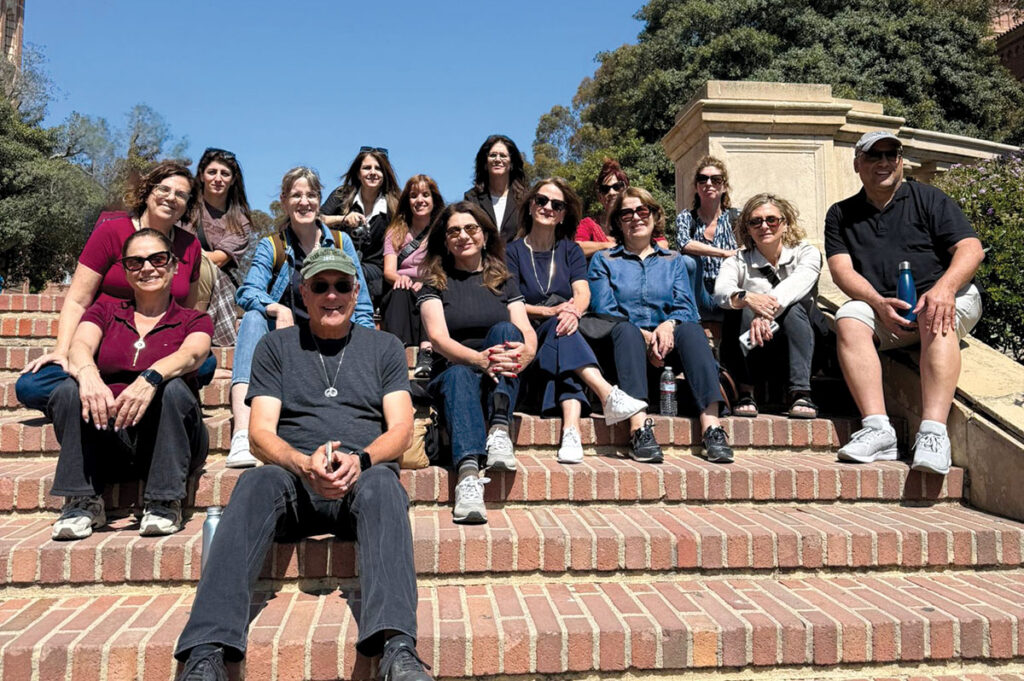
In early June, UCLA hosted a research exchange bringing together 24 Jewish, Muslim and Druze educators from Israel’s Amal Educational Network, co-organized by Hebrew University Vice President Mona Khoury with Professor Ron Avi Astor of the UCLA Luskin School of Public Affairs. The week of scholarship, learning and networking showcased the ongoing UCLA–Hebrew University research project led by Khoury and Astor, which measures how the network’s schools build resilience and bridge cultural divides — “building peace through education” even during wartime.


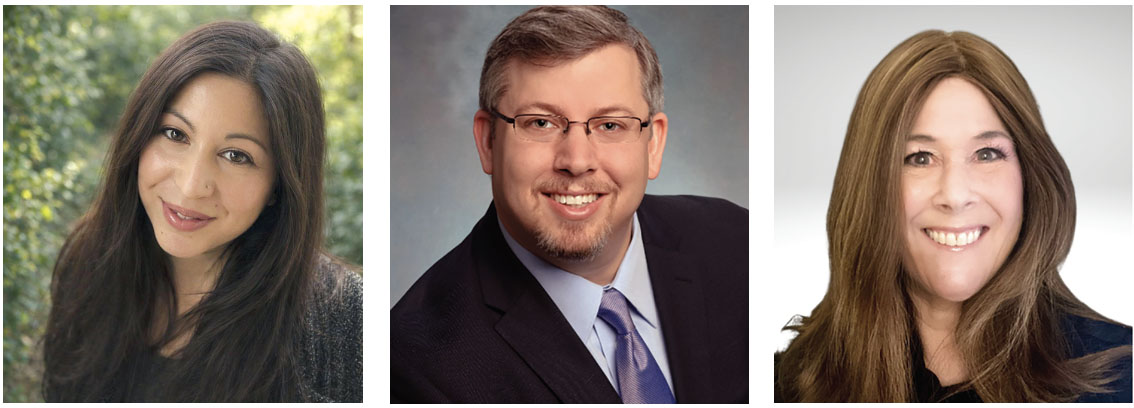
Biance Broomand, Gabe Wintner, and Batsheva Frankel (Courtesy of BJE)

Several new professionals are being welcomed at Builders of Jewish Education (BJE):

Biance Broomand, who is joining BJE as director of teaching and leadership. She’s responsible for ensuring that Jewish educators, administrators and lay leaders across L.A. have access to best-in-class professional learning; a strong sense of professional identity and community; and opportunities to deepen their practice and strengthen Jewish education. Broomand previously served as a member of the leadership team at Valley Beth Shalom’s Early Childhood Center.

Batsheva Frankel is BJE’s new director of Jewish Family Learning, a key leadership role in the organization’s new Jewish Family and Teen Learning Institute. Frankel brings more than two decades of experience across formal and informal Jewish education.

Gabe Wintner, BJE’s new day school liaison, has a key role within BJE’s new Institute for Sustainable Excellence. In this role, Wintner serves as a concierge to BJE-affiliated day schools and yeshivot across Los Angeles and as a trusted partner in solving their most pressing challenges. A day school parent and community leader who is currently completing his rabbinic ordination, Wintner brings 15 years of legal practice, with deep experience in regulatory compliance, franchise law and family law.

All three professionals joined the BJE program leadership team in early July.

BJE supports high-quality Jewish education across the religious and cultural spectrum throughout Los Angeles. There are currently 35 accredited Jewish day schools, grades K-12, affiliated with and supported by BJE, serving 10,000 students across the region. The schools range from Orthodox yeshivas to pluralistic community schools.


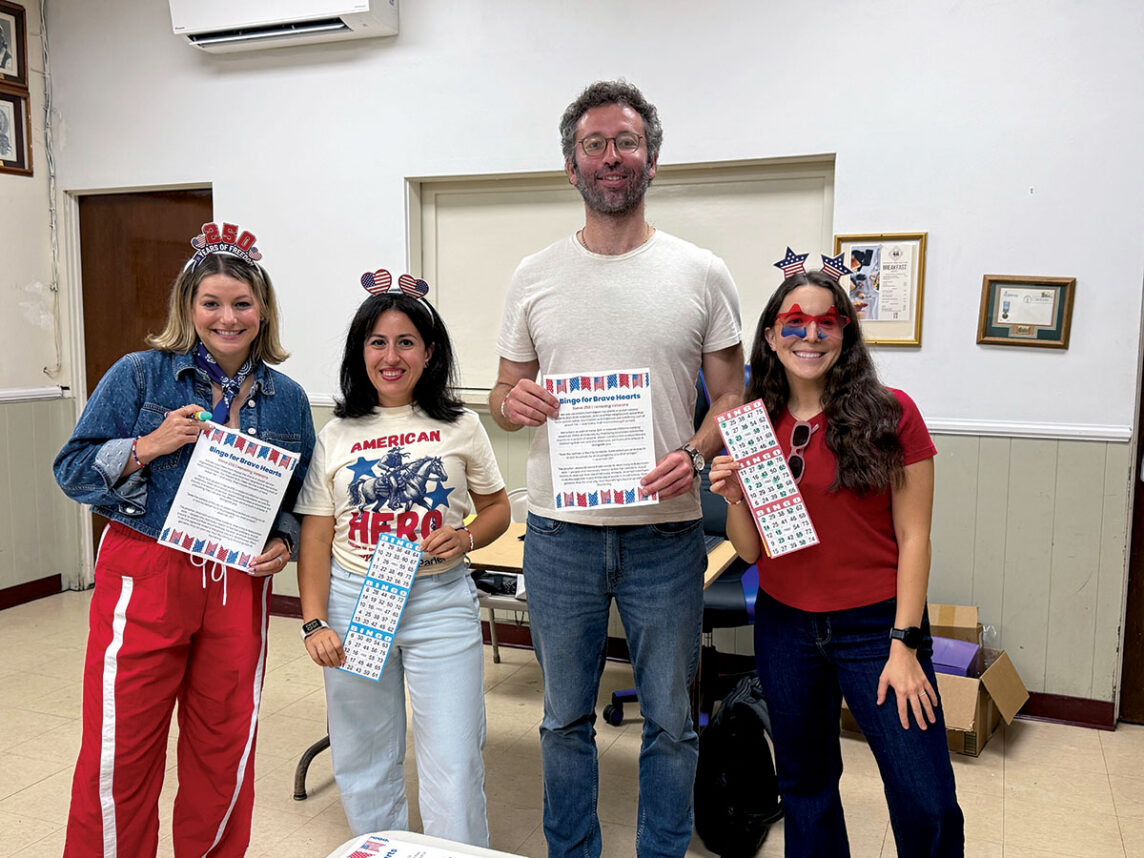
Repair the World Volunteers come together to play Bingo with U.S. veterans in advance of the U.S.’s 250th anniversary Courtesy of Repair the World

On June 23, Repair the World Los Angeles marked America’s 250th birthday alongside American veterans during a fun-filled day of community service and tikkun olam. At the American Legion in Culver City, the team brought volunteers and veterans together for an afternoon of Bingo. Through shared laughs and wins, volunteers served alongside people who have given much to this country. The program – dubbed “Bingo for Brave Hearts” – was part of Repair’s “Serve 250,” a national call to volunteer in honor of America’s 250th anniversary.

It was one of many community service opportunities organized by Repair the World as part of its “Serve 250” init-iative.

“Throughout U.S. history, neighbors have shown up to serve alongside each other,” Anyu Silverman, senior director of bridge-building at Repair the World, said. “Service brings people and entire communities together across differences for a shared purpose: to strengthen our community fabric. Our country needs that now more than ever. We don’t need to agree on everything to show up side by side and meet pressing needs in our communities. By embodying the Jewish value of hitchazkut, strengthening one another, we are building trust and service that connects communities across the nation.”

Hebrew University-UCLA Exchange, New Staff at BJE, Repair the World Volunteer Day Read More »

Arab Citizens of Israel: Between Integration and Separation

For years, critics of Israel have portrayed the country as a settler-colonial apartheid state that systematically oppresses its Arab minority. Yet anyone who has spent time in Israel is likely to encounter a more complex reality. Arab citizens are an integral part of Israeli society. They serve as physicians, nurses, lawyers, engineers, pharmacists, entrepreneurs, professors and judges. It is commonplace to be treated by an Arab physician at one of Israel’s leading hospitals, work alongside Arab colleagues, or encounter Arab attorneys in the country’s courthouses.

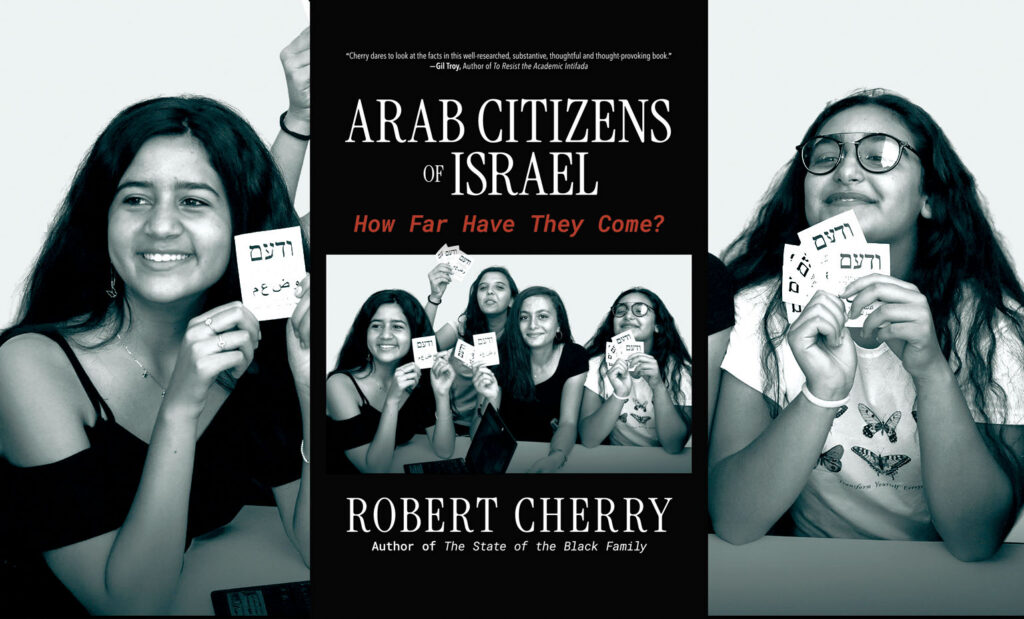
Professor Robert Cherry, emeritus professor of economics at Brooklyn College, set out to examine this disconnect between perception and reality in his new book, “Arab Citizens of Israel: How Far Have They Come?” Drawing on decades of research into discrimination and labor markets, Cherry argues that the widely accepted narrative often overlooks the remarkable social, educational, and economic progress made by Arab citizens since Israel’s founding. While documenting the discrimination and military rule that characterized Israel’s early decades, he concludes that the country’s Arab citizens have undergone a profound transformation that is largely ignored in discussions about Israel today.

Cherry’s interest in the subject grew out of his decades of studying racial discrimination in the United States. After donating to a playground in a Druze village in northern Israel, he became a member of a United Jewish Appeal committee that supported Israeli NGOs.

“I spent a few decades studying racial discrimination in the U.S.,” Cherry said. “It seemed like certain aspects of the dynamic between Jews and Arabs had similarities to what I had studied in the United States between Blacks and Whites.”

The comparison prompted Cherry to explore the experiences of Arab citizens of Israel through the same analytical lens he had applied to discrimination in the American labor market.

Published by Wicked Son Press, the book chronicles the social, economic, and political progress of Israel’s Arab citizens since the first Aliyah in 1882. Cherry also examines how the October 7, 2023 Hamas attack affected Arab-Israeli society, noting that many Arab citizens expressed solidarity with Israel during the war.

“Hamas didn’t distinguish between Arabs and Israelis,” Cherry said, noting that between 40 and 50 Arab citizens were among those killed on October 7. “I was surprised how consistent the support was and how it increased the feeling of being Israelis.”

One of Cherry’s interesting findings while working on the book was the rapid growth of Arab participation in Israel’s high-tech sector. He attributes much of that success to educational initiatives that prepare Arab students for careers in science, technology, engineering, and mathematics from an early age.

“I was certainly surprised with how quickly they had become large numbers in high tech,” he said. “They started in high school giving prep programs and summer programs so they can meet the standards. That’s one of the differences between the U.S. and Israel. There is much more of what is called developmental affirmative action—you prepare people so they can meet those standards.” Cherry pointed to Nazareth, which has emerged as a growing high-tech hub, as an example of that investment.

Cherry believes these developments receive little attention in the United States, where the conversation about Israel often overlooks the experiences of its Arab citizens.

“People don’t know anything about them,” he said. “If you read The New York Times and The Washington Post, they almost never report about the Arab citizens of Israel. People don’t know that they are doctors, and that Jews are treated by Arab doctors. It’s not part of the narrative. Instead they write about the violence in the Arab communities and that the government doesn’t do anything about it.”

In fact, Cherry said, most of the advances the Arab community enjoyed in Israel, took place under the Netanyahu government.

Cherry also points to the growing number of Arab women entering higher education and the workforce as one of Israel’s most significant changes in recent decades. In his view, expanding educational and employment opportunities has benefited both Arab society and the Israeli economy.

“It wasn’t only a moral issue,” Cherry said. “We couldn’t afford a poor community.” He believes Israeli policymakers recognized that increasing workforce participation among Arab women would strengthen the economy while reducing long-term welfare costs.

Cherry also highlights the limits of social integration between Jewish and Arab citizens compared with other societies he has studied. Unlike contexts where intergroup relationships often develop through friendship, shared neighborhoods, and intermarriage, he notes that in Israel, social boundaries remain more pronounced. Jewish and Arab citizens, he argues, generally live in separate communities, and early education is largely segregated, limiting meaningful interaction before university.

“Employment and educational efforts have been successful in integrating Arab citizens, and there are more Arab teachers in Jewish schools than ever before,” Cherry said. However, he emphasized that structural separation remains significant. “Arabs by and large still live in Arab communities and Jews in Jewish communities… schooling before college isn’t integrated.”

While he acknowledges improvements in mixed cities such as Haifa, Jaffa and Jerusalem, he argues that most children still grow up with limited exposure to the other community. As a result, he sees the presence of Arab teachers in Jewish schools as particularly important. “Jewish kids who have never seen Arabs in a meaningful interactive way before college age may carry stereotypes,” he said. “Having Arab teachers in schools helps create that interaction early. You need that kind of engagement.”

For Cherry, this educational role becomes one of the few consistent bridges between the two communities in an otherwise largely parallel social structure.

When asked whether the Arab citizens he had spoken with recognized how much their lives had changed over the years, Cherry said the answer was not always straightforward.

“It’s hard for some of them to embrace that there has been a real change,” he said. “When you have a population that is only one generation removed from a pretty bad situation, it’s hard for them to feel comfortable.”

Cherry acknowledged that there remains a vocal segment of Arab students who identify with Palestinian nationalism. “There is a section of Arab students that is left-wing, and they still see the most important thing as maintaining unity with the West Bank and Gaza,” he said. “They’re more vocal because they’re university graduates but they don’t represent the majority of Arab citizens.”

During my recent visit to Israel this summer, I observed many of the changes Cherry describes firsthand. Arab citizens were visibly integrated across a range of workplaces—from healthcare and law to business and public services—and their presence in professional environments was both routine and unremarkable.

At the same time, the picture was not uniform across all communities. In particular, Bedouin women remain significantly underrepresented in the workforce, reflecting a combination of social, educational, and economic factors that differ across segments of Arab society.

Taken together, Cherry’s findings point to a reality that is often flattened in public debate. Arab citizens of Israel are not outside the system looking in, nor fully absorbed into it, but increasingly embedded within it in specific sectors of society, while still living within clear social and geographic boundaries.

Arab Citizens of Israel: Between Integration and Separation Read More »

‘Floaters’ Brings the Joy and Heart of Jewish Summer Camp to the Big Screen

For generations of Jewish campers, summer camp has been a place where lifelong friendships are forged, first romances blossom and awkward teenagers discover where they belong. Those experiences take center stage in “The Floaters,” an offbeat ensemble comedy opening in Los Angeles theaters on July 17.

Directed by Rachel Israel, the film stars Jackie Tohn (“Nobody Wants This”), Sarah Podemski (“Reservation Dogs”), Seth Green, Steve Guttenberg, Jonathan Silverman and Judah Lewis.

In the film, Tohn plays Nomi, a struggling musician who is kicked out of her band just before it is set to embark on tour. With no prospects for the summer, she’s recruited by her oldest friend, Mara (Podemski), director of a Jewish summer camp, to supervise a group of teenage outsiders known around camp as the “floaters” because they never quite fit anywhere else.

Nomi reluctantly accepts the job just as the camp faces a financial crisis severe enough that it can barely afford essential repairs, including a new septic system. Mara strikes a high-stakes wager with a rival, wealthier camp run by an effectively obnoxious director, played by Green. The prize money could save the camp — if Nomi’s misfit campers can stage a better play than their privileged rivals.

As rehearsals unfold, Nomi gradually bonds with her campers, encouraging them to embrace their individuality, work through their differences and channel their quirks into a delightfully unconventional production.

Jackie Tohn (Nomi) and Aya Cash (Rabbi Rachel) in “The Floaters.” Courtesy of Bright Iris Film Co.

Although Israel didn’t write the screenplay — it was penned by Brent Hoff, Andra Gordon and Amelia Brain — she immediately connected with its setting.

“I really fell in love with the idea of a film set within the world of Jewish summer camp,” Israel told The Journal. “It felt both familiar in the spirit of a summer movie, but also very new in how specifically Jewish it was.”

Rather than dilute that specificity, Israel embraced it.

“The dream with this film was that we would make something super Jewish — crazy Jewish — but that would also be universally relatable whether you’re Jewish or not,” she said. “The films I enjoy most often introduce me to a culture I don’t know. Even if I don’t understand every reference, I understand the emotions.”

That authenticity extends beyond the dialogue. “The Floaters” was filmed almost entirely at Camp Tel Yehudah, the longtime Young Judaea leadership camp in the Catskills, which was transformed into the fictional Camp Daveed.

“It was a true labor of love by people who knew this world intimately,” Israel said.

The filmmakers’ familiarity with Jewish camping culture shines through in dozens of small details. Mara grumbles that the camp’s mashgiach is a “shakedown artist” who nearly shut down the kitchen the previous year over crossbred grapes deemed treif. A quirky rabbi, played by Aya Cash, oversees an Israel-shaped ice cream cartography contest that blends, as she puts it, “the geopolitical” with “the edible,” only to marvel when one camper appears to have solved the Israeli-Palestinian conflict in frozen dessert form.

The screenplay is equally attuned to the emotional landscape of adolescence. Among the film’s strongest storylines is Jonah, one of the floaters, played with understated charisma by Judah Lewis. Sporting a torn T-shirt, a mop of hair and a vaguely Leonardo DiCaprio-esque look, Jonah arrives at camp unconvinced by his father (Jonathan Silverman), who insists camp will be an excellent networking opportunity.

One memorable sequence finds Jonah working kitchen duty when he catches two campers spitting into tubs of strawberry ice cream before serving it. Pressured to join them, Jonah instead cleverly alerts the head chef that fleishig spoons have been mixed with dairy, prompting the horrified staff to throw out the contaminated dessert before anyone eats it.

Israel intentionally cast Jewish actors in Jewish roles, believing the story deserved an authentically Jewish ensemble.

“Because this film says so much about Jewish community, it was important to me that we cast all Jewish characters with Jewish actors,” she said. “I wanted people to see the diversity of the Jewish world.”

Production wrapped just weeks before the Oct. 7 Hamas attacks on Israel. Since then, Israel believes the film has acquired unexpected resonance.

“I was in the edit, kind of high off this feeling of Jewish community coming together,” she said. “The film has gotten deeper and more relevant post-Oct. 7.”

Still, she deliberately resisted making a political statement.

“We intentionally didn’t want to make a political film,” she said. “What we wanted to present was a world that embraces healthy argument.”

Instead, Israel hopes audiences leave with something far simpler.

“Laughter,” she said. “I want them to laugh. I want them to feel that restless joy of summer.”

“The Floaters” opens at Laemmle locations in West L.A. and Encino on July 17. For details, visit laemmle.com/film/floaters.

‘Floaters’ Brings the Joy and Heart of Jewish Summer Camp to the Big Screen Read More »

Alan Rothenberg Brought the World Cup to America in 1994. Now He’s Bringing Soccer’s Jewish History to L.A.

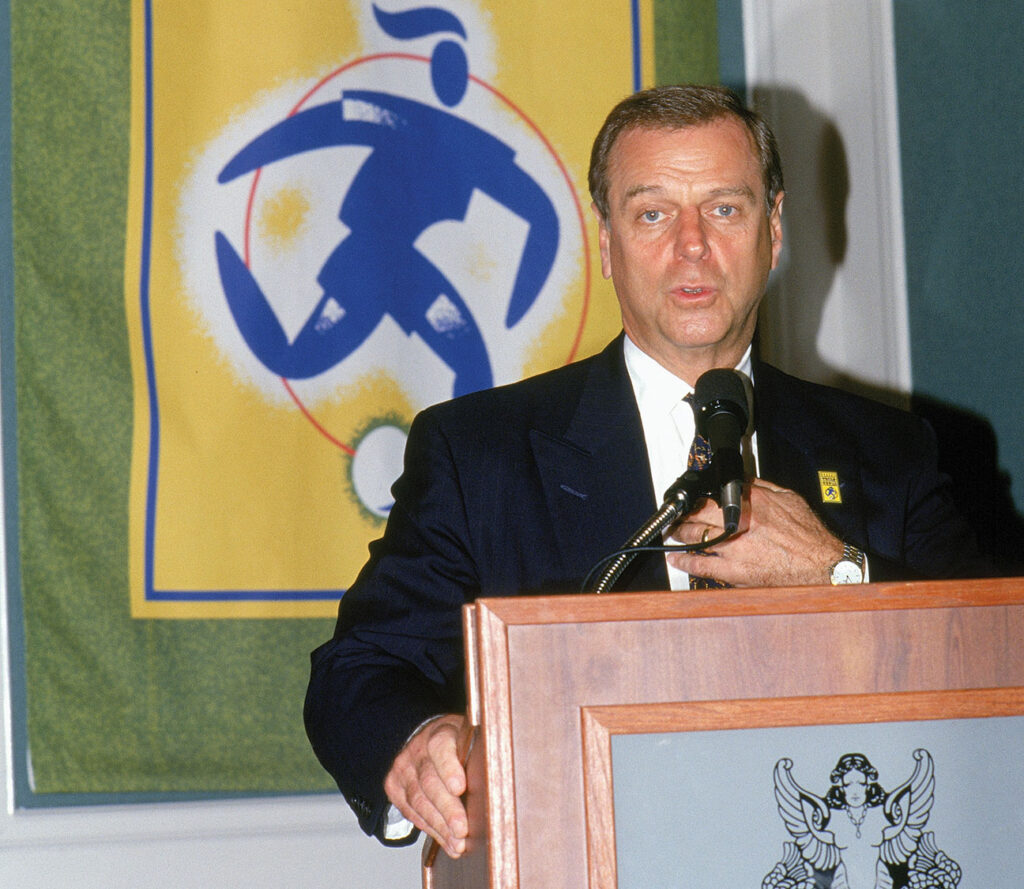
Alan Rothenberg was the epicenter of soccer’s popularity in the U.S. in the 1980s and 1990s. He was soccer commissioner for the 1984 Summer Olympics in Los Angeles. He helped bring the World Cup to the United States in 1994 as chairman and CEO of the host committee. He was also co-founder of Major League Soccer and chairman of the 1999 Women’s World Cup—famously won by the U.S. Women’s National Team in a shootout at the Rose Bowl.

And with the U.S. co-hosting the FIFA Men’s World Cup this summer, he is chairing a different kind of soccer organization. He is the chairman of the committee for The Beautiful Game: The Untold Story, a Holocaust Museum LA exhibition on the role Jews played in soccer before World War II, what happened during the Holocaust and the Jewish role in soccer after the war.

The exhibition is part of the Goldrich Cultural Center, the expansion around Holocaust Museum LA expected to open to the public in mid-August. The new center is slated to include galleries, theater and workshop spaces, a pavilion with a multimedia exhibition centered on an authentic railway car, and a Virtual Survivor Experience using voice recognition and holographic technology.

Holocaust Museum LA approached Rothenberg after developing the idea for a soccer exhibition around the museum’s new building and the World Cup.

“I thought it was a great idea, a great exhibition, great subject, fascinating story,” Rothenberg told The Journal. “And so I was honored to have the opportunity to chair that committee. It was just an eye-opener to me as far as the deep involvement in all aspects of the soccer Jews had in Europe before the war, including they had a woman who started women’s soccer back in the 20s.”

The exhibition also includes a story about Nazis staging a soccer match during a Red Cross visit.

“But when the Nazis were trying to prove that they were treating their prisoners while the Red Cross was on a tour of their facilities, they dressed up at the stadium, had a soccer match, of course, with all Jews playing in it and the Red Cross bought it,” Rothenberg said. “And of course, as soon as the Red Cross was gone, the players were all shipped out to be murdered.”

Rothenberg said his own awareness of the Holocaust began through a distant cousin who survived Auschwitz and was sponsored by Rothenberg’s family.  As a kid in Detroit, soccer was far from Rothenberg’s radar—hockey was his favorite sport to play. Along with Red Wings star Gordie Howe, his favorite childhood sports idol was Jewish first baseman, Hank Greenberg. He remembers his father taking him on his sixth birthday to see Greenberg play at Briggs Stadium.

Rothenberg’s first real awareness of soccer wouldn’t be until he was 27 years old.

“I was aware that the 1966 World Cup in England was the first satellite broadcast of anything overseas,” Rothenberg said. “I didn’t go to see it, but I read about it. It was available in closed circuit theaters in the United States. That was the first time. I mean, I was aware there was soccer.”

By 1994, Rothenberg was helping sell the sport to a country that still did not have a large soccer public. Rothenberg said organizers knew they could not count on American viewers to come to the sport on soccer terms alone.

“In 94 when we started out, there weren’t a lot of soccer people in the country and so there was some concern we would be able to be successful, but we did know that Americans love a big event,” Rothenberg said. “So we focused so much on making this a big event.”

Rothenberg said the U.S. men’s national team also had to be competitive. The team had qualified for the 1990 World Cup after a 50-year absence, but opened that tournament with a loss to Czechoslovakia.

His new book, “The Big Bounce: The Surge That Shaped the Future of U.S. Soccer,” was published by Triumph Books on Feb. 10, with a foreword by Alexi Lalas. The book looks at the period from soccer at the 1984 Summer Olympics to the 1999 FIFA Women’s World Cup. The book is an easy read for a non-soccer fan—it doesn’t get lost in technical details about the sport the way a sports coach memoir often does. It’s more about building organizations and creating a big event as it is about on field or on pitch soccer

Rothenberg said one major shift he’s seen over the last 41 years is how the media understands the sport.

“I think the main thing was the media realizing that low scoring makes the game more dramatic,” Rothenberg said. “And so the initial reaction to non-soccer people is a zero-zero game or a one-nothing game, that’s boring. Well, baloney, it means that from the opening kick to the end, your heart’s in your mouth because any good great play or any mistake or any fluke is like life or death. The drama of the penalty kicks, and then you can just see it in these games in this tournament is just awesome. Fans go crazy. The TV ratings actually go up when you go to penalty kicks. I think that was the biggest educational breakthrough for the media.”

Another shift Rothenberg has seen is that multisport athletes now have more reason to choose soccer.

“There was a story of Sports Illustrated about baseball player Nomar Garciaparra years back in which he said growing up his favorite sport was soccer and the only reason he went to baseball is it paid more money,” Rothenberg said. “Now of course you can make a good living in soccer.”

With 48 countries in the World Cup, Rothenberg said fans from each country bring the same feeling to the tournament.

“And one of the beauties of the World Cup is you got 48 countries and there’s 48 countries fans who feel the exact same way,” Rothenberg said. “The emotion is just remarkable. It’s such a great event.” That reach is part of what gives the Holocaust Museum’s exhibit an opportunity to use soccer to look at Jewish life in the sport before World War II, what happened during the Holocaust and the Jewish role in soccer after the war.

He’s encouraged by the unity he sees amongst many opposing fans in the stands. Many videos of opposing fans have gone viral for hugging and high fiving after a good match—wearing different jersey colors and unable to even speak each other’s language.

“Besides the people in the stadiums and the players, when you see these fan festivals and watch parties and you just walk the streets of any major city in the country and you see people from all over the world—it’s at a time when we so very much need something that’s binding in a community,” Rothenberg said. “It’s positive and joyful, you see that. People are going hand in hand,and it doesn’t matter what the racial differences are, what the ethnic differences are. They don’t care about your religion or politics, it’s a beautiful thing to behold.”  

Alan Rothenberg Brought the World Cup to America in 1994. Now He’s Bringing Soccer’s Jewish History to L.A. Read More »

More Than a Game: How the Equalizer Is Bridging Israel’s Divides One Child at a Time

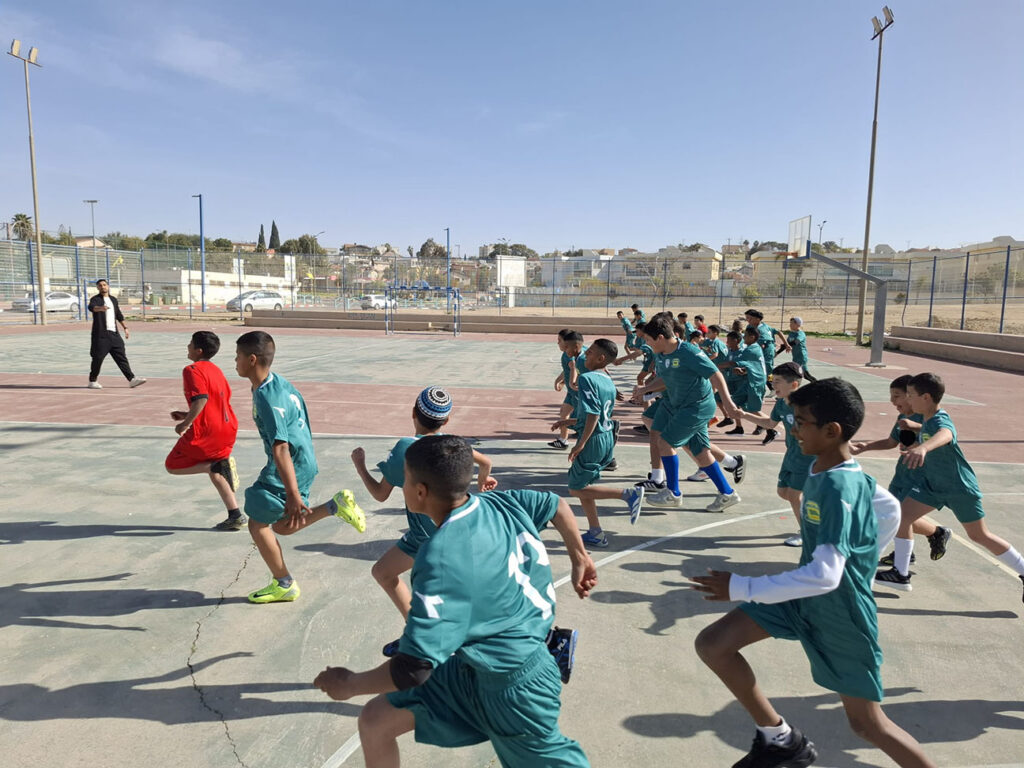
The sight of young Orthodox boys racing across a soccer field against Muslim children from Tayibe may seem almost unimaginable to many people around the world. Yet on playing fields across Israel, these encounters take place regularly. Through The Equalizer (Sha’ar Shivion), children from Jewish, Arab, Druze, Bedouin, religious and secular communities meet through soccer – not only to compete, but also to build friendships and break down barriers that often keep their communities apart.

It all began in 2009, when a group of students from the Hebrew University of Jerusalem volunteered with Ethiopian immigrant families and noticed that many of the children were spending their afternoons without structure or support. They decided to start a soccer team, hoping to offer a sense of belonging, purpose and community.

What began as a small grassroots initiative soon grew into something much larger. The founders quickly realized that soccer could be more than a game — it could serve as a powerful educational tool, helping children build confidence, develop leadership skills, strengthen academic engagement and form meaningful connections across Israeli society.

Today, The Equalizer operates 649 teams serving approximately 12,000 children and teenagers across Israel through soccer, basketball and swimming programs, all designed to promote education, leadership and social empowerment. Working with local schools and communities, the organization creates opportunities for young people who might otherwise never meet to interact through tournaments, joint activities, and educational programs.

At its core, The Equalizer uses sport as a common language — one that allows children from different backgrounds to meet, compete and discover shared ground despite their differences.

During our interview in Jerusalem, Gavriel Halevi, deputy CEO of The Equalizer, explained that while sports initially draw children in, they ultimately serve a much broader purpose.

“Our vision is to create a platform where everyone respects one another,” Halevi said. “We want to foster meaningful dialogue, shared values and common ground and provide an educational framework for young people. We take their passion – almost their obsession – with sports and channel it toward strengthening and uniting Israeli society. Today, The Equalizer is the largest platform in Israel bringing together young people from different communities in the name of education, equality, and a shared society.”

Halevi explained that each participant takes part in four structured weekly activities, two sports practices and two educational sessions led by trained coaches and mentors. While the practices build teamwork and confidence, the educational sessions offer a safe space to discuss personal experiences, process emotions and develop leadership and communication skills.
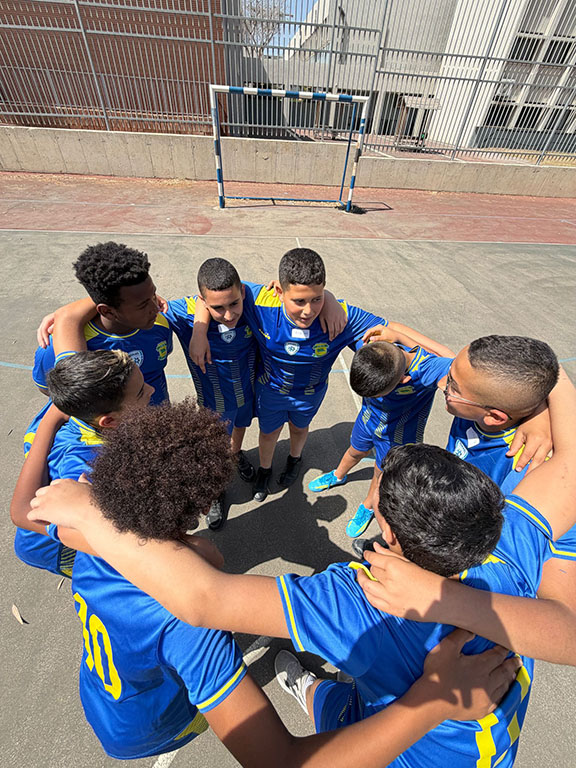
The program also brings together children from communities that rarely interact. Through tournaments, leadership courses and shared activities, young people from across Israel’s social, religious and cultural spectrum meet and often form friendships that extend far beyond the soccer field.

“When you come to one of our tournaments, you see genuine friendships,” Halevi said. “Children from kibbutzim talking with kids from development towns, religious teenagers spending time with Muslim youth from Arab communities.”

He recalled a particularly striking example. “Three students from a religious yeshiva high school in Yeruham attended a coaches’ training course alongside young people from Kfar Qasim. The yeshiva had suffered heavy losses during the war, while many of the participants from Kfar Qasim had never met Jewish teenagers before. By the end of the course, they had become close friends. They shared rooms, the Kfar Qasim participants taught the others how to dance dabke and they discovered just how much they had in common.”

“There is no other program like this in Israel,” Halevi said. “Many of these kids arrive with preconceived ideas about one another, and we give them the opportunity to build genuine friendships.”

According to Halevi, the impact lasts long after the programs end. “When I interview the children later, I see how their perceptions of one another change,” he said. “They become curious about each other’s cultures instead of fearing them. They stop seeing one another as a threat and begin to see each other simply as fellow Israelis. We see this transformation not only among the children, but among the coaches as well.”

Participants often remain in touch through WhatsApp groups, continuing conversations about soccer and daily life long after the activities end. For Halevi, these lasting relationships are among the clearest measures of success.

The organization’s role took on an entirely new dimension following the Oct. 7, 2023 Hamas attack. Just three days later, while thousands of families from border communities were evacuated to hotels and temporary housing across Israel, The Equalizer’s coaches were already on the road.

“Our children were traumatized,” Halevi recalled. “Many had witnessed horrific events, lost friends or family members and suddenly found themselves living in hotel rooms far from home. We knew we couldn’t wait.” Halevi personally traveled to an evacuation center in Eilat, where he was immediately recognized by the children. “I’ll never forget one mother taking me from room to room,” he said. “The children would look at me and ask, ‘You’re from The Equalizer – where is Aviel?’ He was their beloved coach.”

Within days, Aviel arrived and restarted activities at the evacuation center. Similar scenes unfolded across Israel as The Equalizer established programs in approximately 70 evacuation sites. Children who had been confined to hotel rooms were once again running, playing and reconnecting in an environment that felt familiar and safe.

“For many of these children, the coaches became the people they trusted most,” Halevi said. “Parents called them whenever a child was struggling. In many ways, our coaches became anchors of resilience for these communities.”

What began as soccer practices evolved into safe spaces where young people could rebuild routines, process trauma and gradually regain a sense of normalcy during one of the darkest periods in Israel’s recent history.

The organization is now expanding its educational mission with a new initiative designed to teach spoken Hebrew to Arab children. The program responds to what Halevi described as a significant gap in conversational language skills in some communities.

“In some communities, children’s Hebrew is almost nonexistent,” he said. “Many don’t know how to communicate in Hebrew, and that limits their opportunities in life – from higher education to employment. It also means they consume information almost exclusively in Arabic and have fewer opportunities to interact with wider Israeli society.”

According to Halevi, the need became clear early in his time with The Equalizer. “One of the first things I noticed was that many of the children couldn’t speak Hebrew at all,” he said. “Schools have been asking for spoken Hebrew instruction because they understand how important it is.”

This year, The Equalizer launched a pilot program in partnership with the nonprofit Nisan, introducing spoken Hebrew to 90 students. They are now going to expand to five schools in Israel’s Triangle region. Rather than traditional classroom learning, the lessons are integrated into sports activities and based on the children’s interests.

“In the very first lesson, the children order their soccer uniforms, learning colors and numbers in Hebrew,” Halevi explained. “Later, they’re asked to commentate a soccer match in Hebrew. The goal isn’t simply to teach a language, it’s to expand the world they live in.”

More Than a Game: How the Equalizer Is Bridging Israel’s Divides One Child at a Time Read More »

NYBD & Bakery in Mar Vista Features Hamantaschen?

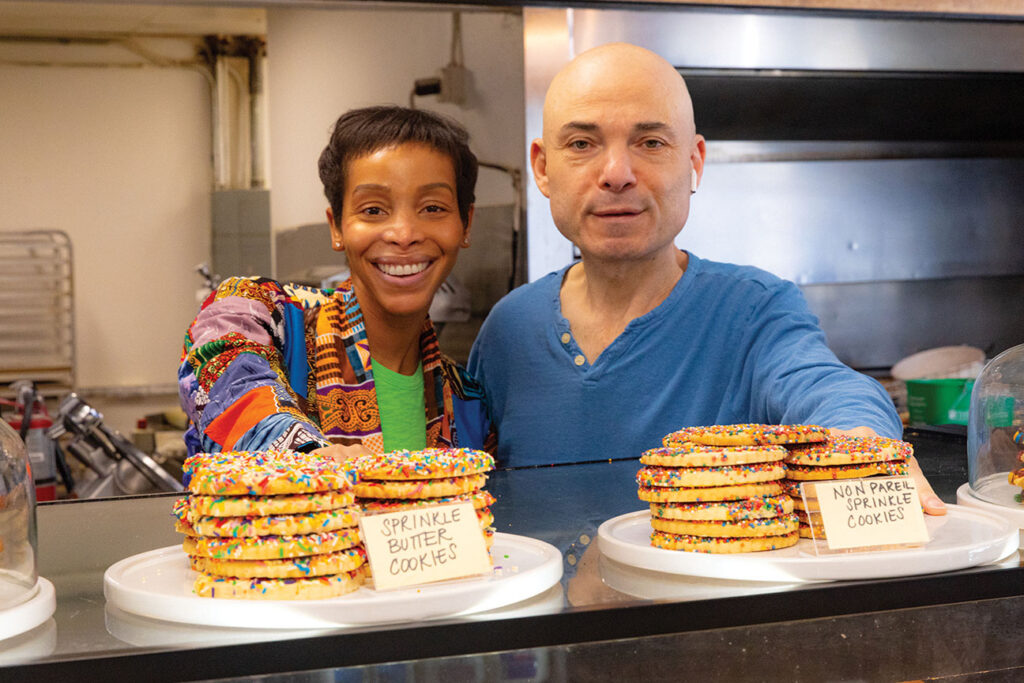
Hamantaschen year-round? Yes, please. This Purim favorite is one of the specialties at Mar Vista’s New York Bagel Deli and Bakery (aka NYBD & Bakery), which recently changed ownership.

It’s important to the owners, Lenny and Adaeze Rosenberg – and the neighborhood – to stay true to its longtime recipes, including and especially the authentic New York-style bagel recipes. “Bagels are everywhere these days,” Lenny told The Journal. “Ours we consider one of the best because it’s more the true traditional New York style.”

The Rosenbergs, whose ownership of Bea’s Bakery in the Valley resulted in a series on JLTV – “It’s a Sweet World” – and cookbook of the same name, returned to the Westside of Los Angeles last year. When NYBD co-founder Brian Gruntz decided to retire, the duo purchased the business. The agreement was to take over the Santa Monica store first, which they did in February 2025; The Mar Vista location reopened this past May.

“Bea’s was something that we had to get because it was a landmark location,” Lenny said. “Now we’re back where we’ve been for the last 25, 30 years.”

The Mar Vista location – established in 1993 – has a fresh new look, courtesy of Adaeze’s design background. This includes their updated logo, merchandise section and flat screen TVs; one with the menu, the other with baking segments from various shows nationwide.

“The videos take [customers] on a journey, while they’re ordering,” Adaeze told The Journal. “The colors make it pop; they get you excited and make you hungry at the same time.”

For the menu, the Rosenbergs kept the traditional New York-style bagels, bialys and shmears, along with breakfast sandwiches, deli options and whole pizzas. Additions include their scrumptious French toast bagel, challah, and challah French toast, gluten-free bagel options and new espresso machine.

The most notable change is the addition of a bakery section. Alongside traditional Jewish fare like black-and-white cookies and Lenny’s favorite – the chocolate rugelach (“It’s what I make all the time at every shop, and in my opinion is the best-tasting pastry we have,” he said) – the shop now offers Italian rainbow cookies and Mar Vista-exclusive snickerdoodles, which is part of their new Mar Vista cookie collection.

“I just love the snickerdoodle,” Adaeze said. “Biting into the moist, delightful cinnamon-y cookie makes me feel like everything’s going to be okay for a couple of minutes.”

And then there is the hamantaschen. “It’s made with a traditional butter cookie recipe,” Lenny said. “It’s very simple and [the combination of] the butter cookie recipe and the fruit filling … is delicious.” Their recipe is below.

They also love its durability and cultural versatility. “It does not fall apart, which makes eating it year round a blessing,” they said. “It is also an interactive family bonding desert, [watching families decide] which filling; that’s relevant any time of the year.”

NYBD & Bakery Mar Vista is at 11700 National Blvd, Los Angeles (https://nybdmarvista.com). The Santa Monica location is 2216 Wilshire Boulevard (https://nybdbakery.com). Both have parking and outdoor seating; only the Santa Monica location has places to sit inside.

Apple or Raspberry Hamantaschen

with butter cookies variation

Yields: 12 3/4-inch in diameter cookies

1 ½ cups granulated sugar

2 ½ cups butter

Pinch table salt

1 ½ tsp vanilla extract

2 ¼ cups pastry flour

2 large whole eggs

Apple or raspberry pie filling

Preheat oven to 350°F.

Combine sugar, butter, salt and vanilla in a mixing bowl.

Mix at low speed for 5 minutes, until the dough is all combined.

Sprinkle flour on the table/surface, so the dough does not stick.

Roll out dough to about ¼ inch thickness.

For butter cookies:

Cut out your favorite cookie shapes.

Place on a parchment paper lined baking sheet.

Bake at 350°F for 12 minutes.

For hamantaschen:

Preheat oven to 350°F.

Cut dough into 3/4-inch rounds.

Put about a teaspoon of apple or raspberry filling in the middle of each cookie.

Then pinch three ends together, so it forms a triangle.

Place on a parchment paper lined baking sheet.

Bake at 350°F for 12 minutes.

NYBD & Bakery in Mar Vista Features Hamantaschen? Read More »

A Ka’ak By Any Other Name

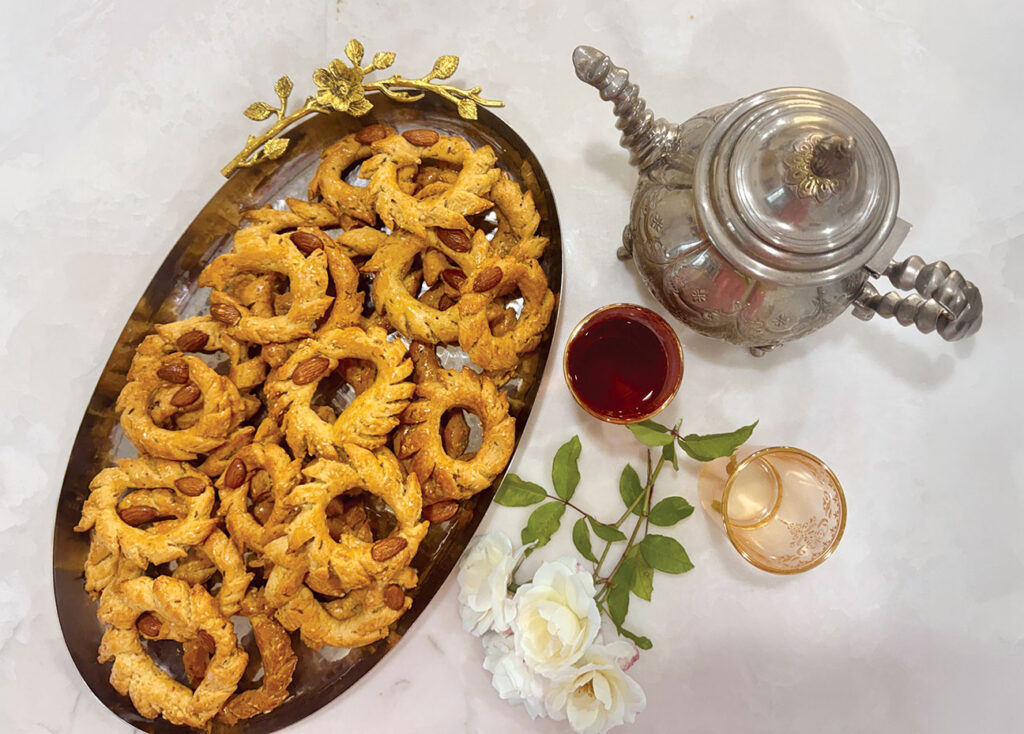
If you are friends with any Sephardic or Middle Eastern Jew, you’ve probably heard of ka’ak, traditional ring shaped cookies. Ka’ak are flaky, crispy and savory, sometimes generously coated with sesame seeds or flecked with anise. Deceptively simple, they pack a lot of flavor!

The round bracelet shape is thought to represent eternity, as well as the changing seasons. For Syrian, Iraqi and Tunisian Jews, ka’ak is often paired with salty cheese. They are served for every occasion, from breaking the fast to simple snacking.

Of course, my Nana Aziza baked the best ka’akat (but in a pinch, Pavilions sells a pretty good za’atar and sesame seed version).

—Sharon

While the word ka’ak is a generic word for cake or cookie in Arabic, in Morocco ka’ak refers to a variety of fragrant pastries and they vary according to the region. In the region around Oujda, ka’ak oujdi is flavored with anise, cardamom and toasted sesame. In Rabat, ka’ak rbati often contains almond paste.

For Moroccan Jews, ka’ak are especially beloved and a symbol of hospitality, with batches baked for holidays, family celebrations and visits with friends and relatives. The recipes are often passed down through generations, every family adding a unique touch. Most Moroccan families will keep a tin of ka’ak in the kitchen because they stay fresh for days and are perfect for unexpected guests.

The ka’ak baked by the Jews of Casablanca has a tender, crumbly texture, with a glossy finish from an egg wash and most probably, sesame seeds sprinkled on top. They are usually enhanced with richly perfumed orange blossom water, lots of toasted sesame seeds, ground anise, sometimes a little fennel seed and whole or chopped almonds.

My family is Spanish Moroccan, so we never called them ka’ak. For us, they are biscochos. Sometimes, my mother would flavor her biscochos with fennel and sesame seeds. Other times, they were more simple with a dash of orange zest and honey. Often she would add whole almonds.

The thing about Moroccan ka’ak is that they are always enjoyed with a cup of hot fresh mint tea. Tea is, and has always been, a big deal in our family. Our typical teapot is filled with green tea and fresh mint leaves. (I always brew mine with one or two decaf green tea bags.)

My father’s favorite tea was a blend of fresh mint leaves and orange blossom flowers. While Moroccans typically add a few drops of orange blossom water to their teapot, our antique teapot had to be filled with the actual blossoms. Since we lived in an apartment, we didn’t have an orange tree. Luckily, on his daily walks with my mother, my father would often find orange blossoms on flowering trees. He was known to pick a handful and put them in his pocket.

When I got older, I started to do the same thing. I would pick blossoms off a tree or from the ground, take them home, give them a rinse and save them in the fridge for our Shabbat teapot.

When Neil and I purchased a home, I grew my own mint and lemon verbena. Thirty-five years later, I still brew our Friday night tea with homegrown mint and verbena. Everyone loves it and it’s extra special when I have orange blossoms in the pot. The perfect way to enjoy ka’ak/biscochos!

—Rachel

Moroccan Ka’ak

2 large eggs

1 cup sugar

3/4 cup orange juice

1 cup avocado oil

1 Tbsp white vinegar

1 Tbsp vanilla extract

2 Tbsp orange blossom water, optional

¾ cup toasted sesame seeds

2 Tbsp anise seeds, ground

2 Tbsp caraway seeds or fennel seed

2 Tbsp baking powder

1/4 tsp salt

5-6 cups all purpose flour

1 cup raw almonds

1 egg, for egg wash

Preheat oven to 350°F.

In a large bowl, add the eggs, sugar, orange juice, avocado oil, vinegar, vanilla, orange blossom, sesame, anise and caraway seeds and mix until well combined.

Add the baking powder, salt and gradually add the flour, mixing in one cup at a time, until the dough is no longer sticky and comes together. (Depending on the kitchen temperature, the amount of flour needed can change. My recipe calls for 6 cups, but I only added 5 cups.)

Let the dough rest for 15 minutes.

Form into two logs, then cut each log into three parts (balls).

Take one ball of dough and roll into a 2 inch log and cut into 1 inch wide pieces.

Take each piece and roll into a strand about 5 inches long. With the back tip of a knife (the dull side, not the sharp side) cut small slits into the dough to make a diagonal pattern. Connect the two ends of the strand and close the circle. Press in to the closure with an almond.

Brush with egg wash and place on a parchment paper lined oven tray.

Bake for 20 minutes or until golden.


Sharon Gomperts and Rachel Emquies Sheff have been friends since high school. The Sephardic Spice Girls project has grown from their collaboration on events for the Sephardic Educational Center in Jerusalem. Follow them
on Instagram @sephardicspicegirls and on Facebook at Sephardic Spice SEC Food. Website sephardicspicegirls.com/full-recipes.

A Ka’ak By Any Other Name Read More »