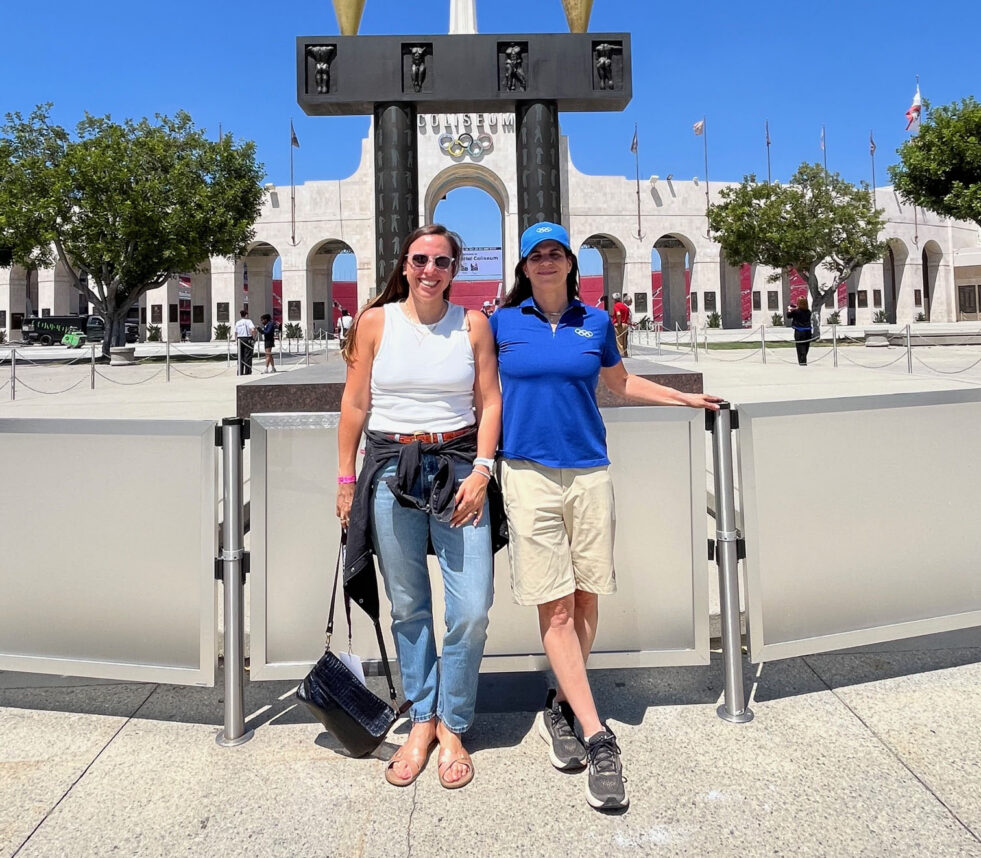
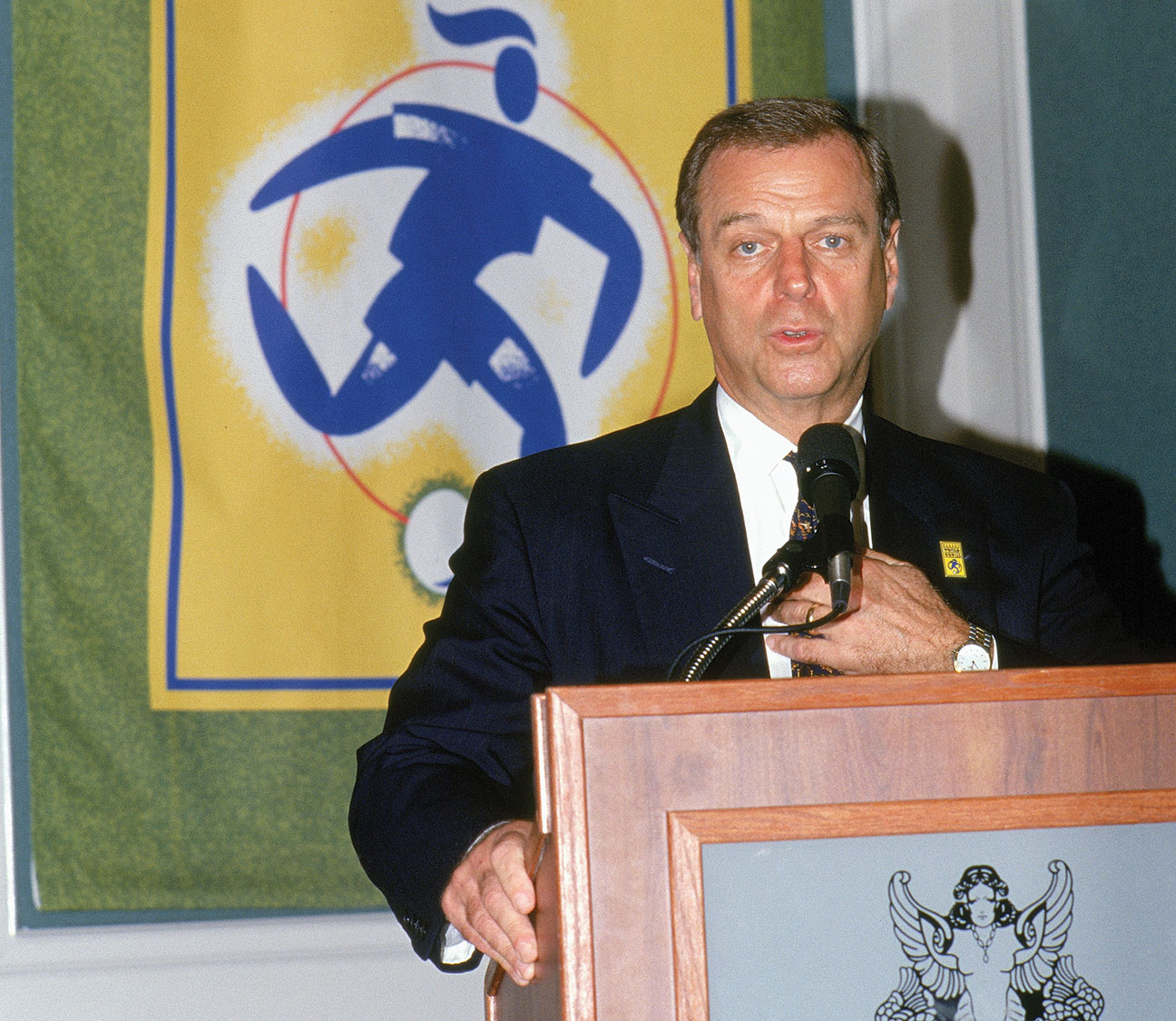
Alan Rothenberg was the epicenter of soccer’s popularity in the U.S. in the 1980s and 1990s. He was soccer commissioner for the 1984 Summer Olympics in Los Angeles. He helped bring the World Cup to the United States in 1994 as chairman and CEO of the host committee. He was also co-founder of Major League Soccer and chairman of the 1999 Women’s World Cup—famously won by the U.S. Women’s National Team in a shootout at the Rose Bowl.
And with the U.S. co-hosting the FIFA Men’s World Cup this summer, he is chairing a different kind of soccer organization. He is the chairman of the committee for The Beautiful Game: The Untold Story, a Holocaust Museum LA exhibition on the role Jews played in soccer before World War II, what happened during the Holocaust and the Jewish role in soccer after the war.
The exhibition is part of the Goldrich Cultural Center, the expansion around Holocaust Museum LA expected to open to the public in mid-August. The new center is slated to include galleries, theater and workshop spaces, a pavilion with a multimedia exhibition centered on an authentic railway car, and a Virtual Survivor Experience using voice recognition and holographic technology.
Holocaust Museum LA approached Rothenberg after developing the idea for a soccer exhibition around the museum’s new building and the World Cup.
“I thought it was a great idea, a great exhibition, great subject, fascinating story,” Rothenberg told The Journal. “And so I was honored to have the opportunity to chair that committee. It was just an eye-opener to me as far as the deep involvement in all aspects of the soccer Jews had in Europe before the war, including they had a woman who started women’s soccer back in the 20s.”
The exhibition also includes a story about Nazis staging a soccer match during a Red Cross visit.
“But when the Nazis were trying to prove that they were treating their prisoners while the Red Cross was on a tour of their facilities, they dressed up at the stadium, had a soccer match, of course, with all Jews playing in it and the Red Cross bought it,” Rothenberg said. “And of course, as soon as the Red Cross was gone, the players were all shipped out to be murdered.”
Rothenberg said his own awareness of the Holocaust began through a distant cousin who survived Auschwitz and was sponsored by Rothenberg’s family. As a kid in Detroit, soccer was far from Rothenberg’s radar—hockey was his favorite sport to play. Along with Red Wings star Gordie Howe, his favorite childhood sports idol was Jewish first baseman, Hank Greenberg. He remembers his father taking him on his sixth birthday to see Greenberg play at Briggs Stadium.
Rothenberg’s first real awareness of soccer wouldn’t be until he was 27 years old.
“I was aware that the 1966 World Cup in England was the first satellite broadcast of anything overseas,” Rothenberg said. “I didn’t go to see it, but I read about it. It was available in closed circuit theaters in the United States. That was the first time. I mean, I was aware there was soccer.”
By 1994, Rothenberg was helping sell the sport to a country that still did not have a large soccer public. Rothenberg said organizers knew they could not count on American viewers to come to the sport on soccer terms alone.
“In 94 when we started out, there weren’t a lot of soccer people in the country and so there was some concern we would be able to be successful, but we did know that Americans love a big event,” Rothenberg said. “So we focused so much on making this a big event.”
Rothenberg said the U.S. men’s national team also had to be competitive. The team had qualified for the 1990 World Cup after a 50-year absence, but opened that tournament with a loss to Czechoslovakia.
His new book, “The Big Bounce: The Surge That Shaped the Future of U.S. Soccer,” was published by Triumph Books on Feb. 10, with a foreword by Alexi Lalas. The book looks at the period from soccer at the 1984 Summer Olympics to the 1999 FIFA Women’s World Cup. The book is an easy read for a non-soccer fan—it doesn’t get lost in technical details about the sport the way a sports coach memoir often does. It’s more about building organizations and creating a big event as it is about on field or on pitch soccer
Rothenberg said one major shift he’s seen over the last 41 years is how the media understands the sport.
“I think the main thing was the media realizing that low scoring makes the game more dramatic,” Rothenberg said. “And so the initial reaction to non-soccer people is a zero-zero game or a one-nothing game, that’s boring. Well, baloney, it means that from the opening kick to the end, your heart’s in your mouth because any good great play or any mistake or any fluke is like life or death. The drama of the penalty kicks, and then you can just see it in these games in this tournament is just awesome. Fans go crazy. The TV ratings actually go up when you go to penalty kicks. I think that was the biggest educational breakthrough for the media.”
Another shift Rothenberg has seen is that multisport athletes now have more reason to choose soccer.
“There was a story of Sports Illustrated about baseball player Nomar Garciaparra years back in which he said growing up his favorite sport was soccer and the only reason he went to baseball is it paid more money,” Rothenberg said. “Now of course you can make a good living in soccer.”
With 48 countries in the World Cup, Rothenberg said fans from each country bring the same feeling to the tournament.
“And one of the beauties of the World Cup is you got 48 countries and there’s 48 countries fans who feel the exact same way,” Rothenberg said. “The emotion is just remarkable. It’s such a great event.” That reach is part of what gives the Holocaust Museum’s exhibit an opportunity to use soccer to look at Jewish life in the sport before World War II, what happened during the Holocaust and the Jewish role in soccer after the war.
He’s encouraged by the unity he sees amongst many opposing fans in the stands. Many videos of opposing fans have gone viral for hugging and high fiving after a good match—wearing different jersey colors and unable to even speak each other’s language.
“Besides the people in the stadiums and the players, when you see these fan festivals and watch parties and you just walk the streets of any major city in the country and you see people from all over the world—it’s at a time when we so very much need something that’s binding in a community,” Rothenberg said. “It’s positive and joyful, you see that. People are going hand in hand,and it doesn’t matter what the racial differences are, what the ethnic differences are. They don’t care about your religion or politics, it’s a beautiful thing to behold.”