
At gatherings of university leaders, my fellow college presidents and I would regularly review data on how Americans felt about higher education, and shake our collective heads.
Each year the percentage of U.S. adults who said that they had either “a great deal” or “quite a lot” of confidence in this country’s colleges and universities declined. Surely this was temporary, we would convince ourselves, and the number would rebound.
In 2015, when Gallup first measured trust in higher education, 57% of respondents reported having confidence. I remember at the time thinking that was shockingly low. Well, the 2026 survey results just came in, and that number has fallen to 38%.
The sharpest decline has been among Republicans. Back in the “good old days” more than half of Republicans held positive views regarding higher education; today that percentage has shrunk to below a quarter. Exactly half of Democrats remain positive, but that too is a new low.
Why has higher education lost so much of America’s trust?
The surveys suggest three main factors.
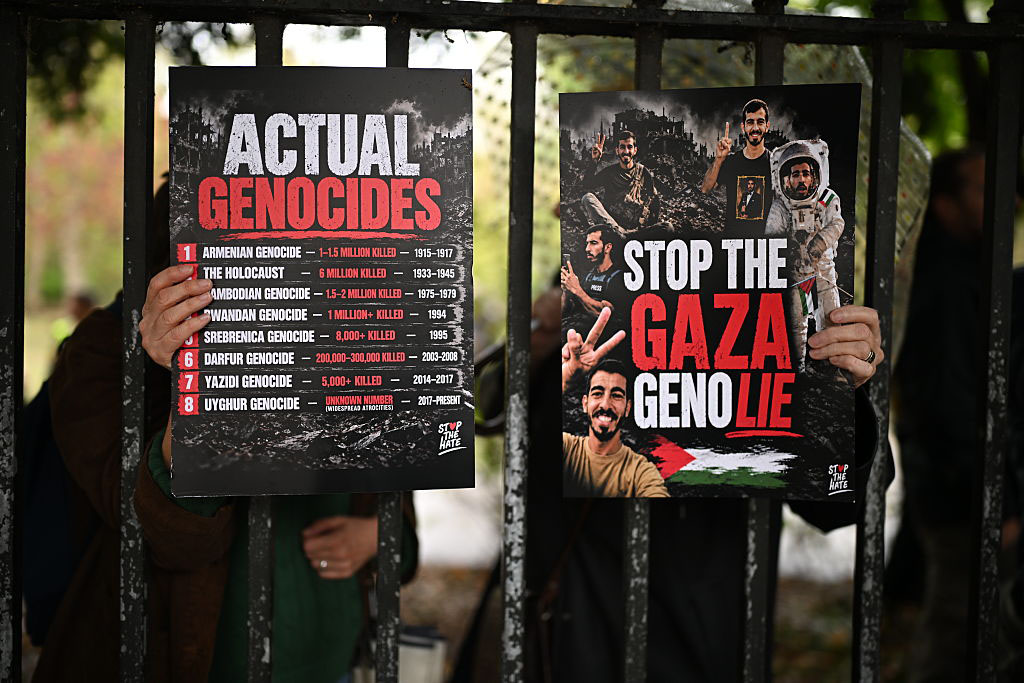
First is the perceived left-wing political agenda on college campuses. Most students study subjects such as engineering, economics, business and the sciences, disciplines where faculty focus more on teaching and research than on asserting ideological positions as established truths. But the humanities and humanistic social sciences, where such political activism is much more prevalent, receive the most attention in the media and in Washington. And never have their “progressive” agendas been so clearly exposed than after the Oct. 7, 2023 massacre, when long-standing anti-Israel views often spilled over into outright antisemitism.
Then there is cost. While selective private and public colleges and universities have put enormous sums of money into financial aid so that the price they charge the vast majority of their students is rising much slower than inflation, the “sticker price” still feels daunting to most Americans.
Third, there is the belief that colleges are failing to adequately prepare students for the workforce. Again, a mountain of evidence exists to the contrary, with college graduates earning a substantial wage premium relative to those who stop their education after high school, but perception rules over reality.
And now there is AI, which is seen by the American public as an emerging threat to the value of a college education, with almost half of the poll’s respondents expecting the financial return to a college degree to fall.
Scary.
And even scarier to note that Americans seem to be losing faith much more widely.
Only 36% have confidence in organized religion, 32% in medicine, 30% in banks, 29% in public schools, 27% in the Supreme Court, 17% in the criminal justice system, 15% in big business, and, everyone’s “favorite,” 10% in Congress. Hard to believe that as recently as in 2004, 30% of Americans trusted Congress!
The survey results provide a valuable comparative perspective: amazingly enough, with 38% of American adults still having confidence in higher education, colleges and universities are kicking butt – in a relative sense, at least.
This general mistrust is manifesting itself in really frightening ways, from a rise in political extremism, to the vilification of Jews on both the left and the right. Neither is surprising. History is replete with examples of how when a society stops believing in its enduring institutions, radicalism flourishes, with Jews all too often cast as convenient scapegoats.
Those of us who are baffled by the fact that only 54% of Americans have a positive view of capitalism (it is 42% among Democrats) should recognize that number isn’t so terrible given that Americans hate most everything these days. Socialism seems like an excellent way to address your many complaints, until it fails in practice. In any case, I believe in the old adage that the revolution ultimately devours its own.
Will Americans ever regain trust in our institutions? I think so.
Perhaps it is my religious faith that gives me hope. Still, I bet that the 36% of Americans who join me in having confidence in organized religion would agree that our nation could use some divine intervention right about now.
Morton Schapiro served for more than 22 years as President of Northwestern University and Williams College.