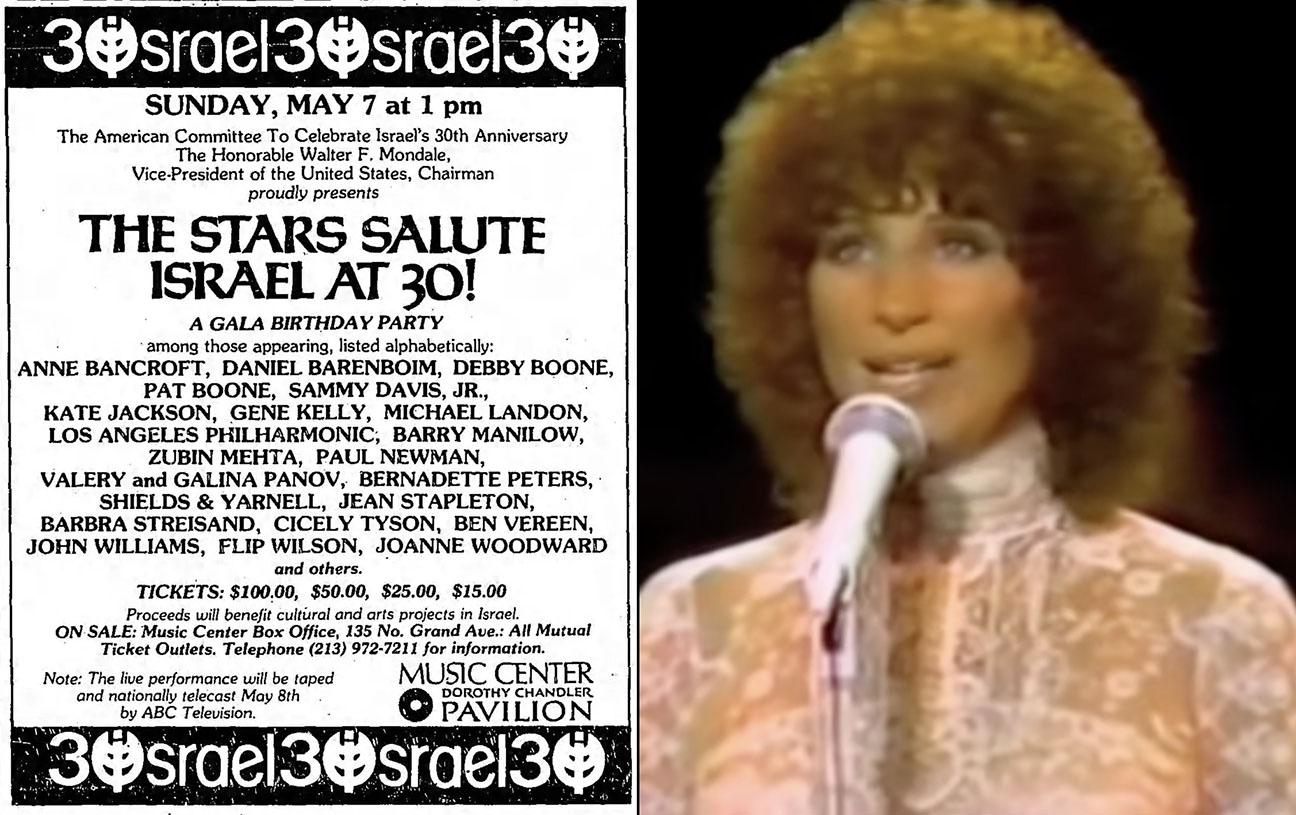
In the spring of 2024, not quite six months after the Hamas terrorist attacks of Oct. 7, 2023, Franklin Foer wrote an article for The Atlantic magazine provocatively titled “The Golden Age of American Jews Is Ending.” Foer talked about how the second half of the 20th century had been a remarkable and unprecedented time of safety and prosperity for the Jewish people in this country — not just our academic and professional successes but our powerful cultural influence in music, literature, television and movies.
His piece included a description of an extraordinary primetime telecast on ABC in 1978 in which an array of that era’s most notable celebrities paid tribute to Israel on its 30th anniversary for a nationwide audience of 18.7 million viewers. “The Stars Salute Israel at 30” concluded with Barbra Streisand singing the Israeli national anthem. In our current combustible environment, the idea of such a program seems surreal. Yet the show reflected a level of not just tolerance but acceptance for a people who had experienced very little of either sentiment throughout our history.
This was about the same time period in which “Walks For Israel,” community-wide walkathons in which participants solicited fundraising pledges for Israeli charities, become widespread throughout the United States and Canada. Despite the fact that children, families and seniors participated in large numbers, security was minimal and the most significant threats to the walkers were frequently blisters and sunburn. (While these events still take place today, they are drastically abbreviated, heavily fortified and marked by mandatory checkpoints, metal detectors and barricades that separate the walkers from the surrounding neighborhoods.)
We didn’t think that we were living in a “Golden Age,” because it did not occur to us that what we were experiencing was only a temporary respite from centuries of animosity and intolerance. We assumed that a fundamental pivot point in human history had occurred and that antisemitism was now simply a relic of less-enlightened times. A “Golden Age of Judaism” was just as unlikely a title for that time as a “Golden Age Of Electricity.” This was the world in which we lived, where anti-Jewish hatred still barely existed in the darkest and most remote corners of society, but for all practical purposes was no longer a factor with which we needed to concern ourselves.
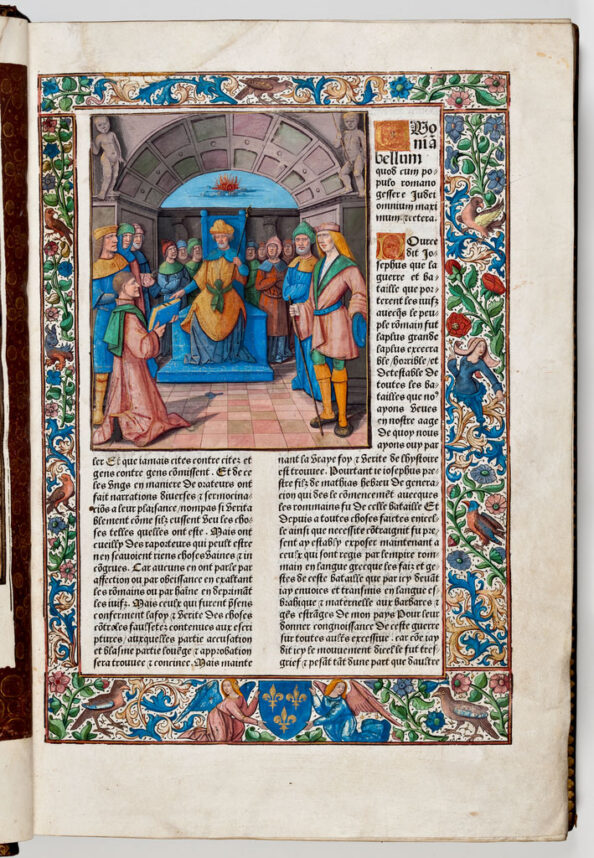
It turns out that we were wrong. Prejudice is patient and persistent, and we allowed our well-earned recency bias to lull ourselves into a false sense of comfort. Many analysts now regard the 80 years after the end of World War II as a historical aberration in which a prolonged period of peace between superpowers represented a hiatus before the world returned to the norms of hostility and warfare that has characterized most of mankind’s existence. Just as that illusion is now challenged by war in Eastern Europe and rising tensions on the Pacific Rim, we may be learning a similar lesson that the time between Israel’s founding in 1948 and Hamas’ terrorist attacks in 2023 marked a similarly fleeting interruption in the otherwise ongoing challenges that Jews have always faced – and may always face. Future students may learn about this period of American history the same way they study medieval Spain as a rare time when Jews were welcomed into the society in which they lived.
Yet this realization should not be cause for dismay but rather to strengthen our resolve. Those of us who have experienced even a portion of that golden age (i.e. all of us) have always had a nagging suspicion that this was not something we earned but inherited. Our parents and grandparents and earlier ancestors fought oppression over the generations, and we benefited from their commitment, their determination and their persistence. We were grateful to them, but many of us wondered whether we would have had the same fortitude that they demonstrated in the face of anger and antisemitic hatred.
Now is our chance to find out. We are being reminded that this isn’t just a challenge for prior generations. It’s our fight too. Let’s see if we’re up to it.
Dan Schnur is the U.S. Politics Editor for the Jewish Journal. He teaches courses in politics, communications, and leadership at UC Berkeley, USC and Pepperdine. He hosts the monthly webinar “The Dan Schnur Political Report” for the Los Angeles World Affairs Council & Town Hall. Follow Dan’s work at www.danschnurpolitics.com