fbpx

April 11, 2018

5 Articles on Holocaust Remembrance and Anti-Semitism

Today is Holocaust Memorial Day in Israel. Here is a list of recent articles I wrote recently on Holocaust remembrance and anti-Semitism. This list first appeared on the Jewish Journal’s daily Roundtable – a daily newsletter I highly recommend (sign up here)

  1. Last year, I asked if we will still remember the Holocaust in 2000 years.

As we remember the Holocaust, we are obliged to think about these highly practical matters. We must think about them as we are the first generation of Jews that will soon have to mark Holocaust Remembrance Day without any survivors around to tell us their stories. We are the first generation of Jews that will soon be sharing the burden of having to shape a Remembrance Day for the ages. Tisha B’Av survived for 2000 years, and is still with us. Can we guarantee such staying power for Holocaust Remembrance Day?

  1. On International Holocaust Remembrance Day, I remembered that in Israel remembering the Holocaust is a daily feature of life:

From January to May, Israel marks not one but three Holocaust Memorial days. There was International Holocaust Remembrance Day, marked this week, and there is the religious Memorial Day, marked, along with other Jewish tragedies, on the Asarah be-Tevet fast, and then there is the actual, official Memorial Day, a week after Passover. Yet in most cases, the Holocaust occupies us not because of special duty — a day that calls for a pause. In most cases it is us, busying ourselves with it because nothing has more power to grab our attention. We do not pause to remember the Holocaust; we remember it while on the move.

  1. In the New York Times, I argued that Israel’s response to anti-Semitism is always colored by Israeli geopolitical interests:

Israel’s silence on the White House’s Holocaust statement tells us a few disturbing things about the Jewish state. The most important is that there is a limit to what Israel is willing to sacrifice in its denunciations of anti-Semitism. Take the example of Austria’s Freedom Party, which was founded by former Nazis. For years, Israel refused to have contact with the party because of its anti-Semitic leanings. But as it grew in power — and came around to backing the Jewish state — Israel was becoming more receptive to accepting the Freedom Party’s courtship.

  1. I also questioned whether it’s a good idea for all Jewish students to visit Auschwitz:

There’s no doubt that these trips have merit. They certainly make Israeli students appreciate the scope and severity of the horrors of the Holocaust. These trips also force young Israelis see with their own eyes what can happen to a people when they are hated and defenseless — a lesson that is as important today as it ever was. So why end these trips? First, because they contribute to a misperception by many Jews that remembering the Holocaust is the main feature of Judaism. Second, because they perpetuate the myth that Israel itself is born only of the ashes of Europe.

  1. And recently I mourned the tendency of Jews to utilize anti-Semitism for their partisan political purposes:

Much more so than in the past, we point fingers at one another as we search for the mysterious factors that ignite anti-Semitism. We see anti-Semitism everywhere, we use anti-Semitism for thinly veiled political purposes, and we identify anti-Semitism among our ideological rivals while turning a blind eye to anti-Semitism within our own ideological camps.

5 Articles on Holocaust Remembrance and Anti-Semitism Read More »

How Good Is a 60th Birthday?

Soon I will celebrate a milestone birthday and turn 60. For some reason, I seem to be obsessed with this birthday unlike any other milestone birthday I’ve enjoyed. Perhaps because turning 60 symbolizes a certain and unique transition in one’s life.

If you have been blessed with a wonderful wife, life partner and best friend for as long as I have (33 years), you can enjoy being an empty nester and hanging out together at a much, much easier pace than when young children and teens are swirling around you and are the focal point of your everyday schedule.

While we miss having our kids nearby, the freedom of being an empty nester grows on you.

If you are blessed with amazing children, as I am, you see them growing up, pursuing their hopes and dreams, and making a life of their own (even if they still depend on you, in part, for financial support).

If you are blessed with one or more parents still living, then you should enjoy them to the fullest. My almost 88-year-old mother has been reminding me for months that I will be 60. In turn, I’ve said to her, “Are you old enough to have a 60-year-old son?” She smiles and laughs.

If you have worked your entire career in one profession, as I have, you begin to see the waning years of that career — there are a few years left but most of your working life is now behind you.

If you have spent the better part of those years employed by one organization, like I have, it’s hard to imagine that, at some point, you will no longer be spending a disproportionate amount of time at your office.

Many proclaim that 60 is the new 40. But I don’t want to be 40 again.

I look back at my career as a Jewish communal professional and realize how blessed I have been to see, and participate in, real miracles in the modern history of the Jewish people: the flourishing of the State of Israel; the emancipation of Jews living in the former Soviet Union; the blossoming and continued expansion of the Houston Jewish community; and the liberation of Jews in Ethiopia, among others.

If you are blessed with good health, wonderful! For me, I’ve begun to experience the normal aches and pains of getting older — for better or worse. But they are not slowing me down.

Will I feel anything different on my actual birthday than I did the day before? Unlikely. Will my life take a dramatic turn when the calendar page turns? Probably not.

Will I encounter some epiphany about the world? Doubtful. But as I enter the next decade of my life, I am sure to encounter life changes that millions before have experienced and that many of us baby boomers are going through every day.

Many proclaim that 60 is the new 40. But, quite frankly, I don’t want to be 40 again. Though I yearn for the days when our kids were still young and enjoying life at home, I really don’t want to go through their adolescent years again. They were and are good kids — but I can live without the teenage attitude.

Although my career was really expanding at age 40, I prefer the comfort zone, albeit with many challenges and stresses, that I’m in today.

According to Jewish tradition, Moses was 120 when he died. That’s the reason that, also according to Jewish tradition, we pray that everyone lives to 120. In that context, one could reasonably state that I have reached middle age. But when I have suggested in the past that I’m middle-aged, the realists have said I’m not in middle age unless I do plan to live past 100.

So, I’m past middle age, not quite a senior citizen (although thankful for the many restaurants and movie theaters that afford senior discounts at lower and lower ages), and yet, I am reaching some undefined age cohort.

Abraham Lincoln was quoted as saying, “In the end, it’s not the years in your life that count. It’s the life in your years.”

As this milestone approaches, I will appreciate the love and support of my family, and laugh at whatever jokes come with turning 60. Then I will get on with the beautiful and blessed life that I’ve led to date.

Here’s to age 60 … and beyond. May all of us live to 120.


Lee Wunsch is the retired president of the Jewish Federation of Greater Houston.

How Good Is a 60th Birthday? Read More »

The Oy of Turning 50

It is happening to me, and IF you are blessed to live long enough, it will happen to you, too.

What is this blessing, you ask? Turning 50.

I’m now going to be considered middle-aged. I am having a slight case of indigestion accepting that I will have lived for half a century. Nu? This doesn’t happen every day.

On the phone the other day, a woman asked for my date of birth. When I gave it to her, she said, “Oh, you’re almost middle-aged.”

My heart skipped a beat. Defensively, I asked, “What do you mean, ‘middle-aged’?”

Within a few months, my birthday would be arriving and I would be considered middle-aged.

AARP, formerly known as the American Association for Retired
Persons, must have everyone in its database because it sent me information just last week to sign up for its senior magazine.

I showed AARP. As soon as I saw AARP on the envelope, I threw its publicity in the trash. That should do the trick and keep me younger.

This would soon be me. I would be entitled to a special senior citizen discount. Ouch!

But nothing could stop my body from progressing on its natural path of womanhood. After crying for two days straight, I realized I was in perimenopause. It suddenly made sense why I had not been sleeping at night, been having mood swings like mad, hot flashes and just been biting everyone’s head off for the past several months.

My poor friends for having to put up with me, and poor me, thinking I had really flown the coop.

Calm down, I told myself. Maybe it’s not so bad.

Just as I began to relax, I remembered once being in a gift shop on a Tuesday and not understanding why it was a madhouse. Jam-packed with elderly women bumping into one another, with a line that extended out the door. I thought they were giving away something. I asked one of the women and found out I had had the misfortune of showing up on senior citizen discount day. A whopping 10 percent off!

This would soon be me. I would be entitled to a special senior citizen discount. Ouch! So when did this happen, God?

How could I have been so busy that the years have all gone so quickly? Please, God, answer me, I need to know.

Suddenly, more than half of my life is gone. Tell me, God, why didn’t you stop me from wasting so much time with nonsense?

The tears began to flow like a river for all the precious days of yesteryear, for what could have been, for what should have been.

I wondered with every bone in my body how I could recapture the fountain, the miraculous fountain of youth. It’s the fountain we all yearn so desperately for, but why?

Youth is filled with ignorance and arrogance. We are quick to anger and slow to forgive. But if we are blessed to defy death until we turn gray with wisdom, hopefully, grace and dignity will accompany us.

We learn this from our patriarch, Abraham. For it is written: “And Abraham grew old and came into days, and God blessed Abraham with everything.”

With these words I understood that I would beg God with all my might, and bow my head in shame to repent for my foolishness of yesterday.

I realized that there is no guarantee to the rite of passage of growing old. It is an honored gift from above and each moment is to be treasured until we are called home.

I have started to think about growing older not as a time to end one’s journey, but instead as an amazing journey to embark upon new beginnings.

After all, life can begin at any age, and mine, with God’s blessings, is about to begin at age 50.


Edith Brown lives in Maryland, where she volunteers for Bikur Cholim, a nonprofit that provides assistance to people facing medical and related challenges.

The Oy of Turning 50 Read More »

Israel: The Startup Charitable Nation

Throughout the world, Israel is known as the “startup nation,” where investors are increasingly drawn to the innovation and brainpower that are its greatest natural resources. Accordingly, philanthropists are starting to look at their Israel-related donations less as one-shot gifts and more as charitable contributions with characteristics more typically associated with venture investments.

An anonymous donor recently gave $1 million to the American Friends of Hebrew University (AFHU). The university invested the same sum of money in Agrinnovation, an Israeli agricultural investment fund partially owned by Yissum, HU’s technology commercialization company. Agrinnovation invests exclusively in cutting-edge agricultural technologies, food, plant and animal sciences originating from HU.

Rather than simply supporting a cause with a single gift, this sort of impact philanthropy seeks to create a virtuous cycle: Dollars are invested to do social good and create financial returns that can be reinvested in the same enterprise. It has become so widespread that in December, JLens, a network of more than 9,000 Jewish investors, held a summit in New York City on impact investing.

“The donation to Hebrew University assumed some characteristics of a typical venture investment, though it is purely philanthropic and the university will benefit from all the returns,” said AFHU board member Clive Kabatznik, “This is a new model for us, and we are meeting with potential donors about what they think is good for the world and coming up with bespoke investment ideas.”

HU has a long history of innovation. Mobileye, a vehicle collision warning and driver safety software system, was founded in 1999 by a researcher at the university; it was purchased by Intel last year for $15.3 billion. Blockbuster chemotherapy drug Doxil and Alzheimer’s disease medication Exelon also originated in HU’s laboratories. Among its agricultural advancements, the university is responsible for a cherry tomato variety with a long shelf life sold around the world.

While philanthropy in Israel was traditionally about Zionism and giving back to the Jewish nation, experts say that has become a tougher sell for younger donors from the tech and hedge fund worlds.

Despite a difficult topography, Israel has been a pioneer in agriculture for decades, making the “desert bloom” and turning a water shortage problem into a surplus through desalination. The agriculture sector is appealing to investors because the time frame from patent to profit is relatively short: five years, on average.

There are currently six companies in the Agrinnovation fund’s portfolio. Among them, ChickP has invented a high-grade plant-based protein for food; Sufresca has created a safe-to-consume vegetable and fruit coating to increase the shelf life of such products. Gemma-Cert, a medical marijuana company, is developing an affordable device for the detection, analysis and sorting of medical cannabis flowers.

“If you are a donor and want to celebrate Israel’s economy and young democracy, then you can accomplish many different goals through an investment in Israel and its agriculture sector,” said Charlene Seidle, executive vice president of the Leichtag Foundation, who visited Hebrew University recently to discuss her foundation’s agricultural property in California.

While philanthropy in Israel was traditionally about Zionism and giving back to the Jewish nation, experts say that has become a tougher sell for younger donors from the tech and hedge fund worlds. Those reasons might be in the back of their minds, but they are increasingly motivated by economic considerations. They want to see their donations actually making a difference.

“What we are seeing among second- and third-generation donors is that they’re giving with their heads rather than their hearts,” said Jeff Solomon, president emeritus of the Andrea and Charles Bronfman philanthropies. “There’s an expectation that you will see a return on your charitable investment just as you would on a business investment.”


Diane Hess is a New York-based writer and alumna of Hebrew University of Jerusalem’s Rothberg International School.

Israel: The Startup Charitable Nation Read More »

Celebrating the Wisdom of the Aged

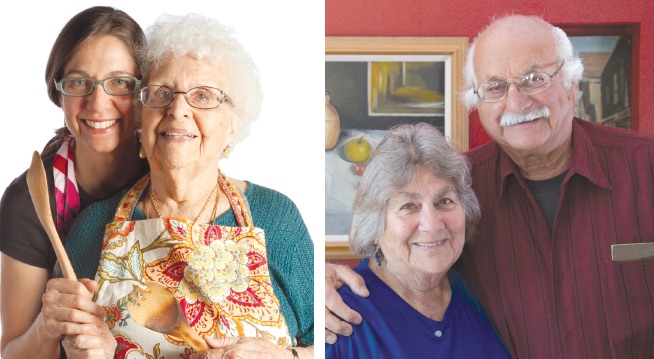
When Sky Bergman began filming her 99-year-old Italian grandmother, Evelyn Riciutti, in 2012, she didn’t plan to make a documentary. She simply wanted to preserve her grandmother’s recipes for posterity.

“She was an amazing cook but never wrote a recipe down,” Bergman told the Journal. “As she cooked, I asked her for a few words of wisdom. And that was the start of the project.”

Figuring that, like Riciutti, other seniors would have insights, life lessons and stories to share, Bergman sought referrals from family, friends and colleagues. Ultimately, she conducted interviews with 40 people ages 75 and older. “My grandmother was my inspiration, but it became much more about all these diverse stories. It needed to be a feature-length film,” she said.

Five years in the making, “Lives Well Lived: Celebrating the Secrets, Wit & Wisdom of Age” is the debut film from Bergman, 52, a professor of photography and video at California Polytechnic State University in San Luis Obispo. Her subjects represent a wide range of ethnicities, professions and economic backgrounds but all are accomplished and active, with dancers, yoga practitioners and world travelers among them.

“They’re passionate about learning something new. They have a support group of friends or family surrounding them. And they have a positive attitude that keeps them going,” Bergman said. Despite the hardship, adversity and loss that many of them faced, “They all see life as a glass that’s half full rather than half empty.”

Bergman, who is Jewish — her mother was raised Catholic but converted to Judaism as a college student, and her father grew up in an Orthodox, kosher home — profiles several Jewish subjects in the documentary.

She asked all her interviewees questions about longevity, mortality, old age concerns and living well, but the subjects with the most compelling stories were spotlighted in longer segments. These include a Japanese woman whose family was sent to an internment camp during World War II, and Jewish couple Marion and Paul Wolff of San Luis Obispo, who escaped Nazi Germany as children and are looking forward to celebrating their 58th wedding anniversary later this year.

Marion, 87, a Berlin native, was sent to safety in England on the first Kindertransport train from Vienna in December 1938. Her sponsoring family later arranged a servant work visa for her mother, “but my grandmother and Paul’s grandmother both died in Theresienstadt [concentration camp]. So did other relatives,” she said.

Paul, 88, noted that his father, who fought for Germany in World War I, “didn’t see the light” about the seriousness of the Nazi threat before Kristallnacht. Having secured visas, Paul and his parents reunited in London with his two older sisters, who had been sent out of Germany on a Kindertransport in 1939. The family sailed by tramp steamer to the United States via the Panama Canal, settling in San Francisco.

While visiting family in the city, Marion’s cousin, who knew Paul’s sister, set them up on a blind date. She was determined to divert Marion’s attention from a German young man she planned to marry, much to the dismay of his parents. “His father had been a Nazi,” Marion said. (Surprisingly, she is still in touch with her ex-fiancé, who lives in Canada. “We’ve stayed at his house in Ontario,” she said.)

Paul also was engaged, to a Chinese woman with two children. But he and Marion bonded over their similar refugee history. “He was the first Jewish man I’d ever been out with,” Marion said. Her family was not observant, and her foster family in England was Quaker. “I keep many more Jewish traditions than Marion does,” Paul said.

The couple agrees that a sense of humor is the key to happiness. “You can’t get through life without it,” Marion said. “It certainly helped us get over a lot of arguments,” Paul added.

He also emphasized the importance of “devoting your energy to something you feel passionate about.” He’s an architect and teaches people how to design spaces to accommodate those with disabilities. Together, they often speak about their experiences to youth groups, military groups, schools and congregations in the United States and Europe.

Paul hopes that the film inspires viewers to “focus on where they’re going and where they’ve been and enjoy every moment while they’re living it.”

Bergman said that, other than her grandmother, who died at 103, most of the film’s participants are still alive. “I think it’s important to have role models who are living long, full and engaged lives. There’s a lot of longevity in my family,” she said. “And I want to be engaged
right up until the end.”

She plans to start a new project this summer on the subject of love. “I got the idea watching the people [in “Lives Well Lived”] talk about their significant other and how they met,” she said.

There are several takeaway messages in the documentary that Bergman hopes audiences will appreciate. Like Paul Wolff, she emphasizes the importance of living in the moment, especially as one gets older, and having a positive attitude. She hopes the film inspires people to take time to talk to the seniors in their lives and hear their stories.

“I’d love the audience to come away with a thirst for wanting to know more, and see the older population as people who are still vital and engaged,” she said. “Everyone has a story to tell if you just take the time to listen. Hopefully, I’ll inspire people to do that.”

“Lives Well Lived” opens April 20 at the Laemmle Monica Film Center, Town Center 5 and Playhouse 7 theaters.

Celebrating the Wisdom of the Aged Read More »

Wrestling With the Real and Unreal

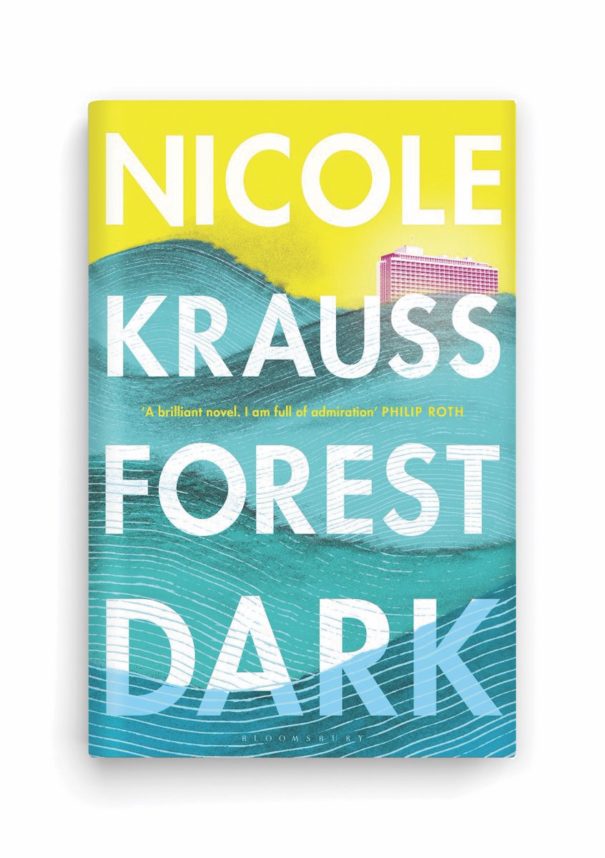
Near the beginning of Nicole Krauss’ novel “Forest Dark,” she presents readers with a startling image. A man hurdles off the side of the Hilton hotel in Tel Aviv, plunging to his death. Nicole, a writer and one of two characters whose parallel stories form the backbone of the novel, is shaken by this image, shared with her by a family member. It’s a moment that changes the course of her life, and maybe even ours — except that we never really know whether it actually happened.

Similar to Krauss’ previous works, “Forest Dark” makes readers feel as if they constantly are perched on a precipice, waiting to drop or to be pulled in either direction. And yet they never fall. A sense of the importance of boundary dwelling permeates the narrative, giving the old cliché of living on the edge a new and more complex meaning. And like the characters in the novel, we can hardly be sure of what is real and not real.

Nicole and Jules Epstein, the other main character, are remarkably adept at refusing to choose between the real and the unreal. Epstein is a 68-year-old man dealing with the death of his parents, the end of his 30-year marriage and his recent retirement from an illustrious law career in New York. In the wake of losing such important aspects of his life, all so precious in their finitude, he travels to Israel looking for opportunities to give away his wealth and to honor his parents’ memory.

Epstein’s search is not for certainty, but for its opposite. “He did not wish to be sure. He had lost his trust in it.” He remains instead in the liminal space between knowing and not knowing. And, consequently, so do we. Krauss is a masterful storyteller who pulls us into the inner world of her characters to such a degree that we, like them, lose our sense of boundary.

“Forest Dark” makes readers feel as if they constantly are perched on a precipice, waiting to drop or to be pulled in either direction. And yet they never fall.

Did a man really hurl himself from balcony of the Hilton? Is Epstein really, as one passionate American rabbi in Tel Aviv suggests, part of the dynastic line of King David? Does Eliezer Friedman, an Israeli professor who enlists Nicole’s help in a project involving Kafka’s lost manuscripts, really exist?

Readers of Krauss’ novels “Great House” and “The History of Love” will recall her history of writing unsettling fiction that compels us to question so much of what we hold true and dear. But where “Great House” is more fragmented and withholds the detailed and cohesive narratives we crave, “Forest Dark” instead doubles down on the importance of storytelling. Yet while the novel tells two stories — the stories of Epstein and Nicole never intersect — the more detailed they become, the harder they are to believe. And that’s exactly where Krauss wants us.

Nicole is 39 years old. A prolific author of Jewish novels, she now struggles to write. She finds it difficult to continue the charade of marriage and family life even as she loves her family immeasurably. She is two parts of a divided self, and each side fears reconciling with the other, seemingly incompatible side. The story of the man falling to his death causes her to feel a sensation of the Freudian unheimlich, that uncanny sense of something being both familiar (like one’s home) and unfamiliar, and which Freud categorizes as an anxiety that emerges from “something repressed that recurs.” She leaves her family indefinitely and stays at the Tel Aviv Hilton for months, hoping that there, in the place where she was conceived by her parents, she will write again.

In Tel Aviv, Nicole is both home and not home. Her origin story begins there, but Tel Aviv was only a place her family visited each year. It wasn’t home. Or was it? Nicole feels more comfortable with people in Israel, “because everything could be touched, so little was hidden or held back, people were hungry to engage with whatever the other had to offer, however messy and intense, and this openness made [her] feel alive and less alone.”

Is that not the definition of home? Like all good works of Jewish fiction, “Forest Dark” raises more questions than it gives answers. This question of home is a familiar one to the Jewish people, and much like the characters in the novel have difficulty choosing between conflicting identities, our diasporic history suggests that we, too, have difficulty choosing. We say “next year in Israel” during Passover, highlighting the collective dream of returning to the Jewish homeland. But the reality is that Jews are no longer in a Diaspora. We are, instead, at home wherever we are. And yet the idea of Israel as symbolic homeland persists.

But is a symbolic home any less real and meaningful than a physical home?

Krauss’ characters, caught up in questions of home and identity, recoil from choosing between such polarities. The fear is, justifiably, that abandoning the threshold and choosing one side over another will result in being bound to that decision, being forced to reject the lovely chaos that accompanies failing to choose. Nicole does not accept one home over another. While the place that one has always been is certainly home, in another sense home only becomes home “if one goes away from it, since it’s only with distance, only in the return, that we are able to recognize it as the place that shelters our true self.”

The idea of return — to one’s self or to one’s home — is important in this novel. Krauss grounds this idea in Jewish history, recalling that for ancient Jews, “the world was always both hidden and revealed.” It is a history to which we are bound, and the theme of binding appears over and over in the novel.

The pressure not just to make one’s parents but also one’s whole people proud leads Nicole to feel that her writing, which “had begun as an act of freedom,” had become “another form of binding.” She recalls that Isaac, the very first Jewish child, was bound and nearly sacrificed for something his father Abraham saw as more important than him. And since that moment, “the question of how to go on binding has hung in the air.”

Nicole’s musings on the education of her son, whose mind does not “follow familiar patterns” and whose “urgent, strange questions about the world revealed it anew” to her, epitomize the paradoxical nature of being bound to something larger than us. As his parents educate him in conventional ways contrary to the way his little mind works, they see his brilliance die out. His thoughts surprise them less and less. And as Nicole reads to her children the stories of Noah or Jonah or Odysseus, it seems to her that those beautiful tales — stories that tell our past and our future — are “also a form of binding.”

The burden of being bound to stories that define our identity is heavy. But I wonder if it’s a heaviness we can’t do without. Nicole suggests that what people “really long for, even more than love or happiness, is coherence.” Stories, even those with more questions than answers, give us this coherence even, and perhaps especially, in their incoherence.


Monica Osborne is a scholar of Jewish literature and culture. She is the author of “The Midrashic Impulse and the Contemporary Literary Response to Trauma.”

Wrestling With the Real and Unreal Read More »

Danny Lobell Draws on Pekar for Comic Book

Stand-up comedian and former Yeshiva student Danny Lobell of Los Angeles has just released an autobiographical comic book, “Fair Enough,” which includes the story of his friendship with Harvey Pekar of “American Splendor” fame.

“That friendship changed my life,” Lobell told the Journal.

Growing up in New York, Lobell’s career plan was to emulate two giants of the comic book industry: Stan Lee of Marvel Comics and Pekar.

Knowing his obsession with all things Pekar, Lobell’s grandmother insisted when he was 20 that he watch “American Splendor,” Pekar’s landmark autobiographical film. “I was mesmerized by the fact that Harvey Pekar was an ordinary guy with no connections and limited resources, but he was able to pursue his dreams, create his own art … find a fan base from it,” Lobell said.

Lobell was so taken by Pekar’s story that he called him at his home in Cleveland. “I was stunned when Pekar answered his own phone,” Lobell said.

That initial call was “just to tell him how much I loved his movie and how inspiring I found him to be,” Lobell said.

Twelve months later, the pair met for the first and only time. “I interviewed him for my college paper, the Baruch [College] paper, The Ticker,” Lobell said.

The two maintained a telephone friendship until Pekar’s death in 2010.

“Harvey Pekar was an ordinary guy with no connections and limited resources, but he was able to pursue his dreams.” — Danny Lobell

An avid artist, Lobell, 34, said he was repeatedly kicked out of class throughout his school years “because I was doodling or drawing or daydreaming.” He photocopied his drawings and sold them to his fellow students.

He recalled an incident in the fourth grade when his teacher, Mrs. Snyder, sent him to the principal’s office for drawing a picture of her.

“The principal looked at it and said, ‘Hmm, that kind of looks like her,’ ” Lobell recalled. After class, the principal called Mrs. Snyder in to see the drawing. She then asked Lobell if she could have the picture. “I said yes,” Lobell said. “But I wanted to tell her, ‘Maybe you shouldn’t have kicked me out if you wanted to take my drawing home.’ ”

Lobell continued to spend more time drawing than studying until he was eventually kicked out of yeshiva in the ninth grade, presumably for poor grades.

“Because that was so unusual, other schools must have thought a cover-up was going on,” Lobell said. “I must have done something egregious to deserve this treatment. None of the yeshivas wanted me.”

He eventually landed at the now-defunct Torah Academy of Suffolk County, a school that Lobell called “a sham. Parents were bamboozled. No proper education was going on there. It was more a baby-sitting service.”

An Orthodox Jew, Lobell withdrew and enrolled in public school for the first time.

Despite his wayward yeshiva years, Lobell stayed on good terms with his rabbis. “Throughout the years, I was kicked out of so many classes and sent to the same principal, Rabbi Glass [at the Hebrew Academy of Long Beach, N.Y.], that he and I became friends. Twenty years later, he came to my wedding. How do you like that?”

With his second comic book due out in June, life is looking good for Lobell.

“I hope this is not the peak,” he said, “though it is pretty good.”

“Fair Enough” is available online through fairenoughcomic.com.

Danny Lobell Draws on Pekar for Comic Book Read More »

‘Chosen’ Offers Lessons of Acceptance

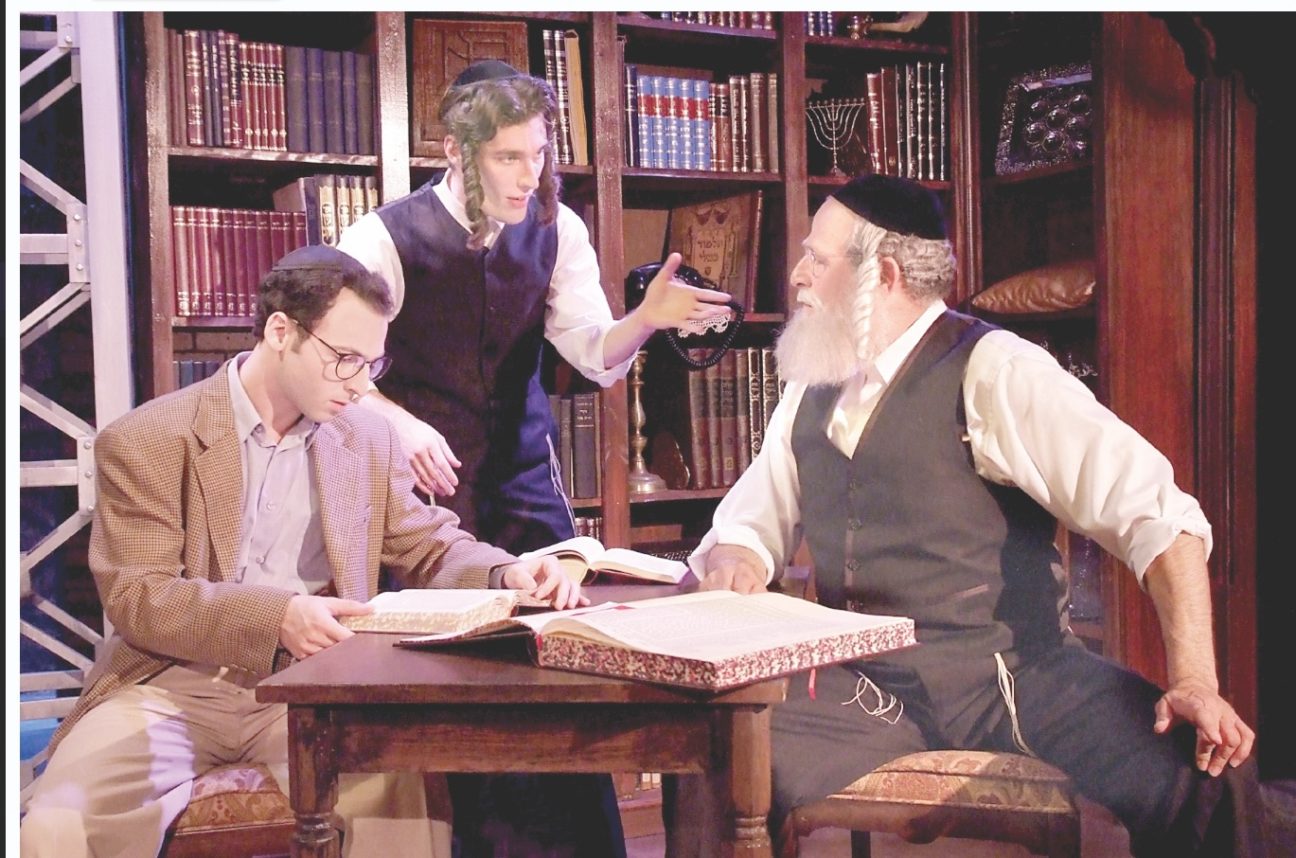
Last year marked the 50th anniversary of Chaim Potok’s beloved novel, “The Chosen,” the tale of two teenagers — one Chasidic, one Modern Orthodox — who become unlikely friends in Brooklyn from the years of the Holocaust through the birth of the State of Israel. The two boys and their fathers clash over the ideology of Zionism and the melding of Judaism with the modern world.  But they ultimately manage to overcome their differences to come to a place of understanding.

Potok’s best-selling 1967 novel was adapted into a film starring Rod Steiger in 1982, a short-lived off-Broadway production seven years later, as well as a 1998 play co-written by Potok and playwright Aaron Poster. The play went on to enjoy more than 100 productions in this country and around the world.

In 2017 — 15 years after Potok’s death in 2002 — Gordon Edelstein, artistic director of the Long Wharf Theatre in New Haven, Conn., approached Poster with a proposition. “He said my version of the play was great — but it could be better,” Posner said in a telephone interview from his home in Silver Spring, Md.

Instead of being taken aback, Posner accepted the challenge and streamlined the play by removing the character of the narrator from his previous version and focusing more specifically on the story of the fathers and their sons. The new version premiered at the Long Wharf Theatre last year and is now running through June 10 at the Fountain Theatre in Hollywood.

“We don’t try to bridge our differences. And this play is all about bridging differences.” — Simon Levy

It was the Fountain’s longtime producing director, Simon Levy, who brought the play to the venue. He was drawn to the piece because of its themes of tolerance: “The conversation in our country has become so toxic and negative that we no longer talk to each other,” he said. “It’s all about choosing sides, sticking to your tribes, and then everyone else is the enemy. We don’t try to bridge our differences. And this play is all about bridging differences.”

Levy was also drawn to the play, in part, because of his own family’s fraught experiences regarding Judaism. While his mother, Rosina, grew up in an Orthodox home in England, her father disowned her after she gave birth to Simon out of wedlock in 1949. “I was a bastard child and he refused to recognize me, and my mother was furious,” Levy said. Levy’s grandfather subsequently refused to ever see his grandchild. And he later disowned his other two daughters after they married non-Jews.

To get away from her father, Rosina Levy moved with the then 2-year-old Simon to San Francisco, and she gave up Orthodoxy altogether. “She was very proud to be a Jew, but she would not raise me religiously,” Levy said. She refused to allow Simon to become bar mitzvah. “That was her anger, her backlash against her father,” he said. “She had a very challenging push-pull with Judaism.”

“The Chosen” explores some similar themes, Levy said. “What Potok and Posner have done is to set up the dynamics between opposing belief systems, and then try to reconcile those worlds.”

To prepare to direct the play, Levy meticulously researched Chasidism and Zionism as well as World War II. He also relied on input from two Los Angeles rabbis to ensure the authenticity of his production: Rabbi Emeritus Jim Kaufman of Temple Beth Hillel in Valley Village, and Daniel Bouskila, formerly the rabbi at Sephardic Temple Tifereth Israel in Westwood and now director of the Sephardic Educational Center.

Bouskila frequently met with the four-person cast for question-and-answer sessions and also lent his entire rabbinical library to help decorate the stage set. All four actors in the play are Jewish, which adds to its authenticity, Levy said. Dor Gvirtsman, who plays the Chasidic teenager, was born in Israel and decided to become an actor after seeing a production of “The Chosen” in Palo Alto when he
was a pre-teen.

Levy believes that the play resonates today. “The heart of Judaism is that opposites can exist at the same time,” he said. “There can be two different interpretations and that’s OK. My feeling is that there’s a lot of that we could use in the United States Congress right now.”

“The Chosen,” Fountain Theatre, 5060 Fountain Ave., Los Angeles. Fridays, Saturdays and Monday evenings and Sunday matinees through June 10 (dark May 11–14, 28). Discussions follow matinee performances on April 22 (“ ‘The Chosen’s’ Place in Literature”); and May 6 (“The Many Faces of Israel’s Jewish Community in 2018”). For tickets and information, call (323) 663-1525 or visit www.FountainTheatre.com.


Naomi Pfefferman is the former Arts & Entertainment Editor of the Jewish Journal.

‘Chosen’ Offers Lessons of Acceptance Read More »

Film Says Israel Should Control Holy Sites

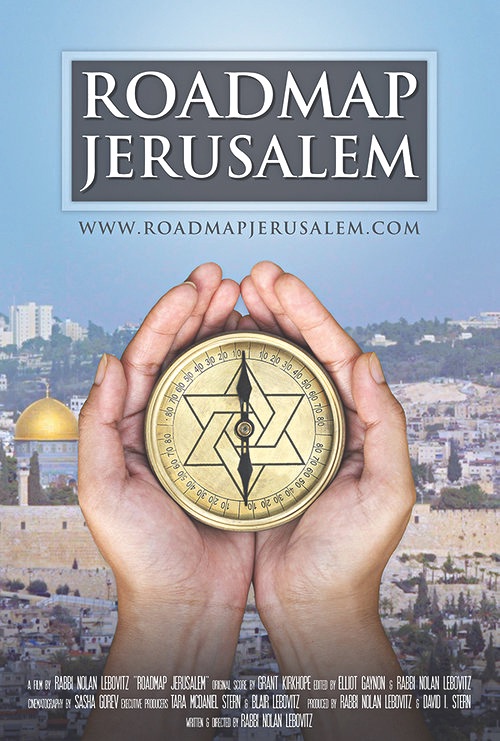
In his new documentary, “Roadmap Jerusalem,” Rabbi Nolan Lebovitz argues that Israel should control access to all the religious sites in the nation’s capital.

After almost a decade working in Hollywood, Lebovitz decided to go to rabbinical school. He graduated in 2016 from the Ziegler School of Rabbinic Studies of American Jewish University in Los Angeles and currently serves as the rabbi of Adat Shalom in West Los Angeles.

The grandchild of four Holocaust survivors, Lebovitz initially began creating “Roadmap Jerusalem” in 2017, and the 26-minute film premiered at Adat Shalom last month.

“We live at a time when the international community at large, [and] UNESCO (the United Nations Educational, Scientific and Cultural Organization) has called into question our Jewish historical narrative,” Lebovitz said in an email to the Journal about the impetus for his film.  “The Jewish Community needs to become more vocal about the significance of facts when discussing Israel. If we believe Jerusalem to be so foundational in our ties to the land, and I believe it is, then we should do a better job explaining to people why we hold it in such regard.”

Lebovitz wanted the movie to explore the biblical, archaeological and political history of the city, and focused on three specific Jerusalemites with expertise in these areas: Rabbi Dov Lipman, who served in the Knesset from 2012-2015 as a member of the Yesh Atid secular centrist party; Jon Seligman from the Israel Antiquities Authority, who discussed the Jewish archeological and historical connections to the Temple Mount; and Vered Hollander-Goldfarb of the Conservative Yeshiva in Jerusalem, with whom Lebovitz studied biblical texts.

In conducting these interviews, Lebovitz said he came to realize that only under the control of the modern State of Israel could all religions have unfettered access to their holy sites.

“I came to understand the prohibitive nature of the foreign empires [that] occupied the city for the last 2,000 years before 1967,” he said. “This is the first time in the history of Jerusalem that the ruling authority does not control the top of the Temple Mount.”

Lebovitz argues because Israel gave up control of the Temple Mount to the Jerusalem Islamic Waqf (Islamic religious trust) as a goodwill gesture, and because Israel also protects the Church of the Holy Sepulchre, it is Israel that should control all of the city’s holy sites.

“We now live during a time of incredible access for all religions to all holy sites, and that is because of the State of Israel,” he said.

Asked by a viewer at the screening who the best audience for the film is, Lebovitz said he believed “friendly communities who already advocate for Israel need to add their voices to this conversation.” He added that communities critical of the film’s viewpoint “need to learn the history and significance of Jerusalem for the Jewish people and the Jewish state, and to see the current controversy in a broader context.”

Lebovitz believes Jerusalem is “the linchpin to the land of Israel. Jerusalem cements our right to a homeland there as our rightful inheritance.”

Jerusalem has been the spiritual and political capital of the Jews for over 2,000 years, Lebovitz said. “We [have] prayed three times a day [for thousands of years] to return to Jerusalem. I think that yearning and the return of Israeli control is similar to a compelling Hollywood love story with a happy ending.”

Visit roadmapjerusalem.com.


Mark Miller is a humorist and writer.

Film Says Israel Should Control Holy Sites Read More »

Israeli Taekwondo Program Has Local Source

In 1997, 12-year-old San Francisco native Eva Leah Gunther was killed by a drunken driver after she stepped into the street in Charlotte, N.C.

A black belt in taekwondo, Gunther had traveled to North Carolina to represent California in her first Junior Olympics tournament.

After her death, her grandparents, Los Angeles philanthropists Richard and Lois Gunther, started a taekwondo program in Israel in her name. The program, which has been operating for nearly 20 years, serves underprivileged girls newly arrived in Israel.

Every year, the Gunthers provide $15,000 to the Joint Distribution Committee in Israel to fund the program, which is overseen by the Israel Taekwondo Federation. To date, the federation has enrolled 190 girls.

The program operates in Rishon LeZion, a city south of Tel Aviv, and primarily serves Ethiopian girls.

In an interview with the Journal, Richard Gunther, 93, said he wanted to create an active memorial to commemorate Eva’s passion for taekwondo and her strong connection to her Jewish identity.

“We wanted to create a living memorial in Israel,” Richard said in an email. “From this thinking came the idea of funding scholarships in Israel for girls to take serious Taekwondo instruction. The girls learn self-discipline, self-respect, how to exercise and basic self-defense. Most importantly, it gives girls the chance to participate in a class and in workshops like other Israeli children, and gives them the feeling that they really do belong in the country and offers opportunities their Ethiopian families could not afford.”

“I think it is a creative example of a Diaspora Jew and family interacting with Israel.” — Richard Gunther

Richard has served as co-president for Americans for Peace Now and on the board of the New Israel Fund. He and Lois are the namesakes of the future Jewish Family Service of Los Angeles senior-focused site that is currently being constructed on Fairfax Avenue. When completed, the former home of the Freda Mohr Multipurpose Center will be known as the JFS Lois and Richard Gunther Center.

The Gunthers’ taekwondo program originally was designed for girls who had been in Israel only a few years, and initially served mainly Russian girls. There was interest in engaging Ethiopian girls, as well, but they were too shy to participate in the classes, Gunther said.

“A lot of the Ethiopian girls felt like they were outside the orbit. They were not integrated well into society, like so many of the immigrants,” he said, and so the Gunthers offered additional funds to serve the additional Ethiopian girls who began taking the martial arts classes.

Ultimately, Gunther said, the taekwondo program “has done wonders for the girls. It raises their whole self-esteem.”

In addition, he said, the program illustrates how someone living in the Diaspora can support the Jewish state.

“I think it is a creative example of a Diaspora Jew and family interacting with Israel, and making a small contribution in a small way,” he said. “We’re making an impact on the young girls in the program. It is a satisfying thing for our family to do, because our granddaughter was a wonderful young woman. To see her memorialized in a program like this, which we know she would have loved, we know we are doing something important in her name.”

Israeli Taekwondo Program Has Local Source Read More »