
In Israel, the two weeks after Pesach are always emotionally packed. Holocaust Memorial Day comes shortly after the long holiday. Independence Day is a week-and-a-half later. The combination is intense, dizzying and confusing — especially so when Israel celebrates a symbolic number, such as 70.
The Mishnah in Pirkei Avot defines 60 as an old age and 70 as having lived a long life. But what’s true for a man is not true for a country or for a people. For them, the Holocaust was just yesterday. As demonstrated by Jews all over the world (see graph at right), the Holocaust is still very much on their minds. For them, Israel is still young, still making rookie mistakes, still dealing with the problems that have haunted it since its birth. It also still has people around who were there when it was born.
Marking Holocaust Memorial Day and Independence Day (attached to Memorial Day) in such sequence is problematic. For many years, Israel has been fighting the widely held, yet mistaken, belief that a Jewish state is compensation for the Holocaust.
In a 2009 speech, Prime Minister Benjamin Netanyahu emphasized that “the right to establish our sovereign state here, in the Land of Israel, arises from one simple fact: Eretz Yisrael is the birthplace of the Jewish people.” This was not a coincidental remark, but rather an indirect criticism of President Barack Obama’s famous Cairo speech, in which he seemed to suggest that Jewish rights to the land depended on Jewish suffering in the Holocaust (in later speeches he corrected this view).
The proximity of Holocaust Memorial Day and Yom HaAtzmaut should serve as a reminder for Jews of the great burden we all share.
Still, as Israel has been fighting this fight, it’s calendar has stood, and still stands, in the way: This week we mourned the Holocaust; next week we celebrate our independence. If this is not a confusing way to send the above, detailed message, I don’t know what is.
Earlier this week, when I was asked to speak to a group of Israeli officers about travel to Poland, this confusing reality was evident again. These officers would be traveling for Holocaust Memorial Day, then coming back for Yom HaAtzmaut — bringing along with them American members of Friends of the Israel Defense Forces. The educational meaning of such a contrast is clear: From complete destruction in Europe to complete overhaul and success in Israel; from defenselessness to self-defense; from miserable dependence to proud independence. Still, it should be noted that utilizing this powerful proximity of events carries the risk of sending a problematic message.
Jews returned to their country not because of the Holocaust. They started building their state before the Holocaust. They started fighting for independence before the Holocaust. I assume that Israel was ready to happen even without a Holocaust. (Of course, there is no way of proving such a theory.)
But to argue that the Holocaust played no role in the way Israel was born would be insincere. It did, in two ways: One — the less important — is common knowledge and frequently mentioned. The other — of much higher importance — is rarely mentioned.
The common knowledge is that the Holocaust probably expedited and eased the way of the Jewish state to gain acceptance and recognition. To stand in its way merely three years after a third of the world’s Jewry was exterminated seemed tasteless even to countries that didn’t usually mix emotions and policymaking.
Yet, it is another reality stemming from the Holocaust that made the main difference for Israel: The complete annihilation of the most significant community of Jews, the demise of the old center of Jewish life, created a vacuum that needed to be filled. And Israel fast became the main, if not the only, prospective candidate to fill this civilizational void. Israel became the place in which Jews would re-form an essential center of gravity.
The proximity of Holocaust Memorial Day and Yom HaAtzmaut should indeed be utilized as a reminder. But not as a reminder to the world on why Jews deserve to have a state. As obvious and banal as it sounds, it should serve as a reminder for Jews of the great burden we all share to guard, support and defend this still very young epicenter.
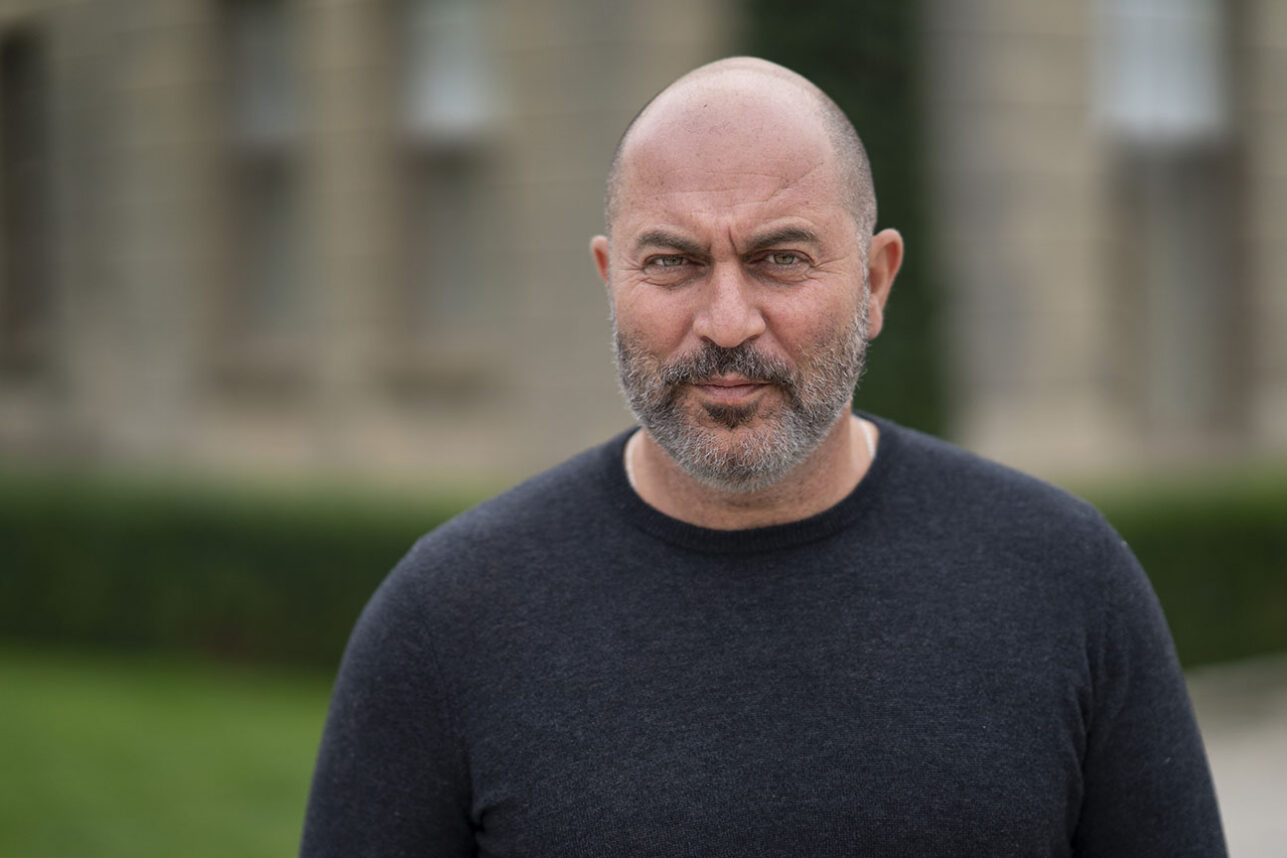
Shmuel Rosner is senior political editor. For more analysis of Israeli and international politics, visit Rosner’s Domain at jewishjournal.com/rosnersdomain.