“It was the greatest rarity to see a Jew drunk.” This quote, from a late 19th-century Polish observer, reflects a commonly held truth. And in the early and middle 20th-century, multiple studies confirmed Jews drank far less than their non-Jewish neighbors.
Nahum Glazer, in his influential 1952 essay Why Jews Stay Sober cites multiple theories why this is so. Some base themselves on Emil Durkheim’s observation that people who live in tight-knit communities have fewer social problems. They theorize that the strong communal bonds in the Jewish community prevent the vulnerable from falling into despair; and as a result, Jews have lower rates of alcoholism. Robert Bales, a Harvard sociologist who wrote his PhD on the topic of Jewish drinking, points to ritual as the critical element. Jews incorporate wine into multiple rituals, from Friday night dinners to weddings and circumcisions. This changes one’s relationship to alcohol. Bales calls this a “fixation factor,” in which ritual frames alcohol as a sacred substance rather than a tool for personal escape.
Glazer prefers a theory first offered by Immanuel Kant. He saw Jewish temperance as an expression of vulnerability. He wrote that, “Women, ministers, and Jews do not get drunk…because their civic position is weak and they need to be reserved.” Jews attract a lot of negative attention; as a result, they are careful not to look bad in public. Glazer says this lesson had become so ingrained that even after Jews were made to feel at home in America, they remained relative teetotalers.
Werner Sombart takes a more direct approach. In his book The Jews and Modern Capitalism, Sombart argues that Judaism’s comprehensive system of religious discipline transformed Jewish culture; and this regimen played a large role in fostering Jewish economic success. Sombart declares that “it can be proved with great certainty that the Jew’s freedom from the evil effects of alcohol (as also from syphilis) is due to his religion.” Jews drink less because of Judaism.
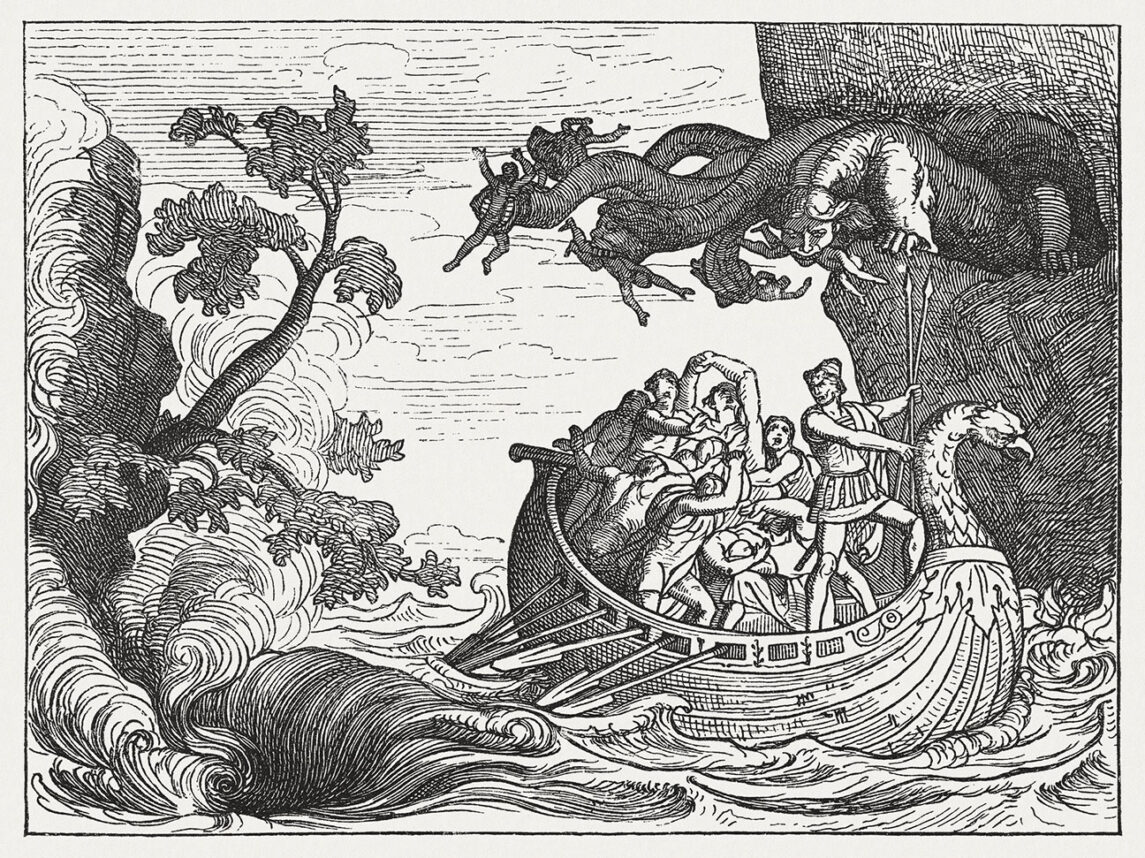
Without question, Judaism discourages excessive drinking. In the Tanakh, Noah and Lot were sexually exposed and humiliated while they were drunk. The Kohanim are forbidden to drink while serving in the Temple. This stands in stark contrast to Ancient Egypt, which held a “Tekh Festival” or “Feast of Drunkenness”, whose ritual is described by one Egyptologist as this: “it seems that in the Hall of Drunkenness, worshippers got drunk, slept, and then were woken by drummers to commune with the goddess Mut”. Divine service has nothing to do with the imaginary inspiration of intoxication; and Halakha forbids praying when one is drunk.
Yet, there is one instance where drinking is encouraged in Judaism: Purim. The Talmud says that “Rava said: A person is obligated to become intoxicated on Purim until they don’t know the difference between “Cursed is Haman” and “Blessed is Mordechai.” Inebriation is the order of the day.
This clashes with the general Jewish attitude towards excessive drinking and demands an explanation. One common resolution is to simply reinterpret this ruling. Rabbeinu Ephraim, a 12th-century author, cited a story the Talmud tells after Rava’s statement:
Rabbah and Rabbi Zeira made the Purim feast together. They became intoxicated. Rabbah arose and slaughtered Rabbi Zeira. The next day, he prayed for mercy and revived him.
The following year, Rabbah said to Rabbi Zeira: “Let the Master come and we will make the Purim feast together.”
Rabbi Zeira said back to him: “Not at every hour and hour does a miracle occur.”
This story seems mythical. But its purpose is clear: to demonstrate the evils of excessive drinking on Purim. Rabbeinu Ephraim argued that this story indicates the Talmud rescinded the obligation to drink on Purim.
In a similar fashion, a 13th-century writer, the Orchot Chaim, reinterprets this law:
A person is obligated to become ‘intoxicated’ on Purim. This does not mean that he should become drunk, for drunkenness is an absolute prohibition. There is no greater sin than this, for it leads to sexual immorality, bloodshed, and many other transgressions besides. Rather, he should drink a little more than his usual habit.
One must drink moderately, even on Purim.
Another way of resolving this riddle is to treat Purim as an exception. Jeffrey Rubenstein points out that the stricture against excessive drinking is not the only religious norm ignored on Purim. A Purim rabbi would hold office, and their sole duty would be to mock the year-round Rabbi. The Rama offers an additional list of changes:
There are those who have the custom …that a man wears a woman’s garment and a woman a man’s clothing, and there is no prohibition in this matter, since their intention is solely for the sake of joy. Similarly, regarding wearing mixtures (sha’atnez) that are rabbinically prohibited…the custom is that it is permitted. Likewise, when people snatch from one another in a spirit of merriment, this does not violate the prohibition of “You shall not steal,” and this is the prevailing custom…..
Rubenstein compares Purim’s celebrations to Victor Turner’s concept of communitas, festive events during which people suspend hierarchical distinctions and experience a direct, unmediated human connection. On Purim, when we recognize how lucky we were to survive Haman’s decree, we embrace an upside-down world where the gift of life comes first and rules and social distinctions last. Drinking until one doesn’t know the difference between “Cursed is Haman” and “Blessed is Mordechai” truly allows one to imagine a world without distinction and without strife, with all the people living together in peace.
According to this interpretation, drinking on Purim is the exception that proves the rule. Apart from Purim, Jews don’t get drunk.
Except they do.
Rabbi Eliyahu Guttmacher (1796-1874) was the Tsadik of Grätz, a brilliant Talmudic scholar and mystic to whom thousands of Jews flocked for blessings and advice. The archives of the YIVO Institute for Jewish Research contain a collection of prayer notes (kvitlach) addressed to him. Glenn Dynner, in his article ‘‘A Jewish Drunk Is Hard to Find’’: Jewish Drinking Practices and the Sobriety Stereotype in Eastern Europe, cites several that relate to drinking problems. One note, from Solomon ben Reizel, includes the admission that he “drinks a lot of liquor to the point it makes him drunk, and because of this he has no domestic tranquility.” He asked for a prayer that God “have mercy on him and guard him so that he doesn’t drink anymore.” Another, from Isaac Eizik ben Rachel, describes how he “drinks more liquor than he needs, and so he beats his children, so he asks for a cure for this.” Sarah bat Leah asked for the rabbi to pray that there be “peace between husband and wife, for her husband is always drunk, and he comes home and quarrels with his wife. And he causes damages and [financial] losses, and she has no rest when he comes home. And he also hit his eldest son for nothing.”
These notes tell the tragic tales of families turned upside down by alcoholism. And problem drinking was not restricted to scattered individuals; a popular Mussar work from the late 1600s, Kav Hayashar, condemns those who drink early in the morning and show up to synagogue drunk.
These problems cropped up when one could still honestly say that “a Jewish drunk is hard to find.” And they are more significant today, when that adage is no longer true. Recent studies have shown a sharp rise in alcoholism and addiction in the Jewish community.
But the old myth that “Jews never get drunk” is getting in the way. Jewish alcoholics are loath to come forward; they are ashamed of their drinking problems, feeling as though they have failed their entire community. And communal leadership can hold tight to an irrelevant myth and ignore the problems before their eyes.
Yet the problems are pretty obvious. There are men who drink excessively at Shabbat Kiddush and then are unable to eat lunch with their families. There are high school students who buy opioids to “cope” with the stress of schoolwork. And we have ever-increasing numbers of people with gambling addictions, fed by constant ads during sporting events.
Yes, we have a drinking problem, right here in the Jewish community.
The first step to solving any problem is to admit that you have a problem. And that is what our community must do. We need to look in the mirror and stop playing make-believe.
We need to admit that our community has a problem, and start looking for solutions.
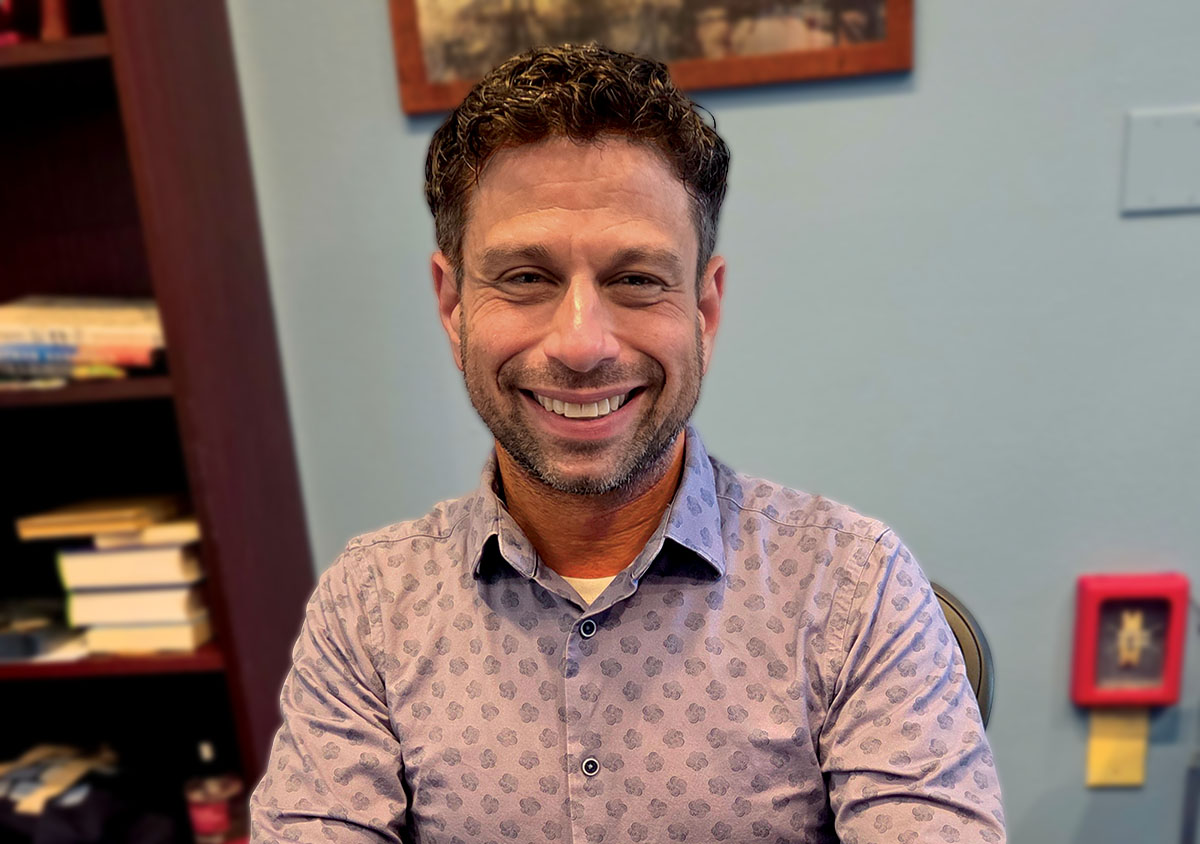
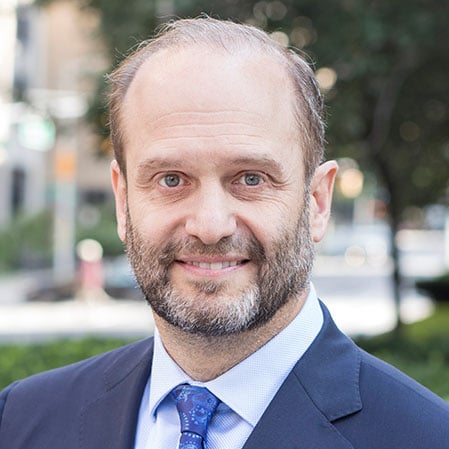
Rabbi Chaim Steinmetz is the Senior Rabbi of Congregation Kehilath Jeshurun in New York.