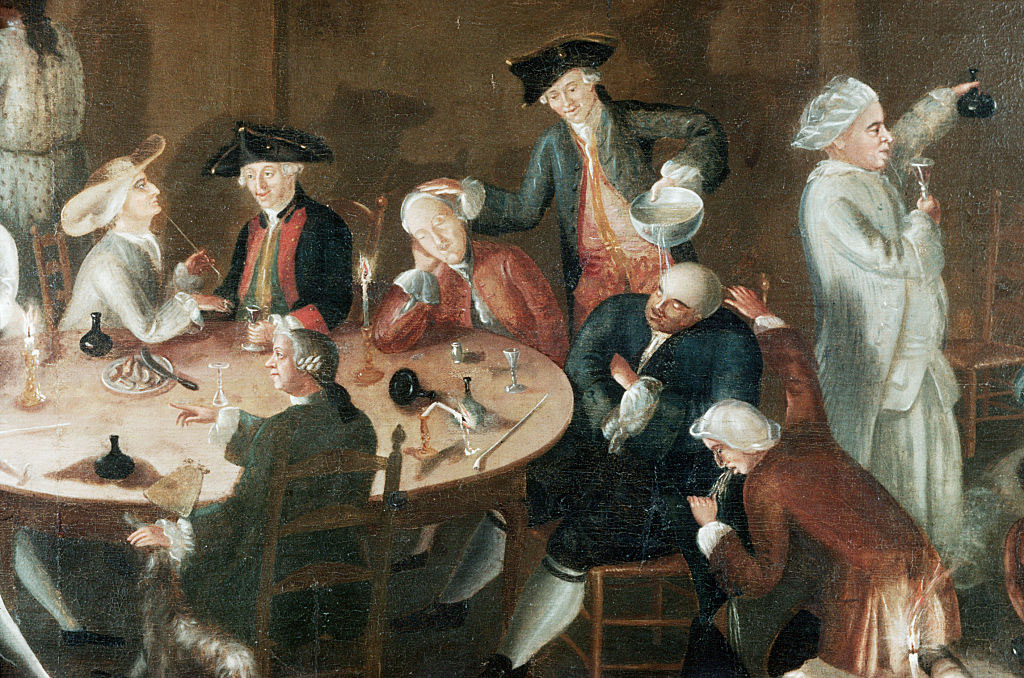
My pursuit of non-sobriety
has ended: I have closed the spigot,
and risks of my inebriety
have tended to make me a bigot.
No longer will I give assent
to excessive use of booze;
for my past boozin’ I repent,
and have decided now to choose
sobriety; I’ve closed all taps
of booze, replacing booze with joy
I now get from post-prandial naps,
no longer shikker wie a goy.
I’m sober as a judge. When I
depart this world I won’t be drunk,
a corpse who’s hoping to get high
in heaven if I do not flunk
the angels’ breathalyzer test,
stopped by gemora kops for speedin’
from where my corpse is laid to rest
to when lehayim’s made in Eden,
in a heavenly society,
refreshing my hebraiety.
The prohibition of the use of a razor by Samson, the child of Manoah’s wife, echoes the prohibition of וַעֲנָבִ֛ים לַחִ֥ים וִיבֵשִׁ֖ים, not only fresh grapes but raisins, recalling the wordplay suggested by an Australian Levite who is a distinguished member of my shul, Mark Leichter, when pointing out that raisin is a bilingual anagram of nazir!
Before the Torah informs us the words of the priestly blessing in Num. 6:24-26, it states in Num. 6:22:
דַּבֵּ֤ר אֶֽל־אַהֲרֹן֙ וְאֶל־בָּנָ֣יו לֵאמֹ֔ר כֹּ֥ה תְבָרְכ֖וּ אֶת־בְּנֵ֣י יִשְׂרָאֵ֑ל אָמ֖וֹר לָהֶֽם׃
Speak to Aaron and his sons: Thus shall you bless the people of Israel. Amor, say, to them:
יְבָרֶכְךָ֥ יְהֹוָ֖ה וְיִשְׁמְרֶֽךָ׃ {ס}
יהוה bless you and protect you!
After describing the laws of the sotah and the nazir, the Torah informs us of the words of the priestly blessing in Num. 6:24-26:
דַּבֵּ֤ר אֶֽל־אַהֲרֹן֙ וְאֶל־בָּנָ֣יו לֵאמֹ֔ר כֹּ֥ה תְבָרְכ֖וּ אֶת־בְּנֵ֣י יִשְׂרָאֵ֑ל אָמ֖וֹר לָהֶֽם׃ {ס}
Speak to Aaron and his sons: Thus shall you bless the people of Israel. Amor, say, to them: May God bless you and protect you!
The rabbis say that the priestly blessing must be performed with love. Perhaps this suggestion was based on a bilingual wordplay, since amor is the Latin word for love and the rabbis must have heard Latin spoken or quoted under Roman influence.
The Hebrew word in Num. 6:23,אָמ֖וֹר , amor, meaning “say,” may also explain why the Torah’s description of the gifts to the tabernacle by all the tribes (except for Levites) follows the paradigm used in the priestly blessing, which every priest is individually commanded to give. This is not a commandment expressed as a plural verb to all the priests as a united community, since in Hebrew the verb amor is in the singular, not plural. This individuality echoes that of each tribe’s gift to the tabernacle. Although the gifts of all the tribes are identical, the fact that they were delivered individually by every tribe echoes the way that the words of the priestly blessing must be delivered individually by every priest to the Israelites.
Making a lehayim is the Yiddish expression for having a drink, but its literal meaning is “To life!”
Gershon Hepner is a poet who has written over 25,000 poems on subjects ranging from music to literature, politics to Torah. He grew up in England and moved to Los Angeles in 1976. Using his varied interests and experiences, he has authored dozens of papers in medical and academic journals, and authored “Legal Friction: Law, Narrative, and Identity Politics in Biblical Israel.” He can be reached at gershonhepner@gmail.com.