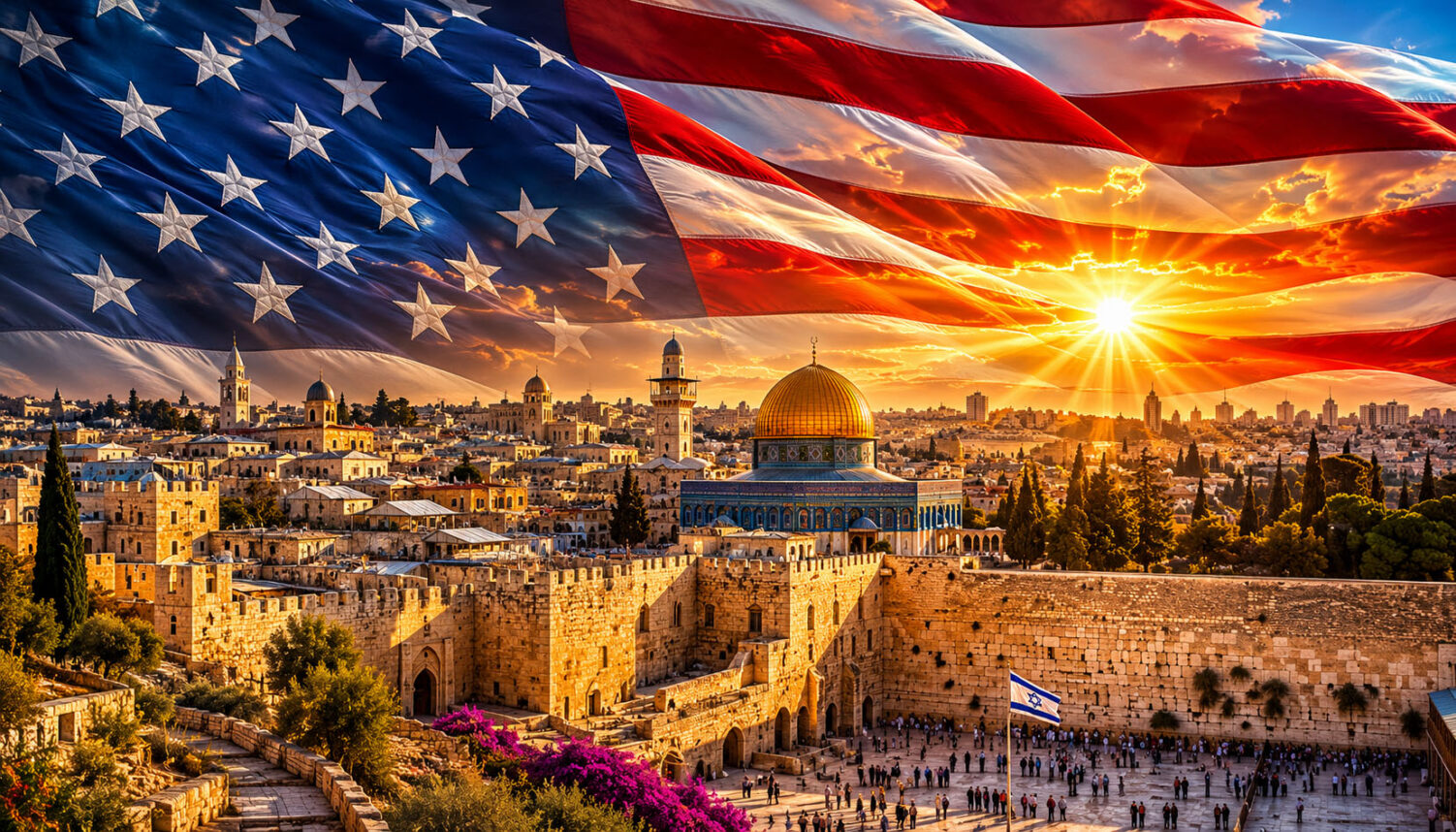
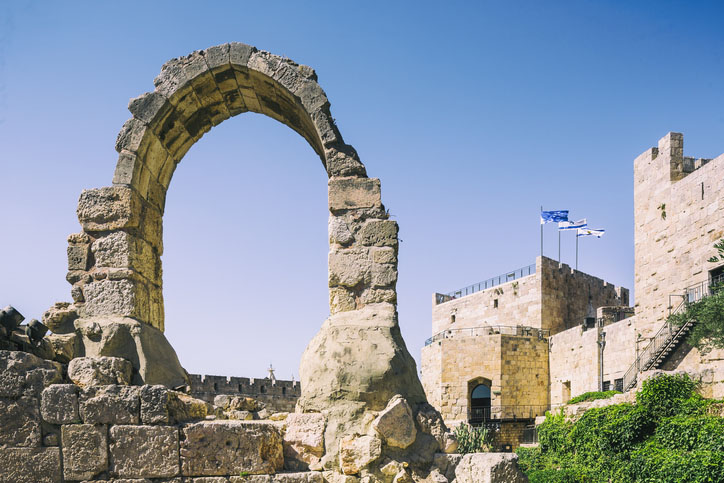
The Tower of David, located near the Jaffa Gate entrance to the Old City of Jerusalem, is one of those museums that is not designed for control freaks.
You wander around ancient structures, discover stairs that can lead you astray, stroll down random pathways that lead to other ancient structures. All along, you’re navigating various multi-media “exhibitions” that try to describe a city that can’t be described.
That was my first takeaway from a recent visit: Don’t try to make sense of Jerusalem. Don’t look to “frame” it in a way that will make it easier to digest.
Jerusalem is not meant to be digestible. It’s meant to confuse, arouse, marvel, complicate, stimulate … did I mention confuse?
For about an hour or two, you’re asked to absorb centuries upon centuries of kings, armies, religions and empires taking turns trying to control the center of the world.
Your mind spins.
When was the Mamluk period again? Did it come before or after the Ottoman empire? How about the Hasmonean, Herodian, Byzantine and early Muslim periods? Which ones got destroyed by the Crusaders? Remind me again how long the Jews were in control? And how did they get all that water up the forbidding mountain?
The history overload is blessedly interrupted by moments of easy pleasure, like a stunning film montage showing a modern Jerusalem as a welcoming home to the world’s three monotheistic religions. It almost makes you forget how they were at each other’s throat for millennia.
Maybe that’s why Jerusalem can be such a confusing experience. It’s not just the impossibly complicated history – it’s also the stark contrast with today.
A few minutes from the Tower of David, for example, is the Mamilla promenade that features retail jewels like Dior, Pierre Cardin, Nike, Tommy Hilfiger, Guess and Rolex. You might as well be on Rodeo Drive.
A foreign tourist might be astonished by the presence of so many Israeli Arabs happily strolling down Mamilla and enjoying the cafes and restaurants. It’s a Jewish state, after all, but Arabs attract no special attention. They fit right in.
Given that my eyes travelled so quickly from ancient Biblical stones to modern Mamilla stores, it was tempting to look at Jerusalem’s tortured history and say, “Who cares about the past? What matters is that today things seem to be OK.”
Well, yes, they do. To walk in today’s Jerusalem is to witness people from around the world, whether Jewish, Christian or Muslim or Ethiopian, Russian or Moroccan, and thinking, “Yes, things seem to be OK.”
Of course, we know things are never OK in this war-torn nation. The threat of violence is never too far away. Enemies of peace still dream of conquering the city. The bomb shelters are always at the ready.
In a way, it makes sense that an ancient city that various tribes fought over for millennia can’t simply transform into an open city that achieves ideal coexistence. As we saw in the museum, the animosities run deep. The dreams and the traumas are bound to linger.
Still, after a few hours at the Tower of David, hearing head-spinning stories about this indescribable place, it felt therapeutic to walk around and see pleasant things that were rather easy to describe — like Jews and non-Jews just going about their lives.
Shabbat shalom from the center of the world.