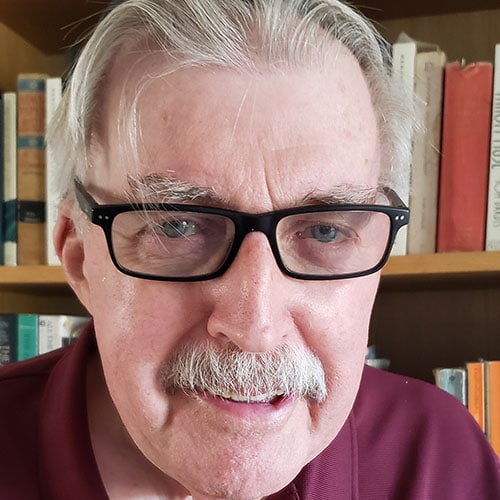

For many Jews, Poland is almost synonymous with the Holocaust. And so it was for Yonah Bookstein when the 19-year-old student first visited Poland
“The survivors I met in Poland in the ‘90s,” Rabbi Yonah said, “they were quite elderly. And they were a very interesting group. Some had been communists, and I spoke Yiddish with them. They had a lot of nostalgia for their childhood. Their kids had left Poland. So there was a big purge in Poland in 1968 of Jews in any position of leadership – medicine, academics.” Poland was his life all through the ‘90s, and with his wife Rachel after they married in 1996.
As a representative of the Ronald S. Lauder Foundation, and eventually as director, he was able to move around the country relatively freely. By the time Bookstein landed there, “most of the Jews in Poland had intermarried or emigrated or they had very, very minimal connections. Many people didn’t believe Jews had survived the Holocaust. But 150,000 Jews were in Poland, even after the Kielce Pogrom. They stayed for all kinds of reasons.”
But mostly, the “Jewish community offered a place where there was food – we paid for a minyan in Warsaw and Kraków. There were numerous official Jewish communities. Meanwhile, Lublin was a sub-community of Warsaw. I’ll mention Łódź, too. There were little remnants of Jewish life in all these cities. As director of the Lauder Foundation, I would visit these cities. They had many different needs.“
Decades later, Rabbi Yonah speaks of Polish Jews as if they are mishpocha. “Yes, I became extremely fond of them,” he said. “I love elderly, Yiddish-speaking Polish Jews” – that’s present-tense love, not loved – “they were a rare and a dying community. Connecting with them always was wonderful. This was something you could rarely experience in the United States: Imagine when people would come into our offices and say, ‘We just found out we are Jewish,’ because many survivors hid their Jewish identity. They didn’t want their kids to grow up with anything.”
Rabbi Yonah found that survivors’ most common reaction to the trauma of the Holocaust was plain and sadly irreversible: “Hide your Jewishness.” The reason: Fear of reaction. “Absolutely,” he said. He found that even as communism was in retreat across the country and parents were aging, the safest behavior was to mask their Jewishness.
All of a sudden, younger Jews were saying, “If they are their natural parents, they reveal the truth. If they are adoptive parents, it’s a different story. Many children were not returned.” Rabbi Yonah estimated “something like 10,000 children were not returned to the Jewish community after the war. They were raised by non-Jews. And they drifted away. There’s a famous story in Poland. One of those children became a prominent priest in Lublin. He had been teased his whole life because he looked Jewish. He had dark hair. But he grew up as a Catholic.” When Rabbi Yonah met him, he found the priest to be “a remarkable guy.” It was, he said, “a very compelling time to be in Poland. “We had people with crazy stories.”
Clearly there was a love affair between the Booksteins, after Rachel and Yonah’s 1996 marriage, and the Polish people and their culture. Throughout the ‘90s, the rabbi reported, “the government was very sympathetic to Jewish-Polish relations. They wanted to build better relations. The president [Aleksander Kwaśniewski] was sympathetic in saying ‘Let’s have good relations.’”
The young American couple felt stronger than ever that “this was a good time to be there and to do our work.”
But was Poland ever going to be a final destination for the Booksteins? “We were young and we were idealistic,” the rabbi said. “But we had not — we were not the kind of people who said, ‘This is what our career is going to be.’ We were following where HaShem would lead us.”
At some point during their time in Poland—after they had lived there for three years and had two children who were born there – the bris for his oldest, Moshe Chaim, in 1999, was “the first public act that anyone could remember.”
The Booksteins’ commitment to Judaism may have seemed extreme to some Poles, especially those who had grown distant from Yiddishkeit. “Parenthetically,” the rabbi said, “because of this work that we did in Poland, and our demeanor, many people thought we were Lubavitchers. And we were not. However, we admire the Lubavitch movement, their outreach and their love of the Jewish community.”
“Lubavitch devotion to Jews all over the world is beautiful. My rabbi was Rabbi Haskel Besser. The Lauder Foundation supported Chabad and other Jewish institutions all over central and eastern Europe.” But in Poland there was no Chabad presence until the 2000s.
Rabbi Yonah noted that while Jews could live openly in Poland during the ‘90s, “we found that people who got passionate about their Jewishness realized that Poland had a ceiling. Options were limited.” When young Jews became excited about their Jewish roots, they would leave Poland.
Once young Jews flew off to New York or Tel Aviv, their optimism was confirmed, said the rabbi. “They were like OMG! This is what Jewish community could be?”
Jews who remained in Poland were Polish first. They came from “some kind of intermarried backgrounds with all kinds of interesting genealogy. Nobody was going to send their kids to a yeshiva.”
There was pushback if the school ever got too religious. The school was run by a wonderful woman (Helise Lieberman), the rabbi says. She still lives in Poland as head of a foundation. Rabbi Yonah made sure the school was not called a yeshiva. Otherwise, parents would not have sent their kids there. To give some Jewish feeling, the fact the school had a kosher kitchen, was closed on Jewish holidays and had a Hebrew class, already made it quite remarkable in Poland, he said. It was like the Haredi to the community.
The Booksteins left in 2001 because they felt the community was able to fend for itself. “We wanted to work on American Jewry,” the rabbi said. Ambassador Lauder, in recognition of all the work they did, suggested the rabbi finish his smicha in the States. He was ordained in 2003.
Over the past two decades in Southern California, Rabbi Yonah has been a dynamic force in American Jewish life. As a Hillel campus rabbi, he connected thousands of Jewish students to their heritage. In Los Angeles, he built Pico Shul, a welcoming community for young Jewish professionals, helping dozens find their life partners. Through Shabbat Tent & Lounge, he brought Jewish hospitality to music and film festivals, creating Jewish connections in unexpected places. Today, through his organization, Neshama, Rabbi Yonah creates community and connection while providing spiritual counseling for a growing and diverse audience, from California to Israel, from Hollywood filmmakers and philanthropists to Duvdevan soldiers and Nova Festival Survivors.
Meanwhile, Rabbi Yonah’s newest book, “Denial is a River in Poland: The Aftermath of Europe’s Last Pogrom,” with a foreword by Dr. Michael Berenbaum, was published this month. It is the true story of Holocaust survivors murdered by their neighbors in Kielce, Poland, and how 80 years later, Poland still refuses to accept responsibility.
https://www.kickstarter.com/projects/rabbiyonah/denial-is-a-river-in-poland