fbpx

June 18, 2026

Rabbis of LA | Rabbis Camras, Vogel Take One Step Back

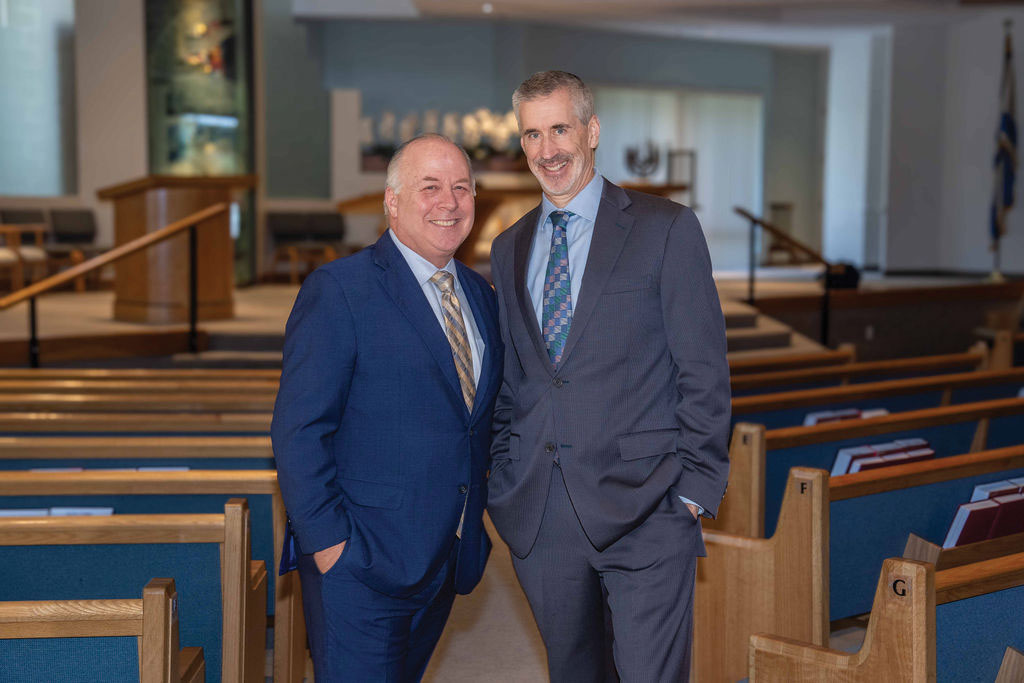
Talking to Rabbi Richard Camras, and Rabbi Stewart Vogel of HaMakom synagogue in West Hills, is like talking to identical twins. The two native Angelenos, longtime friends and professional colleagues, have strikingly similar career paths, present convictions and future intentions. They are so much in tune with each other, they practically finish each other’s sentences.

They are also retiring together; both will be stepping down at the end of June.

“We both had our own unique timelines,” Rabbi Vogel said. “They were similar. Neither of us felt we were being forced into early retirement. There was a timeline for both of us that happened to fit in.” And when Rabbi Camras’ Shomrei Torah and Rabbi Vogel’s Temple Aliyah merged, it was a way for both of them to go forward.

Rabbi Camras quickly picked up on the point. “When we began thinking about the process of merging our two communities, we raised the issue together that when we believed the synagogue was in a healthy place, it probably would be best for the community to hire a rabbi who would take the synagogue into the next decade.”

How did they both know when it is time to step into – or toward – retirement?

Part of it, Rabbi Camras said, is a feeling. “There’s no certainty,” he said. “Rabbi Vogel and I really wanted to begin to feel that when the congregation was settled enough in the merger that there was no crisis in response to coming together – but that there was excitement and steadiness about a future where we felt it was the appropriate time.”

It was three years ago this month when Shomrei Torah and Temple Aliyah– located one-and-a-half miles apart in the West Valley –  joined forces became HaMakom. Turning to his friend, Rabbi Vogel said it was “so interesting that you and I perceived there were changes in synagogue life – this was prior to COVID, which really set the stage for all the changes we were already anticipating. … we already were seeing the writing on the walls about synagogue life, which had changed in terms of membership, of people coming into the synagogue, of how the synagogue would have to be revisioned.”

The changes are nationwide, Vogel said. “I think many synagogues are seeing a radical shift,” which has triggered long-lasting decisions. “By the way, rabbis are leaving the rabbinate as a result. It’s a long story about what I call The Unbundled Generation. We are dealing with a generation now that doesn’t see synagogue life. It’s a bundle: We are here when you need it. And those values of synagogue life were changing drastically.”

Rabbi Camras believes it is about a systematic change in American life where people historically belonged, and now they don’t. “Not just in synagogue life but in everything. Society changed. They want what they want when they want it, and they get it in a way that makes sense for them.”

Both were trained as rabbis in the ‘80s and ‘90s to think about synagogue life for the 1950s and ‘60s. But toward the latter part of their careers, Rabbi Camras said, they both suddenly realized “that the Jewish community is undergoing a rather significant transformation. What will the synagogue of the future look like? Not that it is going to look like the synagogue of our grandparents. Another question is, who best can serve the Jewish community going forward?

Rabbi Camras also pointed to the upheaval in rabbinic education, and in the decision of rabbis to serve or not serve in pulpits Rabbi Vogel noted there are far fewer pulpit-trained rabbis or rabbis serving in the pulpit today. In Rabbi Camras’ opinion, there is a logical explanation for the earthquake. “It’s a rather demanding profession,” he said. “I think young people today want to try to balance work with all sorts of other aspects of purposeful and meaningful living.”

“They are probably not wrong there,” said Rabbi Vogel.

The latest generation of rabbis, Rabbi Camras said “define themselves solely through their professional work. Pulpit work is incredibly demanding on the individual … and on the family. It’s all-encompassing. Rabbis today, young people today, will happily choose to serve the Jewish community in less all-encompassing, demanding ways.”

Quickly picking up on the topic, Rabbi Vogel said that both people and synagogues changed. “We saw this [broad change] prior to COVID. Recognizing that society and the religious life had changed, the synagogue model needed to change. It’s not about religion. It’s about a different focus of what the synagogue is about. I pride myself on having had a creative rabbinate, trying a lot of different things, changing the music in synagogue life years ago, in terms of bringing people in, of creating programing, as Rabbi Camras did as well, to bring people in.”

They both saw things were changing, and knew that the next iteration of synagogue life was going to be for the next generation. Their job, Rabbi Vogel said was “to prepare the moment.  Many synagogues – when they look at themselves – are willing to say, ‘You know what? Things are changing, but we are going to remain how we are. We will just pray for the best.’”

Even Moses, Vogel said, had to be pushed “God said to him, suffer and move forward. We saw that as the model. Rabbi Camras and I started to talk. We had a timeline.”

Fast Takes with Rabbi Camras

Jewish Journal: Do you have any unfulfilled Jewish goals?

Rabbi Camras: One thing I have learned is that I know less than I would like to know in the vastness of Jewish literature and Jewish learning. I can’t wait to have more time to study.

J.J.: Your favorite hobby?

R.C.: Two. I love cycling (both mountain bike and road bike) and I love reading. I love going fast and going far, days at a time.

J.J.: What kind of books do you enjoy?

R.C.: Everything. I love history, fiction and nonfiction. Everything engages me.

Rabbis of LA | Rabbis Camras, Vogel Take One Step Back Read More »

Rabbis of LA | Rabbi Bookstein’s Love Affair with Poland

For many Jews, Poland is almost synonymous with the Holocaust. And so it was for Yonah Bookstein when the 19-year-old student first visited Poland

“The survivors I met in Poland in the ‘90s,” Rabbi Yonah said, “they were quite elderly. And they were a very interesting group. Some had been communists, and I spoke Yiddish with them. They had a lot of nostalgia for their childhood. Their kids had left Poland. So there was a big purge in Poland in 1968 of Jews in any position of leadership – medicine, academics.” Poland was his life all through the ‘90s, and with his wife Rachel after they married in 1996.

As a representative of the Ronald S. Lauder Foundation, and eventually as director, he was able to move around the country relatively freely. By the time Bookstein landed there, “most of the Jews in Poland had intermarried or emigrated or they had very, very minimal connections. Many people didn’t believe Jews had survived the Holocaust. But 150,000 Jews were in Poland, even after the Kielce Pogrom.  They stayed for all kinds of reasons.”

But mostly, the “Jewish community offered a place where there was food – we paid for a minyan in Warsaw and Kraków. There were numerous official Jewish communities. Meanwhile, Lublin was a sub-community of Warsaw. I’ll mention Łódź, too. There were little remnants of Jewish life in all these cities. As director of the Lauder Foundation, I would visit these cities. They had many different needs.“

Decades later, Rabbi Yonah speaks of Polish Jews as if they are mishpocha. “Yes, I became extremely fond of them,” he said. “I love elderly, Yiddish-speaking Polish Jews” – that’s present-tense love, not loved – “they were a rare and a dying community.  Connecting with them always was wonderful. This was something you could rarely experience in the United States: Imagine when people would come into our offices and say, ‘We just found out we are Jewish,’ because many survivors hid their Jewish identity. They didn’t want their kids to grow up with anything.”

Rabbi Yonah found that survivors’ most common reaction to the trauma of the Holocaust was plain and sadly irreversible: “Hide your Jewishness.” The reason: Fear of reaction.  “Absolutely,” he said. He found that even as communism was in retreat across the country and parents were aging, the safest behavior was to mask their Jewishness.

All of a sudden, younger Jews were saying, “If they are their natural parents, they reveal the truth. If they are adoptive parents, it’s a different story.  Many children were not returned.” Rabbi Yonah estimated “something like 10,000 children were not returned to the Jewish community after the war. They were raised by non-Jews. And they drifted away. There’s a famous story in Poland. One of those children became a prominent priest in Lublin. He had been teased his whole life because he looked Jewish. He had dark hair. But he grew up as a Catholic.” When Rabbi Yonah met him, he found the priest to be “a remarkable guy.”  It was, he said, “a very compelling time to be in Poland. “We had people with crazy stories.”

Clearly there was a love affair between the Booksteins, after Rachel and Yonah’s 1996 marriage, and the Polish people and their culture. Throughout the ‘90s, the rabbi reported, “the government was very sympathetic to Jewish-Polish relations. They wanted to build better relations. The president [Aleksander Kwaśniewski] was sympathetic in saying ‘Let’s have good relations.’”

The young American couple felt stronger than ever that “this was a good time to be there and to do our work.”

But was Poland ever going to be a final destination for the Booksteins?  “We were young and we were idealistic,” the rabbi said. “But we had not — we were not the kind of people who said, ‘This is what our career is going to be.’ We were following where HaShem would lead us.”

At some point during their time in Poland—after they had lived there for three years and had two children who were born there – the bris for his oldest, Moshe Chaim, in 1999, was “the first public act that anyone could remember.”

The Booksteins’ commitment to Judaism may have seemed extreme to some Poles, especially those who had grown distant from Yiddishkeit. “Parenthetically,” the rabbi said, “because of this work that we did in Poland, and our demeanor, many people thought we were Lubavitchers. And we were not. However, we admire the Lubavitch movement, their outreach and their love of the Jewish community.”

“Lubavitch devotion to Jews all over the world is beautiful. My rabbi was Rabbi Haskel Besser. The Lauder Foundation supported Chabad and other Jewish institutions all over central and eastern Europe.” But in Poland there was no Chabad presence until the 2000s.

Rabbi Yonah noted that while Jews could live openly in Poland during the ‘90s, “we found that people who got passionate about their Jewishness realized that Poland had a ceiling. Options were limited.” When young Jews became excited about their Jewish roots, they would leave Poland.

Once young Jews flew off to New York or Tel Aviv, their optimism was confirmed, said the rabbi. “They were like OMG! This is what Jewish community could be?”

Jews who remained in Poland were Polish first. They came from “some kind of intermarried backgrounds with all kinds of interesting genealogy. Nobody was going to send their kids to a yeshiva.”

There was pushback if the school ever got too religious. The school was run by a wonderful woman (Helise Lieberman), the rabbi says. She still lives in Poland as head of a foundation.  Rabbi Yonah made sure the school was not called a yeshiva. Otherwise, parents would not have sent their kids there. To give some Jewish feeling, the fact the school had a kosher kitchen, was closed on Jewish holidays and had a Hebrew class, already made it quite remarkable in Poland, he said. It was like the Haredi to the community.

The Booksteins left in 2001 because they felt the community was able to fend for itself. “We wanted to work on American Jewry,” the rabbi said. Ambassador Lauder, in recognition of all the work they did, suggested the rabbi finish his smicha in the States. He was ordained in 2003.

Over the past two decades in Southern California, Rabbi Yonah has been a dynamic force in American Jewish life. As a Hillel campus rabbi, he connected thousands of Jewish students to their heritage. In Los Angeles, he built Pico Shul, a welcoming community for young Jewish professionals, helping dozens find their life partners. Through Shabbat Tent & Lounge, he brought Jewish hospitality to music and film festivals, creating Jewish connections in unexpected places. Today, through his organization, Neshama, Rabbi Yonah creates community and connection while providing spiritual counseling for a growing and diverse audience, from California to Israel, from Hollywood filmmakers and philanthropists to Duvdevan soldiers and Nova Festival Survivors.

Meanwhile, Rabbi Yonah’s newest book, “Denial is a River in Poland: The Aftermath of Europe’s Last Pogrom,” with a foreword by Dr. Michael Berenbaum, was published this month. It is the true story of Holocaust survivors murdered by their neighbors in Kielce, Poland, and how 80 years later, Poland still refuses to accept responsibility.

https://www.kickstarter.com/projects/rabbiyonah/denial-is-a-river-in-poland 

Rabbis of LA | Rabbi Bookstein’s Love Affair with Poland Read More »

Goldrich Center Preview Day, L.A. Native Feted at Israel’s Teachers’ Day, EarlyJ Names L.A. Director

Civic and community leaders—including L.A. Mayor Karen Bass, L.A. City Councilwoman Katy Yaroslavsky, philanthropists and international dignitaries — gathered June 14 for a ribbon cutting to celebrate the start of a countdown, as the long-awaited, final, inspiring touches are put onThe Goldrich Cultural Center. The brand-new facility will officially open its doors to the public this mid-August.

Architect Hagy Belzberg; Goldrich Center Board Chair Guy Lipa; Andrea Goldrich Cayton; Goldrich Center CEO Beth Kean; Melinda Goldrich; L.A. City Mayor Karen Bass; and L.A. City Councilwoman Katy Yaroslavsky. Courtesy of Holocaust Museum LA

Designed as a vibrant hub for performing arts, historical exploration, educational programs and community workshops, the center — an expansion on the property surrounding Holocaust Museum LA at Pan Pacific Park — represents a new beacon of hope, inclusion and courage for the greater Los Angeles area, museum leadership said.

“We view The Goldrich Cultural Center as a living promise of what happens when a community comes together with a shared vision of hope,” Goldrich CEO Beth Kean said. “We are taking just a little extra time to ensure our theater, workshop spaces and galleries are fully ready to inspire everyone who walks through our doors this August.”


Pictured with Maya Abergel is her school’s principal, Ravit Barzilay, who presented her with the award. Courtesy of Puder PR

Last month, Israel marked the 2026 Yom Ha’Moreh (Teachers’ Day). Among the teachers at Israel Sci-Tech Schools (ISTS) who received a special award this year was Maya Abergel, an American educator at ISTS Kreizman High School in Givatayim. She made aliyah from Los Angeles in 2013 and teaches science, biology, nutrition and English.

“Being a teacher can be difficult,” Abergel said. “The students have the typical Israeli chutzpah, but I love it because we are able to build much closer relationships with students than teachers in America. Growing up, I called my teachers by their last names and never felt comfortable asking for help. Here, many of my former students still come up to me to talk throughout the day.”

ISTS is Israel’s largest independent school network, educating approximately 100,000 students across 264 middle and high schools.


EarlyJ has welcomed Alisha Sela as its new Los Angeles director.

Alisha Sela. Courtesy of EarlyJ

According to EarlyJ leadership, “This exciting step will allow us to deepen our impact in Los Angeles and sustain the high-quality support and relationships that have defined our work over the past year.”

Established in the Bay Area, EarlyJ is focused on transforming the reach and quality of Jewish early childhood education across the Bay Area and Los Angeles, with the goal of increasing the number of Jewish families with preschool-age children participating in Jewish early childhood education. And since expanding into Los Angeles in 2025, the organization has built strong momentum here.

Sela, meanwhile, brings more than two decades of expertise in early childhood education to the heart of the Los Angeles community, which will help guide and amplify EarlyJ’s work on the ground. Most recently, she served as the director of the early childhood education center at Kadima Day School, where she led with strategic vision and a thoughtful blend of practical classroom experience.

A lifelong learner, Sela is currently a doctoral candidate in early childhood education leadership at American Jewish University’s Masor School for Jewish Education and Leadership.

Goldrich Center Preview Day, L.A. Native Feted at Israel’s Teachers’ Day, EarlyJ Names L.A. Director Read More »

A Bisl Torah — What Do They Need?

In the shift towards self-care, many have turned inward, asking, “What do I need?” This is whether we are regaining a sense of who we are or trying to find ourselves for the first time.

However, we often confuse our own requisites with what we think others want. Our needs are not the same as someone else’s.

In Pirke Avot, Hillel would say, “Do not judge a person until you have reached his place.” Flipping the adage, we must take the time to first understand a person‘s situation, circumstances, security, and self-worth before we determine what we think is best for them. What serves us may not be the best recipe in serving someone else. This may even change day to day.

Simply, but sensitively asking, “What is it that you need,” may be one of the greatest acts of love we can perform. No assumptions. No judgment. True interest in another’s fulfillment is a beautiful gift. Perhaps a question they’ve never been asked before. A curiosity they never knew was worthy of consideration.

May our genuine desire to understand bring us closer to those we love, ushering in greater waves of honesty, wonder, and deep connection.

Shabbat Shalom


Rabbi Nicole Guzik is senior rabbi at Sinai Temple. She can be reached at her Facebook page at Rabbi Nicole Guzik or on Instagram @rabbiguzik. For more writings, visit Rabbi Guzik’s blog section from Sinai Temple’s website.

A Bisl Torah — What Do They Need? Read More »

A Moment in Time: “I Am Here”

Dear all,

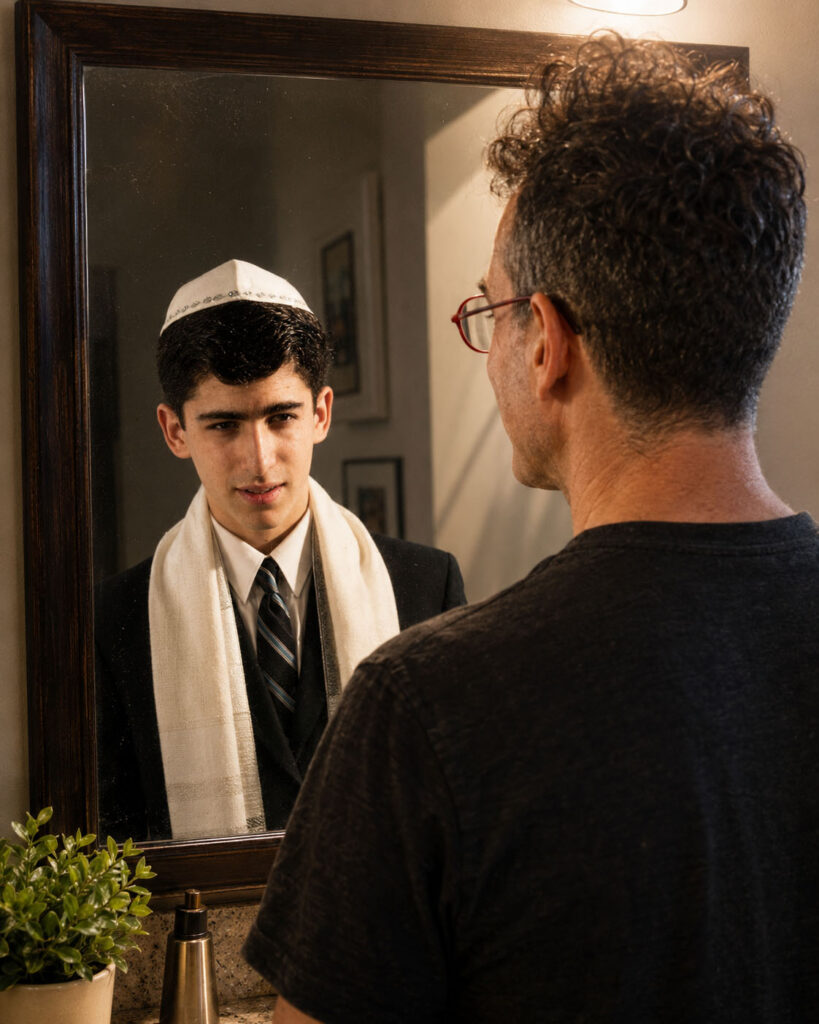
(The photo here is my current self looking at my younger self)

The very first question in the Torah comes from God, just after Adam and Eve eat from the forbidden fruit:

“Where are you?”

God isn’t asking for their location. God knows where they are.

The question is deeper:

Do they know where they are—spiritually, emotionally?

In that moment, they are hiding.

Not just behind trees—

but behind fear, shame, and confusion.

And the truth is—we’re still answering that question.

Because Adam and Eve are us.

We move through our days so quickly that we rarely take a moment in time to ask:

“Where am I?”

So maybe we begin simply—with presence. With the ability to say:

I am here.

I am here to listen.

I am here to be present.

I am here—because there is only one me.

And once we can say that, we can go further:

I am here to make a difference.

I am here to stand with you.

I am here to help make this world better.

God’s question still echoes:

“Where are you?”

Are you ready to answer?

With love and shalom,


Rabbi Zachary R. Shapiro

A Moment in Time: “I Am Here” Read More »

gschroer/Getty Images

Korach and the Mutineers – A poem for Parsha Korach

Korach — baldness, ice, hail, or frost (Numbers 16:1–18:32)

My family is a mutiny of bald people.
A long history of the sun shining on

the skin on top of our heads.
The money we spend on hats

is a rebellion. We should start
The Hair Club for Jewish Men.

Except for Reuben, the first
religious school teacher in

Syracuse, New York. They
didn’t have Photoshop in his day

so I know the picture of his
full head of Jewish hair is real.

Korach was one of the first bald people –
a Levite whose family spawned

the modern-day Cohens –
my mother’s maiden name.

The ancient priests shaved their heads
by law, so Korach’s baldness may

have been intentional. But
evolution has made it inevitable.

Our hair itself rebels like Korach
and his 250 mutineers.

The ground swallowed them up
and now all they have is

a great band name – Korach
and the Mutineers – Live at the Whiskey

Discounts for those with receding
hairlines. Refreshments provided

by the source of life itself. The show
starts at 8pm sharp.

If you’re late, you may not be seated
and the ground will swallow you whole.


Rick Lupert, a poet, songleader and graphic designer, is the author of 29 books including “God Wrestler: A Poem for Every Torah Portion.” Visit him at www.JewishPoetry.net

Korach and the Mutineers – A poem for Parsha Korach Read More »

Print Issue: What Will Bibi Do Now? | June 12, 2026

CLICK HERE FOR FULLSCREEN VERSION

Print Issue: What Will Bibi Do Now? | June 12, 2026 Read More »

Iran Deal Puts Israelis in Cognitive Dissonance with ‘Best Friend’ Trump

Israelis are in a pickle.

Most of them love Donald Trump, but now that he has signed a ceasefire deal with their nemesis Iran that isolates their country, they’re in a state of cognitive dissonance.

How does one get angry at the only U.S. president who lived up to the promise of moving the U.S. embassy to Jerusalem? One presidential candidate after another promised it– Trump was the only one who delivered.

Time after time over his two terms in office, Trump has had Israel’s back.

It’s no wonder a recent poll from JPPI among Israelis notes “exceptionally high public trust in Trump,” with “73 percent of Israelis rating Trump as a better-than-average U.S. president for Israel’s interests.”

You can imagine, then, how Israelis must feel to see their beloved Trump make a deal with their genocidal archenemies in Iran—a deal many see as capitulating to an evil regime and endangering Israel’s security.

Prime Minister Benjamin Netanyahu, who for years has called Trump “Israel’s best friend in the White House,” is in a special pickle of his own. The signed agreement with Iran ends the war on all fronts, including in Lebanon, where Israel has continued to carry out strikes.

How does Bibi end the attacks against the Iranian proxy Hezbollah if the terror group shows no inclination to reduce its own attacks? A key problem for Bibi is that Trump sees the Lebanon conflict as a sideshow that should not distract from the talks with Iran.

Speaking of talks with Iran, Israelis roll their eyes at the very idea. For the wily mullahs who will negotiate with the Americans, words are not instruments to build trust but weapons to gain an advantage. Israelis know from experience Iran can’t be trusted, no matter what it says or promises. That’s another way of saying Israelis believe their best friend Trump is getting duped.

But I would push back on that. Trump is not that easily duped.

Yes, he is impatient, impulsive and transactional. If he attacks, he likes quick, decisive action, like the 2020 assassination of Qasem Soleimani or the June 2025 bunker buster strikes on Iranian nuclear facilities as part of the Twelve-Day War.

I’m sure Trump never expected this latest war against Iran to drag out that long.

So, in his mind, he made the rational calculation that if the war continues and gas prices keep going up, he would risk losing both houses of Congress in the Fall midterms, which would sink his last two years in the White House.

Israelis may be angry, upset and disappointed with his decision, many may even feel betrayed, but they shouldn’t feel perplexed. Trump went as far as he could to support Bibi in the war against Iran, but when he saw political suicide looming, he cut his losses.

Bibi, of all people, should have a fine appreciation for the art of avoiding political suicide.

The fact that someone is my best friend doesn’t mean our interests will always align. Israel and America are close allies, but their interests will sometimes diverge. Sure, because this is Iran, it stings. It’s like seeing your best friend dating someone you hate.

Will Trump’s fling with the theocratic tyrants of Tehran last? Will he lose patience with their deceptive tactics? If his party wins in the midterms, will he feel free to “finish the job” and liberate the Iranian people to secure his legacy?

I’m no prophet.

I know that as my friend and I were walking through Jerusalem the other day, we walked past the U.S. embassy. It felt so long ago when Trump made the courageous move. It’s easy to forget the euphoria we all felt at the time. I try not to.

I also know that Trump has always had a weakness for power and for winners. That’s one reason he’s been so supportive of Israel for so long. He sees Israel as badass, a country no one should mess with.

Israel’s challenge over the next few weeks and months will be to keep that winning mystique without pissing off their “best friend ever” in the White House.

One pickle is bad enough.

Iran Deal Puts Israelis in Cognitive Dissonance with ‘Best Friend’ Trump Read More »

Ancient Crave-worthy Wisdom in Greek and Biblical Literature

Hebrew Bible literature is surely as crave-worthy
as classical literature in unecclesiastical Latin and in ancient Greek,
its semitic surfboads still secularly wave-worthy,
when knowledge of the Hebrew Bible’s ancient language is than theirs less weak.

Although translations of the Hebrew Bible, like any text
in ancient Greek and Latin, prevent them from being grave-worthy,
ignorance of the original language of all these texts should make readers just as vexed
as do their heroes for having treated some of their non-heroes as slave-worthy.


In “Ancient Wisdom:  For her latest book, the popular British scholar Mary Beard gets personal about how she fell for ancient Greece and Rome,” NYT, 5/19/26,  Sarah Ruden, reviewing Talking Classics: The Shock of the Old, by Mary Beard, writes:
If classics has a grande dame, it is the actual Dame Mary Beard, the recently retired Cambridge professor. She would likely loathe the characterization noblesse oblige, but there is some sense in it. The female knighthood is one of countless honors that have rewarded her achievements as a popularizer.
In “Talking Classics,” a wide-ranging and entertaining whence-and-whither discussion of her field, she clearly has in mind a potential worldwide classroom, but a justly skeptical one. What appeal does the subject have now? How can new generations enjoy and learn from the classics without joining ancient authorities in their glorification of imperialism and brutally divided societies — as too many acolytes in previous eras have done?
Latin and Greek are hardly going to do what in past centuries they used to: grab you by the scruff of the neck early in primary school and lock you up with them for a decade or more. Now you have to want classics. But Beard’s career, and particularly this latest book, make a case for the classics as crave-worthy — if not up front and immediately, then after the right introduction.

The parallels between the reports of the spies in Numbers 13 and Polyphemus in Homer’s Odyssey are mentioned in thetorah.com,   https://www.thetorah.com/article/the-scouts-report-from-rhetoric-to-demagoguery, where Sarah Schwartz discusses to the reference to the Nephilim by the ten scouts who warn the Israelites of the dangers of attacking the Canaanites:

Num. 13:32-33 states:

וַיֹּצִ֜יאוּ דִּבַּ֤ת הָאָ֙רֶץ֙ אֲשֶׁ֣ר תָּר֣וּ אֹתָ֔הּ אֶל־בְּנֵ֥י יִשְׂרָאֵ֖ל לֵאמֹ֑ר הָאָ֡רֶץ אֲשֶׁר֩ עָבַ֨רְנוּ בָ֜הּ לָת֣וּר אֹתָ֗הּ אֶ֣רֶץ אֹכֶ֤לֶת יוֹשְׁבֶ֙יהָ֙ הִ֔וא וְכׇל־הָעָ֛ם אֲשֶׁר־רָאִ֥ינוּ בְתוֹכָ֖הּ אַנְשֵׁ֥י מִדּֽוֹת׃
Thus they spread calumnies among the Israelites about the land they had scouted, saying, “The country that we traversed and scouted is one that devours its settlers. All the people that we saw in it are of astonishingly great size;
וְשָׁ֣ם רָאִ֗ינוּ אֶת־הַנְּפִילִ֛ים בְּנֵ֥י עֲנָ֖ק מִן־הַנְּפִלִ֑ים וַנְּהִ֤י בְעֵינֵ֙ינוּ֙ כַּֽחֲגָבִ֔ים וְכֵ֥ן הָיִ֖ינוּ בְּעֵינֵיהֶֽם׃
and we saw the Nephilim there—the Anakites are part of the Nephilim—and we looked like grasshoppers to ourselves, and so we must have looked to them.”
In place of Anakim (giants), they introduce the Nephilim, demigods, alluding to the account in Gen. 6:4:
בראשית ו:ד הַנְּפִלִים הָיוּ בָאָרֶץ בַּיָּמִים הָהֵם וְגַם אַחֲרֵי כֵן אֲשֶׁר יָבֹאוּ בְּנֵי הָאֱלֹהִים אֶל בְּנוֹת הָאָדָם וְיָלְדוּ לָהֶם הֵמָּה הַגִּבֹּרִים אֲשֶׁר מֵעוֹלָם אַנְשֵׁי הַשֵּׁם. Gen 6:4 It was then that the Nephilim appeared on earth—later too, when the divine beings cohabit with the daughters of men, who bear them offspring. They were the heroes of old, the men of renown.


My thoughts:

By using the term Nephilim, the scouts have moved into the realm of the mythological. They then go further, offering a fantastic—and ludicrous—image of the size difference between these Nephilim and a normal sized human declaring that they felt like grasshoppers and adding that that was how the Nephilim saw them. The reference in the report of the testimony of ten dissident spies to grasshoppers, an insect Leviticus allows the Israelites to consume (Lev 11:22), not only  conjures up the image of the Nephilim picking up some tiny Israelite warrior and having him as a snack, but parallels the way that the one-eyed ogre Polyphemus eats Odysseus’ companions in the Odyssey. When Numbers describes the land of Canaan as one that devours its settlers, its suggestion that the land’s inhabitants regarded the Israelites as comparable to grasshoppers, implies that this land not only echoed the area in Sicily adjacent to the volcano of Aetna, the home site of Homer’s ogroid carnivore Polyphemus, but by comparing its invaders to grasshoppers, we hear of insects whose edibility is authorized by laws of Leviticus. The comparison of the territory’s invaders to grasshoppers therefore implies that the dissident scouts thought that the land of Canaan respected the laws of Leviticus.

My son Zachary pointed out that Num. 13:33 contrasts the multiple eyes of the inhabitants of Canaan, a land that allegedly devours its inhabitants in accordance with the laws of Leviticus, with the consumption of Odysseus’ companions by the monocular ogre Polyphemus, who ignored these biblical laws. Num. 13:33 draws our attention to the fact that the settlers of Canaan had more than one eye, in contrast to Polyphemus,  when it states, “We seemed like grasshoppers in our own eyes, and we looked the same to them.” He also pointed out that Num. 22:4 states that the Moabites, facing an invasion by the Israelites, said “Now will this multitude lick up all that is round about us, as the ox licketh up the grass of the field,” implying that they recognized that the Israelite invaders restricted their diet to biblically permissible vegetarian products.


Gershon Hepner is a poet who has written over 25,000 poems on subjects ranging from music to literature, politics to Torah. He grew up in England and moved to Los Angeles in 1976. Using his varied interests and experiences, he has authored dozens of papers in medical and academic journals, and authored “Legal Friction: Law, Narrative, and Identity Politics in Biblical Israel.” He can be reached at gershonhepner@gmail.com.

Ancient Crave-worthy Wisdom in Greek and Biblical Literature Read More »

Phil Rosenthal’s Latest Children’s Book Encourages Kids to ‘Just Try It!’

For years, Phil Rosenthal has spent his career urging viewers to try something new — whether it’s an unfamiliar dish in Bangkok, a hidden neighborhood restaurant in Las Vegas or a cultural tradition halfway around the world.

Now, the creator of “Everybody Loves Raymond” and host of Netflix’s beloved travel series “Somebody Feed Phil” is bringing that same philosophy to children.

Rosenthal and his daughter, Lily Rosenthal, recently released “Just Try It! Someplace New!” the second installment in their “Phil and Lil” children’s book series. Published by Simon & Schuster, the book, which was published in March, encourages young readers to embrace new experiences, even when they seem a little scary at first.

It’s a follow-up to 2024’s “Just Try It!” a semiautobiographical story about a food-loving dad, Phil, encouraging his picky eater daughter, Lil, to try new and unfamiliar bites at a food truck festival.

“We thought, what if the ‘Just Try It’ idea was applied to different things in life?” Rosenthal told The Journal of the latest entry. “Obviously, travel is a big part of my world, and I thought, what’s the first baby step of travel? Maybe going to Grandma’s house. So, it’s ‘Just Try It! Someplace New!’”

The narrative follows a child nervous about visiting her grandmother, a relatable fear rooted in Rosenthal’s own family history. He recalled how his son once flew alone from Los Angeles to visit his grandparents in New York. “My parents were late to the airport to pick him up,” Rosenthal said with a laugh. “After one night with my parents, he was like, ‘Can I come home now?’”

Fortunately, the book tells a much gentler version of the story.

The message, Rosenthal said, extends far beyond childhood. “How many adults do we know who don’t have an open mind?” he said. “Who don’t want to try new foods even, or new places or new ideas?”

The book builds on a theme that has become Rosenthal’s personal mantra. While he may not be scaling mountains or seeking danger in remote corners of the globe, he credits curiosity and a willingness to take small risks with shaping both his career and his life. “Our biggest fear in life is the unknown,” he said. “Children are afraid to walk the first time. They fall down, but they get back up and try again. That’s everything in life.”

That outlook also inspired “Somebody Feed Phil,” which will be moving to YouTube for its forthcoming ninth season in 2027. Rosenthal jokes the haimishe culinary travel series, currently available on Netflix, was borne out of the realization that he isn’t the fearless adventurer that the late Anthony Bourdain was. “I thought maybe there’s a show for people like me who sit on the couch and watch Bourdain and go, ‘He’s amazing. I’m never doing that,’” Rosenthal said.

Yet years of travel have made him more adventurous. “I’ve gotten a little braver over the years,” he said. “Why? Because I’ve tried more things — and I didn’t die.”

The Rosenthals have already signed on for additional books in the “Phil and Lil” series. Future topics could include making friends, sharing, getting a new sibling or even boarding an airplane for the first time. “Everything in life you have to try for the first time,” Rosenthal said. “’Just try it’ is a very good attitude to have.”

Working with Lily has been one of the most rewarding parts of the project. “It was her idea,” Rosenthal said. “She called me and said, ‘You’re good with kids on the show, and kids love the show. Why don’t you do a kids’ book?’ I said, ‘Yeah, if you do it with me.’”

Discerning readers may also spot a familiar comfort food tucked into the book’s colorful illustrations, which are the work of celebrated illustrator Luke Flowers.

“Absolutely,” Rosenthal said when asked if the matzah ball soup depicted in the book was a nod to family tradition. The dish also appears on the menu at Rosenthal’s wildly popular Larchmont diner, Max and Helen’s, named after his parents.

Since opening in November 2025, the diner has become one of the hottest reservations — or rather, non-reservations — in town. Weekend wait times have stretched for hours, generating headlines and a social media frenzy. “There really were eight-hour waits,” Rosenthal said. “But I don’t want people to get the wrong idea. Nobody’s standing in line for eight hours.” Instead, guests add their names to a waitlist and receive a text when their table is ready. Rosenthal intentionally avoided a reservation system so neighborhood residents could still enjoy the restaurant. “It’s a neighborhood diner,” he said. “I would hate to have it that the neighborhood couldn’t even benefit from it.”

For those intimidated by the crowds, Rosenthal offers a simple tip: visit during off-peak hours. ”If you come in-between breakfast and lunch, and in-between lunch and dinner hours, you can walk right in,” he said.

The restaurant’s pedigree certainly helps explain its popularity. Acclaimed chef Nancy Silverton serves as executive chef, while Lily’s husband, Mason Royal, oversees the day-to-day operations. Among the offerings are Max’s fluffy eggs, inspired by his father’s favorite breakfast; a much-buzzed-about waffle with maple butter that the Los Angeles Times called the “drive-across-town dish;” and Helen’s Matzah Ball Soup, adapted from his mother’s — Lily’s grandmother’s — recipe.

Rosenthal admits Silverton improved upon the original. “It’s a very simple recipe that Nancy Silverton took and, I have to admit, made better,” he said. “Mom was not a chef, but she did make that very well.” One secret ingredient? Fresh dill — so beloved by Rosenthal’s late mother that, he joked, “we even buried her with a big sprig of dill.”

Despite juggling a hit television series, a children’s book franchise and a bustling restaurant, Rosenthal remains characteristically grateful. “The secret is just do as much as you can with the time you have,” he said. It’s a simple philosophy that sounds remarkably similar to the message at the heart of his and his daughter’s newest book: Be curious; take the first step; and when life offers something unfamiliar, “Just try it!”

Phil Rosenthal’s Latest Children’s Book Encourages Kids to ‘Just Try It!’ Read More »