Last week I spent almost two hours on the phone with my uncle Sonny. He’s my dad’s younger brother, born 16 years after him. Thanks to an even older brother, Sonny was already an uncle to two nephews before he was born. He wasn’t exactly a planned child, but taking into consideration everything I’ve learned from him, I’m grateful for the accident.
When I was 14 Sonny hipped me to John Lee Hooker’s “Endless Boogie” and “The Revolution Will Not Be Televised,” by Gil Scott-Heron. One afternoon he came downstairs to my bedroom with a copy of “Luther’s Blues” by bluesman Luther Allison. He was the cool uncle who smoked pot with me, who became my lifelong mentor and champion. The two of us have been debating the nature of God, reality, and the sagas of the Jewish people for decades.
No matter what absolutes I carry (ridiculous or otherwise, and sometimes fiercely defend), Sonny just listens and asks questions.
On our phone call I brought up a question that’s taken on greater urgency of late: how has a people of roughly 15 million, in a world of 8 billion, exerted such an outsized influence across so many fields? The extraordinary attention the world has once again fixed on Jews has made me wonder anew about the strange disproportion between our tiny numbers and our presence in the human story.
For me it brings up another question. Could Jewish exceptionalism, by which I mean distinctiveness, not superiority, have something to do with a people that’s spent nearly 4,000 years bringing what can never be fully known into the ordinary disciplines of life?
Judaism doesn’t have a monopoly on connecting the infinite and the everyday. Every mystical tradition builds that bridge somewhere. The Sufi has his dhikr, the Zen monk chops wood and carries water. What’s unique in Judaism is where this leads. Many traditions treat ordinary life as a ladder toward transcendence, something to climb and with enough practice, leave the ordinary behind. Halacha (Jewish law) is different. The infinite is drawn down into things as mundane as which shoe we tie first. The Hassidic masters gave this a name: dira b’tachtonim, a dwelling in the lowest places. God, they taught, doesn’t want us to leave the world, He wants us to build a place for His essence to reside.
My interest lies in the civilizational experience itself: 4,000 years, roughly half of them spent in exile, of bringing the transcendent into continual contact with everyday life.
My uncle listened patiently as I tried to explain my idea. He then posed a question of his own.
“What would be the point of spending so much time dealing with what can never be known?”
What follows is my attempt at an answer.
I began with a metaphor about songwriting. How my best songs are a product of something both tangible and ephemeral.
I’ve spent most of my life writing songs. Lots of them. I’ve released 18 solo albums, three live albums, and five albums of children’s music. There are those who imagine songwriting as some hazy, freewheeling process. My experience, which began when I was 11 and has now continued for more than five decades, has been different.
Many of things I compose begin in uncertainty: a fragment of melody, a few chords discovered almost by accident. Maybe a phrase I overheard on a train or a girl’s face I recalled from my kindergarten class. The song, at this point, hangs somewhere in the ether. But eventually it finds its shape within a rigid architecture of harmony, rhythm and balance. It’s the tangible structure that makes creative freedom possible. And it’s the mystery, that unknowingness, which allows the song to penetrate a listener’s subconscious.
Then I moved into the realm of theology. How the Oneness of God, the inexplicable unity of God, is such a central element of Jewish faith.
Aside from the well-known idea that there is only one God and not 10, 12, or 12,000 gods, the Sh’ma, Judaism’s central prayer, points toward something even more radical: the absolute unity of God. Elsewhere in the Torah this idea is expressed as Ain Od Milvado. “There is none beside Him.”
This goes further than saying God is invisible or all-powerful, further even than saying God is inconceivable, which is itself another attempt at a fixed definition. The impossibility of grasping an understanding of God may be why idolatry has always been so seductive. Human beings seem incapable of resisting the urge to reduce Divinity to something manageable. God will always stay an abstraction. Even so, Jewish practice insists on merging the abstraction back into ordinary life.
Jews are commanded to observe chukim, a category of commandments whose logic remains beyond the ken of the human mind. Shatnez and the red heifer are classic examples, as are certain aspects of the laws of kashrut. These aren’t irrational laws, not exactly. They’re “supra-rational” laws, beyond human understanding. The chukim require us to submit to an intelligence and a will unimaginably beyond our own.
I’ve heard people tell me that keeping kosher is no longer necessary. “We have refrigeration,” they’ll say. “We have antibiotics. Peter get in the car, let’s hit that rib joint!”
Trying to rationalize the laws of kashrut misses the point. The Torah never prohibited pork for reasons of health. A chok is observed precisely because it exceeds our understanding. Its transformative power comes from bringing that encounter into something as ordinary as an afternoon snack.
A “stiff-necked people,” Jews have inherited a tradition that reveres argument as well as agreement.
The Talmud is full of disputes that remain unresolved and are still considered sacred. Minority opinions survive for centuries as a crucial part of the tradition, whether or not they persuaded the majority. I’ve often thought about how extraordinary this is. A civilization in which one of the prized intellectual achievements is fruitful argumentation. It creates a system of learning that teaches its children to question instead of simply memorizing answers. (Personal note: more than once as a kid I was asked to leave a classroom, not because I was disruptive, but because I’d asked questions the teacher couldn’t answer. And this happened most often at Hebrew school. Go figure.)
I’m interested too, in what lies beyond the theology itself, in what this way of being does to the people formed by it. How could that not shape their habits of mind if for 4,000 years, generation after generation has been trained to encounter mystery through mundane acts like eating, studying and doing the work of raising families?
I’ve been wondering whether this has any bearing on why so many Jews found themselves drawn to places where mystery and pragmatism meet. I think of people like Einstein, the Rambam, and the Alter Rebbe, each exploring in radically different ways the limits of human understanding. While none of this can be proved empirically, it makes me curious as to whether a civilization that has spent 4,000 years bringing the transcendent into continual contact with everyday life might not have trained itself for the frontiers of human thought.
Shabbat is a day I’ve observed for almost four decades. Because of that commitment, I’ve turned down television appearances, concert tours, and opportunities that many musicians spend their entire careers hoping for. One day a week I stop trying to shape the world. The phone stays off. The piano and the art easel wait. What’s left is a walk, a meal with people I love, an afternoon with a book. It’s a return, in a literal sense, to reality.
What does it mean that there exists an ancient tradition in which people voluntarily disconnect from technology every week, one that insists that their encounter with reality needs no machine as an intermediary? And what can humanity learn from a people who have been practicing Shabbat for thousands of years?
“Why spend so much time with what is unknowable,” my uncle Sonny asked on our phone call.
Maybe it’s living in the presence of an unsolvable mystery, and encountering it through the recurring practices of life that forms a particular kind of mind. And what kind of people has that mind produced? I think it’s enough to say that Jewish creativity and its contributions to humankind speak for themselves.
We live in an age with zero patience for uncertainty. We have answers for everything, almost magically. And somehow, we still seem to know nothing about what it means to be here.
I’m pretty sure my uncle Sonny would appreciate that.
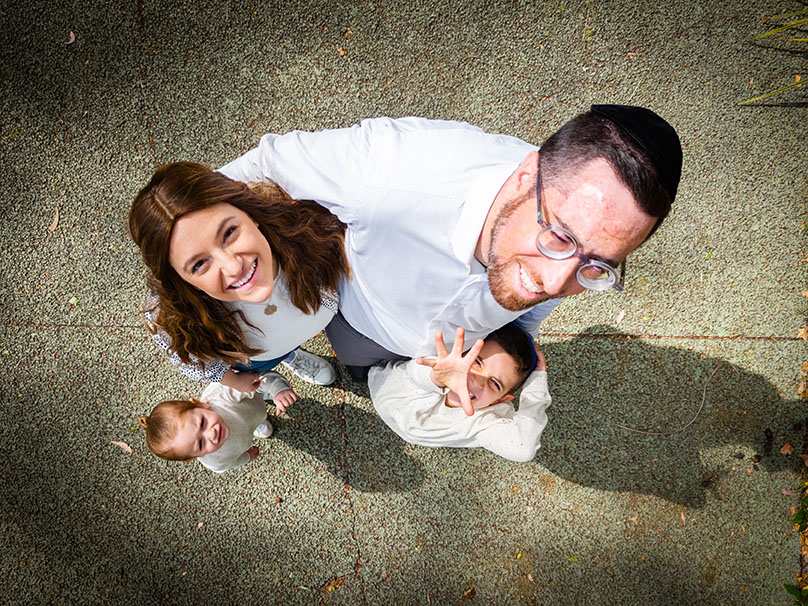
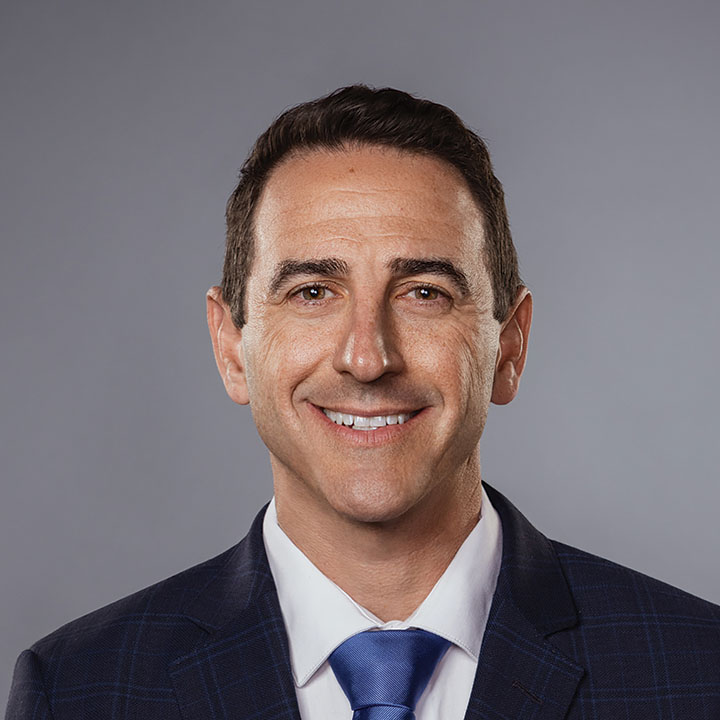
Peter Himmelman is a Grammy and Emmy nominated performer, songwriter, film composer, visual artist and award-winning author.