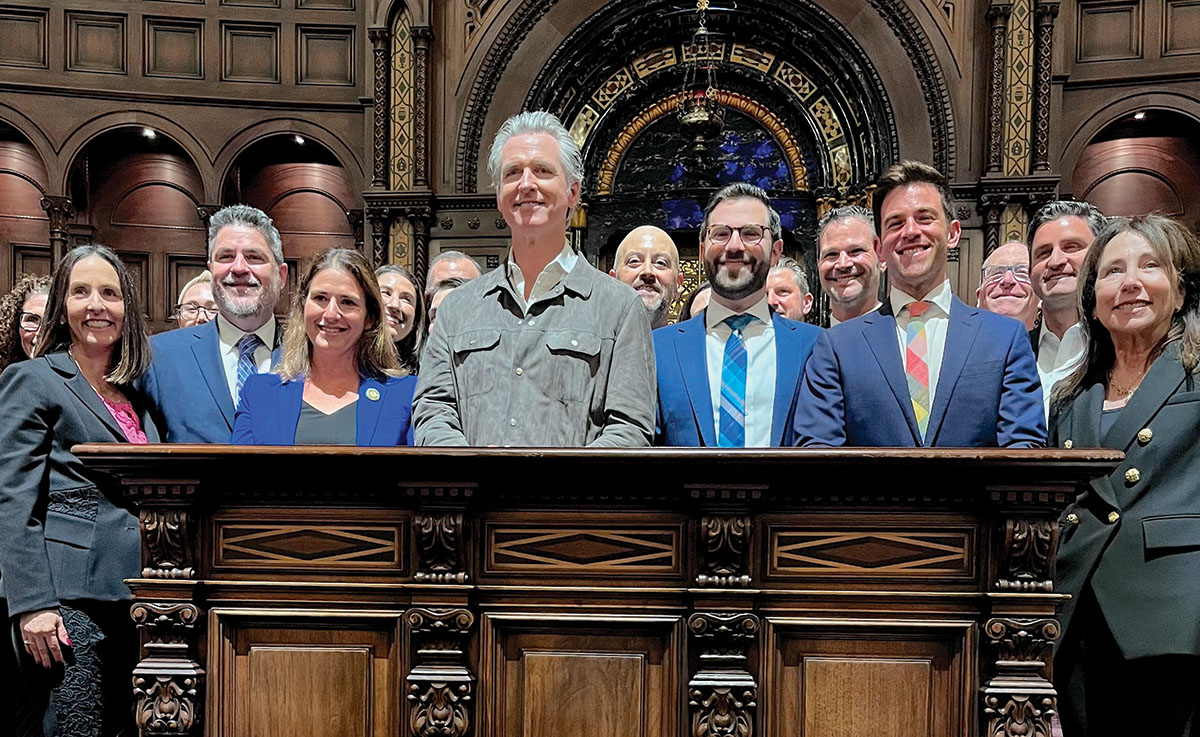
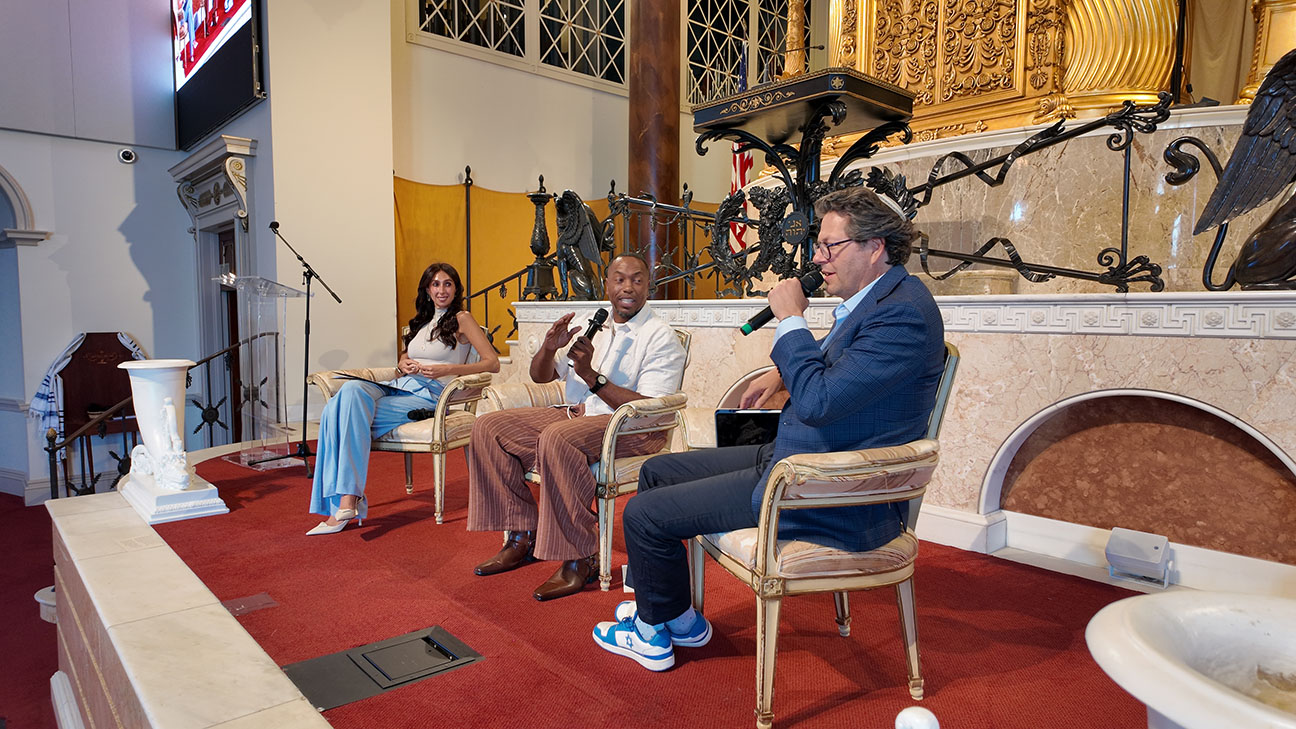
Last week I joined the 2026 Atlanta Summit for Black Pastors and Rabbis — three days of Black and Jewish faith leaders sitting together, telling each other our stories, learning from one another, having challenging conversations, reflecting on the past and making a plan for a shared future.
At the historic Ebenezer Baptist Church, right across the street from the graves of the Rev. Dr. Martin Luther King, Jr., and Coretta Scott King, we heard Dr. Susannah Heschel tell a story about rabbis gathering to sing “We Shall Overcome” in Hebrew shortly after Dr. King was murdered.
We heard Ambassador Andrew Young tell the story of a plan to bring 5,000 Black pastors to Israel in 1967. Plane tickets had been purchased and the plans were in place when the Six Day War erupted, canceling the trip.
And we heard newer stories too, about struggles happening right now, the anxieties we are feeling in both of our communities.
We had hard conversations about Israel and other “wedge issues” and reflected on the challenges of this moment from leaders like Van Jones, Amanda Berman, Rabbi Amb. David Saperstein, Amb. Deborah Lipstadt and Sen. Rev. Raphael Warnock (D-Ga.).
One of the speakers, scholar and writer Eric Ward, delivered an outstanding teaching that he tied powerfully to Ki Tavo, the Torah portion for that week.
That parasha opens with a strange requirement. Before a farmer can celebrate the harvest — before he even tastes the first fruits — he has to tell a story, one that is included in our Passover seders. Arami oved avi, it begins: “My father was a wandering Aramean.” The farmer then recites the whole arc — from slavery, to our cries for help, to our deliverance at the sea — all before he’s allowed to eat. You cannot receive the blessing without first remembering and reflecting on where you came from.
But why interrupt a harvest ritual with 400 years of history? Because the Torah isn’t interested in our gratitude alone. The harvest is the gateway to something much more powerful and profound. The abundance we are literally holding in our hands is supposed to remind us that once our hands held nothing. We were wanderers. We were slaves. Now we have a homeland and a place to harvest. And then comes the most important part:
“And you shall rejoice, together with the Levite and the stranger in your midst, all the bounty that the ETERNAL your God has bestowed upon you and your household.” (Deuteronomy 26:11)
This is how Eric Ward understands this verse: “Memory creates obligation.” It helps us understand who we are and what we’re required to do now.
Our shared stories of hatred, humiliation, oppression and slavery obligate us to show up for one another. That obligation matters most right now, when anti-Black racism persists, economic insecurity threatens, and antisemitism and antizionism continue to rise.
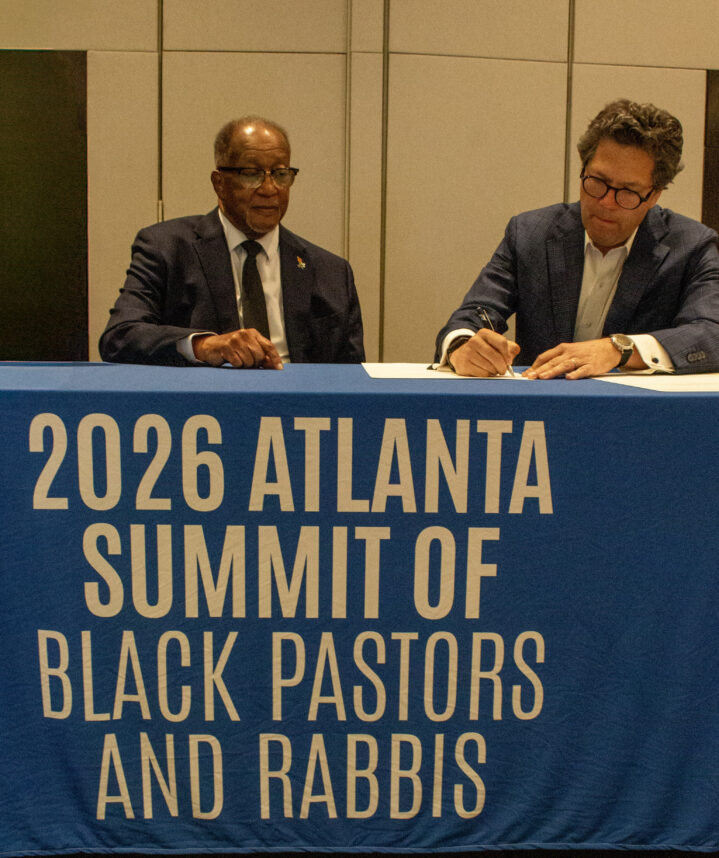
Our gathering concluded with the signing of a document entitled: “Renewing the Black/Jewish Alliance: Our Sacred Covenant.” I was privileged to assist the legendary Civil Rights leader, Dr. Ben Chavis, in drafting the document, in partnership with my colleague and frequent visitor to our congregation, Bishop Michael Fisher of Greater Zion Church Family in Compton. As this document understands it: “Biblical covenant unites remembrance and responsibility. Memory requires moral action.”
That’s exactly what the first fruits ceremony is doing. Our historical experience becomes a standing instruction: care for the stranger, the widow, the orphan, whoever is vulnerable, because you know what it was to be in that place.
At the close of the summit, every participant signed that covenant, with Dr. Chavis sitting beside us as we did. It is not an agreement to see every issue the same way: “Sacred covenant does require that disagreement never become an excuse for abandonment, contempt, collective blame, or dehumanization.” Our pledge is simple and deep: we will not abandon one another.
As I reflect on that week, I carry with me a sense of deep gratitude: for a tradition that gives our lives immeasurable meaning; for friends who show up for us — the many Black pastors and other leaders who traveled to Atlanta, leaders who understand in the deepest way the obligation we have toward one another, leaders who understand that memory requires moral action.
I feel quite confident that our Sacred Covenant will be more than just words — because of the work we’ve already done together, and because of the commitments we’ve made to each other. I know we will carry this work forward, because memory creates obligation.
Rabbi Yoshi Zweiback is the senior rabbi at Stephen Wise Temple in Los Angeles.