fbpx

September 2, 2026

Deuteronomy’s Directions for America

For most Americans, Deuteronomy is an unlikely book to read as the nation continues to commemorate America’s 250th anniversary. It should be toward the top of the list. 

As anyone who has been to synagogue these past couple of months for the public reading of the last of the Five Books of Moses can tell you, the great Jewish leader’s farewell address is devoted largely to a question that every free people eventually confront: What do you do with liberty once you have obtained it?

No wonder, then, that the Puritan leader John Winthrop, in establishing the Massachusetts Bay Colony in 1630, instructed his community to recall the “exhortation of Moses, that faithful servant of the Lord, in his last farewell to Israel, Deut. 30. Beloved there is now set before us life and good, Death and evil, in that we are commanded this day to love the Lord our God, and to love one another, to walk in his ways and to keep his Commandments … that we may live and be multiplied, and that the Lord our God may bless us in the land whither we go to possess it. But if our hearts shall turn away, so that we will not obey, but shall be seduced, and worship and serve other Gods, our pleasure and profits, and serve them; it is propounded unto us this day, we shall surely perish out of the good land whither we pass over this vast sea to possess it; Therefore let us choose life that we, and our seed may live, by obeying His voice and cleaving to Him, for He is our life and our prosperity.”

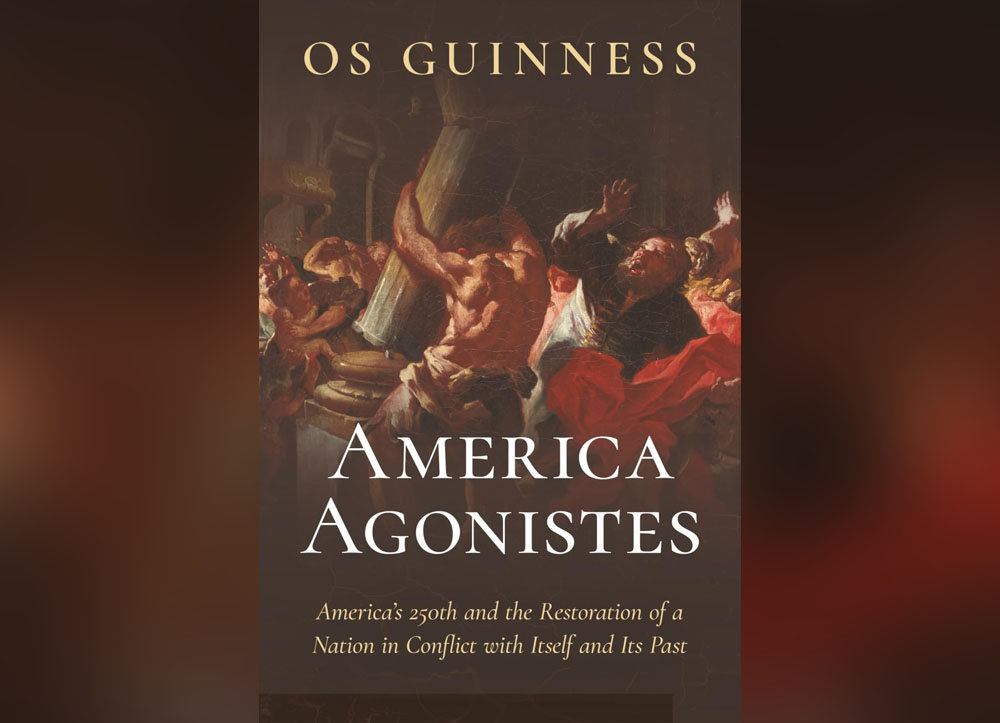
Remembering how Deuteronomy’s directions have served as a clarion call for our country’s character sits at the heart of Os Guinness’ “American Agonistes,” a meditation on the sources and future of American freedom. 

Guinness argues that Americans have never fully appreciated how deeply their understanding of independence was shaped by the Hebrew Bible in general and the themes of Deuteronomy in particular. 

While historians tend to tell the story of American liberty through the prism of Athens, Rome, and the Enlightenment, Guinness asks us to look further back — to the border of the Jordan River. The biblical idea of covenant, lyrically and lovingly articulated in Moses’ last words, supplied a distinctive way of thinking about freedom. Human beings, Moses reminded the Israelites, are capable of choosing. Their decisions matter. Their freedom creates obligations. A covenant makes a people responsible for one another. “Socrates was right,” Guiness writes, “the unexamined life is not worth living … But the Hebrews were right too: the uninstructed life is not worth living, and the prize this wisdom offers is a good life and a good society.”

Of course, Exodus has received some credit as the great story of independence, serving as a source of America’s fight for freedom from Britain. As President Calvin Coolidge put it in 1925, “It required no great stretch of logical processes to demonstrate that the children of Israel, making bricks without straw in Egypt, had their modern counterpart in the people of the colonies, enduring the imposition of taxation without representation.”

But Deuteronomy designs the next steps, asking what happens after liberation. Moses understood that the dangers ahead in the Promised Land were different from the dangers they had left behind. In Egypt, the problem was oppression. In the wilderness, it was survival. In the land, the challenge for the Israelites would be remembering who they were and what their role was as a society.

The land itself was an inheritance, a great privilege coming with responsibility on the part of both the collective and the individual. While “You are a people consecrated to the Lord your God” (Deuteronomy 14:2) is a communal charge, it is every woman and man who are told “You shall love the stranger, for you were strangers in the land of Egypt” (Deuteronomy 10:19). The treatment of those suffering though trying times becomes a test of the character of the society.

Freedom, in Deuteronomy, is therefore a political and moral project. As Guinness elaborates: “Covenantal citizenship … demands responsibility, initiative and the confident engagement of every citizen in the public affairs of the community and nation. Translated into American terms, every American is responsible for the American Republic, and the condition of the American Republic is the health of the relationships of American citizens at large. Like the Hebrew Republic, the American Republic should always be cherished with the strength of liberty, loyalty and love.”

That is a strikingly different conception of citizenship from the one that dominates so much of contemporary political life. The citizen is not simply someone who possesses rights and expects government to protect them. She is a participant in the fate of the republic.

Deuteronomy makes the same point repeatedly, and it does so through remembrance. “Take care and watch yourselves scrupulously, lest you forget the things that you saw with your own eyes” (Deuteronomy 4:9). Later, Moses warns, “Take care lest you forget the Lord your God” (Deuteronomy 8:11). The Israelites are entering a land of abundance, and Moses understands that abundance itself can become a danger. “When you have eaten your fill, and have built fine houses to live in … and your silver and gold have increased … beware lest your heart grow haughty” (Deuteronomy 8:12–14).

As Guinness puts it: “The truth is that freedom is always the greatest enemy of freedom. Forgetting is a more dangerous cause of decline than external foes. Ease and prosperity are harder on enduring freedom and responsibility than crisis and war.” 

In our age, in which previously unimaginable technology is at our fingertips, deaths of despair and loneliness continue to plague our country (though social media companies would claim we are more connected than ever) and radicals on both left and right offer ahistorical articulations of our country’s ethos. “Our pleasure and profits,” to cite Winthrop, have clouded our sense of purpose. What Guiness calls a “cultural climate change” has resulted in faith being marginalized, truth relativized, relationships fraying and trust — the social foundation of freedom — collapsing. 

Deuteronomy’s recipe for national renewal is therefore more urgent than ever as we seek to remember the revolution and revelations that came before us. 

We should remember the generations who built the country, fought its wars, expanded its freedoms and sacrificed for institutions they would never live to see fully developed. 

We should remember the religious and moral traditions that shaped American ideas about human dignity and equality. 

We should remember that the American experiment was never simply an exercise in individual autonomy — it was and is a project in self-government, a project that asks our soul to choose soundly.

At a moment in which antisemitism is finding a constantly-growing audience in parts of American society, there is something particularly perverse about forgetting how deeply Jewish ideas helped shape the country in which that Jew-hatred now appears.

“I have put before you life and death, blessing and curse. Choose life” (Deuteronomy 30:19). In this year of national reflection, Moses’ words beckon, asking us to consider: What have we inherited? What did it cost? What are we doing to preserve and protect it? What are we teaching our children about the meaning of freedom? Will they receive from us a country whose citizens understand that liberty requires character, gratitude and responsibility?

Moses’ speech was addressed to people standing on the threshold of a new chapter. The American story is similarly turning a new page. 

The Israelites had been given their freedom. Now they had to learn how to live with it and how to choose.

So do we.


Rabbi Dr. Stuart Halpern is Senior Adviser to the Provost of Yeshiva University and Deputy Director of Y.U.’s Straus Center for Torah and Western Thought. His books include the newly released “Jewish Roots of American Liberty,” “The Promise of Liberty: A Passover Haggada,” “Esther in America,” “Gleanings: Reflections on Ruth” and “Proclaim Liberty Throughout the Land: The Hebrew Bible in the United States.” 

Deuteronomy’s Directions for America Read More »

A New Borscht Belt?

On June 28, somewhere over the Atlantic, I celebrated the 100th birthday of the 2,000-year-old man by watching a documentary about him, made when he was 99. Of course, I am talking about Mel Brooks.

“Robin Hood: Men in Tights” was the first Mel Brooks movie I ever saw, and I have loved Brooks for as long as I can remember. In retrospect, I sometimes wonder if Rabbi Tuckman, the traveling rabbi in the movie, was the rabbinic voice in my head all along. The speed, the irreverence, the willingness to turn sacred cows into chopped liver. Brooks had a way of making almost anything, especially the things we were told to take seriously, fair game for a joke.

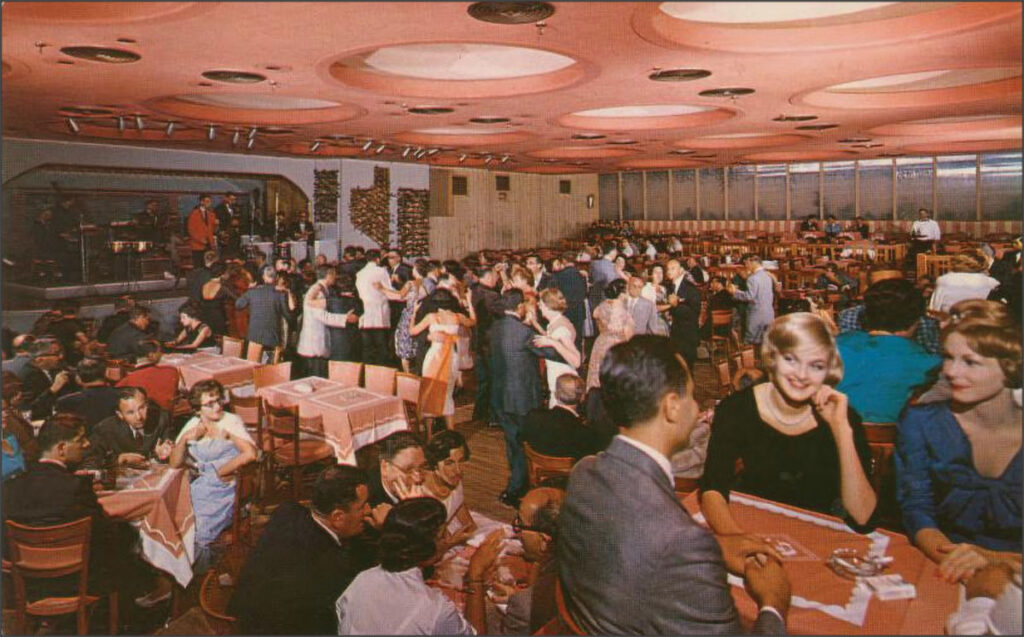
Brooks came up in the Borscht Belt. He worked the Catskills as a drummer and comic, eventually becoming a tummler, part social director and part entertainer, at Grossinger’s before Sid Caesar hired him in 1949. He was hardly alone. The resorts became one of the great proving grounds of American comedy.

The Borscht Belt became what it was in large part because Jews were excluded from much of the vacation world around them. Hotels advertised themselves as places where Jews were not welcome, so Jews built their own. The Catskills developed into miniature Jewish societies, places dense enough that accents, anxieties, humor, food, references and assumptions no longer needed explanation.

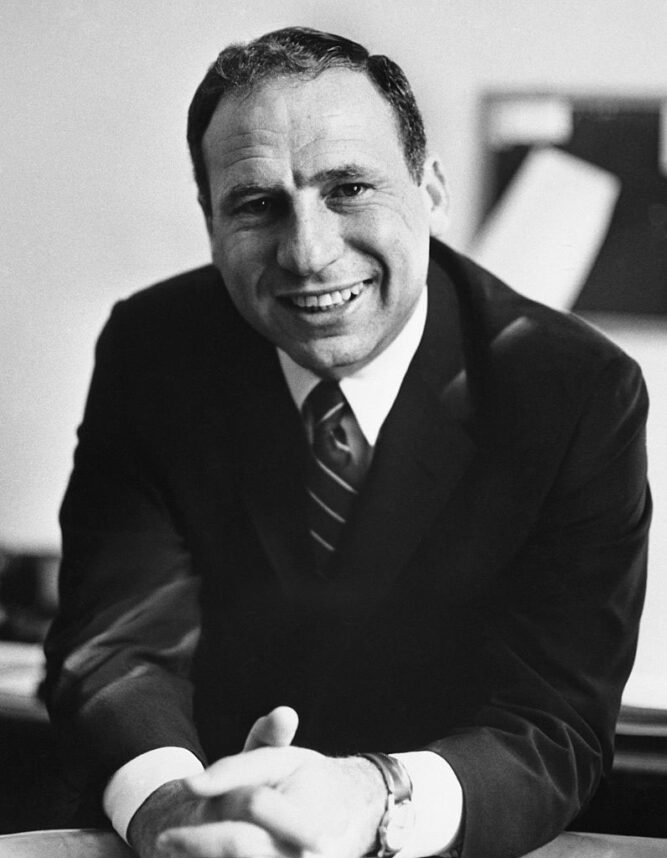
Comedian Mel Brooks. Bettman/Getty Images

Brooks remembered the Borscht Belt as the place where he learned his craft. “The audiences were very tough,” he wrote. “They didn’t give it away. When you got a laugh, you really earned it.” Being Jewish did not get you the laugh. You still had to be funny. 

Brooks learned that lesson early. His first feature began life as “Springtime for Hitler.” When Joseph E. Levine agreed to help finance it, he told Brooks that Jewish movie-house owners would never put that title on their marquees. Brooks wanted the movie distributed, so he changed the title to “The Producers.” He did not change the joke. He knew the difference between getting through the door and letting the person at the door decide what you make.

Eventually, Jews could stay at the other hotels. The doors opened much more widely than the generation that built the Borscht Belt could have imagined. Jews entered universities and professions that had once limited their access. They moved through Hollywood, publishing, the arts, business and public life. The talent formed in places like the Catskills did not remain there. It moved outward and flourished in American culture.

American Jews did not merely survive here; we flourished. The American promise that inherited difference did not have to determine the possibilities of one’s life was revolutionary for a people accustomed to societies in which being Jewish could do exactly that. Jews became profoundly American while remaining recognizably Jewish. We helped make the country, and the country remade us.

But because exclusion had helped create the dense Jewish world of the Catskills, we came to treat that density as a temporary response to exclusion. Once the walls fell, the spaces behind them seemed less necessary. We confused the circumstances that produced the density with what that density made possible.

Acceptance also began to feel less like a historical achievement and more like a settled fact. America became remarkably comfortable with Jewishness as religion, ethnicity, memory and public identity. America was home. Israel could be loved, supported, visited, worried over and fought about from a distance without calling our Americanness into question. But acceptance, however genuine, is still something somebody else does to you.

Today, Jewish and especially Israeli artists are facing exclusion unseen in half a century. Musician Noga Erez has described festival and media appearances disappearing because she is Israeli. PEN America recently interviewed more than 30 Israeli and Jewish writers and literary professionals who described cancelations, disinvitations, new barriers to publication and pressure around the Jewish or Israeli content of their work. American cultural life has not closed itself entirely to Jews. But admission has again become conditional in places where many of us had convinced ourselves that the question had been settled.

We should want the doors open, and when exclusion is discriminatory, we should fight it. But even acceptance at its best does not become something a minority permanently owns.

The first time we built Jewish worlds that dense, we did it largely because we had little choice. Now we do. If a festival decides it does not want an Israeli singer, we can object and fight to reopen the door. But we can also build another stage, back the artist, find the audience and decide for ourselves whether the result is worth a damn.

That is not taking our toys and going home. It is closer to: to hell with you, we are building anyway. And you are invited. The point is not to retreat from the wider culture. It is to stop making somebody else’s invitation the condition on which Jewish cultural life depends.

Building another stage means more than finding a substitute venue. The Borscht Belt created an entire Jewish world for adults without pretending to be an educational intervention. People went to Grossinger’s on vacation. They swam, flirted, complained, watched shows, fought with their families, and ate too much. Jewishness was powerful partly because it did not have to keep insisting on its own importance. The point is not to recreate that world. It is to recreate the conditions that allowed great culture to emerge from it, so that something new can emerge from ours: recognizably Jewish, confident in its own references and good enough to travel.

We now have an example of that on a much larger scale. Israel is a Hebrew-speaking Jewish society of millions in which Jewishness is not a special feature added to the surrounding culture. It is the environment. A comedian can make a joke without first explaining the Jewish world that makes the joke possible. A musician can fill a song with Hebrew, religion, history and politics without first translating all of it for an outside audience. 

Israeli comedian and musician Tamir Bar’s recent song “College” begins with the life he would rather be worrying about: taking his son to the park, being a good husband, discovering that the milk has run out. Instead, as far as the world is concerned, his problem is that he is Jewish. Then he goes on living. He watches FC Barcelona. He listens to Roger Waters even though, as he puts it, Waters boycotts him. In London, he eats kebab and pretends to be surprised that the British have somehow discovered spices.

The refrain is ya Amalek, ani f—ing chai, “Amalek, I’m f—ing alive.” By the end, even Amalek has become Amaleki-beki, something closer to baby talk than a battle cry. A reference as heavy as Amalek is not placed behind glass. Bar can play with it, deform it, make it ridiculous. He doesn’t need to explain the reference before he can use it because the audience is already in the conversation.

In Brooks’ hands, “Hitler” became “The Producers.” He did not need Jewish history to become less terrifying before he could turn Hitler into material for comedy. He came from a culture confident enough in its own references to do more with them than preserve them.

Exclusion is a pathetic basis for a civilization. Jewish institutions should not become emergency shelters for artists rejected elsewhere. An Israeli novelist is not good because somebody refused to publish her. A mediocre Zionist play does not become less mediocre because the playwright was treated unfairly. If renewed exclusion teaches us only to become more protective of Jewish work, we will have learned the wrong lesson from the original Borscht Belt.

I keep kosher. Walk me into a grocery store and the first question I have about a babka is whether I can eat it. If there is only one kosher babka on the shelf, there is a decent chance I am buying it whether or not it is particularly good. Kashrut has already done most of the choosing for me. Put me in a kosher bakery where every babka is kosher, however, and the calculation changes. I no longer have to congratulate the babka for being kosher. Now I can ask the question I really care about: which babka is actually good?

I do not want institutions whose principal standard is that the work is Jewish and its creator deserves our solidarity. I certainly do not want a Jewish stage where affirmation earns applause the work itself has not earned. I want enough Jewish cultural density that Jewishness can become the condition rather than the achievement. Is the joke funny? Is the novel good? Does the music surprise me? Does the argument hold? Is there anything here another Jew might actually want 50 years from now?

Mel Brooks did not stay at Grossinger’s. The Borscht Belt gave him somewhere to become Mel Brooks, and then he walked straight into American culture and helped transform it. Hollywood did not make the Catskills worthwhile after the fact.

Ishay Ribo came from Israel to Madison Square Garden with music that is unmistakably Hebrew, Jewish and religious. About 15,000 people came in 2023, and he returned the following year. He did not make the music less Jewish before bringing it to New York.

Israeli singer Ishay Ribo performs during ‘March For Israel’ at the National Mall on November 14, 2023 in Washington, DC. (Photo by Noam Galai/Getty Images)

This summer, Zusha traveled the other way. The band emerged from New York’s Jewish musical world and played three sold-out shows at the Barby in Tel Aviv. They were not bringing Israelis an imitation of Israeli music. They were bringing something formed here and discovering that Jews there could hear themselves in it.

A Jewish cultural world large enough to be interesting should contain different politics, religious commitments, aesthetics, arguments, and tastes. Density does not eliminate disagreement. It gives disagreement somewhere to happen.

The first Borscht Belt was built under conditions nobody should want to recreate. Exclusion pushed Jews together, and something extraordinarily generative emerged from that proximity. Then America opened, and we walked through the doors, as we should have.

We can fight to keep those doors open and still build Jewish worlds thick enough to create from within them. The mistake was not walking through the doors. It was assuming that once they opened, we no longer needed the room behind us. 


Rabbi Amitai Fraiman is founding director of the Z3 Project.

A New Borscht Belt? Read More »

Judaism as a Covenant for the Ages

In Parsha Nitzavim, which is always read on the Shabbat before Rosh Hashanah, the Torah tells us that God was making the covenant not just with those “who are standing here with us this day” but also “with those who are not with us here this day.”  Commentators have interpreted those who are “not with us” to refer to the descendants of those originally present. In other words, the covenant God made with the Israelites was intended for all future generations. 

Although the intent of the Torah seems clear, our current reality looks very different from the original plan. Current surveys repeatedly show that outside of Orthodox Jews, American Jews are not especially interested in practicing a version of Judaism that mirrors, even to some degree, the covenantal partnership that forms the basis for a meaningful Jewish practice. The data is clear that for religiously liberal Jews, the concept of divine command is not especially relevant and although they are drawn to the cultural aspects of Judaism, ritual observance is relatively low. Also, a growing percentage of American Jews are unaffiliated with Jewish organizations and institutions.  Although reports of a surge in Jewish practice followed Oct. 7, 2023, there has since been a measurable slippage of this trend. 

I worry about these trends among non-Orthodox Jews.  We need more conversations recognizing that the same culture many Jews still claim to love, and in which they continue to take great pride, is steeped in the practice of Jewish tradition and religious observance. 

A few years back I wrote “Remix Judaism: Preserving Tradition in a Diverse World,” which I intended as a guidebook for non-Orthodox parents raising Jewish children. My primary goal was to show why observance of unique Jewish practices must be prioritized for religiously liberal Jews raising families, even if the nature of their practice will, realistically, differ from more traditionally observant Jews. 

For Judaism to thrive and be transmissible in religiously liberal communities, Jews must develop stronger religious cultural norms of observance — a once a year Passover seder and candle lighting during Hanukkah are insufficient. To be transmissible, the norms of Jewish tradition must be celebrated with frequency, consistency, and a sense of joy. Given the realities of our current time, we are more in need than ever of the depth, wisdom, and joy that Jewish tradition offers. 

“Remix Judaism” launched a few weeks before the national COVID lockdown, and I spent the following two years speaking on Zoom to roughly 200 institutions and synagogues. My audience was roughly split between Reform and Conservative Jews. Virtually all who attended were involved grandparents who wanted to see their grandchildren raised with more Judaism.  I rarely saw younger Jews in my audience – except for Jews by choice – a fact that often surfaced in the questions following my presentation.

Although I was gratified that the book I had intended as a guidebook for parents became prized by older Jews actively involved in raising their grandchildren, I still find it disappointing that the people raising the youngest generations of Jews rarely surfaced on my screen.  After all, they are the ones who most need to hear my message. 

All available data shows that today non-Orthodox Jewish parents do not necessarily consider instilling Jewish tradition in their children as the top — or even one of the top — priorities. This does not mean they do not care about their Jewish identities. Realistically, though, they face an endless set of demands on their time in a world that contains more parenting challenges than ever before.  And while the years go by quickly, the days are long and often hard. 

Parsha Nitzavim contains a critical message for Jewish parents as well as for the entire Jewish organizational world. Although Jewish learning is more accessible today than ever before, the challenges facing American Jews are also more complex than in the prior decades. If you think of family life as a pie containing many slices, the top goal for Jewish institutions and organizations should be how to encourage more Jewish parents to make the Jewish piece of their family pie larger and more meaningful.  The covenant our ancestors made with God demands of us nothing less.


Roberta Rosenthal Kwall is a law professor, author and Jewish educator with a focus on American Judaism. Her latest book is “Polarized: Why American Jews are Divided and What to do About It” (Bloomsbury Press).

Judaism as a Covenant for the Ages Read More »

A Summit to Remember

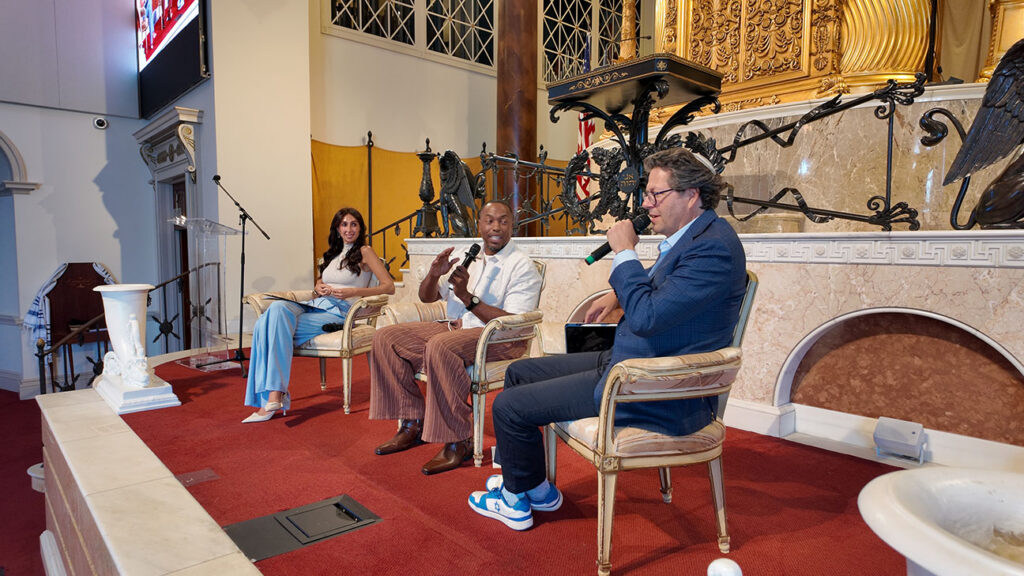
Last week I joined the 2026 Atlanta Summit for Black Pastors and Rabbis — three days of Black and Jewish faith leaders sitting together, telling each other our stories, learning from one another, having challenging conversations, reflecting on the past and making a plan for a shared future.

At the historic Ebenezer Baptist Church, right across the street from the graves of the Rev. Dr. Martin Luther King, Jr., and Coretta Scott King, we heard Dr. Susannah Heschel tell a story about rabbis gathering to sing “We Shall Overcome” in Hebrew shortly after Dr. King was murdered.

We heard Ambassador Andrew Young tell the story of a plan to bring 5,000 Black pastors to Israel in 1967. Plane tickets had been purchased and the plans were in place when the Six Day War erupted, canceling the trip.

And we heard newer stories too, about struggles happening right now, the anxieties we are feeling in both of our communities.

We had hard conversations about Israel and other “wedge issues” and reflected on the challenges of this moment from leaders like Van Jones, Amanda Berman, Rabbi Amb. David Saperstein, Amb. Deborah Lipstadt and Sen. Rev. Raphael Warnock (D-Ga.).

One of the speakers, scholar and writer Eric Ward, delivered an outstanding teaching that he tied powerfully to Ki Tavo, the Torah portion for that week.

That parasha opens with a strange requirement. Before a farmer can celebrate the harvest — before he even tastes the first fruits — he has to tell a story, one that is included in our Passover seders. Arami oved avi, it begins: “My father was a wandering Aramean.” The farmer then recites the whole arc — from slavery, to our cries for help, to our deliverance at the sea — all before he’s allowed to eat. You cannot receive the blessing without first remembering and reflecting on where you came from.

But why interrupt a harvest ritual with 400 years of history? Because the Torah isn’t interested in our gratitude alone. The harvest is the gateway to something much more powerful and profound. The abundance we are literally holding in our hands is supposed to remind us that once our hands held nothing. We were wanderers. We were slaves. Now we have a homeland and a place to harvest. And then comes the most important part:

“And you shall rejoice, together with the Levite and the stranger in your midst, all the bounty that the ETERNAL your God has bestowed upon you and your household.” (Deuteronomy 26:11)

This is how Eric Ward understands this verse: “Memory creates obligation.” It helps us understand who we are and what we’re required to do now.

Our shared stories of hatred, humiliation, oppression and slavery obligate us to show up for one another. That obligation matters most right now, when anti-Black racism persists, economic insecurity threatens, and antisemitism and antizionism continue to rise.

Our gathering concluded with the signing of a document entitled: “Renewing the Black/Jewish Alliance: Our Sacred Covenant.” I was privileged to assist the legendary Civil Rights leader, Dr. Ben Chavis, in drafting the document, in partnership with my colleague and frequent visitor to our congregation, Bishop Michael Fisher of Greater Zion Church Family in Compton. As this document understands it: “Biblical covenant unites remembrance and responsibility. Memory requires moral action.”

That’s exactly what the first fruits ceremony is doing. Our historical experience becomes a standing instruction: care for the stranger, the widow, the orphan, whoever is vulnerable, because you know what it was to be in that place.

At the close of the summit, every participant signed that covenant, with Dr. Chavis sitting beside us as we did. It is not an agreement to see every issue the same way: “Sacred covenant does require that disagreement never become an excuse for abandonment, contempt, collective blame, or dehumanization.” Our pledge is simple and deep: we will not abandon one another.

As I reflect on that week, I carry with me a sense of deep gratitude: for a tradition that gives our lives immeasurable meaning; for friends who show up for us — the many Black pastors and other leaders who traveled to Atlanta, leaders who understand in the deepest way the obligation we have toward one another, leaders who understand that memory requires moral action.

I feel quite confident that our Sacred Covenant will be more than just words — because of the work we’ve already done together, and because of the commitments we’ve made to each other. I know we will carry this work forward, because memory creates obligation.


Rabbi Yoshi Zweiback is the senior rabbi at Stephen Wise Temple in Los Angeles.

A Summit to Remember Read More »

Old-Guard Dems Pushing Back

At a time when Zohran Mamdani, Hasan Piker and Abdul El-Sayed are in the news on what seems to be a daily basis, these are not easy times for Jewish Democrats. (Of course these are equally challenging times for Jewish Republicans, but that will be a column for another day.) But the pro-Israel wing of the Democratic Party, which had seemed to be in full-scale retreat for some time, last week pushed back hard. 

While it’s indisputable that younger and progressive voters are driving the party away from its historic support for Israel, the old-guard Zionist Democrats have made it clear that they will not surrender without a fight. Florida Representative Jared Moskowitz, an adamant pro-Israel voice in the House of Representatives since his election less than four years ago, was named by House Democratic leader Hakeem Jeffries as the ranking member on the panel’s Middle East and North Africa Subcommittee. Jeffries gave Moskowitz plenty of backup on the committee that oversees U.S. relations with Israel and its neighbors, also appointing pro-Israel stalwarts Debbie Wasserman-Schultz of Florida and Wesley Bell of Missouri to serve with him, ensuring that Israel’s interests will be well represented in an increasingly divided Democratic caucus in the next Congress.

This was by no means a given. As Israel’s critics have achieved a much larger presence in party circles than ever before, they have become much more assertive in pushing their priorities both on the House floor and in committees where legislation affecting the region is drafted. Progressives both in and out of Congress were outraged by Moskowitz’s selection, arguing that much of the new energy in the Democratic Party had been coming from its most left-leaning members and that a strong anti-Israel message had been instrumental to its victories over the past year.

“Don’t put Israel hawks out of touch with our voters in charge of our Middle East policy,” Rep. Ro Khanna (D-Santa Clara) protested.

And the Council on American-Islamic Relations said in a statement that the Moskowitz appointment was “an insult to the American people and a desperate attempt to shield Israel from accountability.”

But Jeffries, who is a frequent but not constant supporter of Israel and who represents a heavily Jewish district, has become a savvy political operator since moving into House leadership. He recognizes that while the loudest voices in politics come from the extremes, there is great danger for a leader to automatically accede to their demands. He voted against legislation this summer that would have cut off military support for Israel, but he did not attempt to sway other Democrats to join him and he coupled his vote with a call for “urgent change” and a “major reset” for U.S. policy in the Middle East. 

Leadership in Congress is about balancing competing interests. Jeffries understands that while the pro-Israel wing of his party is shrinking, it is not going away and that he, as possibly the most senior Democratic leader in the country for the next two years, must work with the still-significant number of members, donors and voters who prioritize the U.S.-Israel alliance. Moskowitz will play an instrumental role in those efforts, and if Democrats regain control of the House in November, his presence as committee chair will be a critical component of Democratic efforts to rebuild the traditionally strong base of support for Israel in their party.

Moskowitz’s presence in this role will not in itself lead to an instantaneous resurrection of pro-Israel Democrats. The long-term trends are ominous and a supporter of the Jewish state in this critical role could provide a galvanizing target for Israel’s critics on the left and on the right. But a committee chair has immense authority, through scheduling of hearings, invitations to witnesses and oversight of legislation, to shape the discussion in a beneficial way.

Those of us who prioritize Israel’s safety and security did not get into this predicament overnight, in either party, and the path back will be a long and challenging one. But young and aggressive leaders like Moskowitz in key positions will make that journey more achievable.


Dan Schnur is the U.S. Politics Editor for the Jewish Journal. He teaches courses in politics, communications, and leadership at UC Berkeley, USC and Pepperdine. He hosts the monthly webinar “The Dan Schnur Political Report” for the Los Angeles World Affairs Council & Town Hall. Follow Dan’s work at www.danschnurpolitics.com

Old-Guard Dems Pushing Back Read More »

What Will Life Ask of Us This New Year?

This summer I traveled to Spain, Gibraltar and Portugal. There were many highlights, but perhaps the most unexpected came in one hour in Granada, Spain. Through a former student and now cherished colleague, I was connected to a documentary filmmaker and tour guide, who arranged for me to meet a woman named Batsheva.

Batsheva is an Orthodox Jew from Paris whose ancestors lived in Spain until the expulsion in 1492. At 18, despite her parents’ objections, Batsheva moved to Granada. Today, she and the family she created are one of only five Jewish families there.

Batsheva told me that the locals don’t really talk to her and that while she has her house in Granada, she “lives” in Malaga, where she travels every week — except during the short winter days when Shabbat starts too early.

“Why do you stay?” I asked her.

She gave me two reasons.

First: family legacy. What she inherited from her Spanish ancestors was hers to reclaim and carry forward.

Second: She motioned toward the space in front of us. The entire bottom floor of her house is a museum of Spanish Jewry, one she created single-handedly, with no government assistance. 

Why? 

“I have to tell the story,” she said.

I haven’t stopped thinking about her response and knew almost immediately that I needed to share her story as we begin the new year, which begins at sundown on Sept. 11 with Rosh Hashanah.

Perhaps we are all Batsheva with the same questions: If I don’t tell the story, maybe the story won’t be told. If I don’t make Shabbat, maybe there won’t be a Jewish Shabbat here.

What would become essential? What would be yours to carry? What would keep you going?

These questions take us to the Jewish idea of shlichut — mission, responsibility, vocation. What is mine to do?

The Mishnah Sanhedrin teaches: “Therefore, a single human being was created. Therefore, every person must say bishvili nivra ha’olam — for my sake the world was created.”

Listen to the first-person language: bishvili — for my sake. Not simply: I am valuable. Something has been placed in front of me. The world has been entrusted to me. And the same Mishnah teaches every other person the exact same thing.

Bishvili nivra ha’olam is not narcissism. It’s responsibility.

My life matters. And so does yours. I have something that only I can contribute. And so do you. That is the very essence of shlichut. We are not simply here to ask: What do I want to do? We are here to ask: What have I been given — and for what?

We are more than what we do. Beyond tasks or titles is a more fundamental question: Who are you becoming? And for what?

A career asks: What do I want to do? Divine mission asks: What is being asked of me?

God says to Abraham: “Lech Lecha — Go forth from your land.”

Literally, something like “Go to yourself.”  Abraham is told to leave the place that has defined him before he knows who he will become.

That is an important image for entering this Jewish year. None of us are finished products. We have histories, assumptions, strengths, questions, dreams and fears. And I am certain that this year, each one of us will change.

Something will challenge that which you thought you knew. Someone will teach you the unexpected. You might try something new and fail — and perhaps, as I learned from my teachers, fail better. You may discover that the person you thought you would become is not the person you are meant to become.

That is lech lecha. The journey outward becomes a journey inward.

The Torah marks Abraham’s transformation with a change in name from Avram to Abraham. He is still himself. But he is not exactly who he was.

That is what formation means — becoming more fully yourself. A self stretched by life, community, responsibility and encounter and identified by your own unique mission.

Who are you becoming, and toward what?

There is no one single path to purpose. Sometimes it is revealed through a commandment or a need in the world; sometimes through the gifts we have been given or the particular life we have been given.

The Yom Kippur liturgy includes a strange piece: “My God, before I was created I was not worthy, and now that I have been created it is as though I had not been created.”

What could it mean to say that before I was created, I was not worthy?

Rav Abraham Isaac Kook points out the most basic fact imaginable: I wasn’t here.

Before I was created, there was an almost limitless expanse of time in which I did not exist. If my particular existence had been necessary earlier — if there were something only I could have contributed — then I would have been created earlier.

But I wasn’t.

I was created now. Because, as he continues: “the time has arrived when I am needed to fulfill something toward the completion of reality.”

What a remarkable claim. Your existence at this moment is not simply a chronological accident. It is in this this time, this world, this reality in which your presence matters.

And our own life circumstances may contain clues to what is ours to do.

Why was I born when I was born? Why this moment? What have I inherited? What does the world look like because I am here? 

Simply being created is not enough. The question is what we do with the fact that we have been created.

The answers may change. The world changes. We change. What the world needs from us changes. Divine purpose isn’t necessarily about discovering some grand, hidden destiny. It may simply be learning to ask:

Given the life I have actually been given, what is being asked of me now?

I’m not sure if Batsheva would describe her life as a divine mission. But I do wonder if Rav Kook would recognize something of his teaching in her story.

She had a place. She had a particular history. And she came to believe: “I have to tell the story.”

Not that one person completes the world. None of us could.

But there is some small piece of reality that will be different because we were here. A person we taught. A community we strengthened. A tradition we carried forward. A wound we helped heal.

Entering this year, ask yourself these significant questions.

What does this particular world need from who I am becoming?

What is mine to carry? To teach? To repair? To do?

To do so, however, we also have to let go of some things.

First: Let go of the need to know exactly where the journey ends. Abraham is told: Go. He isn’t given a plan or a map. 

Can we ask instead: What am I learning right now? What is the next step?

Second: Let go of comparison.

Pirkei Avot asks: “Who is rich? One who rejoices in their portion.” Their portion, not someone else’s. 

This year, let go of comparison. Ask instead: What is my portion — and what am I going to do with it?

Third: Let go of the illusion that you must do it alone. We Jews pray in the plural — heal us, forgive us, bless us. Not me. Us. That is the genius of havruta: two people encounter Torah together, and each sees something the other cannot. 

We need one another to become who we are capable of becoming.

I want to return one last time to Batsheva.

She could have looked at a Jewish community of just five families and concluded that nothing she did would matter.

Instead, she reached the opposite conclusion:

Because there are only five of us, what I do matters.

And she acted.

That is what I hope for everyone this year.

Not that you figure out your entire life. Not that you become perfect. Not that you know exactly where you are going. But that you begin to listen for what is yours.

What have I inherited that I am responsible for carrying forward?

And, if you don’t know the answers, that’s okay.

Every day, we have the opportunity to ask those questions better — to sit with them longer, to listen more deeply and to allow the answers to emerge.

At first, we may ask: What do I want to do with my life?

And eventually we may learn to ask:

What does my life ask of me?

That is the beginning of shlichut. And perhaps it is also the path to self-fulfillment.

So as we begin this year, I want to bless you that you listen deeply; allow life to unsettle you as well as inspire you. Let yourself be changed. Discover your portion. Have courage to take the next step before you know the whole path.

May you come to understand that the person you are — with your particular gifts, experiences, limitations, passions and possibilities — is not incidental to your calling. It is the essence from which your shlichut will be made.

And may you have the courage to say, as Batsheva did:

I have to tell the story.

I must repair this piece of the world.

This is mine to do.


Rabbi Cheryl Peretz is the interim dean at American Jewish University’s Ziegler School of Rabbinic Studies. She delivered these remarks at a luncheon marking the new academic year at the Ziegler School.

What Will Life Ask of Us This New Year? Read More »

Why I Write

“I’ve been living in the Pico-Robertson area for a month now, and I must say I’m a little dizzy,” is how I began my first weekly column in the Jewish Journal 20 years ago this week.

I wrote that first column, titled “Welcome to the Hood,” on a whim, having no clue it might turn into a weekly gig that would keep going and going … and going.

I just kept writing.

The next column was titled, “Last Time the Shoulder No Good,” which I overheard a Persian woman tell a Hispanic butcher at Pico Glatt market.

I was writing about moving to a new neighborhood with endless wonders to discover. I figured it would end up being a monthly column, which felt more realistic.

But one day, after my youngest daughter said, “Daddy, my teacher really liked your column this week,” I was struck by a terrifying thought: If this weekly gig turns me into a hero with the kids, how will I ever stop?

So I just kept writing.

And as I did, the column went from being about a neighborhood to being all over the map. Now, I can’t attend any event, watch any movie, read any essay, discover any story, hear any conversation, see any news item without thinking, “this might be a column.”

Indeed, when I realized that this week marked the column’s 20th anniversary, I wondered if “this might be a column.”

If I had space for 10,000 words, I might do a retrospective of some of my favorite columns or, at least, those I felt stood out for some reason. But paper, unlike digital, is not forgiving. Space is limited.

So I’m compelled for the print edition to distill this nostalgia tour into a few observations I hope will hold your interest.

Holding your interest, in fact, is what most holds my interest. I may write something you disagree with, but I’m not allowed to write something I don’t think is interesting.

And I can’t be interesting unless I ask: “If I didn’t write this, would I want to read it?” For aspiring writers, this is a great exercise. That question has been responsible for endless drafts and edits you’ve never seen.

You can’t write a weekly column without being a mad listener. That’s how I overheard that Persian woman at the kosher market, or how I ended up writing the only column my kids remember (“Davening at Aishhhh”).

Being a mad listener also means listening to thoughts and ideas that may be far from your worldview — and still finding value in the experience.

The toughest thing to write about is surely current events, especially when so many are on edge and mired in political combat.

What’s tough, though, is not being honest and truthful. It’s saying something that feels fresh.

I can write a hundred honest columns on antisemitism that will feed your outrage, but if it sounds like you’ve heard it before, what’s the use?

This is my silent secret: while you may be deathly worried about antisemitism, I’m also deathly worried about not boring you.

Your time is your most valuable possession. As you read this column right now, you’re handing me a few minutes of that precious time. The least I can do is to show my gratitude by not wasting it.

There’s a crucial difference between new and news. People swim in news; I swim in new. News is an item; new is an aspiration.

Can I come up with something new about the news? A new twist on an old idea? A new take on Rosh Hashanah? Or Yom Kippur? Or community life? Or Jewish identity? Or antisemitism? Or anything about life that moves us?

As much as thinking helps me write, writing helps me think. I’ve always admired people who can talk in well-crafted sentences, as if they’ve written them out. I can’t. I’m more articulate on the page than in the random flow of live conversation.

If a column is a kind of conversation, then this column has been a 20-year conversation. I used to think that “one year” or “two years” or even “five years” would be more than enough, but after the column reached 10 years, I stopped thinking about milestones and just continued writing.

So, why do I write?

First, because I’m incorrigibly curious. The mix of a fascinatingly diverse Jewish community and a world that often feels like it’s coming apart offers this curious writer an endless number of column ideas.

And two, because it feels good to feel useful; to feel that I may be adding something new and interesting to people’s lives.

Speaking of new, what better time for this anniversary column than right before we begin celebrating the Jewish New Year?

Which means, of course, that now I have to come up with a new and scintillating take on Rosh Hashanah for next week’s holiday issue. This is already making me dizzy.

Why I Write Read More »

Assassinating Reinhard Heydrich Was the Bravest Act of World War II

PRAGUE — There are places where history does not feel dead.

The crypt beneath the Orthodox Cathedral of Saints Cyril and Methodius in Prague is one of them.

I stood there recently, in the place where seven Czechoslovak resistance fighters made their final stand against the Nazi war machine on June 18, 1942. The bullet scars remain. The small crypt remains. And the story remains almost unbearable in its courage.

Among the seven were Jozef Gabčík and Jan Kubiš, the two Czechoslovak soldiers who carried out Operation Anthropoid: the assassination of Reinhard Heydrich.

I left convinced that Gabčík and Kubiš were two of the most courageous men of the Second World War.

And I left thinking about a question that has haunted their story for more than eight decades:

Was killing Heydrich worth it?

The question cannot be dismissed.

The Nazi reprisals were monstrous.

Thousands of Czechs were arrested or killed. Families of resistance members were exterminated. The village of Ležáky was destroyed. And the name Lidice became synonymous with Nazi barbarism.

On June 10, 1942, German forces descended upon Lidice, a village outside Prague that in reality had no meaningful connection to the assassination.

They separated the men from their families.

They shot 173 men and boys almost immediately. More were murdered afterward. The women were deported, most to Ravensbrück. Most of the children were eventually murdered, many apparently by gas at Chełmno.

Then the Germans burned the village, demolished its ruins and attempted to erase its name from the earth.

That was the price Hitler imposed for the death of Reinhard Heydrich.

So the question is legitimate.

Why assassinate one Nazi, even a leading Nazi, if Hitler would retaliate by murdering thousands?

The moral responsibility for Lidice belongs entirely to Hitler, Himmler and the Nazi murderers who destroyed it — not to the heroes who resisted them.

There is something dangerous about the premise of the question itself.

It risks transferring moral responsibility from the murderer to the resistor.

The Nazis destroyed Lidice.

The Nazis murdered its children.

The Nazis chose collective punishment.

The Nazis decided that the price of resistance would be innocent blood.

Gabčík and Kubiš did not murder the people of Lidice. Hitler did.

And if we say that resistance becomes immoral whenever a tyrant threatens retaliation, then we hand every tyrant in history the ultimate weapon.

Kill enough innocent people and nobody will resist you.

Threaten enough children and nobody will challenge you.

Commit sufficiently monstrous reprisals and courage itself becomes immoral.

That cannot be our conclusion.

WHO WAS REINHARD HEYDRICH?

It is also essential to remember who the target was.

This was not the assassination of some obscure German bureaucrat.

Reinhard Heydrich was one of the most terrifying human beings in Nazi Germany.

He headed the Reich Security Main Office, which controlled the Security Police and SD. He was deeply involved in the Einsatzgruppen mass shootings that murdered Jews across Eastern Europe. He helped construct the machinery through which European Jewry would be hunted, deported and exterminated.

And on January 20, 1942 — only four months before the Prague attack — Heydrich chaired the Wannsee Conference, where senior German officials coordinated implementation of the “Final Solution of the Jewish Question.”

He was not merely an antisemite.

He was not merely a Nazi.

He was one of the principal architects and administrators of the Holocaust.

When Gabčík and Kubiš attacked him, the Holocaust was unfolding around them.

Jews were already being murdered by the hundreds of thousands.

And Heydrich was helping organize their annihilation.

Gabčík and Kubiš did the Jewish people an extraordinary service: they killed one of the principal architects of our extermination while the extermination was actually taking place.

As a Jew, I cannot regard that as a historical footnote.

The Jewish people owe these men gratitude.

They did what so many governments failed to do.

They struck directly at one of the men engineering the murder of Europe’s Jews.

A NATION BETRAYED

Operation Anthropoid must also be understood against the humiliation that preceded it.

In September 1938, Britain and France signed the Munich Agreement and permitted Hitler to seize the Sudetenland without Czechoslovakia’s participation in the negotiations.

Czechoslovakia had an army. It had fortifications. It had a democratic government prepared for the possibility of war.

But its supposed allies abandoned it.

Then, in March 1939, Hitler violated even Munich and occupied the Czech lands.

The Nazis marched into Prague.

There was no conventional national war against the German invasion.

That fact became a wound in Czech national consciousness.

But it is profoundly unfair to turn that into the claim that “the Czechs did not resist.”

They did.

They resisted underground. They sabotaged. They gathered intelligence. They helped Allied operations. They hid parachutists at mortal risk to themselves and their families.

And ultimately, Czechoslovakia’s government in exile decided that the world needed an unmistakable demonstration that the nation was still fighting.

That demonstration became Operation Anthropoid.

British Special Operations Executive personnel trained Gabčík and Kubiš. They were parachuted into occupied Czechoslovakia in late December 1941.

Their mission was astonishingly audacious:

Kill Reinhard Heydrich.

THE ATTACK

On May 27, 1942, Heydrich was traveling through Prague in an open Mercedes.

He felt so secure in occupied Czech territory that his vehicle was not heavily protected.

Gabčík and Kubiš waited near a sharp bend where the car would have to slow.

As Heydrich’s Mercedes approached, Gabčík stepped forward with his Sten submachine gun.

He pulled the trigger.

Nothing.

The weapon jammed.

Imagine that moment.

Months of preparation. Enormous personal risk. A Nazi executioner sitting only yards away.

And the gun fails.

Heydrich could have ordered his driver to accelerate away.

Instead, displaying the arrogance that characterized the Nazi occupation, he ordered the car stopped and attempted to confront his attackers.

Kubiš acted.

He threw a modified anti-tank grenade toward the Mercedes.

It exploded beside the vehicle, sending fragments into Heydrich.

The assassins escaped.

Heydrich was taken to a hospital.

For several days it appeared he might survive.

Then his condition deteriorated.

On June 4, 1942, Reinhard Heydrich died.

One of the highest-ranking Nazi leaders killed by resistance fighters during the entire war was dead.

HITLER’S REVENGE

Hitler was enraged.

The Nazis imposed martial law and launched an enormous manhunt.

The terror culminated in Lidice and Ležáky.

The horror should never be minimized in telling the heroic story of Anthropoid. Indeed, Lidice must be part of the story.

But the lesson cannot be that Gabčík and Kubiš should therefore have done nothing.

The lesson is what Nazism was.

Hitler’s message was simple: If you resist us, we will murder your children.

The answer of the resistance was equally fundamental:

You may murder us, but you will not make us consent to slavery.

That distinction matters.

THE BETRAYAL

For weeks the Nazis could not find the assassins.

Then came betrayal.

Karel Čurda, another Czechoslovak parachutist, went to the Gestapo and provided information that helped expose the resistance network.

The trail eventually led to the Cathedral of Saints Cyril and Methodius.

Seven parachutists were hiding there:

Jozef Gabčík.

Jan Kubiš.

Adolf Opálka.

Josef Valčík.

Josef Bublík.

Jan Hrubý.

Jaroslav Švarc.

On June 18, 1942, German forces surrounded the church.

What followed deserves to be remembered as one of the bravest last stands of the Second World War.

“WE WILL NEVER SURRENDER”

Three of the fighters — Kubiš, Opálka and Bublík — fought from the church above.

Four others, including Gabčík, defended the crypt below.

They were hopelessly outnumbered.

The Germans attacked repeatedly.

The paratroopers fought back.

The Nazis attempted to force them from the crypt. They used tear gas. Firefighters were brought in and water was pumped toward the crypt in an attempt to flood the defenders out.

Still they refused to surrender.

The battle lasted for hours.

Kubiš was terribly wounded and later died.

Eventually the Germans discovered the entrance to the crypt.

The remaining defenders understood what capture meant.

Gestapo interrogation.

Torture.

Forced betrayal of others.

Public execution.

They chose death instead.

Gabčík, Valčík, Hrubý and Švarc died in the crypt rather than allow themselves to be taken alive.

Seven men against overwhelming Nazi force.

No escape route.

No realistic expectation of rescue.

No surrender.

The Nazis could conquer Czechoslovakia. They could occupy Prague. They could destroy Lidice. But in that church they discovered something they could not conquer: men who had decided that there are things worth dying for.

Standing in that crypt today, you understand something that cannot be conveyed by statistics.

Courage is physical.

These were not mythical superheroes.

They were young men.

They knew fear.

They knew what the Nazis did to prisoners.

They knew what was happening to the people who had helped them.

And they fought anyway.

WAS IT WORTH IT?

We return to the terrible question.

Was Heydrich’s death worth Lidice?

The question must be answered carefully because no decent person can place a numerical value on murdered children.

No military objective makes their deaths insignificant.

Every murdered Czech civilian was an entire world.

But there is another side.

What happens to humanity when evil becomes immune from attack because evil promises retaliation?

What would that principle have meant for the Warsaw Ghetto uprising?

Should Mordechai Anielewicz and his fighters have surrendered because German retaliation was inevitable?

Should Jewish partisans have remained passive because Nazis might execute civilians?

Should occupied peoples have accepted slavery because resistance carried terrible consequences?

No.

The Warsaw Ghetto fighters knew they could not defeat the Wehrmacht.

Their victory was not measured in territory.

Their victory was that Jews marked for extermination stood up and fought their murderers.

Operation Anthropoid belongs to the same moral universe.

Resistance to genocidal evil cannot be judged solely by whether it reduced the immediate body count. Sometimes resistance is the declaration that human beings will not collaborate in their own degradation.

And Anthropoid had political consequences.

The assassination demonstrated to Britain and the Allies that Czech resistance was real. The brutality of the Nazi reprisals horrified the world. Lidice, which Hitler intended to erase, instead became an international symbol of Nazi barbarism.

The Nazis tried to obliterate its name.

They immortalized it.

STATUES IN CENTRAL PARK

I believe Jan Kubiš and Jozef Gabčík deserve far greater recognition in America.

Indeed, I would like to work toward erecting statues honoring them in Central Park in New York, alongside a memorial to Mordechai Anielewicz, commander of the Warsaw Ghetto uprising.

Not because their circumstances were identical.

They were not.

But because all three represent a principle our generation desperately needs to recover:

There is a moral obligation to resist genocidal evil.

That message is especially urgent at a time when Jewish life is again treated cheaply by too many people in public life, when antisemitism is rationalized as politics, and when the murder of Jews can be contextualized before the bodies have even been buried.

And it would carry particular resonance in New York under Mayor Zohran Mamdani, whose rhetoric and positions on Israel I believe have repeatedly shown contempt for the fears and security concerns of many Jewish New Yorkers.

A monument to Gabčík, Kubiš and Anielewicz would answer hatred not with hatred, but with memory.

It would tell every child walking through Central Park:

These men lived.

These men resisted.

These men refused to surrender their humanity.

THE BRAVEST MOMENT

I have visited many sites connected to the Second World War and the Holocaust.

Few have affected me like that crypt in Prague.

The men who died there could have surrendered.

They could have told themselves that survival was more important.

Instead, they made their final answer to Nazism with bullets and with their lives.

The Holocaust teaches us about the abyss of human cruelty.

Operation Anthropoid teaches us something different.

It teaches us about the heights of human courage.

Jan Kubiš and Jozef Gabčík helped kill Reinhard Heydrich, one of the principal architects of the Holocaust.

The Nazis answered by committing atrocities against innocent people.

The guilt for those atrocities belongs to the Nazis forever.

The glory of resistance belongs to the men who refused to kneel.

Hitler wanted occupied Europe to believe that resistance was futile. Gabčík and Kubiš answered that some acts are necessary precisely because the world must know that evil has not been accepted.

Their mission did not end the Holocaust.

It did not liberate Czechoslovakia.

It could not resurrect a single murdered Jew.

But in May 1942, at the height of Nazi power, two young men stood on a Prague street and attacked one of the most feared architects of genocide on earth.

And they succeeded.

Weeks later, surrounded in a church, they and their comrades made their final declaration.

They would not surrender.

That is why I believe Operation Anthropoid was not merely justified.

It was one of the bravest acts of the Second World War.

And eighty-four years later, standing in Prague, I found myself wanting to say two simple words to Jan Kubiš and Jozef Gabčík:

Thank you.

For the Czech people.

For the Jewish people.

And for every generation that must learn anew that when genocidal evil rises, Never Again cannot merely be a slogan.

It must sometimes be an act.


Rabbi Shmuley Boteach is the international bestselling author of thirty-eight books, translated into more than twenty languages. He has been hailed as “the most famous rabbi in America” (The Washington Post, Newsweek), “arguably the most famous Orthodox Jew on earth” (The New York Observer), and named one of the fifty most influential Jews in the world (The Jerusalem Post). Follow him on Instagram and X @RabbiShmuley.

Assassinating Reinhard Heydrich Was the Bravest Act of World War II Read More »