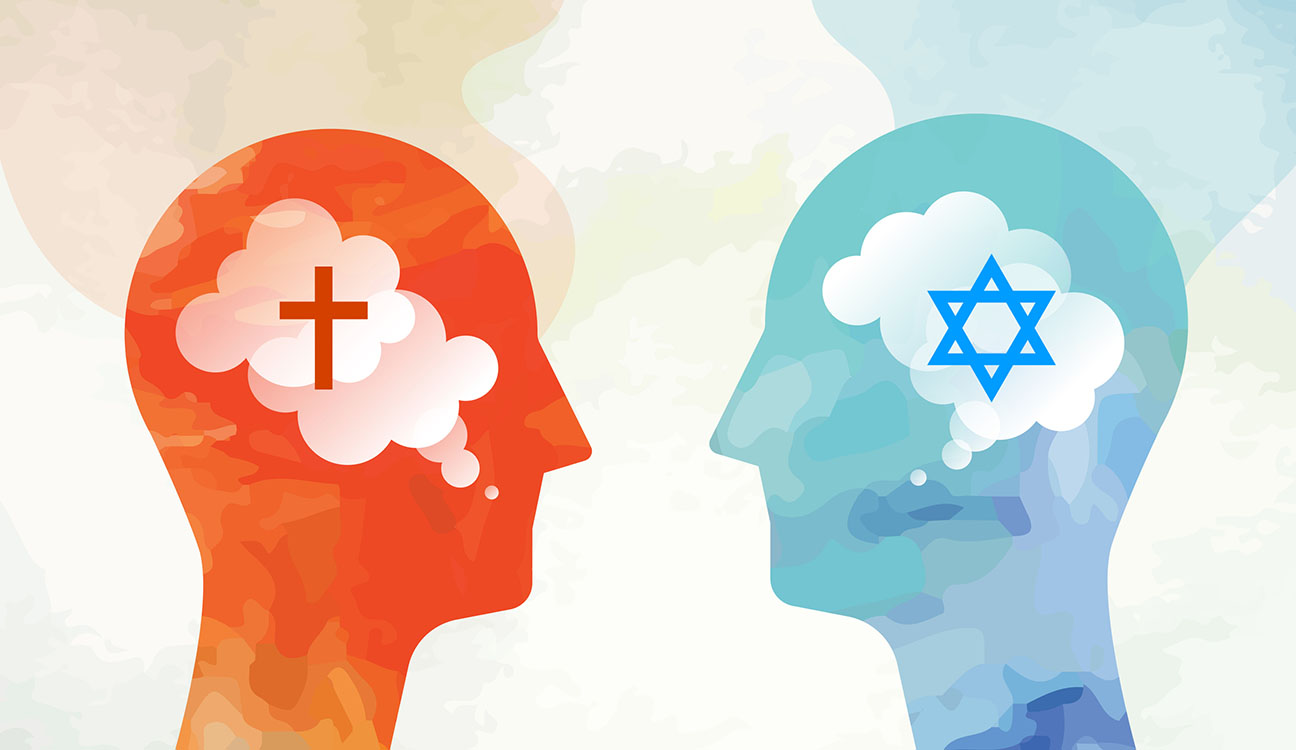
On Oct. 28, 1965, the Second Vatican Council issued the Nostra Aetate declaration, which transformed the Catholic Church’s views on Judaism. Afterward, multiple Catholic-Jewish conferences and groups sprouted up. But many Jews remained deeply skeptical about their value.
In March 1967, Rabbi Moshe Feinstein wrote an impassioned letter decrying rabbinic involvement in these meetings:
“[A] plague has now broken out in many locales on account of the initiative of the new pope, whose only intent is to cause all the Jews to abandon their pure and holy faith so that they will accept Christianity. Indeed, it is much more convenient to convert them in this manner than to employ the methods of hatred and murder that popes prior to him utilized. Consequently, all contact and discussion with them, even on worldly matters, is forbidden.”
One can hear the echoes of centuries of persecution in his response. Feinstein couldn’t imagine non-Jewish faith leaders approaching Jews in search of authentic spiritual dialogue. His own experiences with non-Jews led him to believe that any show of kindness is a trojan horse, a back-door attempt at converting Jews.
However, beginning with Abraham, Jews have always partnered with their fellow travelers in faith.
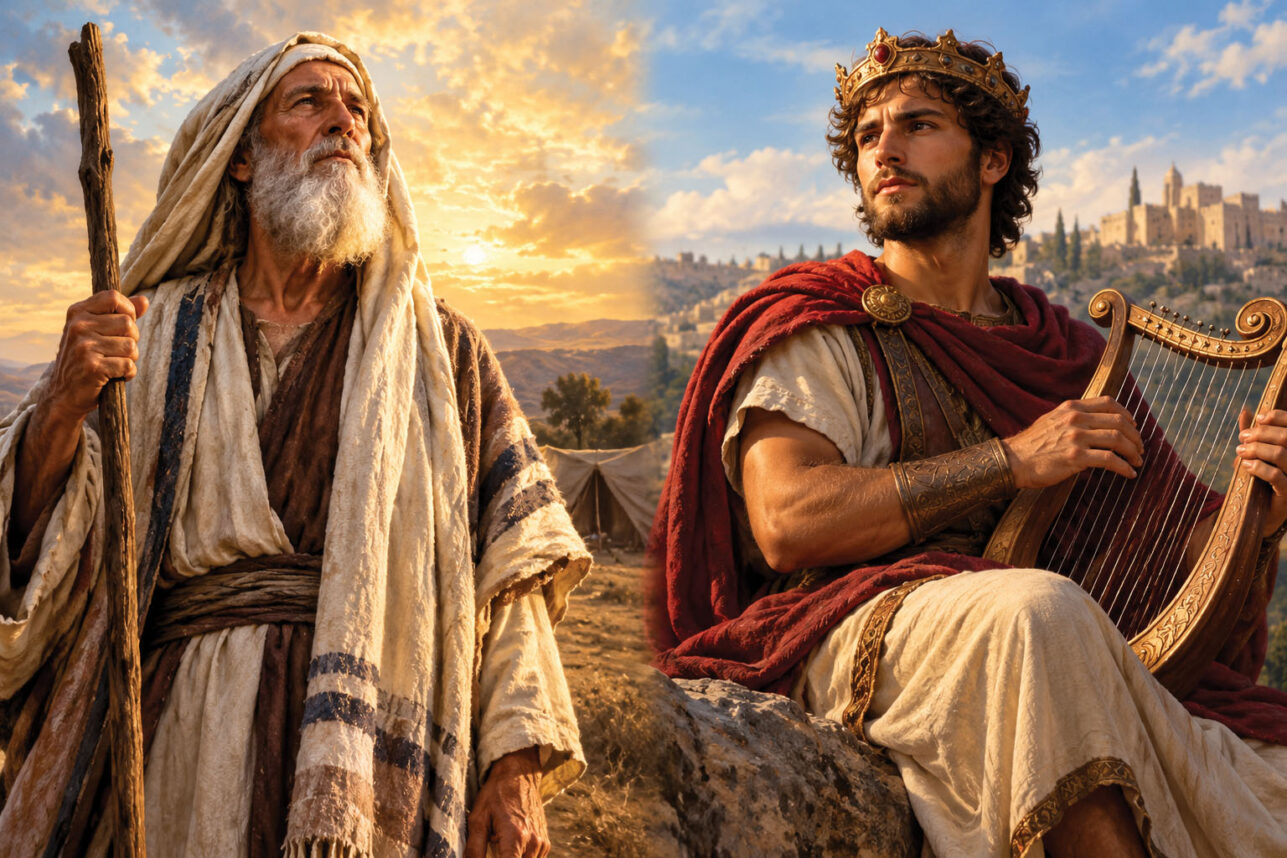
After fighting in a brutal war to free his nephew Lot, a mysterious figure greets Abraham:
“Then Melchizedek king of Salem brought out bread and wine; he was the priest of God Most High. And he blessed him and said:
‘Blessed be Abram of God Most High, possessor of heaven and earth;
And blessed be God Most High, Who has delivered your enemies into your hand.’
And he gave him a tenth of all.”
Although they have never met each other, Abraham and Melchizedek have an immediate spiritual connection. Melchizedek provides Abraham’s men with much-needed supplies and offers them a blessing. In return, Abraham offers the first tithe mentioned in the Bible, and gives one-tenth of the spoils to Melchizedek.
Abraham accepts Melchizedek as a spiritual colleague.
Other parts of the text hint at Melchizedek’s greatness. Literally, his name means “king of justice”; the name of his city means “peace.” Later commentaries take this a step further. According to one Midrash, Abraham’s family was blessed for three generations because of the tithe he gave to Melchizedek. Another passage says that Melchizedek taught Abraham the rules of the priesthood. And multiple commentaries identify Melchizedek’s city, Salem, with Jerusalem.
There was a non-Jewish priest serving God in Jerusalem well before there was a Jewish people. And Abraham gives this priest his own tithes.
Melchizedek challenges our preconceptions of Abraham and the Jewish people. Because of this, some commentaries qualify Melchizedek’s greatness. Samson Raphael Hirsch explains that the cult of “God Most High” had initially been pagan. It assumed there was a hierarchy of gods, with “God Most High” being the leader of all gods. Melchizedek, who initially served this God, arrived at monotheism himself; even so, he did not quite reach Abraham’s rank. Hirsch explains that “Melchizedek taught in Salem that the Most High God demands of man a life of righteousness; but Abraham carried out the Torah of righteousness in actual deed.” Melchizedek had arrived at a unique spiritual insight, but failed to teach it to the world.
Other interpreters go further. The Talmud writes that Melchizedek lost the priesthood that day. In his blessing, he first speaks of Abraham and then speaks of God. That was inappropriate, for “does one place the blessing of the servant before the blessing of his master?” From this moment on, God transferred the priesthood to Abraham.
However, a simple reading of the text sees Melchizedek as exceptional. Melchizedek clearly made an impression on Abraham; Abraham repeats the very language Melchizedek uses. And that phrase, “God Most High, possessor of heaven and earth,” is now employed in the first paragraph of the daily Amidah prayer.
Melchizedek teaches Abraham a prayer that remains a part of the Jewish tradition to this day.
Abraham is often portrayed as truly alone, a single monotheist challenging a world full of pagans. Melchizedek proves that this isn’t true. As Rabbi Jonathan Sacks puts it: “The Hebrew Bible seems to delight in this discovery of godliness outside the Abrahamic covenant.”
Rabbi Adin Steinsaltz takes this idea a step further and explains, “This passage [of Melchizedek] implies that Abraham has companions in faith, that his religion is not his own private invention.”
There were always those who had deep faith in God.
And they received the utmost respect from our rabbis and leaders.
Rabbi Meir in the 2nd century said that “a non-Jew who involves themselves in the study of Torah is like a High Priest.” Maimonides echoes these words and explains that, “Any one of the inhabitants of the world whose spirit generously motivates him, and he understands with his wisdom to set himself aside and stand before God to serve Him and minister to Him and to know God … he is sanctified as holy of holies.” Anyone devoted to God, Jew or non-Jew, is like the High Priest.
Jews have always had companions in faith. But for over 1,000 years, the walls of the ghetto stood in the way. Religious dialogues were a tool of persecution, where Jews were forced to publicly debate the merits of their own religion. Centuries of hatred made meetings like the one between Melchizedek and Abraham impossible.
But that changed more than a century ago, when Western society gave Jews equal rights. And the challenge to Jews became how to respond.
Rabbi Moshe Feinstein felt there had simply been a change in tactics, but not of substance. Three weeks after the letter cited above, he wrote to his colleague and cousin, Rabbi Joseph B. Soloveitchik. In it, he suggested that they issue a joint declaration “that there is an absolute and clear prohibition against joint meetings of rabbis and priests … Just as it is forbidden to dialogue on matters of faith and religion, so too there should be no discussion on matters of ordinary issues that are not religious topics.”
Others embraced the opportunity to dialogue. Beginning in the 1920s, liberal rabbis and ministers took part in dialogues, but most rabbis (and ministers) stayed away. After the Holocaust, this changed. Even more traditional minded rabbis saw the importance of dialogue. Rabbi Abraham Joshua Heschel recognized that Jews have always seen themselves as “a people that dwells alone.” He concedes that “the Community of Israel must always be mindful of the mystery of aloneness and uniqueness of its own being.” However, Heschel still urged Jews to engage in dialogue and recognize that, “No religion is an island. We are all involved with one another … Views adopted in one community have an impact on other communities … Judaism is sooner or later affected by the intellectual, moral and spiritual events within the Christian society, and vice versa.”
In an open society, all religions are in conversation with each other, whether or not we like it.
Rabbi Joseph B. Soloveitchik took a middle position. He emphasized that dialogue on matters of faith will fail because each religion has its own unique identity. To dialogue about one’s faith is to diminish it. As Soloveitchik explains, “We must always remember that our singular commitment to God and our hope and indomitable will for survival are non-negotiable and non-rationalizable and are not subject to debate and argumentation.”
But there still is room for other conversations. Jews must take part in “every civic, scientific, and political enterprise.” Topics of universal concern can, and should, be discussed. Rabbi Soloveitchik clarifies the distinction in a letter. He explains that there is no room for any discussion about topics like “Judaic monotheism and the Christian idea of the Trinity.” However, Soloveitchik was ready to have rabbis dialogue with priests about issues such as “Man’s Moral Values” and “the Threat of Secularism.”
Jews can dialogue with Christians. Not in matters of religion, but rather as concerned members of the family of man looking to make the world a better and more spiritual place.
By the 1980s, inter-religious dialogue became less common. Dialogue was no longer a novelty; and there were few urgent issues that required the joint attention of rabbis, priests and ministers. Dialogue became the domain of specialists.
But today, after a bruising two-year war, inter-religious dialogue is extremely important. So many Christians brought forward help and supplies; and so many others advocated and prayed for Israel on a daily basis. They have shared their love with our community and stood with us against antisemitism.
Dialogue with the Christian community is critical again. A leading Haredi rabbi recently advised a colleague of mine to accept every invitation to speak to church groups; without these churches, Israel would be far worse off. Our friendship with the Christian community is far too important to be taken for granted.
We are once again turning to Melchizedek for help. And we need to start talking again.
Rabbi Chaim Steinmetz is the Senior Rabbi of Congregation Kehilath Jeshurun in New York.