fbpx

October 30, 2025

We Went – A poem for Parsha Lech Lecha

Lech Lecha — Go forth (Genesis 12:1–17:27)

Go forth, They said, and we did.
We’ve been going forth for a while.
We’ve traveled so far forth we’re
back where we’ve started.

Go forth, They said, and I took it to heart.
I made sure back wasn’t a thing.
But I keep looking that way
because the nostalgia is magnetic.

Go forth, They said, and then
we realized we think differently about
what the word forth means. We ended up
using Find My to locate each other.

Go forth, They said, and some of us
got our names changed. Some at Ellis Island
and some with a holy Hey. Some made it local
so people wouldn’t lift an eye.

Go forth, They said, and we ended up
where we ended up – Not sure if it’s
where we wanted to be – Not sure if
we ever got to where we were going.

Go forth, They said,
and by God we did.
We surely did.
Here we are.
Hello.


Rick Lupert, a poet, songleader and graphic designer, is the author of 29 books including “God Wrestler: A Poem for Every Torah Portion.” Visit him at www.JewishPoetry.net

We Went – A poem for Parsha Lech Lecha Read More »

Why Think When You Can Hate?

The generation after the Holocaust was different from any other in history. It was shaped by the undeniable fact that hatred of Jews had resulted in a catastrophic collapse of civilization and the emergence of uncontrolled barbarism. Antisemitism led to a cataclysm that engulfed the entire Western world.

After the Second World War, the Western world had a rare golden age of relative peace. There were the Cold War and the Vietnam war, but no world war and finally the birth of an era when Jews were accepted and appreciated, especially in North America.

Despite relatively good times now, societies everywhere are fracturing into clans that are characterized by the deepest contempt for others. The issue may be immigration, wealth inequality, jobs or culture wars but the result is anger, distrust, hostility and hatred. The Holocaust and its lesson are fading in the fog of history. Societies everywhere in the Western world show signs of internal collapse, prey to forces that delight in the prospect of the demise of democracy. And, of course, the true barometer of this moral collapse is the oldest hatred, antisemitism, this time in the form of belligerence to the State of Israel and playing itself out on the streets of Europe and North America.

Mark Edmunson wrote in the New York Times that hatred is omnipresent in the current culture. He quotes Descartes’ famous dictum, “I think therefore I am,” suggesting that today’s equivalent would be, “I hate, therefore I am.” We no longer trust our institutions and “corrosive skepticism” defines society. Hatred becomes a release valve: “ambiguity and nuance disappear, and you become someone, hating gives you a plan for action.”

Mark Edmunson quotes Descartes’ famous dictum, “I think therefore I am,” suggesting that today’s equivalent would be, “I hate, therefore I am.”

Why think when you can hate? Ideology or conspiracy theories instead of critical thinking, personal opinion over professional expertise, politics over facts and truth. Problems abolished and everything seems clear and simple for the hater. Social media contributes to the mass dissemination of conspiracy theories and poisonous hatred in a way unprecedented in history.

Jew hatred has taken an exceptionally disturbing turn 80 years after the Holocaust. It may be considered even worse than Holocaust denial. The English novelist Howard Jacobson writes about the world holding Jews responsible for what has been done to them. Yes, you read that right—the non-Jews will never forgive the Jews for the Holocaust. The antisemite cannot forgive the Jew for troubling his conscience. Jacobson quotes Freud who speculated that it was those countries in Europe which were the last to forgo what he called “barbarous polytheism” — the tree-worshippers of Lithuania, for example — that most eagerly embraced the Jew-hatred of the 1930s and ‘40s. They were nostalgic for their paganism.

Jacobson writes that Augustine declared that the world should see the Jews in all their misery so Christians can rejoice in what has become of them, but Jacobson concludes that “modern times require more devious strategies of calumny.” So, Jew-hatred evolves with the times.

In other words, this complex, long-standing, ever-changing form of hatred has roots so deep and so extensive that it would take a monumental and concerted effort to remove it. A new enlightenment is needed, one driven by a true moral reckoning to heal a profound and unique form of hatred. and illuminating the world’s inability to accept the idea of human dignity — a symptomatic problem that affects the entire world.

Jacobson’s fascinating insights point to the fact that antisemitism is not a Jewish problem. Jews suffer the consequences but are not the cause. Antisemitism is the hater’s problem and only he can overcome it. The perception of the all-powerful Jew who controls everything is ludicrous, as he cannot control even his own safety.

Antisemitism is the hater’s problem and only he can overcome it. The perception of the all-powerful Jew who controls everything is ludicrous, as he cannot control even his own safety.

The great irony is that it is the hater himself who is not free either. As Rabbi Jonathan Sacks points out, to be free you must let go of hatred.  That is why Moses told the Jews not to hate the Egyptians. If they had held on to their hatred, they would have been consumed by it instead of building their own society in their own land. It is impossible to create a free society based on hatred. That is a crucial lesson for our times.

Rabbi Sacks states unequivocally that “hatred and liberty cannot coexist. A free people does not hate its former enemies; if it does, it is not yet ready for freedom…you have to break the chains of the past, rob memory of its sting, sublimate pain into constructive energy and the determination to build a different future…to be free, you have to let go of hate.”

There are two conclusions to draw. The return of barbaric antisemitism in Western countries is a harbinger of social collapse and makes the case for the sovereign state of the Jews. Anyone opposing that view is blind to history, blind to current events, and out of touch with reality. With rampant antisemitism, thinking stops and hatred rules. Only Israel has the capacity to defend its Jews. Authorities in the Diaspora have never protected their Jewish population and are not doing it now.

The return of barbaric antisemitism in Western countries is a harbinger of social collapse and makes the case for the sovereign state of the Jews. Anyone opposing that view is blind to history, blind to current events, and out of touch with reality. With rampant antisemitism, thinking stops and hatred rules.

The success of Israel as a sovereign state defending its citizens depends wholly on the country being united and determined. Israel cannot afford the kind of fracturing society we witness elsewhere. Either we pull together or we pull apart, with catastrophic results. We lost our ancestral homeland twice because of internal divisions. That was our history. It must not be our future.

The second conclusion has to do with the Western world and its own survival as a civilized society. To save itself, good people, for once, in every country, must openly, vocally, in action and deed, stand with the Jews — not for the Jews’ sake, but for their own. The hatred that consumes the Jews will consume all of society. We have seen this scenario throughout history, and it never ends well.

Some day, sanity may reign in the world. In the meantime, do not count on the arc of the moral universe bending toward justice anytime soon.


Dr. Paul Socken is Distinguished Professor Emeritus and founder of the Jewish Studies program at the University of Waterloo

Why Think When You Can Hate? Read More »

Mamdani is Only the Tip of the DSA Iceberg

For months now, Jews have been up in arms about the prospect of Zohran Mamdani becoming the new mayor of New York.

In a recent letter signed by hundreds of rabbis, Mamdani was taken to task for refusing to condemn violent slogans against Jews and Israel, denying Israel’s legitimacy, accusing the Jewish state of genocide and generally helping to propagate a hostile environment for Jewish New Yorkers.

Those grievances are indeed alarming, but they overlook Mamdani’s even bigger threat to America and especially to the Democratic party.

Mamdani is running as a Democrat but he’s not really a Democrat. He’s a proud, card-carrying member of the Democratic Socialists of America (DSA), a growing political movement that is so far left it makes Bernie Sanders look like Newt Gingrich. Its website, for example, states that the party wants to “collectively own the key economic drivers that dominate our lives.”

Given that the Democratic party has already been damaged by veering too far left, another leftist surge is the last thing it needs.

“Democrats have badly weakened their party with left-leaning ideas and rhetoric, growing only with self-described ‘white liberals’ while losing ground with other voters,” according to a major new study by a group called Welcome, as reported in Semafor. One of its findings is that 70% of voters think the Democratic Party is “out of touch.”

A Mamdani victory under the Democratic banner would exacerbate this trend, sending, as Bret Stephens writes, “a misleading signal that voters want more progressive Democrats, not more moderate ones…[which is] the worst possible lesson if Democrats want to take back Congress and win nationally.”

Beyond hurting the Democratic party, a Mamdani victory would also blow wide open DSA’s radical platform for America to see.

As Staman Ogilvie warns on the No Labels website, “DSA’s platform—previously dismissed as a fringe wishlist—could start shaping policy from inside Gracie Mansion and across America.”

He summarized a few of its signature proposals:

  • Extend “voting rights to non-citizens?”
  • “Disarm law enforcement officers,” and abolish prisons?
  • Nationalize “businesses like railroads, utilities, and critical manufacturing and technology companies?”
  • Prohibit any “new fossil fuel projects from being authorized or built?”
  • Provide “free abortion on demand?”
  • Allow trans minors to access “gender affirming care” – like puberty blockers – “without parental consent?”

Ogilvie characterizes the DSA platform as a case study in what not to do, adding that “it makes sense only if you ignore both history and human nature.”

Giving the DSA more exposure would also show the extent of its threat and how fast it has grown. A seminal report from the Canary Mission notes that: “As its leaders repeatedly state, the DSA are NOT Democrats. They are an external force that has infiltrated the Democratic Party to reshape it in their own image… using the party’s structure and reputation while working to replace it with its own extremist agenda.”

The report includes in-depth reporting of DSA’s growing network of influence, covering a broad and sophisticated web of activists and alliances throughout the country, including ties to the terror-linked Palestinian Youth Movement.

The combined goals of this socialist alliance, the report asserts, include:

  • Destroying “Empire” (what DSA calls the USA)
  • Replacing the market economy with state-controlled Marxism
  • Defunding the police and using the funds for DEI programs
  • Supporting terrorist groups and terrorist entities, i.e., Hamas and Hezbollah
  • Normalizing antisemitism and supporting violent extremist groups
  • Promoting foreign policies that align with authoritarian regimes such as China, Russia and Iran.

In short, New York’s mayoral election is about a lot more than a front-running candidate and his controversial views. Above all, it’s about that candidate’s deep allegiance to a fast-rising socialist movement flying under the Democratic banner.

New York’s mayoral election is about a lot more than a front-running candidate and his controversial views. Above all, it’s about that candidate’s deep allegiance to a fast-rising socialist movement flying under the Democratic banner.

Yes, Mamdani’s views on Israel and the Jews are disturbing and we’re right to sound the alarm.

But as Americans, we must go further. And for those Jews who are loyal Democrats, if they want to return to power they must be ready to distance themselves from Mamdani and DSA’s radical views. The old playbook that Democrats can’t say anything that might help Republicans no longer holds. Dems don’t have that luxury. If they allow their party to move further left, it may well seal their fate for future elections.

We can assume Mamdani will win. He’s a clever politician who knows how to thread the needle and avoid alienating too many people. This makes him even more dangerous because he may try to camouflage his radical views and seduce Dems who are desperate for a winning candidate.

Democrats can’t afford to move further away from the majority of the country. At a time when our politics are already too polarized, the country needs a move to the center, not to its fringes.

This holds true for the Jews, for the Democrats and for America.

Mamdani is Only the Tip of the DSA Iceberg Read More »

Talking Again

On Oct. 28, 1965, the Second Vatican Council issued the Nostra Aetate declaration, which transformed the Catholic Church’s views on Judaism. Afterward, multiple Catholic-Jewish conferences and groups sprouted up. But many Jews remained deeply skeptical about their value.

In March 1967, Rabbi Moshe Feinstein wrote an impassioned letter decrying rabbinic involvement in these meetings:

“[A] plague has now broken out in many locales on account of the initiative of the new pope, whose only intent is to cause all the Jews to abandon their pure and holy faith so that they will accept Christianity. Indeed, it is much more convenient to convert them in this manner than to employ the methods of hatred and murder that popes prior to him utilized. Consequently, all contact and discussion with them, even on worldly matters, is forbidden.”

One can hear the echoes of centuries of persecution in his response. Feinstein couldn’t imagine non-Jewish faith leaders approaching Jews in search of authentic spiritual dialogue. His own experiences with non-Jews led him to believe that any show of kindness is a trojan horse, a back-door attempt at converting Jews.

However, beginning with Abraham, Jews have always partnered with their fellow travelers in faith.

After fighting in a brutal war to free his nephew Lot, a mysterious figure greets Abraham:

“Then Melchizedek king of Salem brought out bread and wine; he was the priest of God Most High. And he blessed him and said:

‘Blessed be Abram of God Most High, possessor of heaven and earth;

And blessed be God Most High, Who has delivered your enemies into your hand.’

And he gave him a tenth of all.”

Although they have never met each other, Abraham and Melchizedek have an immediate spiritual connection. Melchizedek provides Abraham’s men with much-needed supplies and offers them a blessing. In return, Abraham offers the first tithe mentioned in the Bible, and gives one-tenth of the spoils to Melchizedek.

Abraham accepts Melchizedek as a spiritual colleague.

Other parts of the text hint at Melchizedek’s greatness. Literally, his name means “king of justice”; the name of his city means “peace.” Later commentaries take this a step further. According to one Midrash, Abraham’s family was blessed for three generations because of the tithe he gave to Melchizedek. Another passage says that Melchizedek taught Abraham the rules of the priesthood. And multiple commentaries identify Melchizedek’s city, Salem, with Jerusalem.

There was a non-Jewish priest serving God in Jerusalem well before there was a Jewish people. And Abraham gives this priest his own tithes.

Melchizedek challenges our preconceptions of Abraham and the Jewish people. Because of this, some commentaries qualify Melchizedek’s greatness. Samson Raphael Hirsch explains that the cult of “God Most High” had initially been pagan. It assumed there was a hierarchy of gods, with “God Most High” being the leader of all gods. Melchizedek, who initially served this God, arrived at monotheism himself; even so, he did not quite reach Abraham’s rank. Hirsch explains that “Melchizedek taught in Salem that the Most High God demands of man a life of righteousness; but Abraham carried out the Torah of righteousness in actual deed.” Melchizedek had arrived at a unique spiritual insight, but failed to teach it to the world.

Other interpreters go further. The Talmud writes that Melchizedek lost the priesthood that day. In his blessing, he first speaks of Abraham and then speaks of God. That was inappropriate, for “does one place the blessing of the servant before the blessing of his master?” From this moment on, God transferred the priesthood to Abraham.

However, a simple reading of the text sees Melchizedek as exceptional. Melchizedek clearly made an impression on Abraham; Abraham repeats the very language Melchizedek uses. And that phrase, “God Most High, possessor of heaven and earth,” is now employed in the first paragraph of the daily Amidah prayer.

Melchizedek teaches Abraham a prayer that remains a part of the Jewish tradition to this day.

Abraham is often portrayed as truly alone, a single monotheist challenging a world full of pagans. Melchizedek proves that this isn’t true. As Rabbi Jonathan Sacks puts it: “The Hebrew Bible seems to delight in this discovery of godliness outside the Abrahamic covenant.”

Rabbi Adin Steinsaltz takes this idea a step further and explains, “This passage [of Melchizedek] implies that Abraham has companions in faith, that his religion is not his own private invention.”

There were always those who had deep faith in God.

And they received the utmost respect from our rabbis and leaders.

Rabbi Meir in the 2nd century said that “a non-Jew who involves themselves in the study of Torah is like a High Priest.” Maimonides echoes these words and explains that, “Any one of the inhabitants of the world whose spirit generously motivates him, and he understands with his wisdom to set himself aside and stand before God to serve Him and minister to Him and to know God … he is sanctified as holy of holies.” Anyone devoted to God, Jew or non-Jew, is like the High Priest.

Jews have always had companions in faith. But for over 1,000 years, the walls of the ghetto stood in the way. Religious dialogues were a tool of persecution, where Jews were forced to publicly debate the merits of their own religion. Centuries of hatred made meetings like the one between Melchizedek and Abraham impossible.

But that changed more than a century ago, when Western society gave Jews equal rights. And the challenge to Jews became how to respond.

Rabbi Moshe Feinstein felt there had simply been a change in tactics, but not of substance. Three weeks after the letter cited above, he wrote to his colleague and cousin, Rabbi Joseph B. Soloveitchik. In it, he suggested that they issue a joint declaration “that there is an absolute and clear prohibition against joint meetings of rabbis and priests … Just as it is forbidden to dialogue on matters of faith and religion, so too there should be no discussion on matters of ordinary issues that are not religious topics.”

Others embraced the opportunity to dialogue. Beginning in the 1920s, liberal rabbis and ministers took part in dialogues, but most rabbis (and ministers) stayed away. After the Holocaust, this changed. Even more traditional minded rabbis saw the importance of dialogue. Rabbi Abraham Joshua Heschel recognized that Jews have always seen themselves as “a people that dwells alone.” He concedes that “the Community of Israel must always be mindful of the mystery of aloneness and uniqueness of its own being.” However, Heschel still urged Jews to engage in dialogue and recognize that, “No religion is an island. We are all involved with one another … Views adopted in one community have an impact on other communities … Judaism is sooner or later affected by the intellectual, moral and spiritual events within the Christian society, and vice versa.”

In an open society, all religions are in conversation with each other, whether or not we like it.

Rabbi Joseph B. Soloveitchik took a middle position. He emphasized that dialogue on matters of faith will fail because each religion has its own unique identity. To dialogue about one’s faith is to diminish it. As Soloveitchik explains, “We must always remember that our singular commitment to God and our hope and indomitable will for survival are non-negotiable and non-rationalizable and are not subject to debate and argumentation.”

But there still is room for other conversations. Jews must take part in “every civic, scientific, and political enterprise.” Topics of universal concern can, and should, be discussed. Rabbi Soloveitchik clarifies the distinction in a letter. He explains that there is no room for any discussion about topics like “Judaic monotheism and the Christian idea of the Trinity.” However, Soloveitchik was ready to have rabbis dialogue with priests about issues such as “Man’s Moral Values” and “the Threat of Secularism.”

Jews can dialogue with Christians. Not in matters of religion, but rather as concerned members of the family of man looking to make the world a better and more spiritual place.

By the 1980s, inter-religious dialogue became less common. Dialogue was no longer a novelty; and there were few urgent issues that required the joint attention of rabbis, priests and ministers. Dialogue became the domain of specialists.

But today, after a bruising two-year war, inter-religious dialogue is extremely important. So many Christians brought forward help and supplies; and so many others advocated and prayed for Israel on a daily basis. They have shared their love with our community and stood with us against antisemitism.

Dialogue with the Christian community is critical again. A leading Haredi rabbi recently advised a colleague of mine to accept every invitation to speak to church groups; without these churches, Israel would be far worse off. Our friendship with the Christian community is far too important to be taken for granted.

We are once again turning to Melchizedek for help. And we need to start talking again.


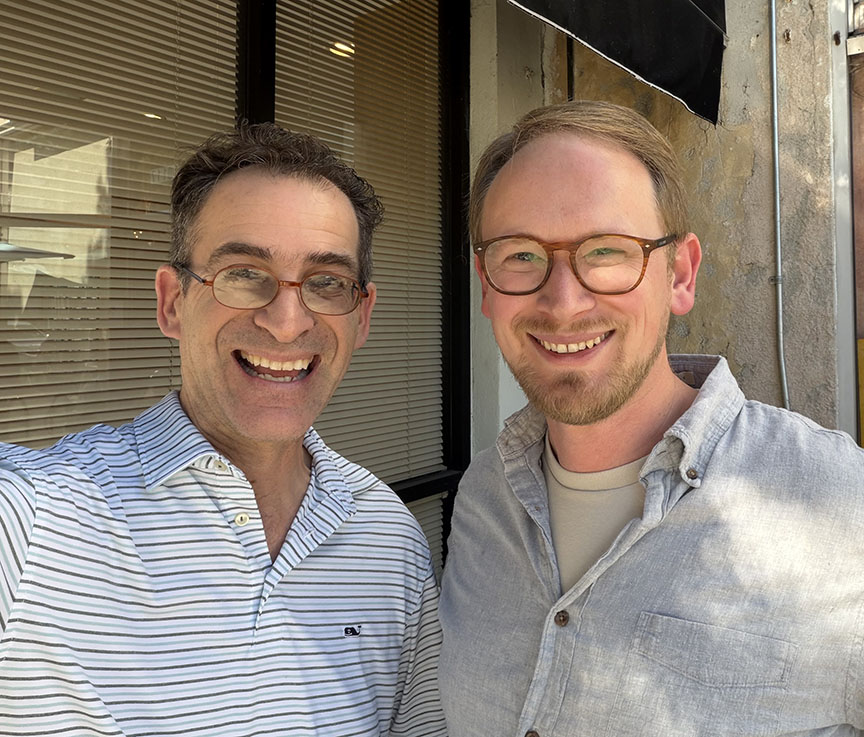
Rabbi Chaim Steinmetz is the Senior Rabbi of Congregation Kehilath Jeshurun in New York.  

Talking Again Read More »

A Moment in Time: “Finding, Making, Becoming”

Dear all,

Rabbi Judah ben Perachya taught in the Mishnah, “Asei l’cha Rav.”

It’s not the easiest phrase to translate. Here are three possibilities:

  1. “Make yourself into a rabbi.”
  2. “Make (or find) for yourself a rabbi.”
  3. “Create rabbis—inspire others to become rabbis.”

I found myself reflecting on this teaching earlier this week over coffee with my dear friend, Rabbi Eric Rosenstein. Eric was just a young boy when I first became a rabbi, growing up in the congregation I served. I was elated when he chose to become a rabbi himself.

For years, I believed I had lived out two of these interpretations. I had helped inspire someone else to become a rabbi (number three), and Eric had made himself into a rabbi (number one).

But during our recent conversation, as Eric shared his wisdom and insights, I realized something new: I had also fulfilled the second teaching. In Eric, I had found for myself a rabbi.

When our students become our teachers, the world opens to new possibilities. And in that moment in time, the present becomes a bridge to tomorrow.

With love and shalom,

Rabbi Zachary R. Shapiro

A Moment in Time: “Finding, Making, Becoming” Read More »

“Jews for Mamdani” and the Tragic Repetition: Why Some Jews Turn Against Themselves

Throughout Jewish history, there’s been a strange and heartbreaking pattern: Jews who, for political or ideological reasons, champion movements and leaders whose victory would ensure their own destruction. Across centuries, the phenomenon has appeared in varied guises — religious zealotry, political radicalism, cultural assimilation — yet the underlying psychology has remained remarkably constant.

The biblical prophets already saw it. Jeremiah warned the people of Judah not to seek salvation in Egypt against Babylon’s might, yet they insisted on doing precisely that, ensuring their ruin. “You rely on a broken reed of a staff,” he thundered (Jer. 36:6). They mistook servility for strategy.

During the Roman siege of Jerusalem, the Zealots — self-proclaimed defenders of Jewish pride — destroyed the city’s food stores, believing that God would perform a miracle. In their fanatical pursuit of ideological purity, they guaranteed starvation and defeat. Rabbi Yohanan ben Zakkai’s escape from Jerusalem and the birth of Yavneh were not triumphs of rebellion, but rescues from self-immolation.

In Spain after 1391, thousands of Jews converted to Christianity, some to save their lives, others to climb socially. Yet as the historian Heinrich Graetz observed, the conversos often became the fiercest persecutors of their former brethren. The Inquisition was staffed by men of Jewish origin eager to prove their loyalty to their new masters by surpassing them in cruelty.

Centuries later, Jewish Marxists in the early Soviet Union joined the Yevsektsiya — the “Jewish Section” of the Communist Party — which zealously closed synagogues, banned Hebrew study, and denounced Zionists as bourgeois traitors. The revolution that promised a “new world” devoured them; Stalin’s purges consumed the very Jews who had enforced his atheistic creed.

In Germany, the tragedy reached its apogee. Many German Jews, anxious to be accepted as “Germans of Mosaic persuasion,” derided Zionism as parochial and obsolete. They believed that assimilation would earn them security. Yet when Hitler came to power, no level of denial could protect them. Their faith in universalism was mocked by a regime that reduced them to racial outcasts.

Why does this pattern recur? The answer, in part, lies in the psychology of oppression. The psychoanalyst Erich Fromm called it the escape from freedom: when liberty is frightening, individuals surrender autonomy to the very forces that dominate them. Anna Freud coined a related concept — “identification with the aggressor” — the victim’s desperate need to win safety by imitating his tormentor.

When liberty is frightening, individuals surrender autonomy to the very forces that dominate them. Anna Freud coined a related concept — “identification with the aggressor” — the victim’s desperate need to win safety by imitating his tormentor.

The Jewish historical experience, marked by long centuries of marginalization, made this temptation ever-present. Yosef Hayim Yerushalmi, in his book “Zakhor,” observed that Jewish memory oscillates between pride and shame. In times of persecution, shame can overwhelm memory; Jews seek relief not in defiance but in disavowal. To be accepted, they condemn their own.

This psychological inversion can even masquerade as morality. Hannah Arendt, writing on totalitarianism, warned that the moral sensibility of the oppressed can be twisted into “the perverse desire to stand always on the side of the victimizer in order to remain innocent.” For many Jews, especially in liberal Western societies, defending Jewish particularism feels parochial; denouncing Israel seems cosmopolitan. The historian Robert Wistrich called it “the temptation of universalism.” Because Judaism values justice, Jews are drawn to universalist movements. But when universalism erases the right of Jews to defend themselves or to exist as a people, it becomes an ideological weapon turned inward. The dream of belonging to “humanity” ends in the nightmare of disappearance.

Because Judaism values justice, Jews are drawn to universalist movements. But when universalism erases the right of Jews to defend themselves or to exist as a people, it becomes an ideological weapon turned inward. The dream of belonging to “humanity” ends in the nightmare of disappearance.

Bruno Bettelheim, the psychoanalyst and survivor of Dachau, wrote that some prisoners internalized their oppressors’ contempt so deeply that they believed cooperation or submission would grant them moral superiority. Bettelheim termed it “moral masochism” — suffering as proof of virtue. Many Jews in modern political movements unconsciously reenact that posture: they measure their righteousness by how loudly they condemn their own.

In contemporary progressive circles, moral legitimacy is often won by one’s willingness to denounce “privilege” and “colonialism.” Jews, anxious to remain on the side of the righteous, sometimes absorb the vocabulary of their critics and turn it against their own existence. When Israel — the only Jewish state on earth — is branded a colonial aggressor, these Jews rush to agree, believing that by joining the accusers they can escape accusation.

This ancient self-destructive impulse has found a new stage in American politics through figures such as Zohran Mamdani, a New York State assemblyman of Ugandan-Indian origin and a prominent member of the Democratic Socialists of America. Mamdani has accused Israel of “apartheid,” called for ending U.S. aid to the Jewish state, and aligned himself with organizations that justify terrorism as “resistance.”

Mamdani’s hostility to Israel is no secret. What is shocking is the number of Jews who champion him — donating to his campaigns, endorsing him on social media, and treating his denunciations as moral insight. For them, his approval offers validation: if an anti-Zionist progressive praises them, they feel liberated from the burden of collective loyalty.

But to imagine that joining Mamdani’s cause elevates Jewish ethics is to ignore history’s harsh lessons. The zealots of Jerusalem also believed they were the true defenders of holiness. The conversos of Spain believed they were saving their souls. The Jewish communists of the Yevsektsiya believed they were liberating mankind. Each sought redemption through self-negation; each brought catastrophe upon themselves and their people.

To align with those who demonize Israel today is to repeat their mistake. For the Jewish people, Israel is not a political accessory; it is the vessel of survival. To undermine it is to erode the foundation upon which Jewish life everywhere depends. Those who claim to act in the name of “justice” while excusing Hamas massacres or delegitimizing Jewish self-defense reveal not compassion, but moral confusion.

Jewish tradition teaches, “He who is compassionate to the cruel will end by being cruel to the compassionate.” (Midrash Tanchuma, Metzora 1). The prophets of universalism who defend those who slaughter Jews commit precisely that inversion. They imagine themselves moral visionaries but become unwitting agents of cruelty.

The Book of Psalms warns, “They loved death more than life.” The Jewish impulse to seek virtue through self-destruction is a spiritual illness — a longing to dissolve into the universal at the cost of existence itself. What begins as moral idealism ends as national suicide.

The historian Salo Baron once decried what he called “the lachrymose conception of Jewish history,” the obsession with suffering. Yet the current wave of Jewish self-denunciation is not lachrymose but suicidal. It transforms compassion into complicity and repentance into erasure.

The antidote is not chauvinism but clarity. Judaism has never taught blind nationalism. It teaches the sanctity of life, the dignity of every human being — and the obligation of self-preservation. The Talmudic dictum “Your life comes first” (Bava Metzia 62a) is not selfishness; it is sanity. Without survival, there is no morality.

Mamdani and his Jewish admirers stand at a moral crossroads. They can choose the comfort of fashionable virtue or the courage of historical truth. The first leads to applause from the world; the second ensures that there will still be a Jewish people to hear the applause.

The choice, as history repeatedly teaches, is not between Right and Left, but between memory and amnesia, between moral posturing and moral survival.

For the sake of our future, we must at last break the cycle of Jewish self-destruction — before history, yet again, repeats its judgment.


Rabbi Benjamin Blech is Professor of Talmud at Yeshiva University.

“Jews for Mamdani” and the Tragic Repetition: Why Some Jews Turn Against Themselves Read More »

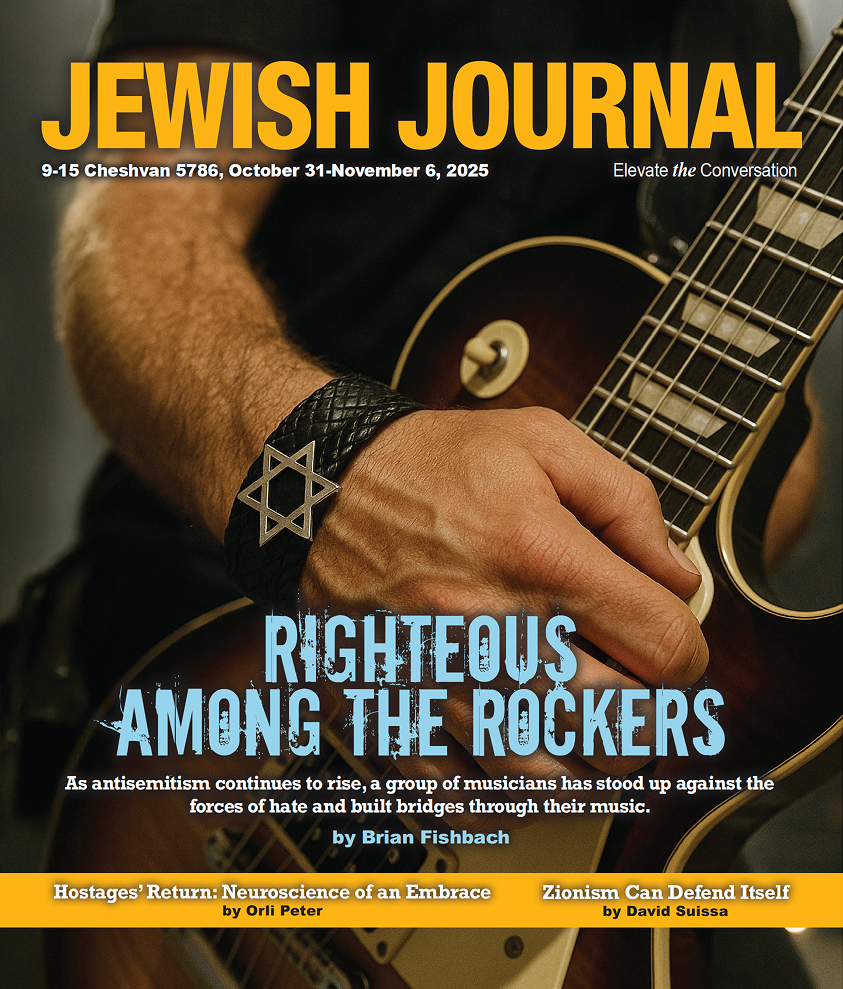
Print Issue: Righteous Among the Rockers | October 31, 2025

CLICK HERE FOR FULLSCREEN VERSION

Print Issue: Righteous Among the Rockers | October 31, 2025 Read More »

Andrew Garfield and Julia Roberts Impress in ‘After the Hunt’

In “After The Hunt,” Julia Roberts stars as Alma, a philosopher hoping to get tenure at Yale who has a friendly, flirtatious relationship to a fellow instructor, Hank (Andrew Garfield), though she is married to Frederik (Michael Stuhlbarg). From the beginning, some things are off. Hank squeezes the leg of Alma’s top student Maggie (Ayo Edebiri, from the FX show “The Bear”) and they go home together.

Maggie confides in Alma that Hank sexually assaulted her, but Hank tells Alma it isn’t true. Meanwhile Frederik, who appears to be Jewish, kind of accepts that his wife is busy in academia and he’ll have to bear her coming home late when he’s cooked. He is annoyed that they haven’t been intimate in some time.

At first, it appears that Maggie is telling the truth, and Hank is lying and hoping his friendship with Alma will bail him out. But as the film goes on it is not clear, and it may very well be that Maggie is telling the truth.

While there isn’t a lot of action in the film, Roberts and Garfield have great chemistry. Stuhlbarg, a Jewish actor best known for playing gambler Arnold Rothstein on “Boardwalk Empire,” is fantastic as a respectable man who you think should get more. Garfield has also identified as a Jew. Edebiri plays someone who is first self-deprecating and then a bit more sure of herself.

Directed by Luca Guadagnino, the film is a slow burn, and we don’t see what exactly happens between Hank and Maggie, though he admits he went into her apartment for a nightcap. Alert to all teachers/professors/assistant professors — you should never be alone in a room with a student, especially when alcohol is involved. 

Maggie is accused of plagiarism by Hank, and the film doesn’t really coherently examine this. There is a big surprise near the end of the film that works well and an anticlimactic ending that doesn’t.

Garfield usually plays a good guy, so kudos to him for showing he can play a bad one. At the least, he’s arrogant and flirts with all his female students. Alma is repressing a lot, and it takes a physical toll on her that sends her to the hospital.

Everyone wants a happy marriage, but sadly that isn’t always the case, and it isn’t uncommon for one spouse to focus more on their career than their partner. When Frederik wonders if his wife truly loves him, Stuhlbarg delivers one of the most powerful lines in the movie.

The film’s title can be symbolic of many things, but one is the danger of tunnel vision: if we sacrifice a lot to get something, whether we get it or not, we may wind up feeling empty. 

Roberts is underrated as an actress. Her performance shows a woman pretending she is sure of herself when that is not the case, as shown when she shouts at one of her students. I would have liked to have seen what Hank was like in the classroom; it would have made the film richer.

The four performances of Roberts, Garfield, Stuhlbarg and Edebiri carry the film. Edebiri has quickly risen to prominence; she has the acting chops to stand toe to toe with the iconic stars. This is because Edebiri excels as a conversational actress in the sense that she delivers most of her lines matter-of factly, with little pomp.

Despite a lukewarm ending, “After the Hunt” is a film that reminds us of the dangers of not keeping strict boundaries, and the ills that can come from thinking you know someone when it is possible they may be lying or hiding something important. We would all like to fight against the mundane rat-race of life, but as we are in it, we must play by the rules and know there are penalties for breaking them.

Andrew Garfield and Julia Roberts Impress in ‘After the Hunt’ Read More »

Two New Looks at the Face of American Jews on Film

Two standout short films at the Soho International Film Festival examine Jewish identity. “The Unburdened” looks at how to teach the Holocaust to the next generation, while “Catalogue of Noses” is a musical comedy about the possibility of rhinoplasty.

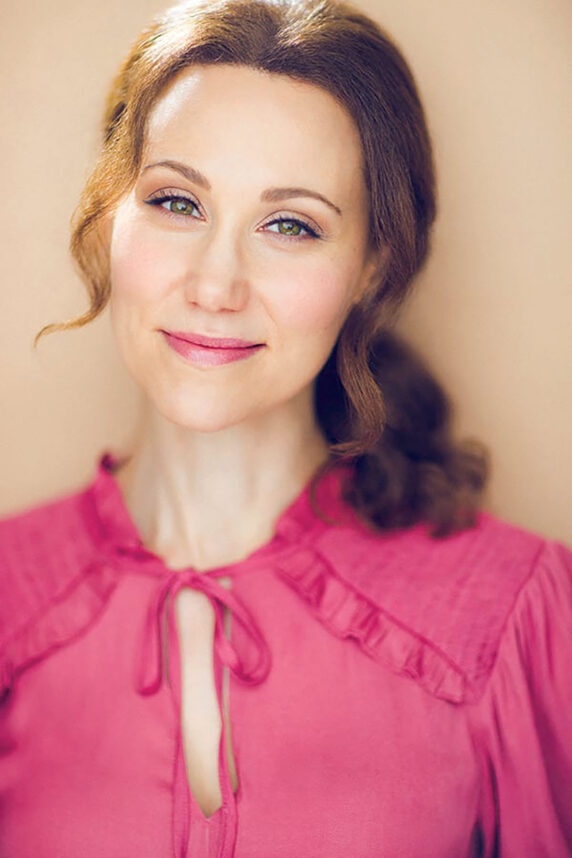
Elana Safar, co-writer and star of “The Unburdened,” is a granddaughter of Holocaust survivors. She remembered telling her family’s story to Steven Spielberg’s USC Shoah Foundation years ago. Growing up, the New Jersey resident was cognizant of what they endured. “You could clearly see the numbers on their arms and they were traumatized,” Safar told The Journal. “I sensed the pain as a young kid. It was always there. It was very personal and visceral. I feel responsible to make sure survivors are not forgotten as we live through the last generation to know survivors and that haunts me.”

Elana Safar Photo by David Noles

Safar, who has appeared on episodes of ABC’s “Quantico” and NBC’s “The Blacklist,” stars as Shayna, who wants to dig up a time capsule she and her friend Marissa (Elizabeth Ness) buried years ago (something Safar actually did in middle school), even as she hopes she’ll have enough time to cut yellow stars for her daughter’s school Holocaust program. 

“When I was growing up, no one talked about trauma,” Safar said. “I understood as uncomfortable as it was, you were supposed to see ‘Schindler’s List’ and go to Holocaust museums. Other kids said they’d rather have fun, and it’d be too depressing. For me in the ’90s, that was not a choice.”

She has twice joined “March of The Living,” where she saw the death camps, and has appeared in two productions of “The Diary of Anne Frank.” While she did not set out to make an educational or preachy film, she hopes “The Unburdened” could help people consider how to present the Holocaust to students. In the film, a parent objects that it may not be appropriate for students to wear yellow stars.

How did being a granddaughter of Holocaust survivors affect her? “In my family, you didn’t waste food, you cleaned your plate,” Safar said. “I remember being at a different house of a grandchild of survivors and they were just throwing out food and not keeping any leftovers. I thought they’d hold on to every scrap of food.”

Safar, an acting coach to students across the country, noticed something that struck her as ironic: a Jewish student from New York was reluctant when it was suggested she perform an Anne Frank monologue, while a Christian student from Texas fully embraced it. She said while she was surprised at first, she realized there could be good reason for it.

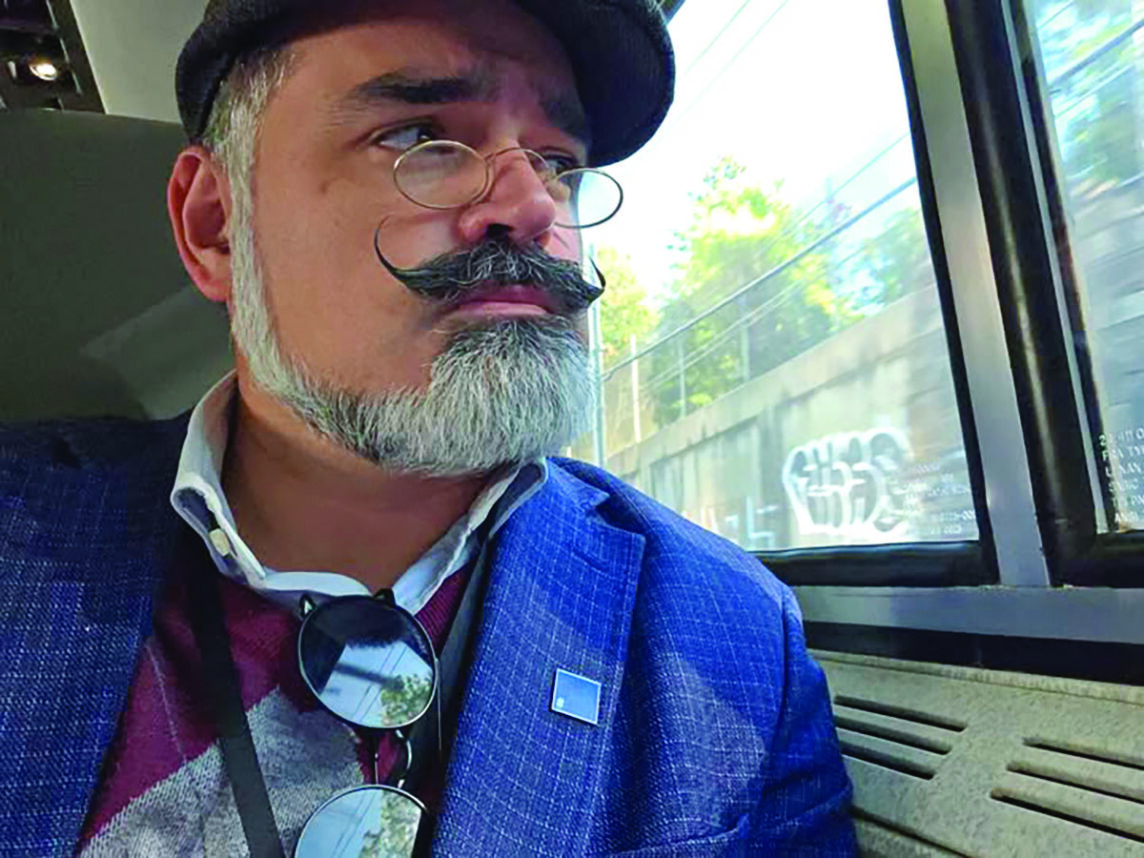
Arnon Shorr, director of “The Unburdened,” who lived in Los Angeles for 10 years beginning in 2014, said his grandparents on his father’s side left Germany in the ’30s when they saw things turning against Jews. 

Director Arnon Shorr Photo by Ilana Shorr

He told The Journal the film asks some crucial questions. “What are the consequences of trying to move on, what are the consequences of recalling it and reliving it?” he asked. “I wanted to explore that question. It speaks to the difficulty that there isn’t one clear obvious answer. I’m always interested in the way Judaism seems to be open to binaries not being binaries and a dialectical way of thinking where two opposite ways of thinking can be true. We have to remember Amalek and erase the name from the planet …”

As there are fewer survivors alive, he said, the task falls to others to tell the story at a time of rising antisemitism and competing views about how best to present information. “One of the challenges of grappling with the Holocaust is how do we not fall into sort of a perpetual self-victimization on one hand, a blasé indifference on the other hand and how do we find this careful and measured entry point in understanding this part of our history,” Shorr said. “This was a deep dark aspect of humanity which is still part of humanity … what does it mean to survive? What does it mean to remember? At what point does remembering interfere with our surviving? At what point does our surviving interfere with our remembering? That complexity is a vibrant piece of who we are.”

“Catalogue of Noses” began as a short stage performance shortly after the controversy of “Jewface,” a term made popular by Jewish comic Sarah Silverman. Writer and actress Lauren Schaffel also heard discussions about Bradley Cooper putting on a prosthetic nose to play Leonard Bernstein in “Maestro” and Helen Mirren doing the same to play Israeli Prime Minister Golda Meir in “Golda.” Schaffel, who grew up and lives in Los Angeles, said she was pressured to get a nose job when she was 16.  

“I was gung-ho to do it at the time,” Schaffel said. 

It’s the genesis of her humorous short, “Catalogue of Noses,” that includes a model nose of non-Jewish actor Jason Biggs of “American Pie.” It tells the story of a young Jewish woman named Emily, who has to decide if she should get a nose job, and what type of nose she would want if she went through with it. 

She said about 100 different young actresses were considered to play Emily. They made the right choice in Jemma Handler, who has a great singing voice, a heaping spoonful of charisma, and was someone they could see in a major comedy playing Adam Sandler’s daughter.

“She blew us away,” Schaffel said of Handler.  

Directed by Josie Andrews, there is a fun nod to “Tradition” from “Fiddler on The Roof.” Schaffel played Becca on “Still Standing,” and can be seen in an episode of “The Marvelous Mrs. Maisel.”

Is there more pressure for a Jewish woman to get a nose job in New York or Los Angeles? “That’s such a good question,” she said. “When I was growing up in LA, it was happening a lot but not spoken about. But I’m sure similar things were going on in New York.” She was made fun of in elementary school, and after the surgery, she was able to book more acting gigs.

“The Unburdened” is emotionally gripping and makes one wonder about the future, while “Catalogue of Noses” doesn’t take itself too seriously, is great fun to watch, and Handler is memorable in a performance that shows moxie. Safar and Schaffel show they know what they are doing both in writing and acting in two short films that examine Jewish identity. While many shorts are made into features, neither writer/actress said that’s their goal, but said they will see what the future brings.

Two New Looks at the Face of American Jews on Film Read More »