In a bitterly ironic twist of fate encapsulating Israel’s confidence roughly nine months ago, two books arrived in stores almost immediately after Hamas’ horrific surprise attack on Oct. 7. One touted “The Genius of Israel.” The other, published by Harvard, was “The Art of Military Innovation: Lessons from the Israel Defense Forces.” The certainty of the manuscripts as they went to press were shattered by the time the books hit the shelves.
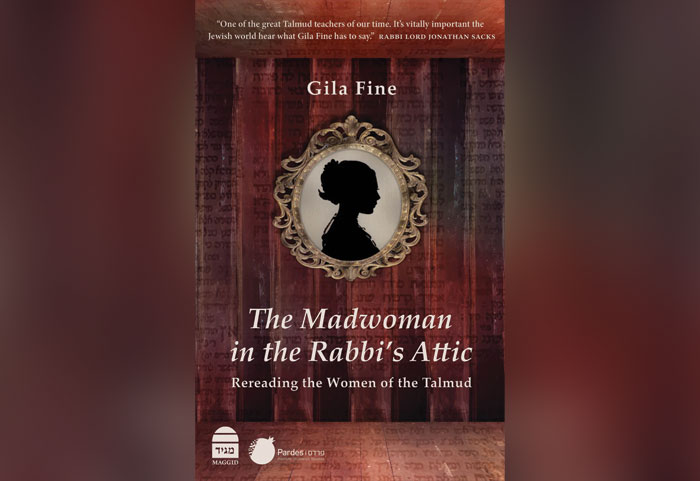
In seeking comfort after the broken confidence of that terrible day – and amidst the Three Weeks of mourning over the Jerusalem Temple’s destruction – we would be wise to turn to the talmudic tale of Marta. As analyzed by Gila Fine in her recently published “The Madwoman in the Rabbi’s Attic: Rereading the Women of the Talmud,” Marta’s ancient story offers a surprising sliver of hope amidst despair.
As Tractate Gittin describes, Marta was one of Jerusalem’s wealthiest women. As confident as a CEO in Start-Up Nation, she had her underlings do her bidding as she sat successful and secure in her C-suite. That is, until the Romans attacked. Amidst the smoldering rubble her riches were no longer of practical use, her rung on the societal ladder rendered irrelevant.
“She sent her messenger and said to him, ‘Bring me fine flour.’
As he went, it was [all] sold. He came and said to her, ‘There is no fine flour, [but] there is white flour.’
She said to him, ‘Go, bring it to me.’ As he went, it was [all] sold. He came and said to her, ‘There is no white flour, [but] there is dark flour.’
She said to him, ‘Go, bring it to me.’ As he went, it was [all] sold. He came and said to her, ‘There is no dark flour, [but] there is barley flour.’
She said to him, ‘Go, bring it to me.’ As he went, it was [all] sold.
She had taken off her shoe, [but still] said [to herself], I will go out and see if I can find something to eat. Dung got stuck to her foot and she died.”
At first glance, Marta’s undoing reads like that of so many other delicate prima donnas getting their just desserts — a talmudic Marie Antoinette ending up without her cake and without her life.
At first glance, Marta’s undoing reads like that of so many other delicate prima donnas getting their just desserts — a talmudic Marie Antoinette ending up without her cake and without her life. But as Fine astutely notes, one can see in the story a determination to overcome her horrific circumstances that inspires others even if Marta herself does not recover.
But as Fine astutely notes, one can see in the story a determination to overcome her horrific circumstances that inspires others even if Marta herself does not recover. As Fine writes:
“The fastidious Marta decides to come down off her high horse and go to the market herself. She doesn’t care that it’s beneath her. She doesn’t care that what she finds there will not be perfect. She doesn’t even care about what others might say. She decides to go outside.”
As Fine observes, there is another, more well-known talmudic figure who also ventures forth despite the danger, following Marta’s emergence. Rabbi Yohanan ben Zakkai, in contrast to Marta, escapes from besieged Jerusalem’s streets and makes it to Yavneh, where he establishes a base of Torah learning and begins repairing the broken psyche of his people.
As Rabbi Lord Jonathan Sacks has reflected: “The world’s greatest civilizations have all, in time, become extinct while Judaism has always survived. In one sense that was surely Divine Providence. But in another it was the foresight of people like Rabban Yohanan ben Zakkai who resisted cognitive breakdown, created solutions today for the problems of tomorrow … and who quietly built the Jewish future.”
The initiative Marta shows in attempting to save herself foreshadowed Rabbi Yohanan’s own efforts to try and save others. Rabbi Yohanan was thankfully more successful, and his victory, Fine argues, should be credited to Marta’s courage.
Concluding her chapter on Marta, Fine offers words fitting the Israel that was made humble in the days following Oct. 7 as they were appropriate for the saved remnant in the era of the Temple’s destruction. They embody the spirit of recovery and reconstruction that has long characterized our people.
“We must act, even if it means we make a mistake. We must choose, even if we choose incorrectly… The world is not a perfect place; uncertainty is the human condition. We can sit around, paralyzed, waiting for certainty, waiting for conditions to be just right – and then we will never do anything at all. Or, like Marta, we can take matters into our own hands, go out into the world, and try, each in our own way, to save a little.”
Rabbi Dr. Stuart Halpern is Senior Adviser to the Provost of Yeshiva University and Deputy Director of Y.U.’s Straus Center for Torah and Western Thought. His books include “The Promise of Liberty: A Passover Haggada,” which examines the Exodus story’s impact on the United States, “Esther in America,” “Gleanings: Reflections on Ruth” and “Proclaim Liberty Throughout the Land: The Hebrew Bible in the United States.”