fbpx

August 1, 2024

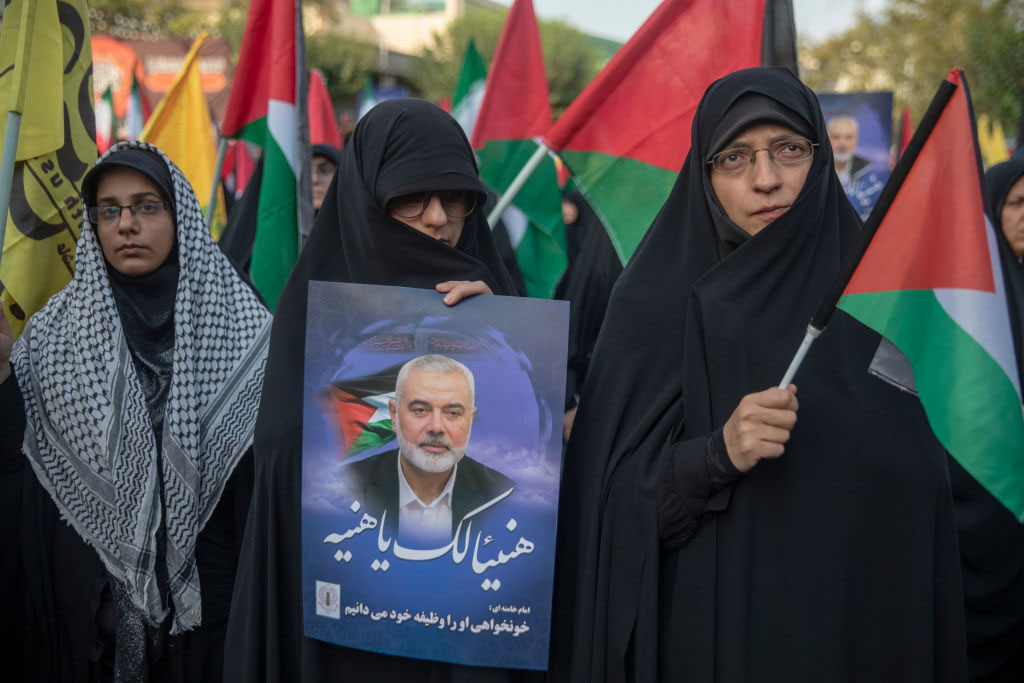
Will Iran Retaliate Against Israel After Assassination of Haniyeh?

In April, when Iran fired about 300 drones and missiles at Israel, it was feared that it was the first step to an all-out war in the Middle East. That did not happen. But as the war in Gaza continues, Hezbollah and Israel trade fire as Israel was forced to evacuate more than 60,000 residents from the North.

The recent assassinations of two key Palestinian leaders by Israel —Hamas’ top military and political leaders, Mohammed Deif, and Ismail Haniyeh, respectively — is unprecedented.

Some were surprised that Israel would be able to kill Haniyeh on Iranian soil, as it required on the ground-levelintelligence.

“By choosing to hit him inside Iran, Israel was able to deliver a message both to Hamas terrorists as well as to the head of the octopus, Iran’s regime, who is funding every single proxy that is fighting Israel,” Lisa Daftari, editor of The Foreign Desk and Middle East expert, said.

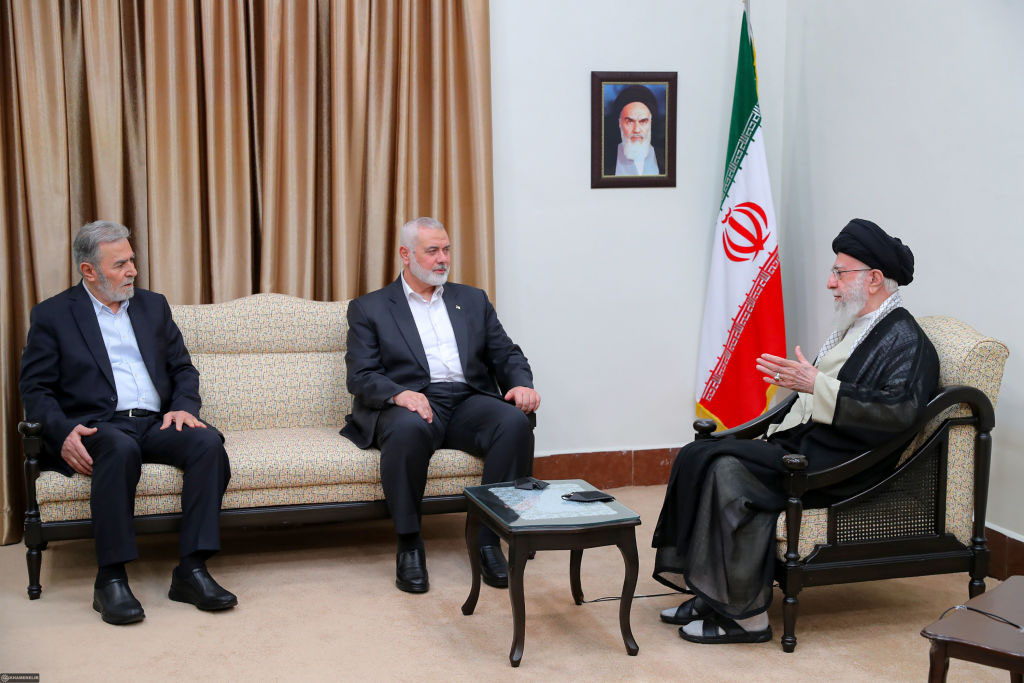
Iran’s supreme leader Ayatollah Ali Khamenei has ordered a strike against Israel. It is unclear exactly what the country will do, or what level of attack would result in an all-out war

“It wouldn’t be surprising to see Tehran insert itself personally here with a retaliatory strike against Israel to show that it will fight back when it is attacked,” Daftari said. “The Islamic Republic was humiliated and as much as it does not want to directly enter the war or escalate matters, it also cannot go without responding to what it deems a direct attack on its soil.”

Iranian citizens have shown no interest in a war with Israel.

In Lebanon, Hezbollah is the de facto ruler of the south with a large arsenal it could use against Israel. It is not known if the show of strength by Israel will cause Iran to have a limited . and back down or a large attack. It is also unclear if the show of force will derail a possible deal for Israeli hostages.

“Hamas had almost 10 months to make a deal until now and did not,” Daftari said. “The fact that Haniyeh is no longer here doesn’t signal an end to talks but perhaps the use of military might in taking out key Hamas players will incentivize (Hamas leader Yahya) Sinwar to sit down and consider what he can get out of a deal before there is no longer an opportunity to have one.”

“Hamas had almost 10 months to make a deal until now and did not. The fact that Haniyeh is no longer here doesn’t signal an end to talks but perhaps the use of military might in taking out key Hamas players will incentivize (Hamas leader Yahya) Sinwar to sit down and consider what he can get out of a deal before there is no longer an opportunity to have one.”- Lisa Daftari

Daftari said the West should recruit “freedom seeking voices” inside Lebanon and Iran and, America and its allies should “support these voices and these movements, there would be a better opportunity to halt the growth and confidence of the Islamic Republic and its terror proxies throughout the region.”

While Israeli Prime Minister Benjamin Netanyahu has received criticism, both for failing to prevent the attacks of Oct. 7 and for not being able to negotiate a second hostage deal, Daftari said Israel took a calculated risk to keep a promise of eliminating enemies of Israel. Did America know what Israel would do in Tehran?

“The U.S. has already come out to say that they did not have any involvement in the hit,” Daftari said. “Generally speaking, there is significant collaboration and intelligence sharing between Israel and the United States. There are times in which they go in together and other times when Israel has to go at it alone. The fact that both the United States and Israel are staying quiet on this might mean that Israel took the risk independently to hit Haniyeh on Iranian soil hoping that it would not tip the scale too much in terms of escalation.”

In an emergency meeting at the United Nations, enemies of Israel blasted the country and some referred to Israel’s actions as “genocide” without mentioning the attacks of Oct. 7 or the culpability of Hamas.

Jonathan Miller, Israel’s deputy permanent representative to the United Nations rebuked them.

“This meeting has been called for by the world’s Number One sponsor of terrorism, responsible for the most horrifying barbarism across the region and the globe, the Islamic Republic of Iran,” Miller said at the UN. “Iran has used its proxies, Hamas the Houthis and the Hezbollah, to target Israel and our citizens from every direction …”

Miller said rather than calls for both sides to restrain themselves, killing of terrorists should be met with relief, in the same way the West reacted to the death of 9/11 mastermind Osama Bin Laden. He said Hezbollah has fired more than 6,500 rockets hundreds of drones and more than 1,000 anti-tank missiles killing dozens of Israeli soldiers and civilians.

“The state of Israel will not stand idly by,” he said. “We will continue to defend ourselves and our citizens…”

Will Iran Retaliate Against Israel After Assassination of Haniyeh? Read More »
Irish Charm

No one is ever taken in by Irish charm if they are Irish,
writes Joseph Epstein, claiming  that the same applies to Jews,
an opinion shared by this Jew, who’s not more admirish
of Biden than of Ireland, which not only once chose to refuse
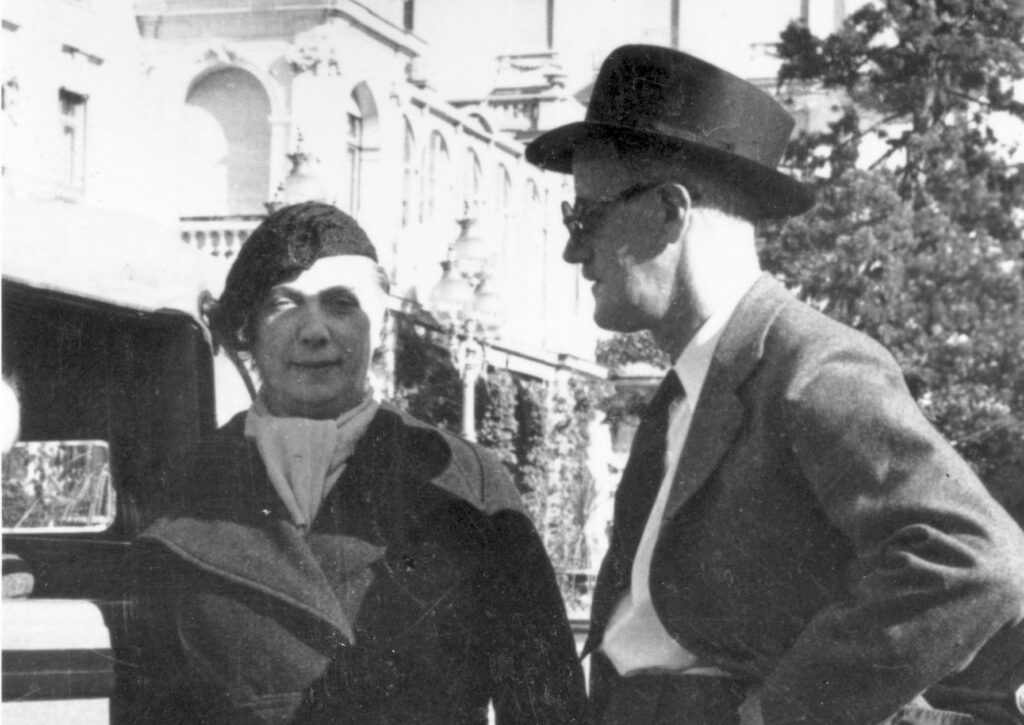
to let Jews in — as once a giant genius James Joyce
historically revealed — and soon will recognize a Palestinian state
which subsidizes terrorists who’re more pro-choice
of death of Jews than making — as has Israel — their own state great.

His choice of his successor, Kamala, from Gilead, I guess
both to America and Israel has brought little balm,
less likely to make either of them declare “Yes, yes, yes,”
than was Bloom’s wife, too willing more men than her Jewish spouse to charm,
in Ulysses’ conclusion illustrating absence of restraint,
a policy whose lack by Israel inspires in Kamala a complaint.


Inspired by an article by Joseph Epstein in the 7/24/24 WSJ “A Not-So-Fond Farewell to Joe Biden: The old boy’s winking Irish charm never worked on me.”

In “The UN would have Israel accept attacks on its citizens,” The Spectator, 29 July 2024, Stephen Daisley writes:

There is no restraint Israel could show that would satisfy the one-eyed umpires of warfare etiquette. They simply do not regard Israeli self-defence as legitimate. And they are in plentiful company. You will search in vain for reports of marches in London, Paris, New York or Sydney decrying the bombing of 12 Arab children. They were the wrong kind of Arabs, bombed by the wrong people. Twelve children won’t show up for football practice in Majdal Shams this Saturday and all the world cares about is restraint.


Gershon Hepner is a poet who has written over 25,000 poems on subjects ranging from music to literature, politics to Torah. He grew up in England and moved to Los Angeles in 1976. Using his varied interests and experiences, he has authored dozens of papers in medical and academic journals, and authored “Legal Friction: Law, Narrative, and Identity Politics in Biblical Israel.” He can be reached at gershonhepner@gmail.com.

Irish Charm Read More »

The Earth on Loan – a poem for Matot-Masei

The areas of open space for the cities which you shall give to the Levites shall extend from the wall of the city outward, one thousand cubits all around.
~ Numbers 35:4

I’m a city boy. I like buildings and things in them.
The infrastructure created to connect them –
sidewalks and funiculars, bridges and
ornate stairways. The skyline created when
building after building is erected so you can
view their ensemble from a distance and
the distinction of a place is revealed.

I’m okay with park spaces too.
Who doesn’t like a good tree
and the story of who planted it
and what happened under it?

And then there’s the vast wilderness
barely kissed by roads.
I was just in Alaska and cities there
are an afterthought, precariously
positioned so you have a place to
hold your possessions while you
trek out into the seemingly infinite
mountains and forests to discover
what the bears have been keeping from us
this whole time.

As much as we’ve built
and the terrible effect it’s had on
the air we breathe and the ability of
the world’s creatures to exist, there is
so much more untouched wilderness.
You could be thousands of miles
from a Starbucks and no one would ever know.

This is the lesson of the Earth we were given.
The open spaces so we can forget where we are.
So we are reminded we are part of this globe,
and not against it. This is what we must maintain
as we borrow this dirt from whoever comes next.


Rick Lupert, a poet, songleader and graphic designer, is the author of 28 books including “God Wrestler: A Poem for Every Torah Portion.” Find him online at www.JewishPoetry.net

The Earth on Loan – a poem for Matot-Masei Read More »

A Bisl Torah – Closure

Whether it is mourning the end of a relationship, grieving a loss, or ruminating over a fissure in a professional or personal journey, we often seek a sense of closure. A meaningful ending to something that held significant meaning. A holy goodbye to a part of our path that has sometimes abruptly, ended without warning.

Pauline Bliss, author of “The Myth of Closure: Ambiguous Loss in a Time of Pandemic and Change” writes, “In relation to loss, closure means termination, finality, something finished. It implies a clear and absolute ending.” However, the author explains that not everyone seeks closure as a means of ending. When people die, we need not end the relationship. When a journey finishes, there is still room to reflect and learn from both roads traveled and avoided. Perhaps, closure is less about ending and more about granting permission. Permission to hold space for what has transpired and also, permission to make new space for what will come next.

Shemot Rabbah offers the following rabbinic parable:

A father gives away his only daughter in marriage. The father says to his daughter, “I cannot ask you to stay, but please, wherever you live, build an extra room for me, so that there is room for me as well.”

The midrash offers an answer to the closure we may seek. An ability to move with the past, holding our memories and emotions and still, creating room for the new. Closure need not mean ending. In fact, sometimes, closure is an invitation to continue, honoring what was and ensuring there is room for what might be.

Shabbat Shalom


Rabbi Nicole Guzik is senior rabbi at Sinai Temple. She can be reached at her Facebook page at Rabbi Nicole Guzik or on Instagram @rabbiguzik. For more writings, visit Rabbi Guzik’s blog section from Sinai Temple’s website.

A Bisl Torah – Closure Read More »

A Moment in Time: “Getting Unstuck”

Dear All,

While visiting Temple Akiba Resident Camp last week, I watched in awe as a group of campers attempted to extricate themselves from this virtual spider’s web.

I admired their determination.

It made me think about the variety of complexities we face each day that cause us to be stuck. For some it’s a relationship or a job. For some it’s a health issue or a fragile emotional state.

Getting unstuck can seem insurmountable. So we keep moving with determination and hope. Sure, there may always be elements of the web that bind us. But even if for a brief moment in time, we can experience the exhilaration of renewal, then our souls have come face to face with God!

With love and shalom,

Rabbi Zach Shapiro

A Moment in Time: “Getting Unstuck” Read More »

Gone Too Soon: A Bereaved Father Vows to Continue His Son’s Legacy

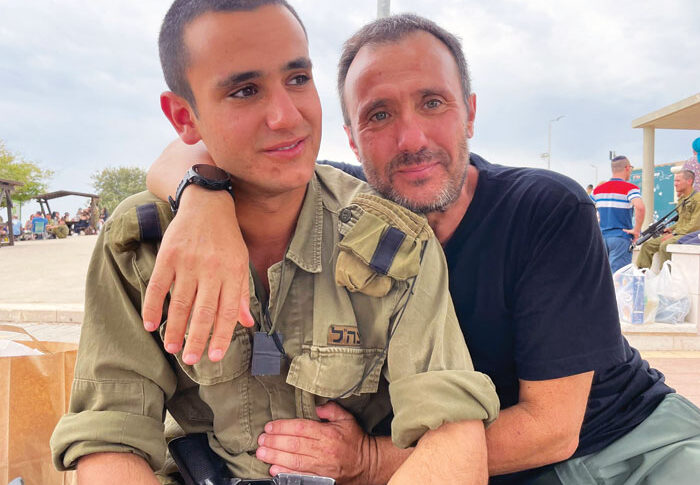
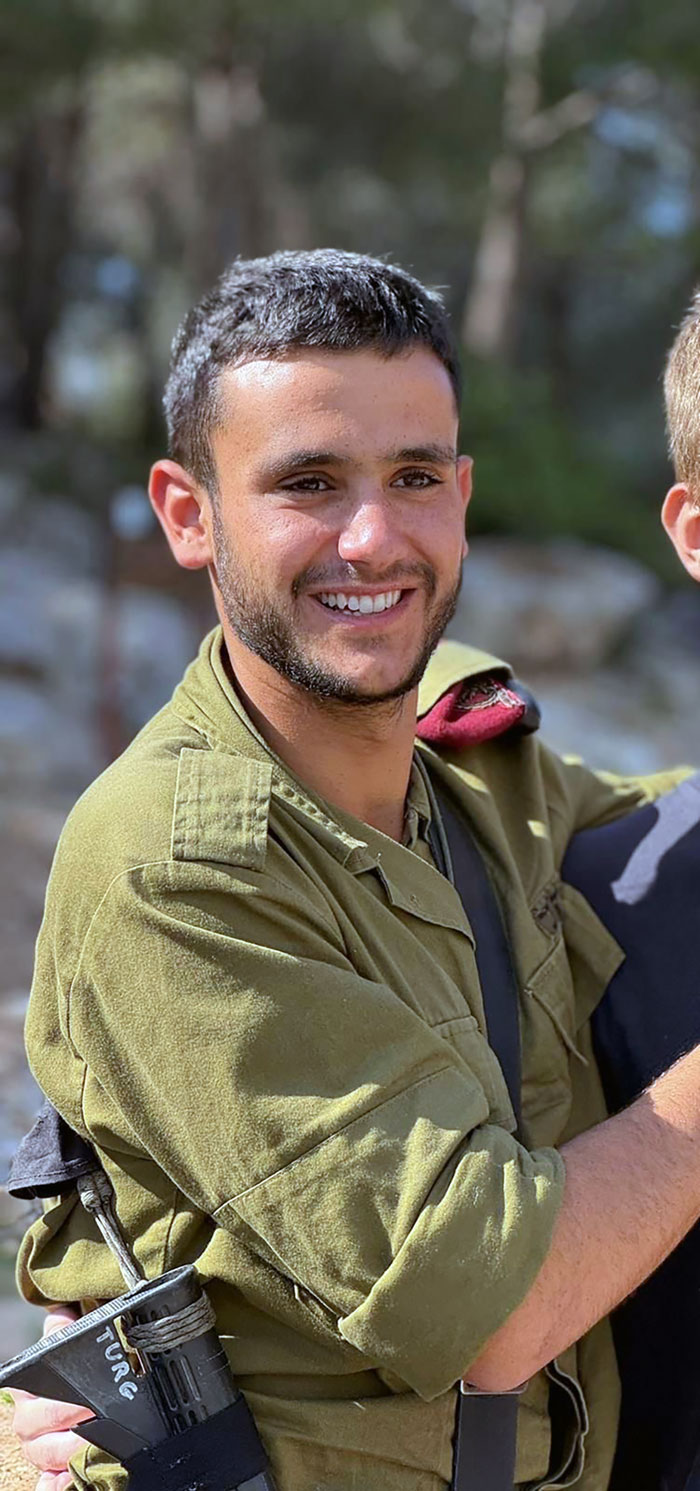
Four days before he received the knock on the door informing him that his beloved son Rif had died on the battlefield, Avi Harush felt that it was going to happen. 

“I started eulogizing him and felt great distress. I even told my wife, and she was somewhat mad at me for saying it, so I kept it to myself,” Harush said in a phone interview with the Journal. “With every day that passed, I felt that Rif was not coming back. I found myself mourning him while I was driving and then was scolding myself for doing so.”

Then came April 6 – and that knock on the door – and Harush knew that premonition was right. The next day, he buried his only son. 

Rif Harush was a combat soldier serving in the combat unit Egoz. He fell in the Gaza Strip during the battle at Khan Yunis. He was 20 years old and had enlisted in the IDF only two months prior to the outbreak of war. His father said it was important for him to take on a meaningful role.

Before entering Gaza, Rif wrote letters to his family, like many IDF soldiers who are asked to write letters in case something happens to them. 

“Why do I risk my life? They did it before me, and they will do it after,” he wrote. “I’m doing it for that elderly lady who is telling me thank you and cries. I’m willing to sacrifice my life for my family, so they will sit peacefully and know that behind them stands a giant army that will watch over them as long as we are on our feet.”

Rif was killed alongside his commander, Captain Ido Baruch, and his comrades, Sergeant Amitai Even Shoshan and Sergeant Eilyahu Tza’iri. 

During the shiva, many bereaved parents came to visit Avi and Sigal Harush. Some had just lost their children in that war and some had lost them in previous wars or terror attacks. “Quite a few of them told me they felt like me, that during the few days before their child got killed, they felt it was going to happen,” said Harush.

A week after the shiva ended, it was Passover. Rif’s parents and his older sister Zoe, 26, booked a hotel in the desert and stayed there for a couple of days. They didn’t feel ready to celebrate the holiday, and Harush said he isn’t sure if they’ll celebrate Rosh Hashanah in October. “It’s going to be weird because Rif loved the holidays so much, and it will be difficult to celebrate them without him.”

The death of his beloved son changed his life in many ways. For one, he decided to quit his job in marketing. “I want to start doing things that have more meaning and help others,” he said. “I can’t elaborate more about it now because it’s still in the early stages.”

Secondly, the family decided to leave Kibbutz Ramat David in northern Israel where Rif was raised and buried and move to Tel Aviv. They needed a change, to start a new chapter in life.

Another decision he, his wife and daughter have made is to continue living and not let grief overcome them. 

“It’s a matter of choice,” he said. “The minute I understood that Rif was killed, I knew I needed to choose life. I’m happy that Zoe and Sigal have chosen the same. Still, it isn’t easy. We still experience daily heartache, hour by hour, even minute by minute, but still we choose to live because that’s what Rif would have wanted us to do.”

“The minute I understood that Rif was killed, I knew I needed to choose life.” – Avi Harush

Throughout the interview, Harush doesn’t express any anger toward the Israeli government or the IDF. He said that at first, he was angry at them and then at Rif for running into the line of fire.

“But with time, you understand that no one forced him to enlist in this unit and risk his life,” he said. 

What pushes him forward is the hope that one day he’ll be able to have a grandson using Rif’s sperm. Many bereaved parents in Israel have fought to allow them to have a grandchild. However, it’s extremely rare. In fact, in 2003, the Israeli attorney general ruled that only a wife or a girlfriend could use the sperm of a deceased partner, not his parents. Since then, every once in a while, there are articles about bereaved parents who are appealing the court to allow them to extract their son’s sperm and have a grandchild (by a surrogate or a woman who is interested in carrying and raising the child). Most often than not, their request is denied. 

After Rif was killed, sperm was extracted from him, per the request of his family. Although the law allows parents to request sperm extraction, it’s not as easy to get an approval to have this sperm used, especially if the deceased wasn’t married or was in a relationship.

“We are now working to pass a law allowing parents to use their son’s sperm to have a grandchild,” said Harush. “We know Rif wanted to have children. He even knew what he is going to name them.”

Harush said that he had spoken with families who are fighting this in court for over 12 years and are spending hundreds of thousands of shekels in legal fees.

“It shouldn’t be this way. We had lost so much and that’s the least that the state of Israel can do for bereaved families.”

When commended for being so strong and optimistic despite everything he had gone through, Harush admitted he has his breaking points. 

“We, the bereaved families, are good actors. From the outside, we seem okay. I’m going out, sitting in coffee shops, meeting people, and it seems like life has gone back to normal. What you don’t see is the constant longing, the pain of thinking about all the things Rif wanted to do but won’t. Rif was full of life, he traveled Israel and the world, he had many friends, he loved listening to music and loved to laugh. I don’t think I had ever seen him sad. He really loved life.”

Harush paused, then continued, “If we had the chance to ask Rif, he would have said, ‘Go on living, live life to the fullest, go and do things you love to do and be happy’ and that’s what we intend to do.”

Gone Too Soon: A Bereaved Father Vows to Continue His Son’s Legacy Read More »

ZAKA Volunteer Speaks in Los Angeles, Artist Joel Rothberg, JFLSA’s ‘Tools for School’

Simcha Greiniman, an expert and an ambassador for Israeli search and rescue organization ZAKA, arrived in Los Angeles in July to speak about ZAKA’s urgent work recovering the bodies of the deceased from the Oct. 7 attack against Israel.

Greiniman’s first stop was at the Israeli Jewish Community Center in Encino. Then on July 9, he spoke at a private home in Valley Village.

The Jerusalem-based ZAKA, made up of search and rescue volunteers, is a highly dedicated nonprofit volunteer organization filling a unique and crucial role in crisis response, serving as a professional authority for handling casualties and disaster victims in Israel.

Since Oct. 7, ZAKA volunteers have been working around the clock in order to save lives, honor the deceased and provide answers to families desperately seeking news of their loved ones.


Artist Joel Rothberg and drawings on display in his gallery. Photo by Ryan Torok

After decades of working in various mediums, Los Angeles Jewish artist Joel Rothberg has released the self-published two-volume book, “The World of Joel,” which chronicles his career as an artist. It is dedicated to his late wife, Diana, who he was with for 55 years before she died last year from brain cancer. 

Much of Rothberg’s artwork—including drawings, relief etchings and photographs, along with the new book—are the focus of an exhibition currently displayed at his home gallery, which he has dubbed “Memorial Gallery,” in honor of his deceased wife.

While Rothberg declined to have his residential address published, he’s encouraging those interested in viewing his work to message him on Facebook and schedule a visit. His profile is facebook.com/joel.rothberg.583.

A strain of darkness runs through his prolific output, which makes sense for an artist who considers Spanish artist Francisco Goya—whose subjects included insanity, witches, fantastic creatures and political corruption—as one of his main printmaking inspirations. Rothberg also cites Jacob Landau, an artist whose output was concerned with the human condition, as an influence.

Rothberg’s imagery is so dramatic, he occasionally frightens family members. When he recently told one of his relatives he wanted to do an artistic take on the Haggadah, the family member attempted to dissuade him.

“Please don’t,” the relative said. “It’ll scare people.”

In an artist’s statement accompanying his new exhibition, Rothberg describes this period of his wife’s illness as the most challenging in his life. 

“For the past several years, including all through Diana’s illness, I created many artworks, some from only scribbles, some experimental ideas of varying success,” he said. “Many of my drawings are fantasist and seem straight out of my unconscious. I allowed myself to just be informal, with only a pen in my hand, and draw…what I guess I was meant to do.”


Volunteers gather in Van Nuys for JFSLA’s “Tools for School.” Courtesy of Jewish Family Service Los Angeles

Jewish Family Service LA (JFSLA) held its annual “Tools for School” event on July 28 at the JFS SOVA Warehouse in Van Nuys. Partnering with American Red Cross and USC, JFSLA distributed free school supplies to underserved school-aged children. In a fun-filled day of activities, snacks and crafts, children “shopped” for school supplies in preparation for the upcoming school year.

JFSLA Young Leaders distributed approximately 400 backpacks filled with essential school supplies, including crayons, markers, colored pencils, rulers, erasers, pencils, pencil sharpeners, writing paper, binders, notebooks, and highlighters.

The event also featured a variety of activities for children, including face painting, temporary tattoos, snow cones and cotton candy.

“Tools For School ensures that every child has the supplies they need to embark on the upcoming school year with confidence,” said JFSLA Young Leaders Co-Chairs Rochell Rotenberg and Adam Dehrey. “The turnout was phenomenal. And the joy and excitement on the children’s faces, as they fill brand new backpacks with pencils and crayons, is unforgettable.”

Organized by JFSLA Young Leaders, “Tools for School” supports JFSLA’s SOVA clients and families, ensuring that every child has access to necessary educational resources. SOVA, JFSLA’s food pantry program, also provides free, nutritious groceries, personal care items, and community resources to all eligible Angelenos.

JFSLA is Los Angeles’ oldest social service agency.

ZAKA Volunteer Speaks in Los Angeles, Artist Joel Rothberg, JFLSA’s ‘Tools for School’ Read More »

Journey to Justice: The Untold Story of Holocaust Survivors and Their Battle Against SNCF

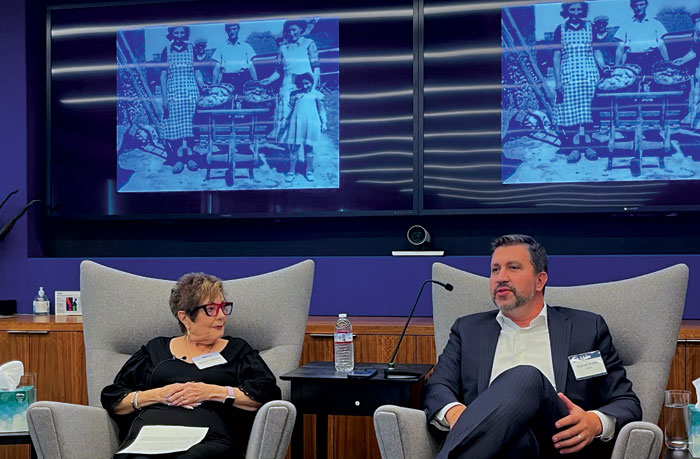
Holocaust survivor Rosette Goldstein and attorney Raphael (Rafi) Prober were guests at an event held in Los Angeles titled “Journey to Justice.” This is likely to also be the name of a Hollywood film that will chronicle the incredible story of the Akin Gump law firm. Goldstein and Holocaust survivor Leo Bretholz worked together to hold Société Nationale des Chemins de fer Français (SNCF), France’s national railway company, accountable for transporting 76,000 Jews and thousands of others to German death camps.

“Everyone says it should be a movie,” said Prober, in an interview with The Journal. “And there are some conversations about making it one.”

During the Second World War, the assets of SNCF were requisitioned by the occupying German forces and used to transport victims to concentration camps in France and Germany. Though it was forced to collaborate, SNCF sought compensation from Germany and France both before and after liberation, charging third-class tickets for those transported in cattle cars.

In the over 70 years since SNCF ran its first deportation train, SNCF has never been held accountable or provided reparations to its victims, many of whom now reside in the United States. For over 10 years, hundreds of survivors and family members of those who perished attempted to hold SNCF accountable for its active role in the Holocaust. 

Akin Gump invested 5,000 hours of pro bono work to seek justice for those Holocaust survivors. In December 2014, an agreement was reached with SNCF to pay $60 million in compensation to Holocaust survivors in the United States, equating to approximately $100,000 per survivor.

“We represented hundreds of survivors,” said Prober. “Out of the 76,000, only 2,000 survived, and of those, most were very elderly; only the very young managed to survive.”

“We represented hundreds of survivors.” – Raphael Prober

One of the survivors the firm represented was Leo Bretholz, who wrote a book called “Leap Into Darkness.” Bretholz escaped from the train along with his friend Manfred Silberwasser by bending the bars on one of the cattle cars. He jumped out from the moving train and evaded capture throughout Europe for the next four years until he left on a ship for New York in 1947. He eventually settled in Baltimore. “He was the lead person we represented,” said Prober. “He testified in two congressional hearings and was really the face of the campaign for justice. Rosette, Leo and I were inseparable.” After Bretholz passed away at 93 years old, Goldstein stepped in as the primary survivor leading the effort to reach a resolution.

Goldstein was born in Paris in 1938 to Polish parents. During the war, her father gave her to the Martin family, who lived on a farm. “They asked him to let them think about it and then came back and said, ‘We have three daughters, and now we have four,’” said Goldstein, who would later have them recognized as Righteous Among the Nations by Yad Vashem. 

Her mother stayed in the apartment building where they used to live, hiding in plain sight, while her father worked as a tree cutter for the Germans.

“Things were getting worse because France was collaborating with Germany,” said Goldstein. “Food was scarce, Jews weren’t allowed to shop until certain hours, and of course, by the time they went to shop, there was nothing left.”

Her father was able to visit her in the evenings, until one night, he stopped coming. “Monsieur Martin came over and said, ‘they took them.’ As little as I was, I knew what that meant. I realized then that I probably would never see my dad again.”

Most of her father’s family perished in the war. She was seven years old when her mother came back for her.

“I hadn’t seen her at that point for two and a half to three years, but I still remembered her,” Goldstein said. “It was hard for her to keep me with her, so I went to a Jewish camp and then she asked the Martins to take me back, which they did.” She stayed with them until she was sent to live with her aunt in the U.S. in 1949.

“I went aboard the Queen Elizabeth ship all alone – my mother didn’t get a visa yet – and all I remember is that I was sick for five days. A week after arriving at my aunt’s house, she sent me to school. I didn’t speak a word of English and when I did, I had a heavy French accent, which I worked hard to get rid of.”

For years she tried to put the horrors of the war behind her. She got married, raised children and lived her life in peace until she met a group of Holocaust survivors in Boca Raton, Florida. “Their stories were different, but in a way, the same as mine,” she said. “We all started talking in schools and haven’t stopped. It was very important for us because there are so few of us left. I’m one of the youngest.”

Rosette met Prober 15 years ago. She heard about the efforts of SNCF to bid on a project for a high-speed rail line in Maryland and was horrified. This was the same company that sent her dad and so many other Jews to their deaths.

“I heard they were going to bid on a high-speed rail in Florida,” she recalled. “So, my husband and I drove to the meeting where they were supposed to put on bids. I was the only survivor there.”

There was a big media presence, and Goldstein made sure to talk to all of them and made big headlines. 

“We were asked to write a note on why we object to the SNCF bid, and I wrote that I felt the French railroad should not be accepted because of what they did in the Shoah. Following that, Governor [Charlie] Crist said that European companies bidding, would have to admit to what they had done during World War II,” said Goldstein.

According to Goldstein, the SNCF then gave the Board of Education in Florida $80,000 with the condition to have the Holocaust curriculum changed. She felt that they were trying to portray themselves in a better light. 

“When I heard about it, I went to one of the meetings and complained about it and also wrote to the head of the education department in Tallahassee,” said Goldstein. “I didn’t think that the taxes of survivors in Florida should be going to teach the Holocaust by the French SNCF. I knew they were going to lie about what happened. I didn’t want my grandchildren to learn a lie.”

After some pressure, the funds were returned to SNCF, and their offer was declined. 

It took many years and efforts to get the SNCF to admit wrongdoing and pay the survivors $60 million. Some of the survivors were living in poverty, and those funds were a godsend, said Prober.

At times there were 40 to 50 people in his law firm working on this case. He estimates they put in more than 5,000 lawyer hours in total. There were years when he spent more than half of his time on this case. “I don’t think we realized how big this case was going to be,” said Prober. “But even if we knew, we still would have done it. It’s one of the cases the firm is most proud of. It was such an important one for such important clients. It was sort of a singular moment in time, and it was an honor, honestly.”

Bretholz was supposed to speak in front of Congress and voice his objection to SNCF building the railroad when he passed away in 2014, months before their big victory. “Rafi called me and said ‘Leo passed away, what are we going to do?’” Goldstein said. “I said, ‘You know what? Book me a flight. We can’t let it go because Leo would be very upset. I’ll be there tomorrow morning.’ I ended up testifying in front of Congress.”

Goldstein’s one regret is that her friend Bretholz didn’t get to see their accomplishment, whom she said reminded her of her father. “He used to call me sometimes in the evenings and we would say, ‘Do you think anything will really come of this?’ and we both used to say, ‘I don’t think so, but we are showing the world the truth, what had really happened.”

A five-part podcast on this story, “Covering their Tracks,” by documentarian Matthew Slutsky, is available on tabletmag.com/podcasts/covering-their-tracks

Journey to Justice: The Untold Story of Holocaust Survivors and Their Battle Against SNCF Read More »

There’s a Difference Between Fighting Terrorists and Terrorizing Them

It turns out the targeted killing of Hamas leader Ismail Haniyeh was even more daring than we thought. According to an investigation by The New York Times, Haniyeh was assassinated by an explosive device covertly smuggled into the Tehran guesthouse where he was staying.

The bomb had been hidden approximately two months ago in the guesthouse, which is run and protected by the Islamic Revolutionary Guards Corps and is part of a large fortress-like compound, known as Neshat.

Haniyeh, who had stayed at the guesthouse several times when visiting Tehran, probably felt very safe.

His assassination, then, must have terrorized those around him. Israel took Haniyeh down when he least expected it, just as it did a day earlier with the #2 man in Hezbollah, Fouad Shukr, in his hideaway in Beirut. Every enemy of Israel, in fact, must now be spooked, including the mother of all enemies who sponsors them all, Iran.

“Both operations will undoubtedly impact Hamas and Hezbollah capabilities going forward, even as they will force both groups to generate some type of response,” Israel Policy Forum analyst Michael Koplow writes. “But the intended audience was less the leadership of both groups as much as it was their Iranian patrons. The aim was to demonstrate to Iran that Israel is not the paper tiger on the verge of collapse that many of Israel’s foes increasingly see when they look toward Jerusalem, and to put to rest any doubts about Israeli capabilities.”

That is enormous value from two daring strikes.

Compare this efficient approach to fighting a conventional war, as Israel has been doing in Gaza for more nearly 10 months. It’s Israel’s longest war. The IDF has fought ferociously and has severely downgraded Hamas, as it is continuing to do. And yet, after so many lives lost on both sides and so much devastation and thousands of Hamas terrorists still entrenched in terror tunnels, one must ask: Has this war of attrition spooked any of Israel’s enemies? Has it helped Israel regain its mystique?

Part of me wishes that Israel would have launched its targeted killing campaign on Oct. 8 and called it “Operation Spook.” No one is arguing that a ground war was not called for– it was. But it might have had a lot more impact had it been supplemented by a campaign to take down big fish like Haniyeh and Shukr.

Let’s go back to that scene right out of “Fauda” or “Tehran” when Israel operatives smuggled that explosive device to take down Haniyeh. In that terrifying operation, they didn’t lose one soldier. They took out one terrorist and one bodyguard. No one else died. Israel kept its mouth shut. There were no loud declarations of total victories or defensive interviews on CNN explaining away massive collateral damage and civilian casualties.

No, there was just a sudden injection of fear in Israel’s enemies.

This kind of approach– speak silently and carry a wicked stick–spooks the top leaders. Instead of fighting them, you terrorize them. Unlike with regular wars, they never see you coming, and they can’t attack you for killing thousands of their people. And the blows can be lethal.

As military analyst Seth Frantzman writes in JPost, “[Haniyeh’s] loss is a major blow because Hamas will have a hard time finding a well-known, popular leader who also has experience in the region and can be the one to craft Hamas’s return to power.”

The point is, if your goal is to deter your enemy, taking down the top players can be highly effective. A leader who’s terrified is less likely to start wars, which means thousands of lives can be saved on both sides. That’s the kind of enemy you want– one who is afraid of making the wrong move.

Yes, it’s important to combat terror groups the traditional way and downgrade their capabilities. But it’s even more important to terrorize the leaders who give the orders so they’ll be a lot more hesitant to use those weapons.

It’s clear that Iran and its Hamas and Hezbollah proxies are now obligated to respond, if only to salvage their honor. As this happens, let’s hope things don’t unravel into an all-out war. Let’s also hope that this show of Israeli strength will  provide more incentive for Hamas to free the hostages.

For now, Israel’s foes have seen up close that Israel is no paper tiger. In the long run, this targeted killing approach may indeed help prevent wars and save thousands of lives. It’s not pretty but it seems to get the right people’s attention: terrorize the terrorists.

There’s a Difference Between Fighting Terrorists and Terrorizing Them Read More »

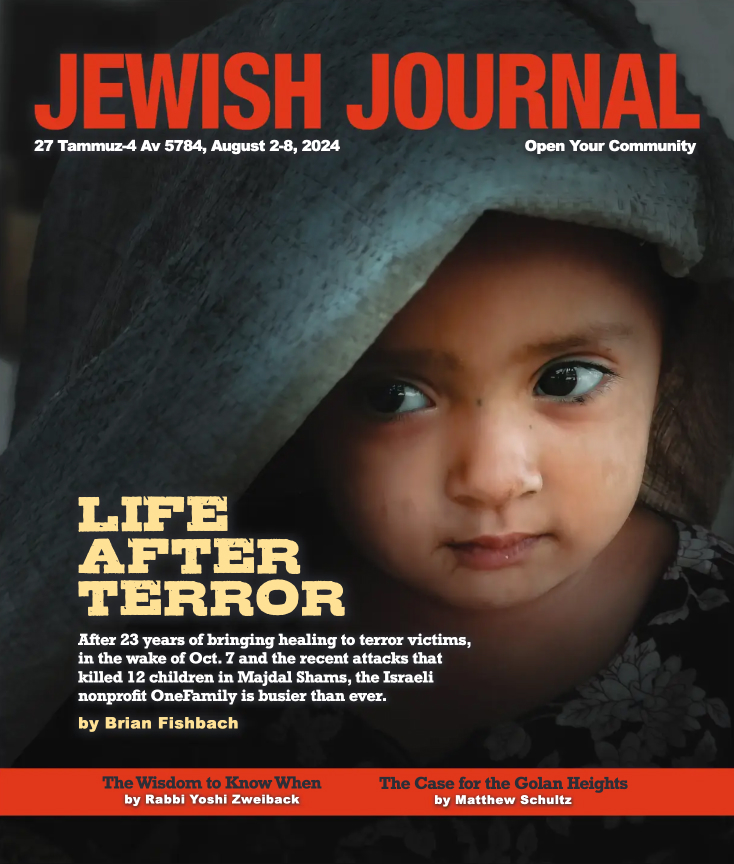
Print Issue: Life After Terror | Aug 02, 2024

CLICK HERE FOR FULLSCREEN VERSION

Print Issue: Life After Terror | Aug 02, 2024 Read More »