fbpx

August 1, 2024

Fish Recipes for the Nine Days of Av

This year, the Nine Days of Av run from sundown on Aug. 4 through Aug. 12. During the Nine Days, meat and wine are prohibited, since they are associated with joy. 

Here are some fish recipes to try during this somber, meditative time. 

Rima Kleiner’s blackened tilapia recipe pairs mild, protein-rich fish with a refreshing watermelon salsa.

“Tilapia is a mild, versatile white fish that’s a natural for summer meals,” Kleiner, MS, RD and blogger at “Dish on Fish,” told The Journal. “In place of traditional tomato and cilantro, we use juicy watermelon cubes with fresh basil, balanced with a kick of lime, jalapeño and red onion.”

“Tilapia is a mild, versatile white fish that’s a natural for summer meals.” – Rima Kleiner

Top the crostini with crumbled feta and, if you like, a drizzle of balsamic glaze.

“Pick up a bag of frozen, individually-wrapped tilapia filets, and you’ll always have a lean protein source on hand,” she said. “They go with anything!”

Crostini with Blackened Tilapia and Watermelon Salsa

Yields 6 appetizers (2 per person)
2 Tbsp olive oil, divided
1½ pounds tilapia
1 tsp paprika
1 tsp onion powder
1 tsp oregano
¼ tsp cayenne pepper
¼ tap salt
1 baguette, sliced thinly into ¼-inch pieces
2 cups watermelon, diced
¼ red onion, finely diced
½ jalapeño, chopped
½ lime, juiced
Dash of salt
¼–½ cup fresh basil, chopped into thin ribbons
½ cup feta cheese, diced into small chunks
Freshly ground black pepper
Balsamic glaze (optional)

Preheat the grill to medium-high. Place fish in a dish. Drizzle both sides of the fish with 1½ tablespoons olive oil; set aside.

Make blackening seasoning by combining paprika, onion powder, oregano, cayenne pepper and salt in a small bowl. Evenly cover both sides of the fish with blackening seasoning. Place fish on grill; cook 3-4 minutes per side or until fish is cooked thoroughly.

While the fish is cooking, make salsa by combining watermelon, red onion, jalapeño, lime juice and salt in a small mixing bowl. Fold in basil; mix gently.

Drizzle bread slices with remaining olive oil. Place bread slices on the grill, using tongs and grill for about 1 minute or until desired crispiness.

Divide cooked fish into 12 crostini-sized (about 2”x3”) pieces and place on top of crostini; top with watermelon salsa, feta and a sprinkle of freshly ground black pepper. Then drizzle with balsamic glaze, if desired.


Lior Lev Sercarz’s Whole Roasted Fish Photo by Thomas Schauer

La Boîte’s Lior Lev Sercarz said that roasting whole fish is simple enough for a child to make. 

“I know because that’s when I first cooked one,” Lev Sercarz told The Journal. “After fishing with my dad, I’d stuff the trout we caught with lemon slices and throw it in the hot oven.” 

His recipe for savory and Aleppo pepper roasted fish is almost as easy. 

“Have the fish cleaned and scaled at the store and, once home, coat the skin with oil and spices; this will roast into a very savory crust,” he said. “A medley of vegetables in and under the fish turns into a natural side dish, making this a one-pan meal that you can walk away from while it’s roasting. 

He added, “Good crusty bread or steamed rice make this a complete dinner.”

Savory and Aleppo Pepper Roasted Fish with Fennel and Cherry Tomatoes

Yields 4 to 6 servings

Spice Blend:
1 whole limon omani (dried Persian lime; 4 grams)
4 whole dried bay leaves
1 Tbsp plus 2 tsp dried garlic slices (8 grams)
1 tsp dried savory (1 gram)
1 tsp Aleppo pepper (2 grams)

Fish:
2 whole white fish (1 lb. each), such as branzino, sea bass, dorade or orata, cleaned and scaled
Extra-virgin olive oil
Kosher salt
2 large shallots, halved and thinly sliced lengthwise
1 fennel bulb, halved, cored and thinly sliced lengthwise
1 pint cherry or grape tomatoes
Lemon wedges, for serving

For the Spice Blend:
Crack and crush the limon omani into smaller pieces by pressing it against a cutting board with your palm, then transfer the pieces to a spice grinder along with the bay leaves and garlic. Finely grind them together and immediately mix with the whole savory and Aleppo pepper.

For the Fish:
Preheat the oven to 400°F.

Using a sharp knife, cut four or five 2-inch-long, 1⁄2-inch-deep slits on both sides of each fish. Drizzle and rub oil all over the fish to coat both sides. Sprinkle the spice blend all over the fish and inside their cavities.

Stuff some of the shallot and fennel slices inside the fish cavities. Put the tomatoes and remaining shallots and fennel in a small roasting pan, half sheet pan or shallow baking dish. Generously drizzle with oil, season with salt, toss to coat and spread in an even layer. Season the fish evenly with salt and place on top of the vegetables.

Roast until the flesh is opaque (you can tell if the flesh is opaque by peeking into the slits) and the blade of a paring knife inserted into the thickest part and removed feels warm when you touch it to your lips, about 25 minutes. Let the fish rest for a few minutes, then serve with the vegetables and lemon wedges for squeezing over the fish.

Fish Recipes for the Nine Days of Av Read More »

Summer Reminiscing— A Fresh Salad for Hot Days

This summer, my daughter Gabriella is spending her summer in Jerusalem on a Yeshiva University internship, writing for an Israeli online publication.

In every phone call, she tells us about her interviews and of her exploits traveling around Israel visiting the Nova Festival site, Sderot, the Gaza envelope, Gush Etzion and Shiloh.

Her most recent journey was to Hebron to visit Maharat Ha’Machpela, the Tomb of the Patriarchs, and the old domed structure of the Avraham Avinu Synagogue, built by Sephardic Jews in 1540.

This call sent me straight back to when I was a college student at YU.

It’s the eighties and I’m sitting on the Madison Avenue uptown bus headed to my happy place: the Metropolitan Museum of Art. It’s where I would go to gaze at the Impressionist masterpieces, works by the Dutch and Italian Baroque masters, the precious jewelry of the Ancient Egyptians and the plush bedrooms of the French aristocracy.

All of a sudden, there’s a kerfuffle at the front of the bus. Two visibly Orthodox Jewish men are trying to pay with dollar bills to get on the bus. I’m a little annoyed—don’t they know you need exact change or tokens?

I want to go help them, but I am embarrassed that I am wearing jeans. No one else stands up, so I go and pay their bus fare.

When they try to pay me back, I realize that they are Israeli. I speak to them in Hebrew, and they ask me where I am from. I explain that I was born in Israel, grew up in Australia, that my family lives in Los Angeles and that I am studying in New York. The taller, more talkative man exclaims “You are the daughter of David and Shoham! We just spent Shabbat with your family in Beverly Hills.”

The man’s name was Rabbi Yigal Kutai, the leader of the Kiryat Arab Community Center. His companion was Rabbi Eliezer Waldman, a member of the Israeli Knesset and founder of Yeshivat Nir Kiryat Arba in Hebron. They were running late to a meeting with Bibi Netanyahu, who was then the Israeli ambassador to the United Nations. They couldn’t find a taxi and had decided to hop on a bus.

Fate dictated that we should meet.

Over the years, Yigal and his lovely wife, Shifra and his children became close family friends. Kiryat Arba and Hebron were as normal to visit as Jerusalem, Tzfat and Tiberius.

Hebron, the first place in Israel that was owned by the Jewish people, was firmly imprinted on my family’s heart.

In 2007, we celebrated two bar mitzvahs there—my son Ariel in January and my cousin Aron in May.

That summer, my brother Danny, a couple of days after marrying my sister-in-law Lemor, took our friends and extended family on a bus tour to Hebron. I will never forget the UN peacekeeper, who filmed us in the casbah, the area of the vegetable market purchased by Jews in the 1800s. After a hot day visiting the ancient sites and modern sights, we celebrated Sheva Brachot at the pizza place there.

I just remember that summer as exceptionally hot. I craved ice cold, sweet, juicy watermelon and fresh salad, which is truly the best Israel has to offer.

Before our visit in Israel was over, my uncle hosted a family meal at his home in Yemin Moshe and I offered to make a salad. I remember shopping at Shuk Machne Yehuda and reveling in the bright colors of the freshly picked produce. The dark red peppers, the cucumbers with their little frilly stems, the almost neon green of the scallions, and each ear of corn, individually wrapped by Hashem, in a pale, papery husk.

“I remember shopping at Shuk Machne Yehuda and reveling in the bright colors of the freshly picked produce.“

I brought all the vegetables home and was inspired to combine two salads into one— the Israeli salad of my birth country and the black bean and corn caviar of my home in California to make a fresh summer corn salad.

Over the years, this has become my most requested salad recipe. I make it almost every Shabbat. I make it for parties and for potlucks. It’s beloved by young and old alike.

The basic ingredients are fresh roasted corn, black beans, crunchy cucumber, red, orange and yellow peppers, green scallions and perfectly ripe avocado, with a creamy honey sriracha dressing, garnished with crispy tortilla chips.

Perfect as a meal for a meatless Monday (or the nine days) or as a side at a barbecue.

We hope you add this fresh summer corn salad to your repertoire.

—Sharon 

Summer Corn Salad

Dressing: 
1/2 cup mayonnaise
1 Tbsp honey
1 Tbsp sriracha or hot sauce
1 tsp granulated garlic powder
1 tsp salt
2 limes, juiced

In a small bowl, add mayonnaise, honey, sriracha, garlic powder and salt. Mix to combine well. 

Add lime juice and mix well. 

Set aside. 

Salad: 
2 ears of fresh corn or 1 can of corn
1 can of black beans, drained and rinsed
1 red pepper, diced
1 orange pepper, diced
1 yellow pepper, diced
2 Persian cucumbers, diced
4 stalks of green scallion, diced
1 ripe avocado, diced
1 bag of tortilla chips, for garnish 

Roast or microwave the corn for 5-7 minutes, until cooked. Cut corn from the cob. 

Place cooked corn in a large bowl. Add the beans, peppers, cucumber, scallions, and avocado. 

Pour dressing over the vegetables and toss well. Garnish with tortilla chips. 


Poisson en Papillote
Photo by Sephardic Spice Girls

A Passion for ‘Poisson’

I have a passion for entertaining, and throwing a party is one of my favorite things to do. 

I love to visualize the colors of the table settings and the flowers, I love to plan the menu and I love to make my guests feel welcome in my home.

Ever since my son Sam became a personal chef (follow him @sheffathome), I have creative, talented competition in the kitchen!

I am inspired by the way he takes traditional Mediterranean recipes and presents them in a thoroughly modern, reductionist style. Everything he creates looks incredibly simple, but his recipes are so refined, distilling the food to its very essence.

One of my favorite collaborations with Sam was for my husband’s surprise 60th birthday party. My son Max took Neil golfing for the day. Neil came home and found our close friends standing with champagne glasses in their hands, ready to toast him.

The guests sat at tables set with woven placemats, stone plates, fancy glasses and lots of vases with vibrant yellow flowers and leafy greens. The ultimate fresh summer backyard touch were the many lemons scattered on the table. The fresh citrus scent put everyone in a happy mood.

Sam loves to serve his meals in multiple courses. This meal started with hot sourdough alongside creamy homemade, hummus, tehina and a cherry tomato and garlic confit. Then seasonal farmers market lettuces, dressed in a light, lemony vinaigrette. Then a melanzane con mozzarella e pomodoro (eggplant with melted mozzarella in a flavorful tomato sauce). Then his homemade pasta noodles in a lemony cream sauce.

The piece de resistance was poisson en papillote, which is French for fish in paper. A delicious filet of white fish served with spinach and broccolini.

Dessert was a fancy birthday cake and hamsa shaped sesame brittle.

Having the small courses encouraged our guests to savor the food and created anticipation for the next course.

It was a wonderful night filled with excitement and laughter.

We share this fabulous fish recipe for the days before Tisha B’Av, but we know that it will become a favorite.

Serving fish “en papillote” sounds really fancy. The theatrical presentation is fantastic—like a surprise on your plate, a little gift ready to unwrap. And while it might look difficult, it’s very easy to make. The recipe adapts to whichever vegetables and seasonings you have on hand.

A firm fish, like halibut, cod, sea bass, or salmon, works best for this cooking method. Pick your favorite fish and choose two or three vegetables to include—asparagus, zucchini, French string beans, shallots, spinach. All will taste delicious. Grape tomatoes or quartered roma tomatoes add a lovely sweetness. Potatoes go well with fish, so I like to add very thin slices of Yukon gold or parboiled fingerling potatoes. Add a salty, umami tang with Kalamata or Castlevetrano olives. Capers add a Provençal touch.

Aromatics, such as fresh oregano, parsley, thyme or basil lend a subtle sweetness. Add a squeeze of lemon juice or for a very French touch, a splash of white wine.

Et voila—you have your nine days fish recipe all wrapped up.. 

—Rachel 

Poisson en papillote

This recipe is for one portion of fish. Multiply the amount needed for each portion. 

1 12”x16” piece of parchment paper
1 6oz seabass filet
1 large gold potato, thinly sliced on a mandolin
6 thin asparagus spears
1 roma tomato, cut into wedges
1 garlic clove, minced
2 tsp of olive oil, divided
Salt and pepper, to taste
6 Kalamata olives, pitted
A few sprigs of fresh oregano or thyme
2 Tbsp white wine or juice of half a lemon

Preheat oven to 400°F.

Place the potatoes in the center of the parchment sheet. Sprinkle with salt, then add 3 spears of asparagus. 

Place the fish on top and season with salt and pepper, wine and fresh herbs. Then add the tomatoes and olives around the fish. 

Drizzle with the remaining olive oil. 

Fold the top and bottom of the parchment closed and twist the ends shut.

Bake in the oven for 20 minutes.


Sharon Gomperts and Rachel Emquies Sheff have been friends since high school. The Sephardic Spice Girls project has grown from their collaboration on events for the Sephardic Educational Center in Jerusalem. Follow them
on Instagram @sephardicspicegirls and on Facebook at Sephardic Spice SEC Food. Website sephardicspicegirls.com/full-recipes.

Summer Reminiscing— A Fresh Salad for Hot Days Read More »

Campus Watch August 1, 2024

Judge Mandates UCLA Develop Plan to Protect Jewish Students

A federal judge mandated on July 29 that UCLA must develop a plan to protect Jewish students on campus by Aug. 5.

The Becket Fund for Religious Liberty, which is representing three Jewish students in a lawsuit against UCLA over the university’s handling of the anti-Israel encampment, announced that the judge, Mark Scarsi, “asked the parties to work out an agreed plan preventing UCLA from allowing discrimination against Jewish students.” Yitzchok Frankel, one of the Jewish students suing the university, said in a statement, “UCLA tried to force me to choose between being a student or being a Jew. I appreciate the chance to have my day in court, and I look forward to being able to return to campus safely next month.” Becket President Mark Rienzi also said in a statement, “It’s disgusting that a prestigious American university would aid and abet antisemitic agitators who harass and segregate Jewish students. UCLA’s behavior needs to change, and we look forward to working out an appropriate plan that protects Jewish students on campus.”

UCLA Vice Chancellor for Strategic Communications Mary Osako said in a statement to the Associated Press that the university’s “committed to maintaining a safe and inclusive campus, holding those who engaged in violence accountable, and combatting antisemitism in all forms. We have applied lessons learned from this spring’s protests and continue to work to foster a campus culture where everyone feels welcome and free from intimidation, discrimination and harassment.”

Anti-Israel Activist Indicted Over Alleged Firebombing of UC Berkeley Police Vehicle

An anti-Israel activist was indicted on July 24 over allegedly firebombing a UC Berkeley police vehicle on June 1.

The Jewish News of Northern California (The J) reported that Casey Robert Goonan, 34, was indicted on two felonies related to the firebombing and one felony on allegedly carrying an unregistered firearm. Goonan was initially arrested in June in connection to four alleged arson attacks at UC Berkeley and arrested again on July 11 after he allegedly lobbed rocks at an Oakland federal building’s window; Goonan allegedly had molotov cocktails on him as he was throwing the rocks. The indictment does not mention the alleged July 11 incident. The charges Goonan faced over the other three alleged arson attacks were dropped.

Jeff Wozniak, Goonan’s attorney, has previously told The J that Goonan is innocent and facing a “political persecution” over his views on “the ongoing genocide in Gaza.” The federal government is handling Goonan’s prosecution.

Report: “Many” Charges Against Anti-Israel Protesters on Campuses Dropped

The New York Times reported on July 21 that more than 3,100 anti-Israel protesters on college campuses nationwide were arrested or detained since Columbia University’s encampment was first erected, but “many” charges against them have been dropped.

The report stated that “most were charged with trespassing or disturbing the peace” while others faced “more serious charges, like resisting arrest.” The report proceeded to examine three schools which had “significant” amounts of protesters arrested: Indiana University Bloomington, University of Texas at Austin (UT Austin) and University of Virginia (UVA).  At Indiana University Bloomington, administrators “abruptly changed campus rules to prohibit temporary structures without prior permission” and arrested 60 protesters on charges of trespassing; those charges were dropped after a local prosecutor concluded that the arrests were “constitutionally dubious.” Regarding the protesters arrested at the UT Austin encampment on April 29 on trespassing charges, Travis County Attorney Delia Garza said it would be hard for her office to prove that those arrested heard — and ignored — the dispersal order given during the pandemonium as officers in riot gear pushed back against the protesters. And at UVA, where 27 protesters were arrested, “the local prosecutor dropped the charges facing seven people after he determined there wasn’t enough evidence,” reported the Times. “He offered the rest an agreement: Their charges would be dismissed in August if they didn’t have any outstanding criminal charges at that time.”

Education Dept., Monterey School District Reach Resolution Agreement Over District’s Handling of Antisemitic Incidents

The Department of Education’s Office of Civil Rights (OCR) announced on July 26 that they reached an agreement with Carmel Unified School District in Monterey County after OCR concluded that the district did not properly handle complaints of antisemitic incidents on campuses.

The district had received 15 notices of antisemitic incidents from 2021-22 and 2023-24 that included swastikas on campus as well as one student who claimed he wanted “to kill all Jews and burn them in their homes.” “While the district responded to these incidents by attempting to identify the responsible individuals and to discipline them when appropriate, OCR found that the district violated Title VI by failing to take effective steps reasonably calculated to eliminate the known hostile environment and to prevent its recurrence,” the press release stated. 

Under the resolution agreement, the district will, among other things, develop updated policies on harassment and “conduct a districtwide assessment of school climate, including specifically regarding antisemitism, with an emphasis on harassment and submit any proposed responsive action to OCR.”

Campus Watch August 1, 2024 Read More »

Table for Five: Matot-Masei

One verse, five voices. Edited by Nina Litvak and Salvador Litvak, the Accidental Talmudist

Aaron the kohen ascended Mount Hor at the Lord’s bidding and died there, on the first day of the fifth month in the fortieth year of the children of Israel’s exodus from Egypt.

– Num. 33:38


Rabbi Shlomo Seidenfeld
Freelance Rabbi, Scholar in Residence Aish/JMI

Moshe/Moses may get all the headlines but dare I say, Aaron’s aspirations and legacy were/are no less crucial to the survival of the Jewish people. Here’s the point: Despite our prodigious achievements in every arena of life, despite our passionate pursuit of social justice in every society we’ve lived in, despite our possession of a tradition and a wisdom that ennobles our souls and expands our consciousness, there is one element that holds us back. One element that continues to challenge us. One element that continues to embolden our enemies. 

INTERNAL DIVISION. 

A Midrash astutely observes a contrast in the texts that describe the Jewish people’s sadness over the loss of Moshe and the loss of Aaron. The implication is clear. Although Moshe’s passing left a profound void, Aaron’s passing was more deeply and poignantly felt. The vacuum created by Aaron’s passing according to the Midrash was experienced viscerally by each member of the Jewish people. 

So, what was Aaron’s passion? What value pedestal did he stand upon? PEACE! Aaron was G-d’s special Peace Envoy to the Jewish people. The brokering of peace between every Jew animated his existence and energized his soul and he pursued it with a holy vengeance! With Tisha b’Av around the corner and with the unnerving and unabashed upswing in antisemitism, we would do well to learn from Aaron. In the prescient words of Pirkei Avot, “Be like the students of Aaron. Love peace, pursue peace, love all people and bring them close to Torah.” 


Nili Isenberg
Judaic Studies Faculty, Pressman Academy

When my father died, I recorded myself singing my own version of Adele’s famous song: “Shalom, Can you hear us? / We pray for peace upon our father, mother, sibling, child, spouse / Who are gone now, and free / May their souls ascend to heaven / And bless our families.” Unexpectedly, my video reached thousands of strangers who wrote touching comments about their own times of loss. 

Death is a profound mystery. In Bava Batra 17a we learn that Miriam, Aaron, and Moses all died with a kiss, as it is written, “by the mouth of the Lord” (translated here as “at the command of God”). In the Midrash, when Moses witnessed the peaceful passing of his brother he longed for that same death, evidenced by the words “as Aaron your brother died” in the verse describing the death of Moses (Deut. 32:50). 

We do not all have a peaceful chance to say goodbye. I think of the families of the victims of Oct. 7. I think of the families of the soldiers dying at war. I think of the families of the hostages who await dreaded news and pray for the strength to have hope in spite of it all. During this week of Aaron’s yahrzeit when we read this parsha, may we have the opportunity to tell our loved ones how much they mean to us. I also dedicate these words to this week’s yahrzeit of my own father, Tzadok Reuven HaLevi z”l, who meant the world to us. https://www.youtube.com/watch?v=XjV08jdkK7I


Cantor Michelle Bider Stone
Temple Beth Am

This verse doesn’t tell of Aaron’s death. It is the retelling of his death. Aaron died a few weeks ago in Parsha Chukat. This week, as the Israelites stand ready to enter the land of Israel, the Torah retells the entire journey from Egypt to this point. And in the midst of recounting the 42 encampments in the wilderness, it includes the place and date of Aaron’s death. None of the other characters who died in the desert are mentioned. In fact, Aaron is the only biblical figure who is given a yahrzeit; the first of Av, which happens to be this coming Monday. 

The first of Av begins the Nine Days when we mourn the destruction of the first and second Temples. Tradition teaches that the Second Temple was destroyed because of the Israelites’ sinat chinam, baseless hatred, for each other. Perhaps Aaron’s death is mentioned in this parsha and he’s the only biblical figure whose yahrzeit is given because he was a rodef shalom, a pursuer of peace, one who was always helping people find common ground and work out their differences. According to Pirkei Avot, Hillel said, “Be like the students of Aaron, love peace and pursue peace, love all human beings, and draw them closer to Torah.” This year, as we mark Aaron’s yahrzeit, perhaps we can learn from him as a peacemaker and help bring an end to the infighting that has become too prevalent in our society today. Shabbat Shalom.


Kylie Ora Lobell
Community Editor, Jewish Journal

Aaron was known as the first marriage therapist. When couples quarreled, he would counsel them and bring them to a place of peace and understanding. According to Chabad, when Aaron passed away, 80,000 Jewish boys were named after him – because he had helped 80,000 Jewish couples reconcile their relationships. After his death, the Clouds of Glory appeared in the desert and unified all the Jews. Aaron died on the first day of Av, the start of the period in which we mourn the loss of our Temples, which fell because the Jewish people harbored baseless hatred towards each other. 

When Moshiach comes, G-d willing soon, we will receive our Third Temple and usher in an era of harmony throughout the world – like Aaron did for the Jewish people when he was alive. Now, especially post- Oct. 7, we must set aside our differences and come together as a people. This starts at home. Work on your relationship with your spouse; treat them like the best friend they are. Tell your children and other family members you love them. Respect them, as well as your friends and your neighbors and strangers. Do not judge your fellow Jew or bad-mouth them. Instead, see everyone with the “ayin tov,” the “Good Eye.” By coming together as one people, as one Jewish family, we can encourage the rest of the world to do the same. Aaron may be gone, but through our thoughtful words and powerful deeds, his legacy will live on. 


Rabbi Natan Halevy
KahalJoseph.Org

Regarding the passing of Moses and Miriam the month is not specified, whereas the Torah informs us of the month, Av, when Aaron passed away. The Torah hints that the month Av has some negative energy, much of which is connected to Aaron’s passing. Av is the month when the spies returned with their negative report of the Land of Israel which led to the 40 years of wandering in the desert. Both temples were destroyed in Av. Losing Aaron was a major blow to the nation. He was a man of peace who brought many blessings to the nation. He was the original Cohen Gadol (High Priest) who served in the original temple, the Mishkan-Tabernacle in the desert. 

Aaron passed away immediately after Moses requested passage through the land of Edom and their king refused. Edom later became the nation of Rome, who destroyed the Second Temple and who exiled Israel, causing great suffering to our nation. We are still dealing with the ramifications of this exile in our current day and age. 

How is all this negativity connected with this beautiful man and his ascension to the higher realms? Aaron did not die a regular death; rather, he died in peace by Hashem’s word and a “divine kiss.” The Torah is teaching us to emulate Aaron and increase in peaceful activities in order to counter the energies of hate that rage in the world. By becoming a beacon of light we can replicate Aaron’s energy in our lives.

Table for Five: Matot-Masei Read More »

Why a Harris Administration Offers Hope in the Fight Against Antisemitism

The 2024 election will be a pivotal moment for how America tackles antisemitism. As someone who’s spent years in the trenches of Jewish advocacy, I can tell you — the stakes are high. We’re looking at some drastically different approaches here and — whether you’re left, right, or somewhere in between — you should be asking tough questions about what each candidate brings to the table. 

Throughout her career, Kamala Harris has demonstrated unwavering commitment to fighting antisemitism and standing in solidarity with Jewish communities. As vice president, she has consistently spoken out against antisemitic incidents and emphasized the vital contributions of American Jews to our nation’s fabric. When the Biden-Harris administration recognized the need to tackle antisemitism head-on, Second Gentleman Doug Emhoff helped to lead the effort to develop the U.S. National Strategy to Counter Antisemitism, showing a proactive approach to addressing this pernicious form of hate.

Moreover, as the first Jewish spouse in the White House, Doug Emhoff’s advocacy and leadership in countering antisemitism cannot be overstated. Over the past four years, Emhoff has leveraged his unique position to draw attention to the rise of antisemitism across the country, advancing stronger protections for Jewish communities and providing us a voice in the highest level of government. Emhoff and the vice president actively seek out and engage in interfaith dialogue and peacebuilding efforts, demonstrating a deep commitment to fostering understanding and combating hate at its roots. 

Meanwhile, JD Vance directly takes his cues from Trump, weaponizing the U.S.-Israel relationship for partisan, personal gain. His track record is obvious: A seat at Trump’s table is a threat to the safety and security of American Jews. Together, the two solicit support from and defend blatant antisemites such as political commentator Nick Fuentes and Kanye West, who, just like Vance and Trump, have been known to spread inflammatory antisemitic conspiracies. Trump and Vance both also tout the “Great Replacement” theory, which invokes historical antisemitic tropes about Jewish influence and control, stoking fears that have long been used to marginalize and persecute our community.

Together, the Republican presidential ticket represents an endorsement of hatred in the highest echelons of power. A Trump-Vance administration would embolden extremist elements, undermining years of progress in the fight against antisemitism. Under their administration, radical hate speech would be the norm, potentially leading to increased violence against the Jewish community, our synagogues and institutions.

The choice is clear. Vice President Harris’ career is a testament to building inclusive coalitions that recognize and confront discrimination. From her childhood collecting tzedakah to planting trees in Israel to her career defending the most vulnerable, Harris approaches the challenges American Jews face with grace and acumen. Most recently, her approach acknowledges that the fight against antisemitism is inseparable from the broader struggle for civil rights and social justice. This holistic view is crucial in addressing the complex roots of antisemitism and building a society that actively rejects all forms of hate.

Harris’ career is a testament to building inclusive coalitions that recognize and confront discrimination. From her childhood collecting tzedakah to planting trees in Israel to her career defending the most vulnerable, Harris approaches the challenges American Jews face with grace and acumen. 

Furthermore, Harris’ unwavering support for Israel aligns with the values of most American Jews. Her commitment to maintaining the strong U.S.-Israel relationship and prioritizing Israel’s security, while also advocating for policies that would advance negotiations for a ceasefire in Gaza, demonstrates a nuanced understanding of the complex issues at play. 

Harris embodies the kind of society we wish to build for future generations, l’dor v’dor, one of multiculturalism and a strong commitment to inclusive communities. In sharp contrast, a Trump/Vance administration would embolden dangerous ideologies that have historically led to our persecution.

Now more than ever, we need leadership that unequivocally rejects hate and works tirelessly to build a more just and inclusive society. For American Jews and all those committed to combating antisemitism, Kamala Harris represents our best hope for a brighter, more secure future.


Ada Horwich is a board member of the Jewish Democratic Council of America and the Nexus Project. She is also a past campaign chair for the Jewish Federation of Greater Los Angeles.  

Why a Harris Administration Offers Hope in the Fight Against Antisemitism Read More »

Rabbis of L.A. | Rabbi Freedman Builds a Different Kind of Career

When Rabbi Daniel Freedman returned to Temple Akiba in the spring to oversee the Culver City Reform synagogue’s religious school program, he brought with him new, groundbreaking viewpoints. Akiba’s former rabbinic intern (2018-2020) arrived declaring “Everything I do is aimed at how do we bring people into the community?”

Religious school parents may be hearing lines new to them.

“Judaism is not just meant to be learned about,” in Rabbi Freedman’s view, “it’s an active religion. One of my goals is not making Jewish education seem like just another school. It is about creating opportunities for you to personalize things you do  — to build your spiritual muscles. How does Judaism give you an entryway into that?” 

The intellectually inclined St. Louis native cringes, and is saddened when he hears cynical parents tell their charges “I had to suffer through religious school. It’s your turn to do the same.”

Young and curious, the rabbi acknowledged that halacha and Reform Judaism are rarely seen in the same sentence. As a rabbinical student, he was interested in probing why not.

“Many Reform Jews have a way of pushing Shabbat aside,” Rabbi Freedman said. “They’ll say, ‘It’s not the way we observe Shabbat. Okay then, how do we create a contemporary Shabbat practice based on our tradition and through the halachic process? I want to bring Judaism here for people to actively engage with, to ask, ‘What are we going to do on Shabbat?’”

You could call him a thinking Jew’s rabbi. He says being a rabbi is about people skills – understanding how people are experiencing things. How do they interact? How do you meet them where they are and bring them along with you? How do you connect with them? 

”Everyone has different ways,” said Rabbi Freedman. “As rabbis, we have to see everyone as a unique individual. It’s about everyone being created in the image of God. “What individual spark does each person have? Connect with it and help them see how their purpose can be developed, how they can be brought into the community.”

What is the difference between connecting with children and with adults? It’s important, he believes, to figure out the different stages of life for the different age groupings. What engages them? What do they need to feel purpose? “Everybody needs a sense of safety and security to be connected,” he said. However, what a child needs to feel safe differs from adult needs. “If we give students, both young people and adults,  a rich environment in which to experience challenges, to connect with peers, it will bring strong connections both to the community and their peers.”

When leading adults, Rabbi Freedman tries to have an intention behind cohorts of learning. “There is something meaningful in inviting certain common groups to study a topic together,” he said. 

Before dedicating himself to the rabbinate, Rabbi Freedman was interested in architecture. He explained the commonality. “Growing up, I was interested in architecture – I still am – because the built environment is all about how people interact with the world, how they see the world and go through it. I can have a profound effect in people’s lives, positively or negatively. I always felt that connection between what I was experiencing in different buildings or houses, how it impacted me. I thought it could be really fun to be a person who creates that. Scale, he said, certainly has “impact.” Whether small makes you feel intimate and something larger makes you feel it could be important.” He also was intrigued by the way space is utilized. “The room we are sitting in could be set up in different ways,” he said. “Even though the ceiling won’t change, we could set up a different experience if the seats were arranged differently.”

As an undergraduate at Ohio State, he thought he wanted to create and interact with people through buildings, but he made a life-changing discovery. “I figured out the design and creation of buildings, for me, was not the most meaningful way for me to interact with people. I would not be in close enough contact with people.”

That reminded Rabbi Freedman of a revealing moment on the way to the rabbinate. He was exploring an architecture program at a school.

“I was asking questions to the students, trying to figure if this was the right path,” he recalled. “One said ‘Look, architecture is like a religion. You have to be completely committed if you are going to be successful. It’s intense, basically a lifestyle.’  It took some time before I realized that is not the religion I want to be devoted to.”

Rabbi Freedman hasn’t entirely let go. “Architecture is interesting,” he said. “I still enjoy it. The connection between the Jewish world and how its buildings are designed – synagogues, museums – and how they impact us.”

Yad Vashem fascinates the rabbi. “It is purposely designed in an interesting way to bring you into the experience of the Holocaust,” he says. “But the religion I really wanted to devote myself to, what I want to create and build, is Jewish community.”

“The religion I really wanted to devote myself to, what I want to create and build, is Jewish community.“ 

Young Daniel was strongly grounded in Judaism – via his family —  as a schoolboy in St. Louis.  When he went off to Ohio State, Hillel was the last piece that made up his mind. “I discovered how Jewish community truly could have an impact on someone,” he said.

Fast Takes with Rabbi Freedman

Jewish Journal: What is your next goal?

Rabbi Freedman: My biggest goal in the next year, for the school, is to assess what is going well, and get to know the parents, kids and teachers. Then I would ask what can strengthen the school and the community. I’ll visit classrooms and speak with parents about what is important to them. Goals will be reached through partnerships. 

J.J.: What is your favorite non-Jewish book?

R.F.: “In Five Years,” by Rebecca Serle. I enjoyed it because it is about looking forward in five years. While it is important to live in the moment, if you are not also thinking about where you want to be, you may miss out on much you want to change.

J.J.: Your favorite Jewish food?

R.F.: Matzah ball soup, and Passover is one of my favorite Jewish holidays. The combination is a winner for me.

Rabbis of L.A. | Rabbi Freedman Builds a Different Kind of Career Read More »

Peaceful Dwellings: A Poem for Matot-Masei

Journeys of reinvention, neighborhood of refuge
and cinema, where a poet’s footsteps echo louder
than those of the redeemer

Squashed olives on the stairs that belong
to cats and brides and graduates

Water gushes toward the valley in cascades
of petals, pebbles

Windmill sails hover over puddles, blurring
the reflection from the wine bar’s lightbulbs

On Pele Yoetz Street, my father pauses and recalls
our first walk one week ago —
the synagogue we passed, the bench we sat on
the photo he took of his wife and daughter
fountains and children in the background
and David’s tower

Nodding, he repeats out loud the names
of all that he may not return to see —
the sultan’s pool, the mayor’s park, the Turkish wall
days in a hotel on Hebron Road
room with a panoramic view

my mother on the edge of the bed
sewing my leggings’ seams
my father on the other side stretched out
resting after hours of sun and stones
and I, child again between them
watching the sky embrace the Mount of Olives, Zion


Julia Knobloch is a rising fifth-year rabbinical student at HUC-JIR Los Angeles. She also serves as poetry editor for Ben Yehuda Press.

Peaceful Dwellings: A Poem for Matot-Masei Read More »

Jewish Diversity Simmers in New Children’s Picture Book, ‘This Is Not a Cholent’

I was a toddler when I first tasted the deeply comforting flavors of gondi, the traditional Persian Shabbat meatball and broth stew that, like most comfort foods, is cooked slowly over a low simmer. 

I was in my 20s when I first discovered two other slow-cooked Sephardic or Mizrahi Shabbat foods: the divine richness of Moroccan dafina, a dish that features tender chunks of beef, garbanzo beans and wheat berries; and t’bit, the succulent Iraqi Shabbat dish that is dripping with meat, cinnamon, paprika, and ginger.

Amazingly, I was in my 30s when I first tasted cholent. 

As opposed to my vivid descriptions of non-Ashkenazi Shabbat foods above, cholent needs no introduction. That’s because it’s widely assumed that all Jews know what it is, and prepare it for Shabbat. In fact, the word, “cholent,” is so ubiquitous that its non-Ashkenazi counterparts are often not called by their own names, whether dafina or t’bit, but simply known as “Moroccan cholent” or “Iraqi cholent.”

But half of the Jewish world — the non-Ashkenazi half — never knew about cholent until recent decades. Half of world Jewry also didn’t know about bagels, lox, latkes, hamantaschen, Hanukkah sufganiyot and yes, even challah, until the mid-20th century, with initial Ashkenazi culinary dominance after the establishment of the modern state of Israel, and with pop culture in America that made it seem as though every Jew stood on a New York City street corner, holding a bagel in one hand and a challah loaf in another. 

At a young age, many Jews are exposed to narratives that highlight only half of the Jewish world, and that is why Jewish children’s books that feature Sephardic and Mizrahi stories, characters and settings are so critical. In this vibrant, mostly new landscape of storytelling — with its absence of Eastern European shtetls, predictable Jewish names, and references to matzah ball soup that are common to many Jewish children’s picture books — Sarah Sassoon is leading the way in captivating young readers with stories about the Jews of the Middle East.

In this vibrant, mostly new landscape of storytelling — with its absence of Eastern European shtetls, predictable Jewish names, and references to matzah ball soup that are common to many Jewish children’s picture books — Sarah Sassoon is leading the way in captivating young readers with stories about the Jews of the Middle East.

Sassoon, a Jerusalem-based author, poet and educator who was born in Sydney, Australia to an Iraqi Jewish family, has written her second children’s picture book, “This Is Not a Cholent” (Kar-Ben 2024), illustrated beautifully by Viviana Garofoli, who was born in Argentina and has illustrated more than 70 picture books. 

Sarah Sassoon. Photo by Rachel Markowitz

Sassoon’s first picture book, “Shoham’s Bangle” (Kar-Ben, 2022), tells the poignant story of a Jewish family who is forced to leave Iraq in the 1950s. Both works are anchored by the character of a resilient, wise grandmother, based on Sassoon’s own grandmother, Nana Aliza. 

The setting of the book also renders the work a standout, as the story is set in Australia and focuses on a little girl named Amira and her grandmother, Nana, who enter the “Best Cholent Competition Down Under.” Young readers will be enthralled to learn that the land that they most likely associate with kangaroos, koala bears and kookaburras is home to many Jews (over 100,000, to be precise, comprising the ninth-largest Jewish community in the world). 

Sassoon grew up in Sydney and learned how to cook t’bit and other Iraqi Jewish dishes with her grandmother. In “This Is Not a Cholent,” Amira and her grandmother, Nana, attempt to wow judges with t’bit, as onlookers relentlessly question their dish. 

“‘This Is Not a Cholent’ was an idea I had soon after as I imagined what it would be like to share my Iraqi Jewish heritage with the Ashkenazi-majority community I grew up with in Sydney,” Sassoon told me. 

The title may be “This Is Not a Cholent,” but symbolically, the book is a proverbial response to anyone who has ever met an out-of-the-box Jew, especially someone who wasn’t Ashkenazi, and declared, “This is not a Jew!” Amira and her grandmother have darker skin and Middle Eastern-sounding names; their cholent isn’t even a cholent; it has its own name, t’bit, because it merits its own name after nearly 3,000 years of Jewish presence in Mesopotamia/Iraq.  

One of the greatest strengths of the story is Sassoon’s deliberate characterization of Amira and Nana as the “other” Jews who nonetheless possess a wonderful, no-nonsense confidence. As onlookers gather to find fault with their entry in the competition, grandmother and granddaughter, writes Sassoon, “went straight to work.” And why not? As Iraqi Jews, t’bit is the primary Shabbat dish that they know. Why wouldn’t they have the audacity to believe that it is as equal a Shabbat staple as cholent? 

As a crowd gathers, watching Amira add ginger, garlic and onion to the pot, someone declares, “This is not a cholent. What’s ginger doing in cholent?” Amira simply smiles and continues to prepare t’bit. 

When another onlooker asks, “Shouldn’t there be potatoes?” it is Amira who reassures her grandmother, “Don’t worry, Nana. They’ll love it.” This is a little girl who truly owns her Iraqi Jewish identity. 

Other questions range from “What’s that unusual aroma?” to “What’s rice doing in a cholent?” There are no rude questions, but there is an air to the questions that reinforce the seemingly inarguable notion that cholent is the definitive slow-cooked Shabbat dish. 

Finally, as shocked passerby watch Nana stitch the t’bit’s stuffed chicken with a needle and thread, everyone gasps. “What’s that for?” the crowd asks in bewilderment. “You can’t sew a cholent!” 

Amira’s response is, for lack of a better term, epic: “Watch us!”

Sassoon, who loves to work with her hands in the kitchen, is not removed from the subject matter. In fact, one can easily imagine her staining her own hands with spices and meticulously grating ginger while preparing t’bit for her family ahead of Shabbat. 

This proximity to the story results in vivid descriptions that leave readers almost tasting and smelling the rich Shabbat stew that Amira and Nana are preparing, from adding “diced tomatoes into the golden mix, along with hefty pinches of paprika, baharat and cinnamon” to throwing in a “joyous sprinkle of cardamom.” While the world around them cannot wrap its head around their unfamiliar cholent, Amira and Nana focus on one task: Infusing their dish with ancient flavors, and a heaping amount of Jewish joy. 

But Amira is not made of stone, and eventually, the constant questions begin to rattle her. “I had fun creating the shocked responses of the audience to all the weird and wonderful ingredients that make up a t’bit (so utterly different to European Jewish cholent),” said Sassoon. 

“What I didn’t expect was how anxious Amira would become, and I realized that’s the real story for me,” she added. “The anxiety that can accompany being different, and sharing your own unique culture with a wider audience.”

When the bewildered crowd declares, “Whoever heard of eggs in a cholent!”, Nana, like any sage grandmother, calmly responds, “Stewed brown eggs are part of our tradition, passed from my grandmother to my mother, to me, and now to Amira.” 

“I think my grandmother’s support was that she was who she was without apology,” said Sassoon. “So proud and dedicated to producing her complicated, time-consuming dishes that she grew up with. She was like a last link to that ancient Iraqi Babylonian Jewish world where Jews were a third of [the population of] Baghdad in 1917.”

Sassoon continued, “Her pride and knowing who she was as a Jew with a very special, rich and unique Jewish story still gives me strength today, to share Iraqi Jewish food and stories.”

In the end, it is not about winning or losing the “Best Cholent Competition Down Under,” and I won’t spoil the ending for readers. At its core, “This Is Not a Cholent” is about having a literal seat at the proverbial Jewish table, even if that seat is sprinkled with remnants of cinnamon, paprika and a child’s desire to own and enjoy her ancient heritage. 

Thankfully, Nana and Amira do not ask for a seat at the proverbial table; for the most part, they know they are entitled to a seat, and that their contribution is just as valid as the others. No permission is asked to enter a cholent competition; no explanations are offered to argue that Iraqi Jews are just as Jewish as anyone else. “Whatever happens,” Nana tells her granddaughter, “We know this is our own special cholent that’s traveled through many hands to be here.”


Tabby Refael is an award-winning writer, speaker and weekly columnist for The Jewish Journal of Greater Los Angeles. Follow her on X and Instagram @TabbyRefael

Jewish Diversity Simmers in New Children’s Picture Book, ‘This Is Not a Cholent’ Read More »

The Inspiring Teaching of the Talmud’s Tragic Woman

In a bitterly ironic twist of fate encapsulating Israel’s confidence roughly nine months ago, two books arrived in stores almost immediately after Hamas’ horrific surprise attack on Oct. 7. One touted “The Genius of Israel.” The other, published by Harvard, was “The Art of Military Innovation: Lessons from the Israel Defense Forces.” The certainty of the manuscripts as they went to press were shattered by the time the books hit the shelves. 

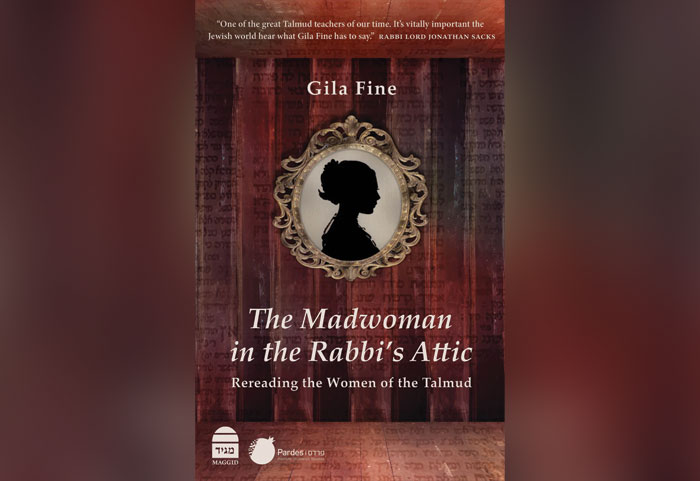
In seeking comfort after the broken confidence of that terrible day – and amidst the Three Weeks of mourning over the Jerusalem Temple’s destruction – we would be wise to turn to the talmudic tale of Marta. As analyzed by Gila Fine in her recently published “The Madwoman in the Rabbi’s Attic: Rereading the Women of the Talmud,” Marta’s ancient story offers a surprising sliver of hope amidst despair.

As Tractate Gittin describes, Marta was one of Jerusalem’s wealthiest women. As confident as a CEO in Start-Up Nation, she had her underlings do her bidding as she sat successful and secure in her C-suite. That is, until the Romans attacked. Amidst the smoldering rubble her riches were no longer of practical use, her rung on the societal ladder rendered irrelevant. 

“She sent her messenger and said to him, ‘Bring me fine flour.’

As he went, it was [all] sold. He came and said to her, ‘There is no fine flour, [but] there is white flour.’

She said to him, ‘Go, bring it to me.’ As he went, it was [all] sold. He came and said to her, ‘There is no white flour, [but] there is dark flour.’

She said to him, ‘Go, bring it to me.’ As he went, it was [all] sold. He came and said to her, ‘There is no dark flour, [but] there is barley flour.’

She said to him, ‘Go, bring it to me.’ As he went, it was [all] sold.

She had taken off her shoe, [but still] said [to herself], I will go out and see if I can find something to eat. Dung got stuck to her foot and she died.”

At first glance, Marta’s undoing reads like that of so many other delicate prima donnas getting their just desserts — a talmudic Marie Antoinette ending up without her cake and without her life.

At first glance, Marta’s undoing reads like that of so many other delicate prima donnas getting their just desserts — a talmudic Marie Antoinette ending up without her cake and without her life. But as Fine astutely notes, one can see in the story a determination to overcome her horrific circumstances that inspires others even if Marta herself does not recover.

But as Fine astutely notes, one can see in the story a determination to overcome her horrific circumstances that inspires others even if Marta herself does not recover. As Fine writes:

“The fastidious Marta decides to come down off her high horse and go to the market herself. She doesn’t care that it’s beneath her. She doesn’t care that what she finds there will not be perfect. She doesn’t even care about what others might say. She decides to go outside.”

As Fine observes, there is another, more well-known talmudic figure who also ventures forth despite the danger, following Marta’s emergence. Rabbi Yohanan ben Zakkai, in contrast to Marta, escapes from besieged Jerusalem’s streets and makes it to Yavneh, where he establishes a base of Torah learning and begins repairing the broken psyche of his people. 

As Rabbi Lord Jonathan Sacks has reflected: “The world’s greatest civilizations have all, in time, become extinct while Judaism has always survived. In one sense that was surely Divine Providence. But in another it was the foresight of people like Rabban Yohanan ben Zakkai who resisted cognitive breakdown, created solutions today for the problems of tomorrow … and who quietly built the Jewish future.”

The initiative Marta shows in attempting to save herself foreshadowed Rabbi Yohanan’s own efforts to try and save others. Rabbi Yohanan was thankfully more successful, and his victory, Fine argues, should be credited to Marta’s courage.

Concluding her chapter on Marta, Fine offers words fitting the Israel that was made humble in the days following Oct. 7 as they were appropriate for the saved remnant in the era of the Temple’s destruction. They embody the spirit of recovery and reconstruction that has long characterized our people.

“We must act, even if it means we make a mistake. We must choose, even if we choose incorrectly… The world is not a perfect place; uncertainty is the human condition. We can sit around, paralyzed, waiting for certainty, waiting for conditions to be just right – and then we will never do anything at all. Or, like Marta, we can take matters into our own hands, go out into the world, and try, each in our own way, to save a little.”


Rabbi Dr. Stuart Halpern is Senior Adviser to the Provost of Yeshiva University and Deputy Director of Y.U.’s Straus Center for Torah and Western Thought. His books include “The Promise of Liberty: A Passover Haggada,” which examines the Exodus story’s impact on the United States, “Esther in America,” “Gleanings: Reflections on Ruth” and “Proclaim Liberty Throughout the Land: The Hebrew Bible in the United States.”

The Inspiring Teaching of the Talmud’s Tragic Woman Read More »

Court Orders UCLA to Form Plan to Protect Jewish Students After Anti-Israel Protests

A federal judge ordered Monday July 29 that the University of California, Los Angeles craft a plan to protect Jewish students, months after pro-Palestinian, anti-Israel protests broke out on campus.

Three Jewish students sued the university in June, alleging that they experienced discrimination on campus amid demonstrations against the Israel-Hamas war.

Yitzchok Frankel, a UCLA law student who is Jewish, said in the lawsuit that he declined an invitation from the director of student life to help host a lunch gathering because he did not feel safe participating.

“Under ordinary circumstances, I would have leaped at the chance to participate in this event,” Frankel said. “My Jewish identity and religion are integral to who I am, and I believe it is important to mentor incoming students and encourage them to be proud of their Judaism, too.”

But Frankel argued UCLA was failing to foster a safe environment for Jewish students on campus.

UCLA spokesperson Mary Osako said the school is “committed to maintaining a safe and inclusive campus, holding those who engaged in violence accountable, and combatting antisemitism in all forms.”

“We have applied lessons learned from this spring’s protests and continue to work to foster a campus culture where everyone feels welcome and free from intimidation, discrimination and harassment,” Osako said in a statement.

The university was ordered to craft a proposed plan by next month.

The demonstrations at UCLA became part of a movement at campuses across the country against the Israel-Hamas war. At UCLA, law enforcement ordered in May that over a thousand protesters break up their encampment as tensions rose on campus. Counter-demonstrators had attacked the encampment overnight, and at least 15 protesters suffered injuries. In June, dozens of protesters on campus were arrested after they tried to set up a new encampment.

Court Orders UCLA to Form Plan to Protect Jewish Students After Anti-Israel Protests Read More »