
Jewish Contributions to Humanity #2:
Original research by Walter L. Field.
Sponsored by Irwin S. Field.
JONAS SALK (1914-1995) b. New York City. The polio vaccinator.
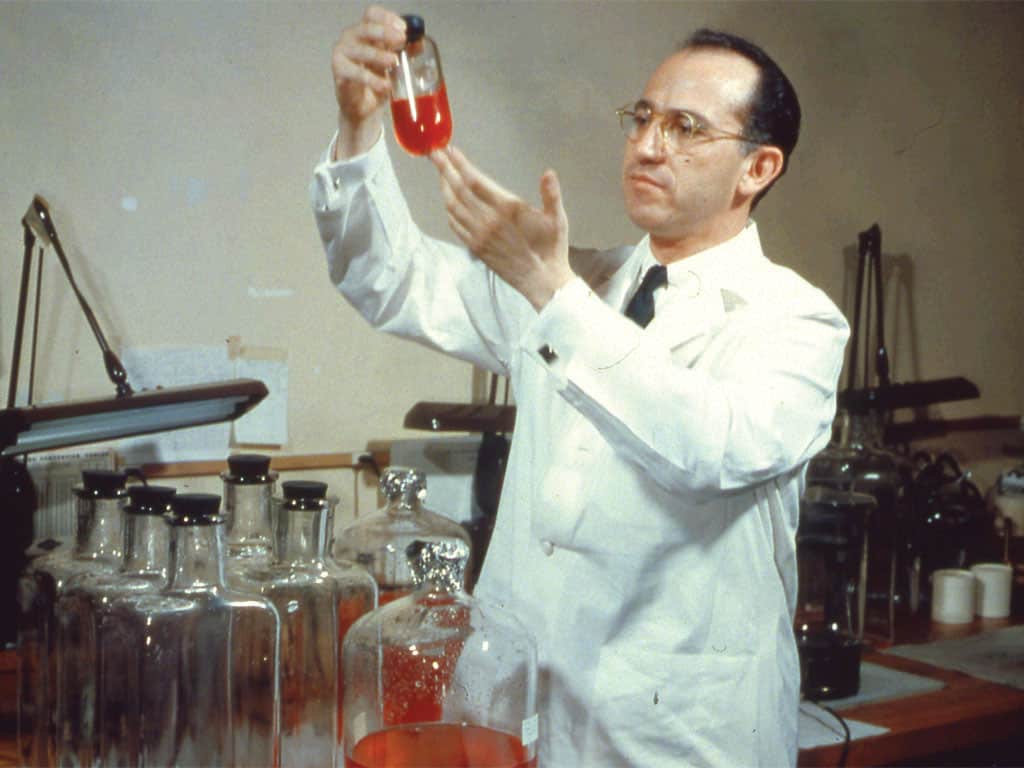
To understand Salk’s impact on medicine, one must first understand the fear that polio held over the populations of wealthy countries in the 1950s. Thousands of children died from the virus every year in the United States, and tens of thousands suffered from it, including Itzhak Perlman and Franklin Roosevelt. During an appointment in 1947 at the University of Pittsburgh School of Medicine, Salk used a method he practiced earlier when researching flu vaccines, and designed a polio vaccine with a dead polio virus (he injected it with formaldehyde). Salk was eschewing the prevailing scientific consensus, which was that only live viruses could produce an effective vaccine. After testing his “killed virus” vaccine, though, on his family, and after overseeing a massive clinical trial, Salk proved to the world that he had discovered the vaccine for the most feared postwar disease in the developed world. Remarkably, he declined to patent the disease, effectively turning down the fortune that would’ve awaited him.
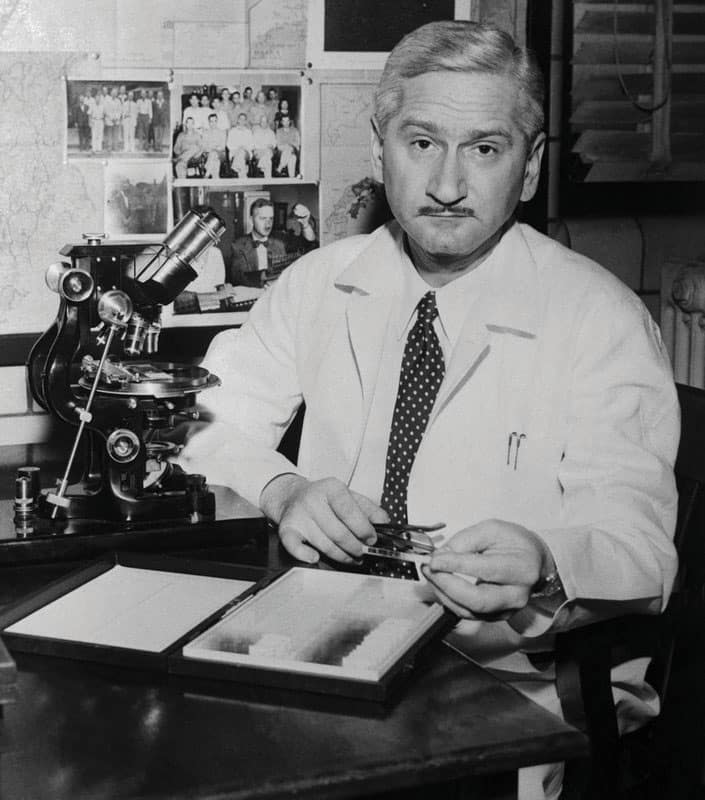 ALBERT SABIN (1906-1993) b. Bialystok, Poland. The polio eradicator.
While Salk’s vaccine prevented most of Polio’s harmful and deadly complications, it did not prevent the initial infection, which occurred in the intestines. That’s where Albert Sabin came in, developing an oral vaccine with a weakened version of the live virus—a vaccine that prevented polio from ever establishing itself in the intestines, where it would otherwise multiply and proliferate. Although polio is virtually eradicated in the developed world, it still exists in small numbers in developing countries, and the World Health Organization remains concerned about its potential to spread.
CESAR MILSTEIN (1927-2002) b. Bahia Blanca, Argentina.

Nobel Prize in Physiology or Medicine 1984. Aiding the body’s natural defenses.The body’s natural antibodies are remarkable, but not perfect, at tagging harmful elements (bacteria, viruses) for the immune system to attack. Cesar Milstein helped complement the body’s natural defense system by producing monoclonal antibodies in 1975. These are laboratory-produced antibodies that can be designed to attach to specific cells that the body’s immune system may not have previously identified as harmful. Monoclonal antibodies are now used in drugs for cancer, arthritis, Crohn’s disease, colitis, and numerous other diseases. They are one of modern medicine’s most promising tools for fighting a multitude of illnesses that afflict humanity, and they play a central role in our relentless efforts to fight cancer.