The last time I went to Carnegie Hall to see something Jewish, it didn’t go well. In October I went to hear the Israel Philharmonic but was denied entry because my pocketbook was “too big.” Security had nothing to say about the hundreds of protesters screaming, spitting, and throwing stuff at the Jews in line.
Last week, holding the tiniest bag I could find, I looked at the heavy police presence from across the street with a group who were there to see a performance of traditional Japanese arts. “Why so many cops?” one woman asked. “Well, there’s also a show about Jews and Israel,” I told her. She shook her head, “I’m so sorry you have to deal with this.”
It was the voice of a moral conscience; a voice we’ve been waiting for but rarely came. And the perfect prelude to a truly incredible evening of pride, resilience, and hope.
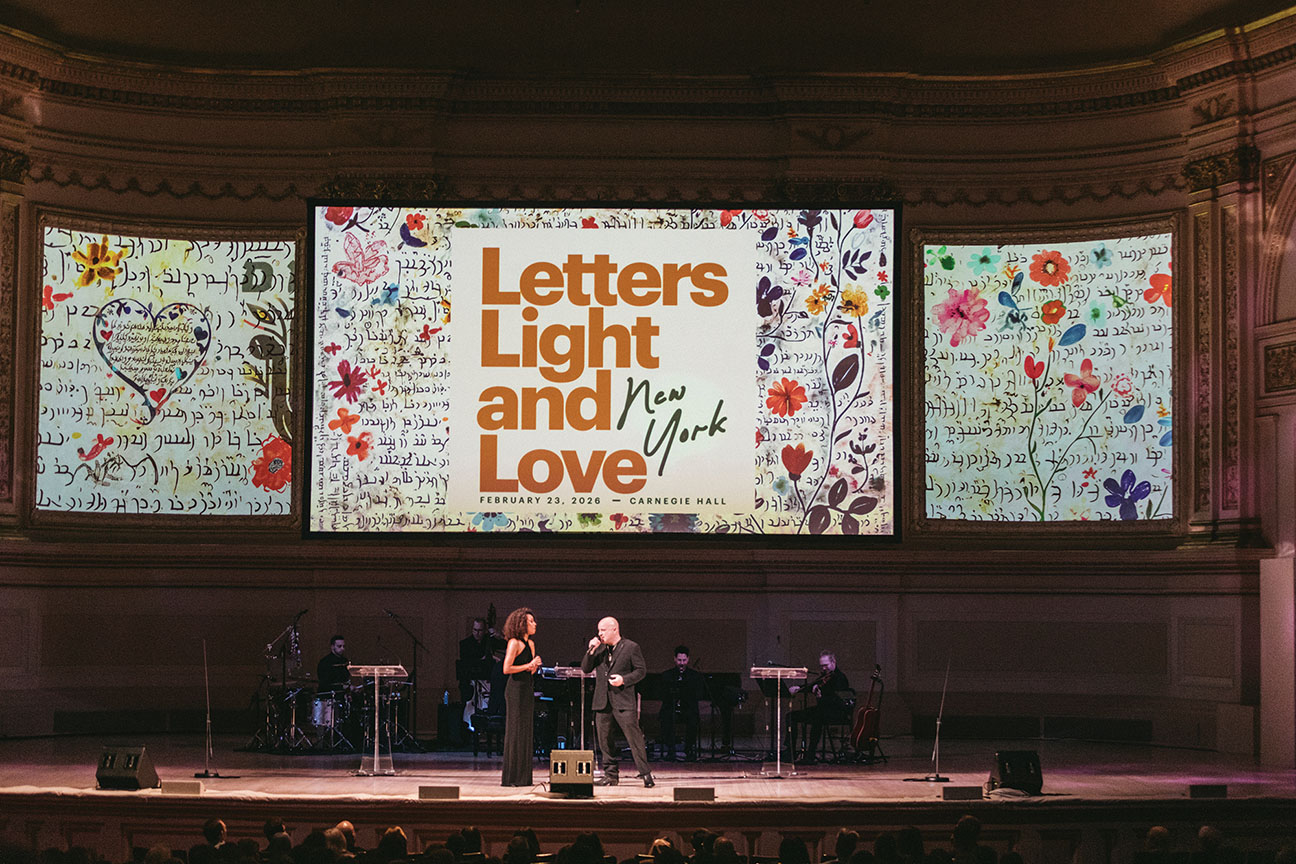
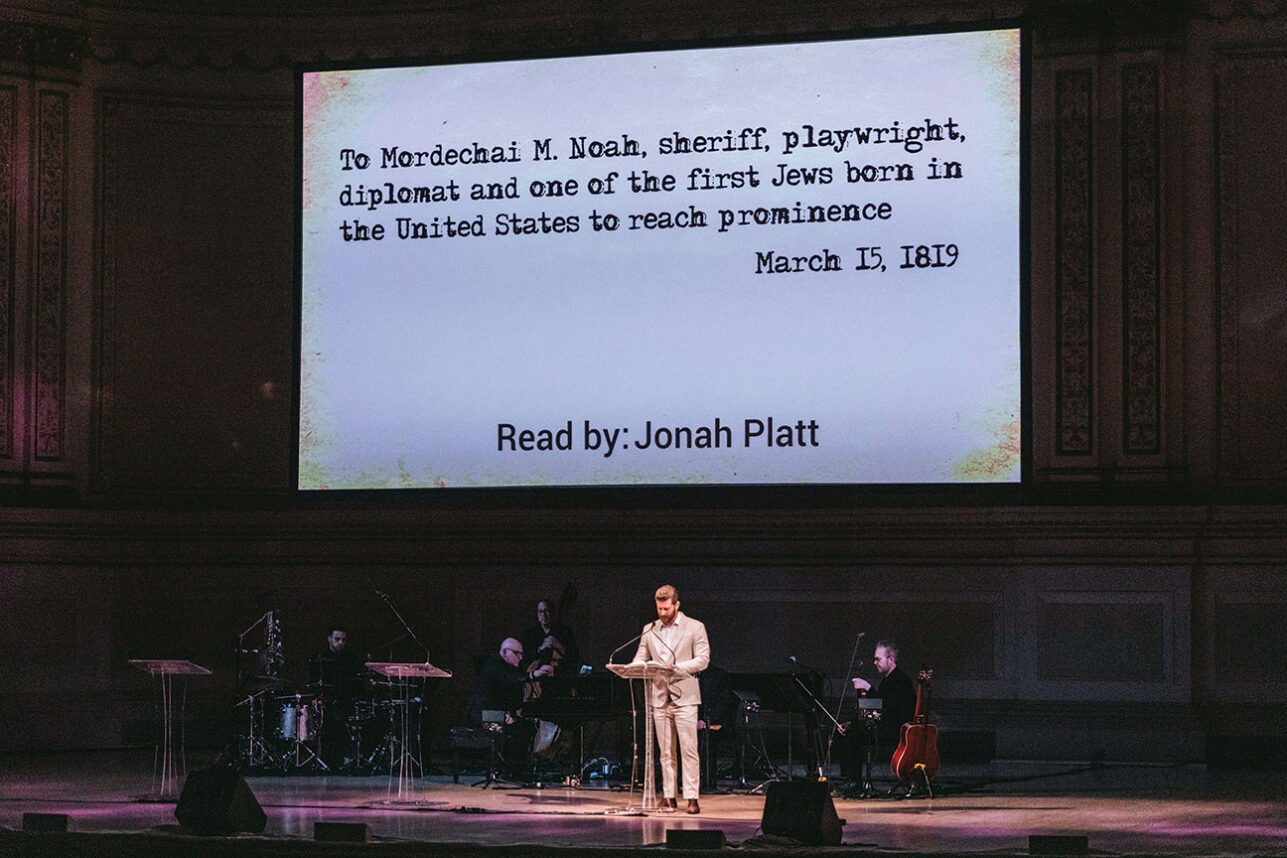
The New York premiere of Letters, Light and Love, sponsored by UJA-Federation of New York, featured an all-star cast who brought to life letters written about Israel across centuries by leaders and thinkers such as Maimonides, Julius Caesar, Winston Churchill, Golda Meir, Albert Einstein, and Leonard Bernstein, interwoven with powerful personal stories.
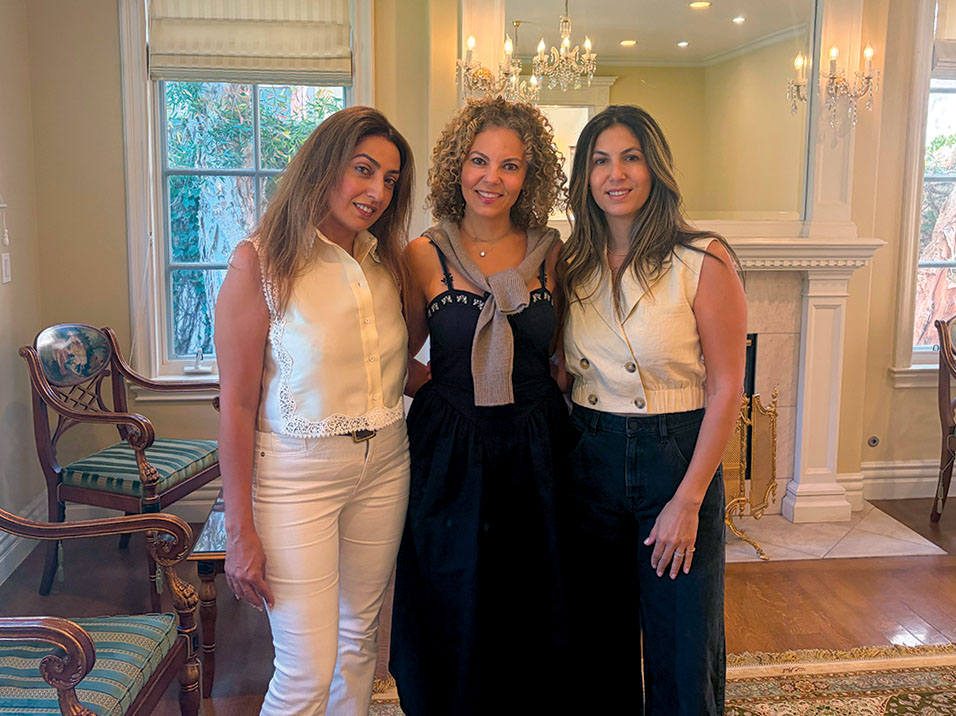
Co-produced by Sarah Sultman and Michal Noé, the letters highlight the historic link between the Jewish people and the land of Israel spanning thousands of years. “This show seeks to restore context and emotional continuity. Our story is ancient, human, complex, and still unfolding. It did not begin in 1948, and it does not end with our narrative hijacked by others,” read the beautifully designed program.
The one-night-only performance in the Stern Auditorium’s Perelman Stage was the second showing of the play, which ran in London’s West End in 2024. The idea came to Sultman, who is the co-founder of the Gesher School in London, in early November 2023, while on a solidarity mission to Israel.
While visiting a number of kibbutzim, Sultman had the idea of using letters to tell our story. “I suppose it was driven by the pervasive narrative that Jews are white colonizers from Poland,” said Sultman. “That our connection to Israel [began] in 1948. For me, Judaism and its connection to Israel are inextricably linked and always have been.”
After the trip, Sultman began working with the National Library of Israel, digging through archives and accumulating hundreds of letters. “We have a 3,000-year-old history. We have letters from across time. [We created] a performance, interwoven with music, that tells our story in a way that is educational, soulful, and moving. It’s also purposeful. It should be used as a project of regrowth in Israel.”
Woven together with beautiful music and songs, the letters form a sacred, deeply human narrative expressing Jewish unity and Israel’s enduring spirit, resilience, and purpose.
To cast the play, Sultman and Noé only wanted to include actors and musicians who are “proud of their Judaism and Zionism.” For the NYC show that included Mark Feuerstein, Noa Tishby, Julianna Margulies, Matisyahu, Debra Messing, Jonah Platt, Amy Schumer, David Schwimmer, Lawrence Bender, Emmanuelle Chriqui, David Draiman, Tovah Feldshuh, The Maccabeats, Rona Lee Shimon, and Ariel Stachel.
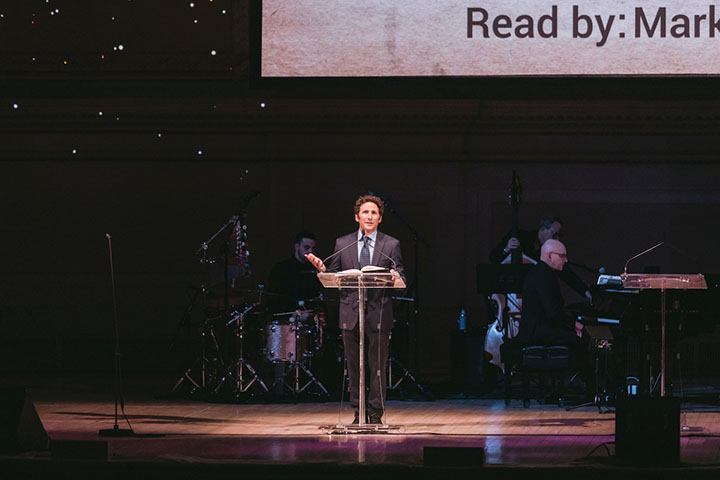
Divided into three chapters—Our Journey, Our Arrival, Our Land—the show opened with the reading of a letter written by Israeli astronaut Ilan Ramon to his professor, seeking guidance on “man’s purpose in life.” It closed with excerpts from a letter written by Rabbi Lord Jonathan Sacks in 2001, telling Jews that each one is a “letter in the scroll.”
Other readings included notes written by Maimonides to Rabbi Yaphet bar Eliyahu the Judge, in the 12th century; Stephen Norman, the only grandchild of Theodor Herzl, on his first visit in the years before Israel’s statehood was declared; Esther Cailingold, who was mortally wounded defending the Jewish Quarter in Jerusalem during Israel’s war of independence; and a final letter written by Elkana Wiesel to his family, just before he fell in battle in the Gaza Strip in January 2024.
“Words have immense power,” wrote Robert Messick, the director, in the program. “Right now it feels that power is being weaponized against our community with devastating and dangerous results. But in ‘Letters, Light and Love’ we look at how that power can be used for good. How letters have been used to reach out through the darkness of fear, isolation, and hatred to dispel the shadows and to bring in the light.”
What made the evening magical was the music—our music. David Draiman singing Leonard Cohen’s “Hallelujah” and Simon & Garfunkel’s “Sound of Silence”; Cantor Azi Schwartz of Park Avenue Synagogue; the Maccabeets; “Over the Rainbow”; Matisyahu ending with “One Day.”
Only one presenter received a standing ovation: Eli Sharabi, the former resident of Kibbutz Be’eri who was kidnapped by Hamas and held in Gaza for 491 days. In an emotional speech, Sharabi thanked American Jewry for its support. Proceeds from the play will go toward rebuilding Be’eri.
“’Letters, Light, and Love’” is a celebration of not just the shared history and heritage of our people but of the beauty and resilience that we find together,” said Noé. “Throughout the centuries, when faced with hate, our response is always to focus on the light and to look forward and rebuild, and we are honored to be a conduit for people to come together and take comfort and joy in our eternal story.”
The evening honored our creativity, non-conformity, resilience, and most important: our eternal bond with Eretz Yisrael. Looking around at the tears, laughter, and joy after two years of hell, the show was able to not just touch but nourish our souls. Because it is our souls—why we respond so powerfully to Hebrew letters, Stars of David, photos of Jerusalem—that foster the bravery and resilience needed right now.
Fittingly, the show ended with Rabbi Sacks. In December 2023, IDF soldiers serving on the front lines were given a booklet featuring a letter from his book, Radical Then, Radical Now:
“This, then, is our story, our gift to the next generation. I received it from my parents and they from theirs across great expanses of space and time. There is nothing quite like it. It changed and still challenges the moral imagination of mankind.
“I want to say to you and Jews around the world: Take it, cherish it, learn to understand and to love it. Carry it and it will carry you. And may you in turn pass it on to future generations.
“For you are a member of an eternal people, a letter in their scroll. Let their eternity live on in you.”
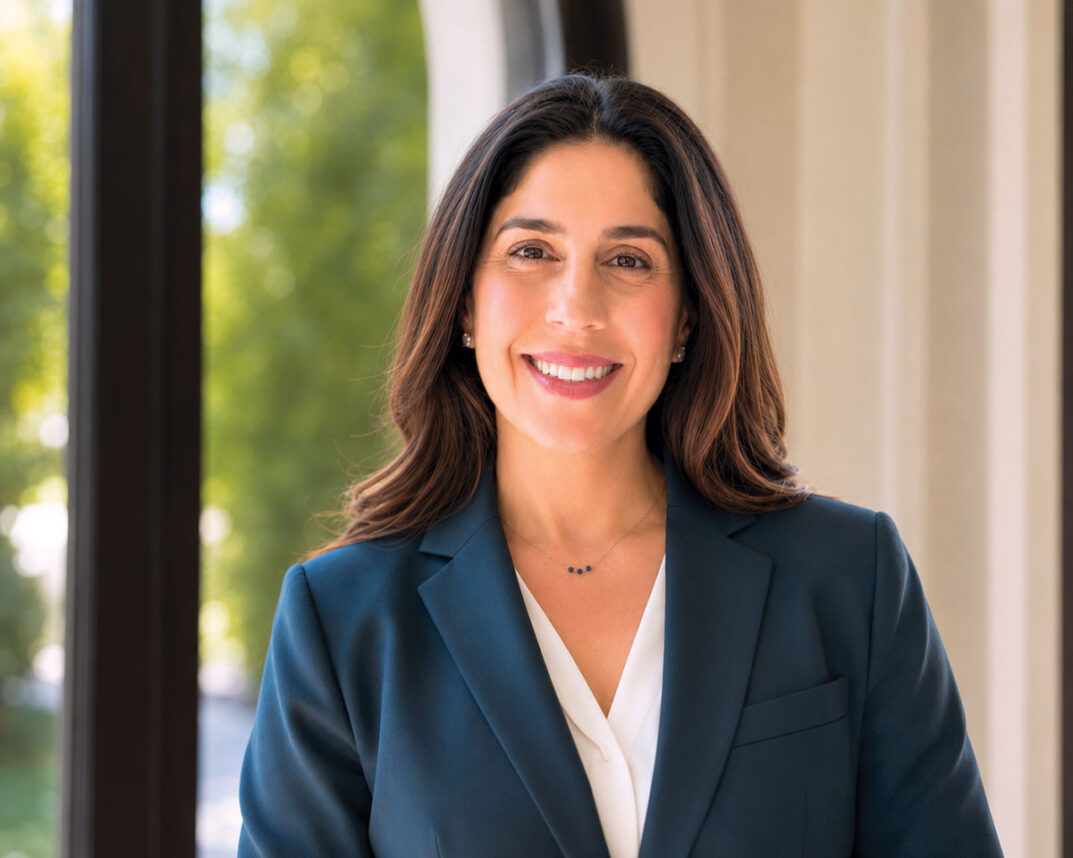
Karen Lehrman Bloch is editor in chief of White Rose Magazine..